Key Takeaways
- Inducement is bait — obvious liquidity that lures retail traders into entering right before smart money’s real move.
- Smart money needs liquidity to fill large orders, and trapped retail traders’ stops and entries provide exactly that.
- The obvious level is usually the trap. The setup that looks too clean is often the inducement, not the real entry.
- The sequence is predictable: inducement forms, retail piles in, the level gets swept, then price moves to the true point of interest.
- You avoid it with patience — waiting for the inducement to be taken before entering at the real level.
- It’s not a magic pattern. Inducement works because of retail impatience, and it still fails without discipline.
Here’s a scenario every trader knows too well. You spot a clean, obvious setup — a perfect-looking level, textbook support, exactly where you’re “supposed” to buy. You enter with confidence. And almost immediately, price stabs straight through your level, hits your stop loss, reverses, and takes off in your intended direction — without you. You did everything right, and you still lost. If this has happened to you again and again, you weren’t unlucky. You were the bait. You got caught by inducement.
Inducement is one of the most important — and most humbling — concepts in ICT and Smart Money Concepts, because it explains why the “obvious” trade so often fails. This is a clear breakdown of what inducement actually is, how smart money uses it to trap retail traders, how to spot it, and how to stop being the liquidity that fuels someone else’s winning trade.
What Is Inducement?
Inducement (sometimes shortened to IDM) is liquidity that is deliberately made to look attractive in order to “induce,” or tempt, retail traders into taking a position before the real move happens. It’s the bait. It’s an obvious level — a recent swing high or low, an obvious support or resistance, a tidy pattern — that looks like a perfect entry, precisely because it’s designed to look that way. Retail traders see the obvious level, pile in, and place their stops in predictable spots. That cluster of retail orders and stops is the liquidity smart money is after.
The key idea is that the obvious, tempting level is frequently a trap set before the real point of interest. Inducement typically sits just ahead of the genuine level where smart money actually wants to enter. So the trader who takes the obvious bait gets caught, while the real move begins from a different, less obvious spot entirely. Understanding this reframes how you read the whole chart, building on the core ideas of liquidity and market structure.
“The setup that looks too clean and too obvious is often the bait, not the entry. Inducement is the market showing you a door specifically so it can shut it on you.”
Why Smart Money Needs to Trap You
To understand inducement, you have to understand a fundamental truth about large players: they have a problem retail traders don’t. When you place a small order, it fills instantly. But institutions moving enormous size can’t just enter without someone to trade against — they need a large pool of opposing orders to fill their position without moving price against themselves. In other words, they need liquidity, and retail traders are a reliable source of it.
This is why the market so often seems to do the opposite of what “should” happen. Smart money engineers moves to generate the liquidity they need. By creating an obvious, tempting level, they lure a crowd of retail traders into buying (or selling) and placing their stop-loss orders in predictable places. Then price is driven to sweep those stops — a move often called stop hunting — which fills the institutional orders at great prices, before the market finally moves in its real intended direction. The retail traders provided the fuel; the institutions took the ride. Inducement is simply the bait used to gather that fuel in the first place.
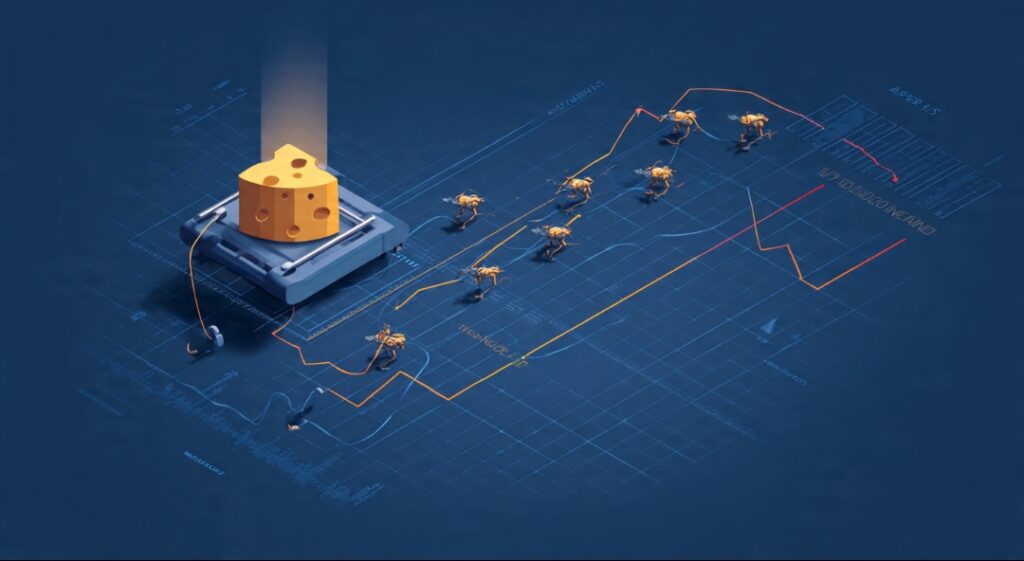
How the Inducement Trap Works, Step by Step
The trap follows a remarkably consistent sequence once you know what to look for.
Step 1 — The bait forms. An obvious, attractive level appears: a clean swing high or low, equal highs or lows, or textbook support or resistance that draws the eye. This is the inducement.
Step 2 — Retail piles in. Traders spot the obvious level and enter there, placing their stops in the predictable spot just beyond it. A pool of liquidity now sits exactly where smart money can use it.
Step 3 — The sweep. Price is driven into that level, sweeping the retail liquidity — triggering their stops and trapping those who entered. This provides the orders institutions need to fill their real position.
Step 4 — The real move. Having gathered its liquidity, price now moves to the genuine point of interest, like a true order block, and the actual intended move begins — usually in the opposite direction to where the trapped retail traders were positioned.
The cruel elegance of it is that the trapped traders were often “right” about the ultimate direction. They just entered at the bait instead of the real level, got stopped out on the sweep, and then watched the move happen without them. Recognizing this sequence is what turns you from the hunted into an observer of the hunt.
Inducement vs the Real Level
The critical distinction is between the inducement (the bait) and the true point of interest (where the real move begins). These are two different levels, and confusing them is the entire trap.
| Inducement (the bait) | The real point of interest |
|---|---|
| Obvious and eye-catching | Less obvious, often overlooked |
| Sits before the real level | Sits beyond the swept liquidity |
| Where retail enters and gets trapped | Where smart money actually enters |
| Gets swept, not respected | Respected, launches the real move |
| The trap | The opportunity |
This is exactly why so many traders who switch to reading price action and smart money concepts have their eyes opened — they finally see that the obvious level was never the real one. It’s a close relative of the logic behind breaker blocks and mitigation blocks: all of them are about reading price action to see where liquidity gets engineered and where the real move truly begins.
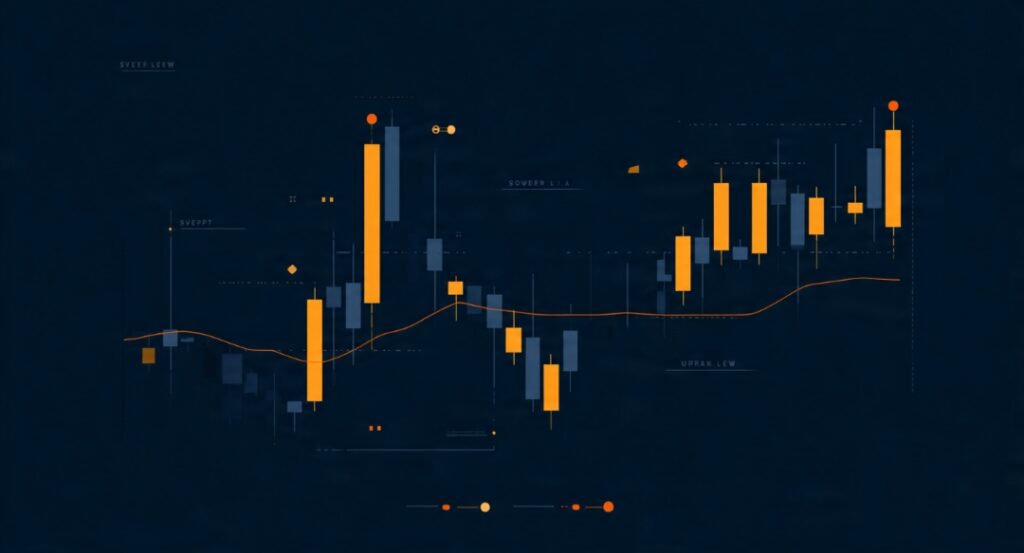
How to Avoid Being the Liquidity
You can’t stop smart money from setting traps, but you can stop walking into them. The defense is patience and structure.
1. Distrust the obvious level. When a setup looks too clean and too easy, treat that as a warning sign, not an invitation. Ask yourself: is this the real level, or is this the bait designed to trap people exactly like me?
2. Wait for the inducement to be taken. Instead of entering at the obvious level, wait for it to be swept first. Once the inducement liquidity has been grabbed, you can then look for your entry at the real point of interest that follows — entering with smart money, not as its fuel. This patience is the same discipline behind not chasing price and waiting for the real move.
3. Anchor to higher-timeframe bias. Know the dominant direction first. Inducement makes far more sense when you understand which way the real move is likely headed, so you can anticipate where the trap and the true level sit.
4. Never skip your risk management. Even a perfect read of inducement can be wrong, so every entry still needs a defined invalidation and proper position sizing. Reading traps well means nothing without the mechanical discipline to survive the ones you misread.
What Nobody Tells You About Inducement
Here’s the honest truth beneath the concept. Inducement isn’t a magic pattern that prints money — it’s an explanation of why retail traders keep getting trapped, and the real reason it works is retail psychology. Inducement is effective because so many traders are impatient, chase obvious levels, fear missing out, and want to enter early. The bait only works because the crowd behaves predictably. In a sense, inducement isn’t really about the market outsmarting you — it’s about your own impatience being used against you.
Which means the deepest defense isn’t a chart pattern; it’s your own discipline and patience. The trader who waits, who distrusts the obvious, who lets the trap spring before acting, simply stops being catchable. And the usual honest caveats apply: inducement can be misread, the “obvious” level sometimes really is the level, and no reading of it guarantees a winning trade. Don’t fall into over-labeling every move as inducement, and never mistake understanding the concept for having an edge. As with every smart-money concept, the tool reveals the market’s behavior, but only disciplined risk management turns that understanding into results.

Now It’s Your Move
Inducement explains one of the most frustrating experiences in trading: doing everything “right” at the obvious level and still getting stopped out right before the move. Once you understand that the obvious level is often the bait, engineered to gather the liquidity smart money needs, you stop being the hunted and start reading the hunt. The obvious becomes suspicious, patience becomes your edge, and you learn to enter with the real move instead of fueling it.
- Question the obvious. When a level looks too perfect, suspect inducement before you trust it.
- Wait for the sweep. Let the bait get taken before looking for your entry at the real level beyond it.
- Know your bias. Anchor to the higher-timeframe direction so you can anticipate where the trap and the true level sit.
- Master your impatience. The trap works on emotion — patience is what makes you uncatchable.
- Protect every trade. Define your risk on each entry, because even a good read of inducement can fail.
The market didn’t beat you because you were wrong about direction — it beat you because you took the bait. Learn to see inducement for what it is, master the patience to let it spring without you, and protect your capital on every trade, and you turn one of smart money’s favorite traps into one of your sharpest reads.
Inducement, sometimes called IDM, is liquidity deliberately made to look attractive to tempt retail traders into taking a position before the real move happens. It is an obvious level, such as a swing high or low or textbook support or resistance, designed to look like a perfect entry. Retail traders enter there and place predictable stops, and that cluster of orders becomes the liquidity smart money needs. The obvious, tempting level is usually a trap set just before the true point of interest.
Large institutions need liquidity to fill big orders without moving price against themselves, and retail traders are a reliable source. By creating an obvious, tempting level, smart money lures retail into entering and placing stops in predictable spots. Price is then driven to sweep those stops, filling the institutional orders at good prices, before the market moves in its real intended direction. The trapped retail traders provided the fuel, and inducement is simply the bait used to gather it.
Look for the obvious, eye-catching levels that draw retail attention, such as clean swing highs or lows, equal highs or lows, and textbook support or resistance, especially when they sit just before a deeper, less obvious point of interest. Inducement tends to be the level everyone can see and would naturally trade. The genuine level usually sits beyond the swept liquidity and is less obvious. Recognizing that the too-clean level is often the bait is the key to spotting it.
Inducement is the bait, an obvious level that sits before the real level, where retail enters and gets trapped and which gets swept rather than respected. The point of interest is where smart money actually enters, usually less obvious, sitting beyond the swept liquidity, and it is respected as the launch point of the real move. Confusing the two is the entire trap, since traders enter at the bait instead of waiting for the sweep and the true level that follows it.
Distrust levels that look too clean and obvious, and instead of entering there, wait for the inducement to be swept first. Once that liquidity is grabbed, look for your entry at the real point of interest that follows, entering with smart money rather than as its fuel. Anchor to your higher-timeframe bias so you can anticipate where the trap and true level sit, and always keep strict risk management, since even a good read of inducement can be wrong.
This is often the classic symptom of getting caught by inducement. You enter at the obvious level, place your stop in the predictable spot, and price is driven to sweep that stop before reversing into the real move, frequently the direction you originally expected. You were right about direction but entered at the bait instead of the true level. The fix is patience: wait for the obvious level to be swept, then enter at the genuine point of interest beyond it.
No. Inducement is an explanation of why retail traders get trapped, not a magic pattern that guarantees profit. It works largely because of retail psychology, impatience, chasing obvious levels, and fear of missing out, so the deepest defense is your own discipline and patience. Inducement can also be misread, and sometimes the obvious level really is the level. No reading of it guarantees a winning trade, and only disciplined risk management turns the understanding into consistent results.
Disclaimer: This article is for educational and informational purposes only and does not constitute financial, investment, or trading advice. Trading the financial markets carries a high level of risk, and the majority of retail traders lose money. Nothing here is a recommendation to enter any trade, and the concepts described are not guarantees of any outcome. Past patterns do not predict future results. Never risk money you cannot afford to lose, and consider consulting a licensed financial professional before trading.