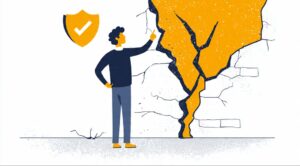
Pressure doesn’t build character — it reveals it. The moment a deal collapses, a launch fails, or cash runs low, you find out what an entrepreneur is actually made of. And here’s what surprises most people: the ones who perform best under pressure aren’t fearless, and they aren’t calmer by nature. They’ve simply built a set of internal systems that let them function when everyone around them is losing their head. Composure under pressure isn’t a personality trait you’re born with. It’s a skill, and like any skill, it’s built deliberately, long before the pressure arrives. Here’s how the best actually do it.
They Separate the Decision From the Emotion
The untrained response to pressure is to react — to let the spike of fear or anger drive the next move. Top entrepreneurs do something different: they create a gap between the feeling and the action. The emotion is allowed to exist, but it isn’t allowed to hold the steering wheel. This is the core of good decision-making under stress — acknowledging “I feel panic right now” while refusing to let that panic pick the decision. The feeling is data about your state, not a command about what to do. That single separation is what stands between a measured response and a reaction you’ll regret, and it’s closely tied to how the best handle risk as calculated decisions rather than emotional gambles.
The Prepared Mind: They’ve Already Decided
Much of what looks like grace under pressure is actually preparation wearing a disguise. Elite entrepreneurs run scenarios in advance — they’ve mentally rehearsed the launch flopping, the key client leaving, the funding falling through. So when crisis hits, they’re not improvising from a blank page; they’re executing a response they’ve already partly thought through. The pressure is real, but it’s not a surprise, and that changes everything. A mind that has pre-considered the bad outcome doesn’t freeze when it arrives. This is why the daily thinking patterns of successful entrepreneurs matter so much — the composure is manufactured in ordinary moments, then withdrawn when it’s needed most.

Strategic Patience: They Don’t Force the Move
There’s a lesson from chess that maps almost perfectly onto high-pressure business: the stronger player doesn’t always win by brilliance — often they win by patience, waiting for the opponent to make a mistake and then capitalizing decisively. I’ve come to believe the same is true under business pressure. When everything feels urgent, the instinct is to do something immediately, to force a move just to relieve the tension. But forcing a move from a position of panic usually creates the very mistake that sinks you. The disciplined entrepreneur resists that itch. They hold position, stay composed, and wait for the right moment to act rather than the first moment — because in high-stakes situations, the person who moves out of anxiety typically loses to the person who moves out of clarity. Patience under pressure isn’t passivity; it’s refusing to convert stress into a bad decision just to feel like you’re doing something.
They Reframe Pressure as a Signal, Not a Threat
The body’s response to pressure — the racing heart, the sharpened focus, the fight-or-flight response — is identical whether you interpret the moment as a threat or a challenge. The difference is entirely in the framing. Top performers have trained themselves to read that physical arousal as readiness rather than danger: the same pounding heart that panics an amateur signals “I’m engaged, this matters” to a professional. This reframing doesn’t remove the pressure; it changes what the pressure does to you. Instead of narrowing into fear, the energy gets channeled into focus. It’s a subtle mental shift with an outsized effect on performance, and it’s a cornerstone of genuine mental toughness and resilience.
Adversity Is the Foundation, Not the Enemy
Here’s a perspective that reframes pressure entirely: the taller a building is meant to rise, the deeper the pit that must be dug for its foundation. The depth of the hole isn’t a disaster — it’s the very thing that makes the height possible. I think about this every time business feels like it’s collapsed into a pit. That low point, as brutal as it feels, is often the foundation being dug for something taller. The entrepreneurs who eventually rise highest are almost always the ones who were forced deepest first, because the pressure of those low moments builds a base that comfort never could — the same principle behind recovering from business losses with a real comeback framework. This isn’t toxic positivity — it’s recognizing that the hardest, most pressure-filled seasons are frequently where the real structure of a person gets built. The ones who understand this stop seeing adversity as proof they’re failing and start seeing it as the discomfort that growth actually requires, which is exactly why failure isn’t the opposite of success in business — it’s part of its architecture.

They Shrink the Problem to the Next Action
Pressure overwhelms because the mind tries to hold the entire crisis at once — every consequence, every worst case, all stacked on top of each other. Top entrepreneurs cut that overwhelming mass down to a single question: what is the one next action? Not the whole solution, just the immediate next step. This narrowing does two things: it makes an impossible-feeling situation actionable, and it pulls attention out of the anxious future and back into the controllable present. Crises rarely get solved in one heroic move anyway; they get solved one deliberate action at a time. The ability to find and take that next small step, instead of freezing in front of the whole mountain, is one of the most practical pressure skills there is.
They Protect the Quality of Their Decisions
A decision made by an exhausted, depleted mind is a worse decision, no matter how talented the person making it. The best entrepreneurs know their judgment degrades under fatigue and stress, so they actively protect the conditions their decisions depend on — enough sleep, a clear head, and crucially, not making irreversible calls in the worst emotional moment. When pressure peaks, they’ll often deliberately delay a major decision by even a few hours to let the acute stress response settle, because they trust their clear-headed self far more than their panicked one. Managing pressure isn’t only about pushing through — sometimes it’s about knowing when your own mind isn’t fit to decide yet.
They Build the Skill Before They Need It
The entrepreneur who stays composed in a crisis didn’t discover that composure during the crisis — they built it in a hundred smaller moments beforehand. Every time you sit with discomfort instead of reacting, every time you make a calm decision under mild stress, you’re training the exact muscle that a real emergency will demand. This is what separates people who crumble from people who rise: not the size of the pressure, but the amount of preparation that met it. This kind of earned steadiness is also where real self-confidence comes from — not from never feeling pressure, but from proof you can function inside it. Composure compounds like anything else, which is part of the broader psychological resilience that defines entrepreneurship at the highest level. By the time the defining moment arrives, the performance has already been decided by the preparation — and that’s a genuinely hopeful truth, because it means performing under pressure is something you can build, starting now.

Pressure Is a Skill, Not a Trait
The comforting myth is that some people are just born calm under fire. The more useful truth is that performing under pressure is a learnable capability, assembled from specific habits: separating emotion from decision, preparing the mind in advance, exercising strategic patience, reframing arousal as readiness, treating adversity as foundation, shrinking problems to the next action, and protecting the conditions your judgment relies on. None of these require a special temperament. They require practice. And the entrepreneur who practices them deliberately, in the ordinary pressures of everyday business, is quietly building the exact composure that the extraordinary moments will one day demand.
- Composure under pressure is a built skill, not an inborn trait — it’s assembled in advance, not discovered in the crisis.
- Top entrepreneurs create a gap between emotion and decision — the feeling is allowed to exist but not to drive the choice.
- Much of “grace under pressure” is really preparation: mentally rehearsing bad outcomes so crisis isn’t improvised.
- Strategic patience matters — forcing a move out of panic usually creates the mistake; clarity beats anxiety.
- Adversity is the foundation being dug for future height, not proof of failure.
- Shrink overwhelming problems to the single next action, and protect decision quality by not deciding while depleted.
Frequently Asked Questions
Are top entrepreneurs naturally calm under pressure?
Usually not. Most build composure deliberately through habits and preparation rather than possessing it as an inborn trait. They feel pressure like everyone else, but they’ve trained systems that let them function through it.
How do successful entrepreneurs make decisions under stress?
They separate the emotion from the decision — allowing the feeling to exist without letting it drive the choice — and often delay major, irreversible calls until the acute stress response settles and their judgment is clearer.
What is the biggest mistake people make under pressure?
Forcing a move out of panic just to relieve the tension. Acting from anxiety rather than clarity tends to create the very mistake that worsens the situation. Strategic patience often outperforms rushed action.
How can I train myself to perform better under pressure?
Build the skill in small everyday moments: sit with discomfort instead of reacting, make calm decisions under mild stress, and mentally rehearse difficult scenarios in advance. Composure compounds through repeated practice.
Why do some entrepreneurs thrive on adversity?
They reframe hard, high-pressure seasons as the foundation being built for future growth rather than as evidence of failure. That perspective turns adversity into fuel instead of a reason to quit.
How do you stay focused when everything feels overwhelming?
Shrink the entire problem down to a single question: what is the one next action? Focusing only on the immediate next step makes an overwhelming situation actionable and pulls attention back into the controllable present.
Should you make big decisions during a high-pressure moment?
Often it’s better not to. Judgment degrades under acute stress and fatigue, so many successful entrepreneurs deliberately delay major irreversible decisions until they can approach them with a clearer, calmer mind.