Somewhere along the way, polished stopped selling. The glossy, expensive-looking ad that shouts “this is an advertisement” now gets scrolled past on reflex, while a slightly shaky video of a real person talking to their phone camera stops the thumb cold. That’s the entire shift behind user-generated-style content, and it’s the reason a small brand with almost no budget can now outperform a company spending a fortune on production. But most people who try it just film random clips and wonder why nothing sells. UGC that actually converts isn’t random — it comes in a handful of specific formats, each engineered to move a different part of the buyer’s mind. Here are the four that do the heavy lifting, and the reason being small is secretly your biggest advantage.
Why UGC-Style Ads Outconvert Polished Ones
The mechanism is trust. A highly produced ad triggers the viewer’s advertising defenses — they know they’re being sold to, so they brace against it. User-generated content, or content built to look like it, slips under that defense because it reads as a real person’s genuine experience rather than a corporate message. It borrows the credibility of a recommendation from a friend, which is the most persuasive form of marketing there is and always has been.
That’s why UGC-style ads convert at rates polished commercials often can’t touch, especially for newer brands nobody has heard of yet. When people don’t know your name, a real face vouching for the product does more than any amount of production polish. The format itself is a trust signal — and trust is the thing standing between a stranger and a purchase.
Type 1: The Founder Ad
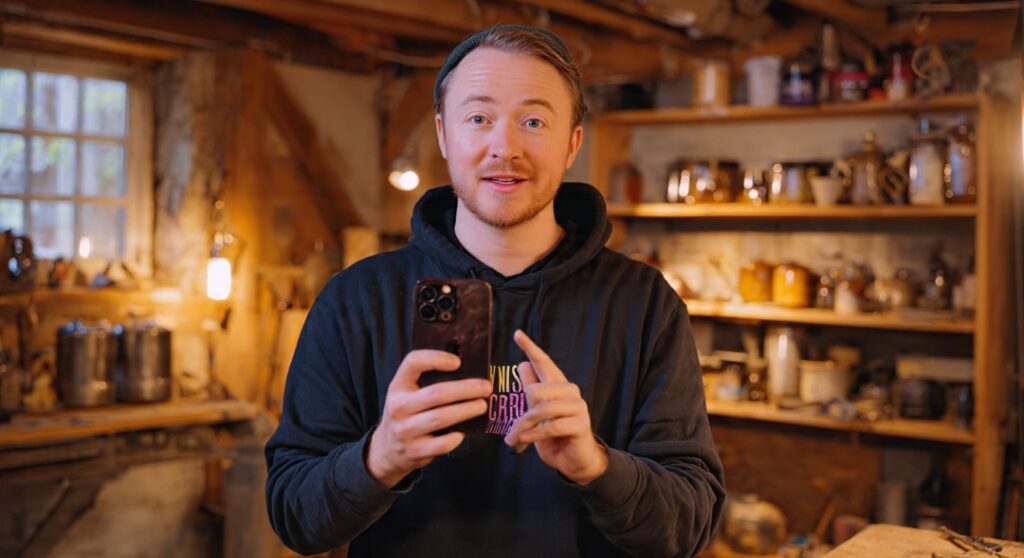
The founder steps in front of the camera and talks about the product themselves — why they built it, what problem it solves, and often how it’s actually made. Showing the manufacturing, the process, the real hands behind the thing, does something no actor can replicate: it proves there’s a real human staking their name on this.
This format works because people want to buy from people, not from faceless logos. A founder who’s willing to show their face is signalling confidence and accountability — “I made this, I stand behind it, here I am.” For a small or new brand, this is often the single most powerful ad you can run, because it turns your biggest apparent weakness (being unknown) into your greatest strength (being personal and real). The founder ad is the one a giant corporation structurally cannot make, because there’s no single face behind it. You have one. Use it. This same principle of a personal name carrying trust is why building your own name is such a quiet business asset.
Type 2: The Pain-Point Ad
This one opens not with the product, but with the problem — stated in the customer’s own words. “I struggled with X for years.” “My skin would break out before every important day.” “I could never get my invoices paid on time.” The ad leads with the ache the viewer already feels, then shows the product being used, then shows the result.
The reason this structure is so effective is that it hooks the exact person who needs the product in the first three seconds. Someone scrolling who has that specific pain stops immediately, because the ad is describing their life. You’ve earned their attention by naming their problem before you’ve asked for anything. By the time the product appears, they’re already leaning in — you’re not interrupting them with a pitch, you’re offering a solution to something that was already bothering them. Pain first, product second, result third. That order is the whole trick.
Type 3: The Before/After Ad
Show the before. Show the after. Attribute the change to the product. It sounds almost too simple, and that simplicity is exactly why it works — transformation is the most naturally compelling story structure that exists, and the before/after ad is that structure compressed into its purest form.
Humans are wired to respond to visible change. A believable before-and-after does the persuading for you, because the viewer draws their own conclusion instead of being told what to think. The critical word, though, is believable — an exaggerated or fake transformation destroys trust faster than a weak one ever could, and once a viewer smells a lie, everything else you say is discounted. Kept honest, this format is devastatingly effective across almost any category where the product creates a visible or measurable improvement. The transformation is the proof, and proof outsells promises every time.

Type 4: The Comparison Ad
Here you position your product directly against a bigger, well-known brand — and cast yours as the hero. You show where the established option falls short and where you win, letting the viewer see the contrast for themselves.
This is a bold move, and boldness is precisely why it works for a challenger. When you compare yourself to a giant, you borrow their recognition — the viewer already knows the big name, so putting yours next to it instantly frames you as a serious alternative rather than a random unknown. You’re using their fame as a stage for your advantage. Big brands almost never do this in reverse, because they have everything to lose and nothing to gain by acknowledging a smaller competitor even exists. That asymmetry is your opening: you can name them, but they can’t afford to name you. Handled with confidence rather than bitterness, the comparison ad punches far above your weight class. (A note on the worldwide reality of this: comparison advertising rules differ by country, so it’s worth knowing what’s permitted where you operate — but the strategic principle holds everywhere.)
The Real Secret: Being Small Is Your Advantage
Here’s the insight that reframes this entire game, and almost nobody sees it because they’re too busy wishing they were bigger.
Big brands and small entrepreneurs win on completely opposite things. A large brand’s entire strategy is built on fame and reputation — and because that reputation took years and fortunes to build, they spend most of their energy protecting it. They move slowly. They avoid risk. They run everything through committees and legal and brand guidelines, because a single misstep could damage something precious. They are, structurally, playing defense.
You are not. You have no reputation to protect, which means you have nothing to lose — and that is a superpower, not a disadvantage. You can move fast, take creative risks a big brand would never approve, test wild ideas, and speak to customers with a personal directness no corporation can match. While they’re protecting what they have, you can take infinite shots on goal. You can post the risky ad, try the weird angle, and personally care about each individual customer in a way that simply doesn’t scale for a company serving millions.
This is the same underdog logic behind the brutal truths of building a business: speed, risk tolerance, and genuine personal care are the levers available to the small that are structurally unavailable to the large. Stop trying to look like the big brand. Your smallness is the weapon.

How to Actually Deploy These Four
Knowing the formats is only half of it — the other half is using them as a system rather than one-off posts:
- Don’t pick one — run all four. Different buyers respond to different formats. The founder ad converts the trust-driven buyer; the pain-point ad catches the problem-aware; the before/after convinces the skeptic; the comparison ad wins the shopper deciding between options. Together they cover the whole audience.
- Volume beats perfection. Your advantage as a small brand is being able to make many at low cost. Produce lots, cheaply, and let performance tell you which angles work rather than trying to guess the perfect one upfront.
- Keep it real, not produced. The moment a UGC ad starts looking like a polished commercial, it loses the exact trust that made the format work. Rough and genuine beats slick and corporate here.
- Double down on winners. Once an ad converts, make more variations of that specific angle. You’re not looking for one perfect ad — you’re looking for the winning angle, then mining it.
And here’s the crucial next step most people miss: a converting ad is only the first touch. The ad gets a stranger’s attention, but a single ad rarely closes the sale on its own — what closes it is what happens after they’ve seen it, in the sequence of follow-up touches that turns curiosity into a purchase. Great creative feeds a system; without the system behind it, even a brilliant ad leaks most of the customers it attracts.
- UGC-style ads outconvert polished ones because they read as genuine experience and slip under the viewer’s advertising defenses — the format itself is a trust signal.
- Founder ad: you appear and show the product/process, turning “unknown” into “personal and real” — the one ad a giant corporation can’t make.
- Pain-point ad: open with the customer’s problem in their words, then product, then result — it hooks exactly the right person in three seconds.
- Before/after ad: show the transformation and let the viewer conclude for themselves — but it must be believable, or it backfires.
- Comparison ad: position against a bigger brand to borrow their recognition and frame yourself as the serious alternative.
- Being small is the advantage: big brands protect their reputation and move slowly, while you have nothing to lose and can take infinite creative shots.
Frequently Asked Questions
What are UGC ads and why do they work?
UGC ads are user-generated-style videos that look like a real person’s genuine experience rather than a polished corporate commercial. They work because they slip under the viewer’s advertising defenses and borrow the credibility of a personal recommendation, which is the most persuasive form of marketing.
What are the main types of UGC ads that convert?
Four formats do most of the work: the founder ad (you explain and show the product yourself), the pain-point ad (open with the customer’s problem, then product, then result), the before/after ad (show a believable transformation), and the comparison ad (position against a bigger brand to borrow their recognition).
Which UGC ad type is best for a new brand?
The founder ad is often the strongest for a new or unknown brand, because showing a real face staking their name on the product turns being unknown into being personal and trustworthy — something a large faceless corporation structurally can’t replicate.
Why do UGC ads convert better than professional-looking ads?
Because polished ads trigger the viewer’s defenses — they know they’re being sold to and brace against it. UGC-style content reads as a real experience, so it earns trust instead of resistance, which matters most for brands people don’t yet recognize.
How is being a small brand an advantage in advertising?
Big brands must protect a reputation that took years to build, so they move slowly and avoid risk. A small brand has no reputation to lose, so it can move fast, take creative risks, test many angles cheaply, and offer personal care that doesn’t scale for large companies.
Should I make one UGC ad or many?
Many. Your advantage as a small brand is producing lots of ads cheaply, then letting performance reveal which angles work. Different buyers respond to different formats, so running all four types and doubling down on winners beats betting everything on one ad.
Do before/after ads have to be completely honest?
Yes. An exaggerated or fake transformation destroys trust faster than a weak result would, and once viewers sense a lie, they discount everything else you claim. A believable, honest before-and-after is far more persuasive than an unrealistic one.