Here’s a scene you’ve lived through without noticing it was a strategy. You see an ad for something, you like it, you click through to the site. You scroll, you check the price, you think “maybe later,” and you leave. Then over the next few days that same brand keeps appearing — first showing you real people using the product, then, just as you’re still on the fence, offering you a discount. And you buy. You felt like you made a free choice. You didn’t. You were walked, step by deliberate step, through a funnel designed to close you. Once you can see the funnel, two things happen: you stop being closed by it, and you can start using it to close your own customers. This is the difference between brands that scale and brands that burn money on ads that go nowhere.
Why 100 Random Ads Do Nothing
Most small businesses approach advertising like throwing darts blindfolded. They make a pile of creatives, blast them at strangers, and hope something sticks. It almost never does — and then they conclude that “ads don’t work for us,” when the real problem is that they never built a path for a customer to travel down.
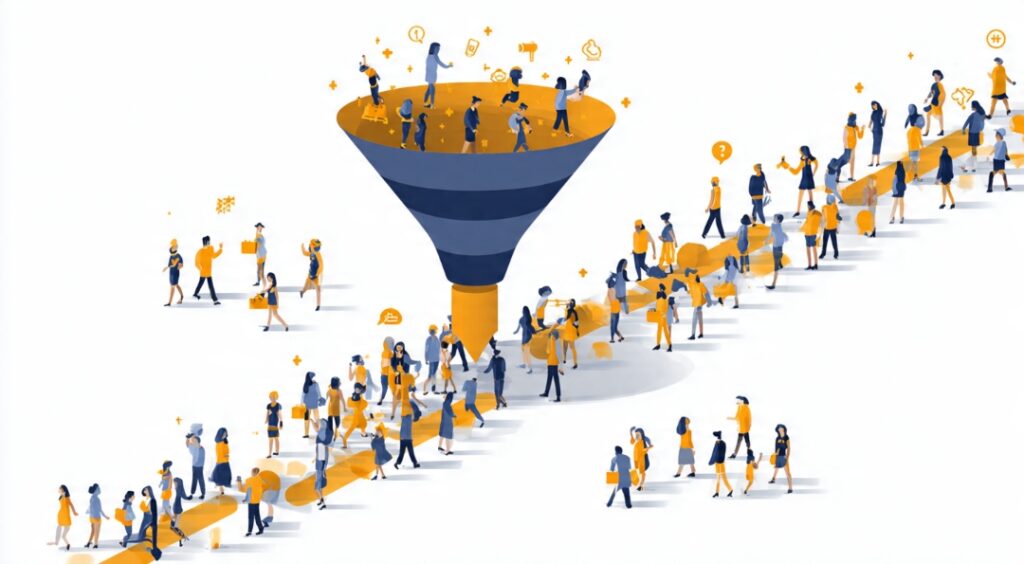
A single ad shown to a cold stranger is asking a person who has never heard of you to trust you and hand over money, all in one impression. That’s an enormous ask, and most people say no — not because your product is bad, but because you skipped every step that builds the trust a purchase requires. The brands that win don’t rely on one heroic ad. They build a purchase funnel: a deliberate sequence that moves someone from “who are you” to “take my money” one small step at a time. A hundred random creatives with no funnel behind them achieve almost nothing. A handful of ads arranged into a funnel can quietly outperform all of them combined.
The Machinery Underneath: Retargeting
The engine that makes the funnel possible is retargeting — the ability to show specific follow-up ads to people who have already interacted with you, like visiting your site. This is the quiet mechanism behind that “it’s following me around the internet” feeling, and it’s not sinister. It’s simply the recognition that someone who already showed interest is a completely different prospect from a random stranger, and deserves a different message.
This is the piece most small businesses never set up, and it’s the single most important one. A cold stranger and a warm visitor are not the same person and should never see the same ad. Retargeting lets you stop shouting the same message at everyone and start having a progression with each person based on how far down the path they already are. Without it, every ad is a first impression forever. With it, you get to build a relationship in stages.
Stage 1: The Cold Ad — Just Earn the Click
The first ad has exactly one job, and it is not to sell. It’s to introduce you to a stranger and earn a single click to your site. That’s all. Trying to close a sale in this first touch is exactly why cold ads feel desperate and convert poorly — you’re proposing marriage on the first date.
The goal here is simply attention and interest strong enough to make someone curious enough to look. This is where a scroll-stopping, genuine-feeling creative earns its keep, which is precisely what the different UGC ad types are engineered to do — hook the right person and pull them one step closer. Judge this ad only on whether it gets the click, not whether it makes a sale. Its entire purpose is to turn a stranger into a visitor, because a visitor is someone you can now follow up with. The sale comes later, and expecting it now is what makes people give up on advertising too early.
Stage 2: Retarget With Proof — Answer “Can I Trust This?”
Now the person has visited and left. They’re curious but unconvinced, and the specific question in their head is “can I actually trust this brand?” So the second ad they see answers exactly that — not with more selling, but with social proof: reviews, testimonials, real customers vouching for you.
This works because of a deep human bias — we trust the experience of other people far more than we trust the claims of the seller. You saying your product is great is marketing. A hundred customers saying it is evidence. When a warm visitor who was on the fence suddenly sees proof that real people bought this and were happy, the trust barrier that stopped them starts to come down. You’re not repeating your pitch louder; you’re handing them the reassurance they were quietly looking for. This is why genuine reviews and testimonials are worth more than any clever copy you could write about yourself — they carry a credibility you structurally cannot give your own brand.
Stage 3: Retarget With Demonstration — Let Them See It Work
Some people are convinced by proof but still want to see the thing in action before they commit. So the next layer shows the product actually being used — real people, multiple angles, demonstrating it in real life, explaining what it did for them.
This stacks on top of the trust you just built and adds something proof alone can’t: a concrete picture of the product working. The viewer moves from “other people like this” to “I can see exactly how this works and I can imagine it in my own life.” Each of these retargeting touches is quietly removing one more reason to hesitate. Notice the progression — you introduced yourself, you proved you’re trustworthy, and now you’re demonstrating the result. Nobody is being pressured. They’re being walked toward a decision they’re increasingly ready to make, which is exactly how real business growth comes from connection rather than pressure.
Stage 4: Retarget With an Offer — Remove the Last Reason to Wait
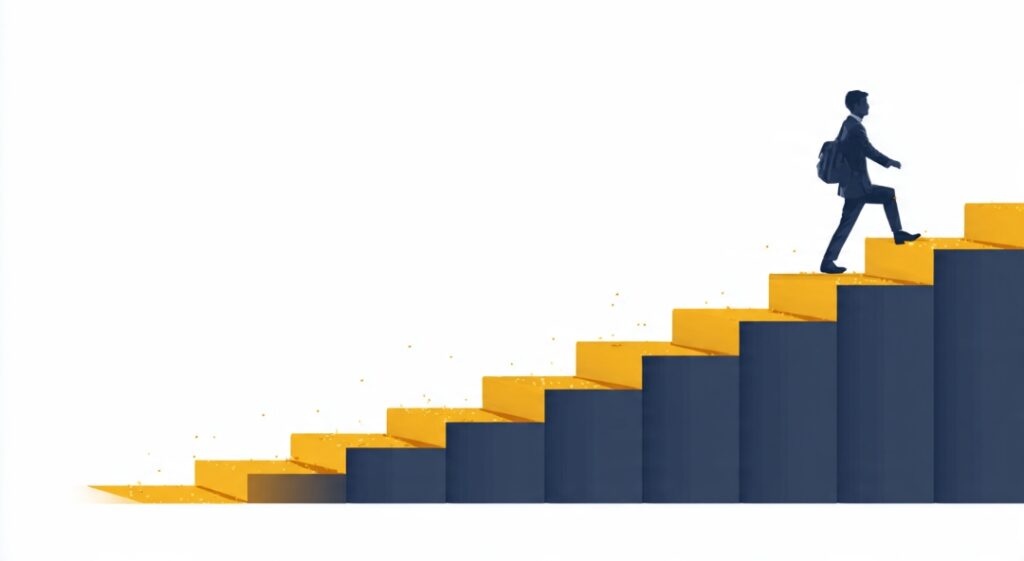
By now the person knows you, trusts you, and has seen the product work. They want it. And yet many still haven’t bought, held back by one last soft barrier: “I’ll get it later.” Later usually means never — not from lack of desire, but from simple inertia. So the final ad removes that last hesitation with a genuine reason to act now: a discount, typically in the range of 15 to 20%.
This is the moment the whole funnel was built for. The offer doesn’t work in isolation — a discount shown to a cold stranger who doesn’t trust you yet does almost nothing. But shown to someone at the end of the journey, who already wants the product and only needed a nudge past their own inertia, it’s the final domino. Every reason to hesitate has been methodically removed, and now there’s a real incentive to stop waiting. That’s why the discount lands here and nowhere earlier: it’s not bribing a stranger, it’s rewarding a nearly-decided buyer for acting today instead of “someday.”
The Insight Most People Get Wrong: Real FOMO vs Fake Urgency
This is the part worth reading twice, because almost everyone does it backwards.
Businesses slap “LIMITED TIME ONLY” and “LOW STOCK” badges on everything, believing they’re creating fear of missing out. They’re not. That’s fake urgency, and modern buyers see straight through it — a countdown timer on a cold ad to someone who doesn’t even want the product yet creates nothing but eye-rolls. A manufactured badge is not FOMO. It’s noise.
Real FOMO is a state you build, not a badge you paste on. By the time a customer reaches the end of this funnel, they genuinely know the brand, they’ve seen the proof, they’ve watched it work, and now a real discount is on the table. That is real fear of missing out — the authentic pull of “I actually want this, and there’s a genuine reason to act now, so if I don’t I’ll lose something real.” It works precisely because everything before it was real. The urgency isn’t printed on the ad; it’s the natural result of a buyer who’s been properly walked to the edge of a decision. Fake urgency tries to manufacture the feeling in one step. Real FOMO earns it across four. That distinction is the difference between a funnel that converts and a gimmick people ignore.

How to Build This for Your Own Business
The beauty of this system is that it’s the same regardless of what you sell, and it doesn’t require a big budget — it requires sequence:
- Map the four stages before you make a single ad. Decide what the cold ad says, what proof you’ll retarget with, what demonstration comes next, and what offer closes. The strategy comes before the creative, always.
- Match each ad to a stage of awareness, not to everyone. Cold audiences get the introduction; site visitors get proof; engaged visitors get demonstration; the most engaged get the offer. Same person, different message depending on where they are.
- Gather your proof first. You can’t run stage two without real reviews and testimonials, so collecting them is foundational, not optional. This is the asset the whole funnel leans on.
- Hold the discount until the end. Discounting a cold audience trains people to expect discounts and wastes the one lever that closes. Save it for the buyer who’s already convinced.
- Judge each stage by its own job. The cold ad is measured on clicks, not sales. The proof ad on re-engagement. Only the final stage is measured on purchases. Blaming your cold ad for not selling is like blaming a handshake for not being a wedding.
Build it once and it runs quietly in the background, turning strangers into buyers on autopilot while your competitors keep throwing random ads at cold crowds and wondering why nothing works. This is the same test-and-sequence discipline behind validating before you scale — and it reflects how business owners think about money differently: not “how much can I spend on ads,” but “what path turns each dollar of attention into a customer.”
- A hundred random ads blasted at cold strangers achieve almost nothing — winning brands build a deliberate funnel, not a pile of creatives.
- Retargeting is the engine: a cold stranger and a warm visitor should never see the same ad.
- Stage 1 (cold ad): its only job is to earn a click, not to sell — don’t propose marriage on the first date.
- Stage 2 (proof): retarget visitors with reviews and testimonials to answer “can I trust this?”
- Stage 3 (demonstration): show the product working to remove the next hesitation; Stage 4 (offer): a 15–20% discount closes the nearly-decided buyer.
- Real FOMO is built across the whole funnel, not pasted on as a fake “limited time” badge — modern buyers see through manufactured urgency.
Frequently Asked Questions
Why do random ads fail to generate sales?
Because a single ad shown to a cold stranger asks them to trust you and buy in one impression, skipping every step that builds the trust a purchase requires. Winning brands instead build a funnel that moves someone from stranger to buyer one step at a time.
What is a retargeting funnel?
It’s a deliberate sequence of ads shown to people based on how they’ve already interacted with you. A cold stranger sees an introduction, a site visitor sees proof, an engaged visitor sees a demonstration, and the most engaged sees an offer — each message matched to where the person is in their decision.
What order should the funnel stages go in?
Cold ad to earn a click, then retarget with social proof (reviews and testimonials), then retarget with demonstration of the product working, and finally retarget with an offer or discount to close. Each stage builds on the trust created by the one before it.
Why shouldn’t I put a discount in my first ad?
Because a discount shown to a cold stranger who doesn’t trust you yet does almost nothing. The offer works only at the end, for someone who already knows the brand, trusts it, and wants the product — then it removes their last reason to keep waiting.
What’s the difference between real FOMO and fake urgency?
Fake urgency is a “limited time” or “low stock” badge pasted onto an ad, and modern buyers see through it. Real FOMO is the genuine pull a buyer feels at the end of a funnel when they already want the product and a real reason to act now appears — it’s built across stages, not manufactured in one.
Do I need a big budget to build a marketing funnel?
No. The funnel is about sequence, not spend. A handful of ads arranged into the right progression can outperform a large pile of random creatives, because the structure — not the budget — is what converts strangers into buyers.
What do I need before I can run this funnel?
Real reviews and testimonials, because the second stage depends on them, plus the ability to retarget people who visited your site. Gather your social proof first — it’s the foundation the entire funnel leans on.