Key Takeaways
- Multitasking feels productive but quietly reduces the quality of everything you touch — full engagement, not split attention, is what actually moves things forward.
- Procrastination isn’t laziness — it’s resistance to starting, and it dissolves faster than most people expect once you actually begin.
- Complaining feels harmless in the moment but slowly trains your brain to default to noticing what’s wrong before anything else.
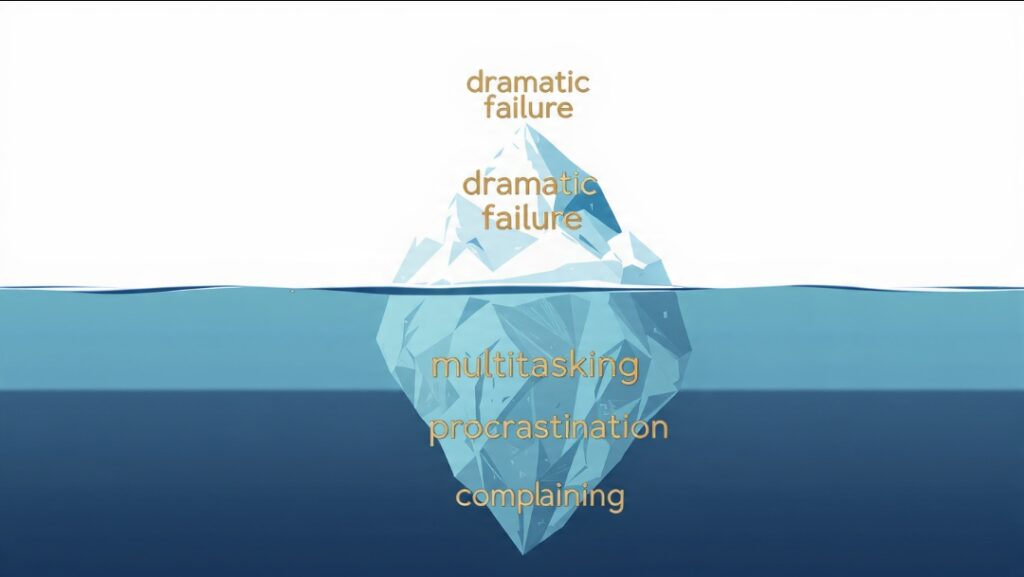
- None of these three habits look dramatic — which is exactly why they’re so easy to ignore while they quietly compound against you.
- Fixing all three doesn’t require willpower overhauls — small, specific, repeatable interruptions work better than trying to “just be more disciplined.”
- Growth rarely stalls from one big failure. It stalls from these three ordinary habits running in the background for years.
Nobody ever traces their stalled growth back to multitasking, procrastination, or complaining. People blame the market, their circumstances, bad luck, not enough talent. Rarely does anyone sit down and admit the real culprit was smaller and far more boring — three habits so ordinary they barely register as habits at all.
I’ve watched capable people stay stuck for years, not because they lacked ability, but because these three things quietly ran in the background of every single day, eating just enough momentum to keep real progress just out of reach.
Multitasking: The Productivity Illusion
Multitasking feels like efficiency. Answering messages while on a call, half-writing a proposal while checking notifications, switching between three tabs and calling it “getting a lot done.” What it actually produces is divided attention across everything and full commitment to nothing, which quietly lowers the quality of every single task involved, even if it doesn’t feel that way in the moment.
The fix isn’t complicated, even if it’s uncomfortable at first: commit fully to one task at a time. Close the other tabs. Silence the notifications. The discomfort of single-tasking usually fades within a few minutes, replaced by the strange realization that the task actually gets done faster and better than it would have while being split three ways.
“Doing five things at once isn’t five times the productivity. It’s one-fifth the quality, five times over.”
Procrastination: The Resistance That Dissolves Once You Start
The hardest part of almost any avoided task isn’t the task itself — it’s the resistance to starting it. This is closely tied to procrastination as a well-studied pattern: the anticipated discomfort of a task is almost always worse than the actual experience of doing it, and once someone actually begins, the resistance that felt so heavy a moment earlier tends to dissolve quickly.
A genuinely practical fix is committing to just five minutes of the avoided task, nothing more. Not the whole project, not the entire session — five minutes, with full permission to stop after that if it still feels unbearable. In practice, the five minutes almost always turns into much more, because the hardest part was never the task itself. It was the decision to start it.

Comparison: The Habit vs The Fix
| Habit | Why It Feels Harmless | Practical Fix |
|---|---|---|
| Multitasking | Feels like getting more done at once | Commit fully to one task, remove all distractions |
| Procrastination | Feels like waiting for the “right moment” | Use the 5-minute rule to break the starting resistance |
| Complaining | Feels like harmless venting | Build active awareness with a physical tracking habit |
Complaining: The Habit That Rewires What You Notice First
Complaining rarely feels like a real problem in the moment — it feels like blowing off steam, stating an obvious frustration, being honest about a bad situation. What it actually does over time is train the brain to scan for what’s wrong before it registers anything else, a pattern closely related to negativity bias becoming stronger the more it gets exercised, the same way any repeated mental habit strengthens with practice.
A surprisingly effective, low-effort fix is wearing a simple rubber band on your wrist and moving it to the other wrist every time you catch yourself complaining, for a full week. The point isn’t the rubber band itself — it’s building conscious awareness of exactly how often the habit fires without you noticing, which is usually the first real step toward reducing it.
“Complaining doesn’t just describe your day. Repeated enough, it starts writing how you experience every future one.”

What Nobody Tells You
Here’s the part that rarely gets said honestly: none of these three habits look serious enough to fix urgently, which is exactly why they survive for years. Nobody schedules an intervention for “answering emails while on a call” or “mentioning the weather is annoying for the third time today.” They’re too small, too socially acceptable, too easy to justify in the moment.
But this connects directly to why rewiring a mindset from zero rarely starts with one dramatic decision — it starts with noticing and interrupting the small, unremarkable patterns that quietly run underneath everything else. The habits that actually determine long-term outcomes are almost never the dramatic ones. They’re the boring ones nobody bothers to examine.
Why These Habits Compound Silently
Each of these three habits costs very little on any single day. A few minutes lost to multitasking here, a delayed task there, one complaint that seemed justified in context. The real damage isn’t in any single instance — it’s in the compounding effect of running all three, every day, for months or years without ever being consciously addressed.
This mirrors the daily compounding habits that actually build meaningful change — small negative habits compound in the exact same silent way positive ones do, just in the opposite direction. Fixing them isn’t about a single dramatic overhaul. It’s about interrupting the pattern consistently enough that the compounding direction flips.
Why Awareness Has to Come Before Discipline
Trying to force discipline onto a habit you’re not even fully aware of rarely works. This is why each of the fixes above starts with a specific, concrete interruption — closing tabs, timing five minutes, moving a rubber band — rather than a vague commitment to “be more disciplined” or “complain less.” Vague intentions rarely survive contact with an actual busy day. Specific, physical interruptions do.
This same principle underlies why discipline functions as a survival mechanism rather than a personality trait — it’s built through small, repeated, specific actions, not through deciding once to simply be a more disciplined person.
Building the Opposite Habits Deliberately
The opposite of these three habits isn’t some dramatic personality transformation. It’s single-tasking through one task at a time, starting the avoided thing for just five minutes, and catching a complaint before it leaves your mouth. This mirrors the daily thinking patterns of people who consistently perform well — small, deliberate, repeatable choices rather than occasional bursts of motivation that fade within days.
None of this requires becoming a different person overnight. It requires noticing these three ordinary habits operating in your own routine, and choosing, repeatedly, to interrupt them until the interruption itself becomes the new default.
Now It’s Your Move
- Pick one task today and commit to it fully — no other tabs, no notifications, no second task running alongside it.
- Identify one thing you’ve been avoiding and commit to just five minutes of it, with permission to stop after that.
- Wear a rubber band for one week and move it to the other wrist every time you catch yourself complaining.
- Track how often each of these three habits shows up in a normal day before trying to fix them — awareness has to come first.
- Notice how small each individual instance feels, and remind yourself that the damage is in the compounding, not any single moment.
- Replace vague intentions with specific interruptions — a five-minute rule beats “I’ll be more productive” every time.
- Review your week honestly and identify which of the three habits showed up most, then focus deliberately on interrupting just that one first.