Most business owners think growing means doing more of everything — more hours, more effort, more stress, more hoping. Then they stare at a bank balance that barely moved and wonder what they did wrong. Here’s what nobody told them: a business doesn’t run on a hundred things. It runs on four numbers. Track those four, and you stop guessing — you can see exactly where the money is leaking and exactly which lever to pull. Better still, these four multiply against each other, which means a modest improvement in each doesn’t add up. It compounds. Improve them all a little and you can nearly double the whole business without finding a single extra hour in your week. Let’s break down the four numbers, and the math that makes doubling realistic rather than a fantasy.
Why Four Numbers Beat a Hundred Tactics
Walk into most struggling businesses and ask the owner why revenue is flat, and you’ll get a vague answer — “the market’s slow,” “people aren’t spending.” That vagueness is the actual problem. You can’t fix what you can’t measure, and an owner who doesn’t know their four numbers is flying blind, throwing effort at problems they haven’t located.
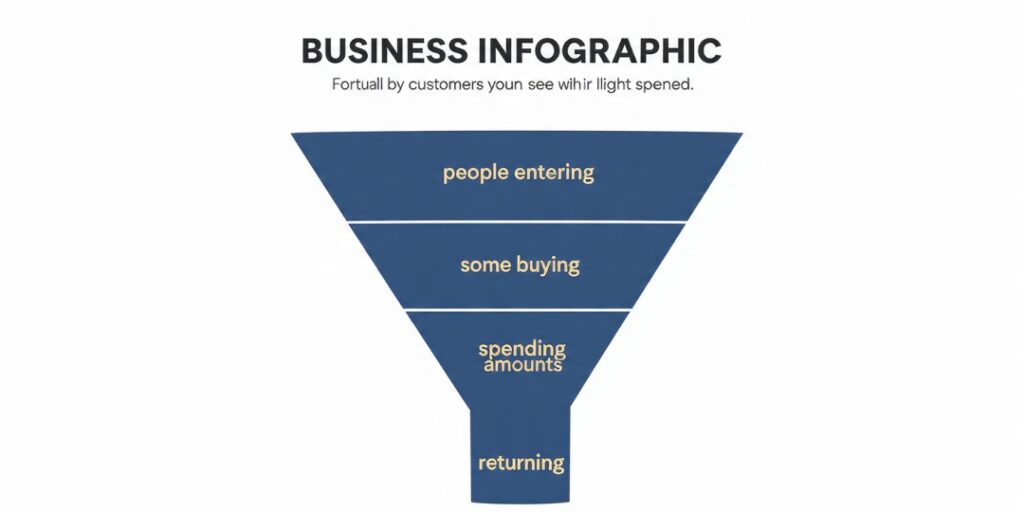
The four numbers turn a fuzzy feeling into a diagnosis. Revenue isn’t one mysterious lump — it’s the direct result of how many people come in, how many of them buy, how much each one spends, and how many come back. Each of those is a specific, fixable number with its own specific fix. When revenue is down, you don’t panic or guess; you check the four, find the weak one, and work on that. This is what separates an operator who runs their business from one their business runs — the same clarity behind how real business owners think about money differently. These four are your core performance indicators, and everything else is noise.
Number 1: Footfall — How Many People Come In
The first number is simply how many potential customers reach you — walking through the door, landing on the site, calling the phone. It’s the top of everything, because no other number can work if this one is too low. You can’t convert, upsell, or retain a customer who never arrived in the first place.
So the rule here is blunt: if footfall is your weak number, marketing comes first, and everything else waits. There’s no point obsessing over your sales pitch or your pricing if barely anyone is showing up to hear it. This is the number that foot traffic for a physical shop and website visitors for an online business both measure, and it’s where your marketing effort — ads, content, referrals, visibility — is meant to move the needle. If you’ve got a great business that nobody knows about, this is your bottleneck, and a proper customer-acquisition funnel or well-built UGC ad strategy is exactly how you fix it. Diagnose footfall first; it’s the foundation the other three stand on.
Number 2: Conversion — How Many Actually Buy
Of everyone who walks in or lands on your page, how many actually buy? That percentage is your conversion, and it’s where most businesses quietly bleed money without noticing. You paid — in marketing, rent, effort — to get that person to show up, and if they leave without buying, that entire cost was wasted.
For many retail and service settings, a healthy conversion of people who genuinely engage sits somewhere around 70 to 75%, though it varies widely by industry. Here’s the important part: if your conversion is low, it usually isn’t the customer’s fault — it’s a sales problem. Either the person handling the sale isn’t trained to guide someone to a decision, or the product isn’t positioned clearly enough for the buyer to see why they need it. Both are fixable, and neither costs a cent in extra marketing. Improving how you turn an interested visitor into a paying customer is often the single fastest revenue gain available, because you’re not paying to acquire anyone new — you’re just keeping the ones you already attracted. Getting good at this is the difference between an order-taker and someone who can genuinely sell, which is why the best operators act like advisors, not salespeople, and know how to handle objections without losing the deal. This whole discipline is what conversion is about: not more traffic, but more yield from the traffic you have.
Number 3: Average Ticket Size — How Much Each Customer Spends
The third number is the revenue you earn per customer, and it’s the one most owners completely ignore — which makes it the biggest hidden opportunity of the four. The same person who already decided to buy from you can very often be guided to spend more, and they’re the easiest person in the world to sell to because they’ve already said yes.
You raise this number through upselling and cross-selling — offering the natural companion to what they’re already buying. Sold someone a shirt? Offer the trousers that go with it. Did a haircut? Offer the other services that complete the look. None of this is pushy when it’s genuinely helpful; it’s simply completing what the customer came for. And the leverage here is enormous, because it requires zero additional footfall. You’ve already paid to get this person in and convert them — raising what they spend is almost pure profit on top. Even a 25 to 30% lift in average spend, on the exact same number of customers, is a massive jump in daily revenue with no extra marketing cost whatsoever. This is one of the most underused levers in all of business.

Number 4: Repeat Customers — How Many Come Back
The fourth number is what percentage of your customers return, and it’s the one that quietly determines whether you have a real business or just a constant, exhausting hunt for strangers. Winning a new customer is expensive; a returning one costs you almost nothing and already trusts you.
A healthy, established business should see somewhere around 60 to 70% of its customers coming back, depending on the type of business. And this number is the ultimate quality signal: if repeat customers are low, you have a product or service problem, full stop. People don’t return to something that disappointed them. High footfall with low repeats means you’re pouring water into a leaking bucket — spending endlessly to attract people who try you once and never come back. Fixing retention isn’t a marketing task; it’s about making the actual experience good enough that people choose to return on their own. This is where business growth built on genuine connection rather than pure profit pays off, and why respect for the customer drives growth more than any promotion. Strong customer retention is the difference between a business that compounds and one that runs on a treadmill.
The Math That Makes Doubling Realistic
Here’s the part that turns these four numbers from a checklist into something genuinely powerful. Your revenue isn’t the four numbers added together — the first three multiply. In simple terms:
Revenue ≈ Footfall × Conversion × Average Ticket Size — and repeat customers multiply the whole thing over time.
Because they multiply, small improvements don’t add — they compound. Watch what happens when you improve just the three revenue levers by a modest 25% each:
| Lever | Improvement | Multiplier |
|---|---|---|
| Footfall | +25% | 1.25 |
| Conversion | +25% | 1.25 |
| Average ticket | +25% | 1.25 |
| Combined effect | — | 1.95 — nearly DOUBLE |
Read that again, because it’s the whole point. You didn’t double any single thing. You improved three numbers by a manageable quarter each — and because they multiply, the business nearly doubled (1.25 × 1.25 × 1.25 = 1.95). Even a gentler 15% lift on each of the three produces a 52% increase (1.15³ = 1.52). This is why chasing one number obsessively is the slow path, and nudging all of them together is the fast one. A quarter more traffic, a quarter better sales, a quarter bigger orders — each one is achievable on its own, and stacked, they transform the business. And once repeat customers rise on top of that, the growth doesn’t just spike; it sustains. This multiplicative effect is the same force behind compounding — small consistent gains, multiplied, becoming something enormous.

How to Actually Use This in Your Business
The framework only works if you turn it into a habit rather than a one-time read:
- Measure all four now. Most owners can’t state their four numbers off the top of their head. Getting them written down is step one, because you can’t improve what you’re not tracking.
- Find your weakest number and start there. Don’t spread yourself across all four at once. The weakest number is where the fastest, biggest gain is hiding — fix the bottleneck before optimizing what’s already working.
- Match the fix to the number. Low footfall means marketing. Low conversion means sales skill and positioning. Low ticket means upsell and cross-sell. Low repeat means product or service quality. Never apply the wrong fix to the wrong number.
- Then nudge all four together. Once the worst is handled, remember the multiplication. Modest, simultaneous improvements across all four beat a heroic effort on any single one.
- Re-check regularly. These numbers move. Reviewing them on a schedule turns you into an operator who steers by data instead of by feel — which is exactly what validating before you scale is really about.
Do this consistently and growth stops being a mystery. You’ll always know which number is weak, which lever to pull, and roughly what pulling it will do — and a business run on that kind of clarity is one you can genuinely scale, even into multiple income streams, instead of one you’re constantly firefighting.
- A business runs on four numbers: footfall, conversion, average ticket size, and repeat customers — track them and growth stops being guesswork.
- Footfall: if it’s low, marketing comes first — no other number works without people arriving.
- Conversion: low conversion is usually a sales/training/positioning problem, not the customer’s fault — and it’s the fastest gain because it needs no new traffic.
- Average ticket: the most ignored lever — upsell and cross-sell to existing buyers is almost pure profit; even a 25-30% lift is huge.
- Repeat customers: the ultimate quality signal — low repeats mean a product or service problem, and 60-70% return is healthy for an established business.
- The first three multiply: improving each by just 25% nearly doubles revenue (1.25³ = 1.95) — small stacked gains compound instead of adding.
Frequently Asked Questions
What are the four numbers that grow a business?
Footfall (how many potential customers reach you), conversion (what percentage of them buy), average ticket size (how much each customer spends), and repeat customers (what percentage come back). Together these determine your revenue, and each has its own specific fix.
How can improving four numbers double a business?
Because the first three multiply rather than add. Improving footfall, conversion, and average ticket size by just 25% each produces roughly a 95% increase in revenue (1.25 × 1.25 × 1.25 = 1.95), because the gains compound against each other instead of stacking one on top of the next.
Which business number should I fix first?
Your weakest one, because that’s where the biggest, fastest gain is hiding. If footfall is low, start with marketing. If conversion is low, fix sales skill and positioning. Fix the bottleneck before optimizing numbers that are already healthy.
Why is my conversion rate low?
Low conversion is usually a sales problem, not a customer problem — either the person handling the sale isn’t trained to guide a decision, or the product isn’t positioned clearly enough for the buyer to see why they need it. Both are fixable without spending more on marketing.
What is average ticket size and how do I increase it?
It’s the revenue you earn per customer. You raise it through upselling and cross-selling — offering the natural companion to what someone is already buying. Since the customer has already decided to buy, this is almost pure profit and requires no additional marketing spend.
What does a low repeat-customer rate mean?
It usually signals a product or service quality problem, because people don’t return to something that disappointed them. High footfall with low repeats means you’re spending to attract customers who try you once and never come back — a leaking bucket.
How often should I check these business numbers?
Regularly and on a schedule, because they move over time. Reviewing them consistently turns you into an operator who steers by data rather than by feel, so you always know which number is weak and which lever to pull.