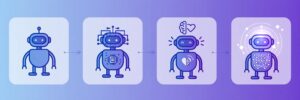
“Machine learning” gets used as a catch-all term for basically anything AI-related these days, which makes it easy to lose track of what it actually means. At its core, it’s a specific, well-defined idea: instead of programming a computer with explicit step-by-step instructions for every situation, you give it data and let it find the patterns itself, then use those patterns to make predictions on data it hasn’t seen before.
What Machine Learning Actually Is
Machine learning is the subset of artificial intelligence focused on algorithms that learn patterns from training data and use those patterns to make accurate predictions about new, unseen data. Instead of a programmer hard-coding rules for every possible scenario, a machine learning model is trained on examples, and through that process, it develops its own internal representation of the patterns connecting inputs to outputs. This pattern-recognition capability is what lets ML systems make decisions or predictions without someone explicitly writing out every rule in advance.
The Term Has Been Around Longer Than You’d Think
The term “machine learning” traces back to 1959, when IBM researcher Arthur Samuel used it to describe a checkers-playing program capable of improving its own performance through experience — famously summarized as a computer being programmed “to learn to play a better game of checkers than can be played by the person who wrote the program.” That core idea — a system improving through exposure to data rather than through more explicit programming — is still the foundation of everything modern machine learning builds on, even as the underlying techniques have grown vastly more sophisticated.
The Three Main Categories
Machine learning algorithms generally sort into three broad categories, each suited to different kinds of problems. Supervised learning trains a model on labeled data — examples where the correct answer is already known — so the model learns to map inputs to those known outputs and can then predict outputs for new, unlabeled inputs. Unsupervised learning works with unlabeled data instead, looking for hidden structure or groupings within it without being told what the “correct” answer should be. Reinforcement learning takes a different approach entirely, training a model through trial and error using rewards and penalties for actions taken within an environment, gradually learning which actions lead to better outcomes over time. I cover this third category specifically in what is reinforcement learning? A beginner’s guide.
How Training Actually Works
The central premise behind machine learning is that if a model’s performance is optimized on a training dataset that adequately resembles the real-world problems it’ll eventually face, the model should then be able to make accurate predictions on genuinely new data it hasn’t seen before. This process — model training — involves repeatedly adjusting the model’s internal parameters based on how well its predictions match the known correct answers in the training data, gradually improving accuracy over many rounds. I go deeper into this specific mechanical process in how does AI learn? Training explained simply.
Where Machine Learning Fits in the Bigger AI Picture
Machine learning isn’t the same thing as artificial intelligence broadly, though the terms often get used interchangeably in casual conversation. AI is the broader field concerned with building systems that perform tasks typically requiring human intelligence; machine learning is one specific approach to achieving that, and it happens to be the approach that currently dominates the field — providing the backbone of most modern AI systems, from forecasting tools to large language models. Deep learning, in turn, is a further subset of machine learning that uses multilayered neural networks to handle especially complex pattern recognition tasks. AI vs. machine learning vs. deep learning: the difference breaks down exactly how these three terms nest inside each other, since the confusion between them is genuinely common and worth clearing up directly.
The Technology Underneath Modern AI Tools
Nearly every AI tool you interact with today — chatbots, recommendation systems, image generators — is built on machine learning foundations, typically using the deep learning approach specifically. Understanding what a neural network actually is fills in the architectural piece that most modern machine learning systems rely on, and what an LLM (large language model) actually is shows how these underlying machine learning principles scale up into the systems powering today’s most visible AI applications.
Machine Learning Versus Generative AI
A common point of confusion: machine learning is the broader technique, while generative AI refers specifically to systems capable of creating new content — text, images, audio, code — rather than just classifying, predicting, or clustering data. Generative AI systems are built using machine learning techniques, but not every machine learning application is generative; a fraud-detection model or a spam filter is a machine learning system that isn’t generating anything new, just making a classification decision. what is generative AI? A beginner’s guide covers that specific distinction in more depth, and helps clarify which category a given AI tool actually falls into. Understanding how these systems ultimately process and respond to input, once trained, connects back to tokens and context windows, which describe how the trained model actually handles information at the point of use.
Key Takeaways
- Machine learning is the subset of AI focused on algorithms that learn patterns from data rather than following explicitly hard-coded rules.
- The term dates to 1959, coined by IBM researcher Arthur Samuel while describing a self-improving checkers program.
- The three main categories are supervised learning, unsupervised learning, and reinforcement learning, each suited to different problem types.
- Training works by repeatedly adjusting a model’s internal parameters until its predictions on known data become accurate, then applying that learning to new, unseen data.
- Machine learning provides the backbone of most modern AI systems, including deep learning and large language models, which are further specialized subsets built on top of it.
- Not all machine learning is generative — classification and prediction tasks are machine learning without generating new content.
Frequently Asked Questions
What is machine learning in simple terms?
It’s a subset of AI where algorithms learn patterns from data and use those patterns to make predictions on new data, rather than following explicitly hard-coded rules.
What’s the difference between machine learning and AI?
AI is the broader field concerned with building systems that perform tasks requiring human-like intelligence. Machine learning is one specific, currently dominant approach to achieving that.
What are the three main types of machine learning?
Supervised learning (trained on labeled data), unsupervised learning (finding structure in unlabeled data), and reinforcement learning (learning through trial and error using rewards and penalties).
Is deep learning the same as machine learning?
Deep learning is a subset of machine learning that uses multilayered neural networks, particularly suited to especially complex pattern recognition tasks.
Who coined the term “machine learning”?
IBM researcher Arthur Samuel is generally credited with the term, in a 1959 paper describing a self-improving checkers-playing program.
Is every AI tool built with machine learning?
Not necessarily every one historically, but the vast majority of modern AI systems, from chatbots to recommendation engines, are built on machine learning foundations today.
Is generative AI the same as machine learning?
Generative AI is built using machine learning techniques, but it’s a specific category focused on creating new content, while machine learning broadly includes many non-generative tasks like classification and prediction.