Key Takeaways
- An order block is the last candle in one direction right before a strong move in the opposite direction — marking a zone where big institutions placed large orders.
- The idea is that when price returns to this zone, leftover institutional orders may push price again — making it a potential entry area.
- Most beginners mark every candle as an order block. The real skill is identifying only the high-quality ones that come with a strong move and a break of structure.
- An order block is not a guarantee — it is a probability zone. Plenty of them fail, which is normal and expected.
- Knowing what an order block is and being able to trade it profitably are two different skills, separated by real experience and discipline.
Of all the ICT concepts that confuse beginners, order blocks might be the worst offender. Everyone talks about them. Everyone marks them on charts. And almost nobody can explain, in plain language, what they actually are and why they supposedly work.
So you end up drawing little boxes on your chart because a YouTube video told you to, without really understanding what the box represents or why price should care about it. Then half your boxes fail, you get frustrated, and you conclude that order blocks do not work — when really, you just never understood them in the first place.
This guide fixes that. The Data Pips Team is going to explain what an order block actually is, why institutions create them, how to spot a good one versus a worthless one, and how to use them without falling into the traps that catch every beginner. Plain language. Real examples. No assuming you already know the jargon. Let us get into it.
First — What Is an Order Block in Plain English?
Let us strip away all the jargon and define it simply.
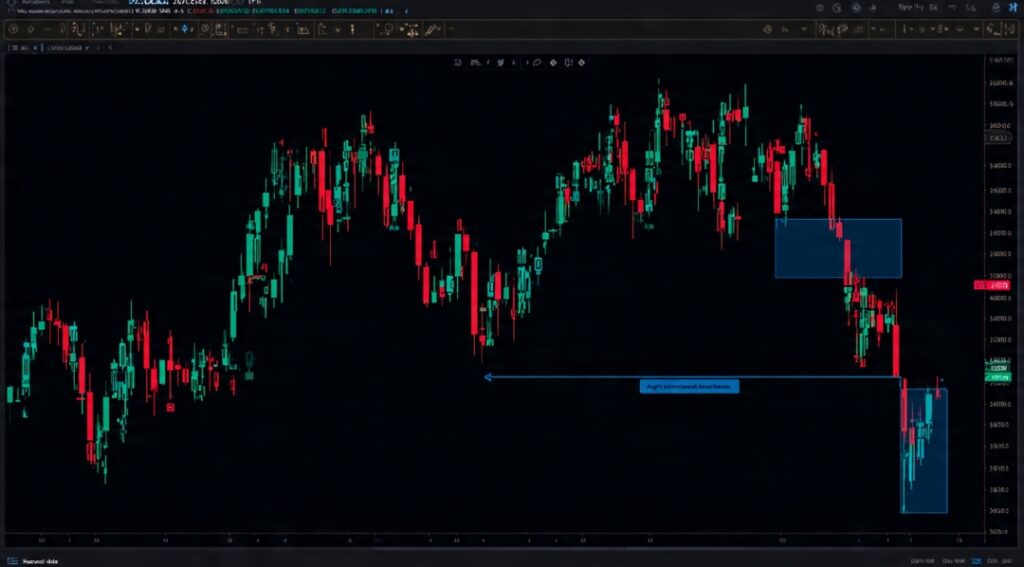
An order block is the last candle in one direction right before price makes a strong move in the opposite direction.
That is it. That is the whole definition. Let us break it down with an example:
Imagine price is drifting downward — making small red (down) candles. Then suddenly, the market explodes upward with several strong green (up) candles. The last red candle, right before that explosion upward, is the order block.
The same works in reverse. If price is drifting up with small green candles, and then suddenly crashes downward with strong red candles, the last green candle before the crash is the order block.
So an order block is simply that final candle before a big, sharp move in the other direction. Spotting them, at the basic level, is genuinely that simple. If you understand candlesticks — and if you do not, Investopedia has a clear explanation of candlesticks — then you can already identify order blocks. The harder part, which we will get to, is knowing which order blocks actually matter.
— Data Pips Team
Why Do Order Blocks Supposedly Work?
Okay, so you can spot an order block. But why should price care about it? Why does this concept exist at all? Here is the logic behind it.
Remember the central idea of ICT: large institutions — banks, funds, the so-called “smart money” — move enormous amounts of money. When they want to enter a big position, they cannot do it all at once, because their order is so large it would move the price against them before they finished. So they have to place their orders carefully, in zones where there is enough activity to absorb their size.
The order block — that last candle before the big move — is theorized to be exactly such a zone. It represents the area where institutions were quietly building their large position before they pushed the market in their intended direction. The strong move that follows is the result of those institutional orders overwhelming the market.
Now here is the key part. Institutions often cannot fill their entire desired position in one go. So the theory holds that when price later returns to that order block zone, there are still unfilled institutional orders sitting there. Those leftover orders get triggered, and price pushes again in the same direction as the original move.
This is why traders watch for price to return to an order block — they are looking to enter alongside those leftover institutional orders, riding the same move the smart money is making. In simple terms: the order block is where the big money entered last time, and the idea is that they may enter again when price comes back.
Whether this theory is literally true in every case is debated. But as a practical framework for finding entry zones, order blocks work often enough that they have become one of the most widely used concepts in modern trading. For the deeper foundation behind why institutions move price this way, read our beginner guide on what ICT concepts are in forex trading.
How to Spot a GOOD Order Block (Not Just Any Candle)
Here is where beginners go wrong, and where the real skill begins. If an order block is just “the last candle before a strong move,” then there are dozens of them on every chart — and most of them are worthless. The skill is not spotting order blocks. The skill is spotting the good ones.
A high-quality order block usually has these characteristics:
1. It Comes Before a Strong, Decisive Move
The move away from the order block should be powerful — strong candles, real momentum, not a weak drift. The bigger and more decisive the move, the more significant the order block. A small candle followed by a tiny move is not a meaningful order block. A clear candle followed by an explosive move is.
2. It Breaks Market Structure
The strongest order blocks come with a “break of structure” — meaning the move away from the order block breaks a recent high or low, signaling a genuine shift in the market. An order block that causes the market to break out of its previous pattern carries far more weight than one buried in the middle of choppy, directionless price action. Understanding market structure is essential here — our guide on ICT concepts, liquidity, and market structure covers this foundation in detail.
3. It Aligns With the Higher Timeframe Trend
An order block that points in the same direction as the bigger trend is far more reliable than one fighting against it. If the higher timeframe is clearly bullish, bullish order blocks are more trustworthy. Trading order blocks against the dominant trend is one of the most common beginner mistakes — and one of the most expensive.
4. It Is Fresh (Untouched)
An order block that price has not yet returned to is considered “fresh” and more likely to react. Once price has already returned to an order block and used up the orders sitting there, that zone often loses its power. The first return to a quality order block is usually the highest-probability moment.
Put these together and you have a filter. Instead of marking every candle, you mark only the order blocks that come before a strong move, break structure, align with the trend, and remain fresh. That filter alone separates beginners who lose from beginners who start to see real results.
Real Pattern: The Order Block That Worked vs. The One That Failed
Consider a beginner trading Gold who marks two order blocks in the same week.
The first order block formed in the middle of a choppy, sideways market. It was a small candle, the move away was weak, and it did not break any structure. The beginner entered when price returned to it — and the trade failed immediately, because the order block had no real significance. It was just a candle in a noisy market.
The second order block formed differently. Price had been consolidating, then a clear down candle was followed by an explosive drop that broke below a major recent low — a clean break of structure, aligned with a bearish higher timeframe trend. When price pulled back up to that fresh order block, the beginner entered short, and price dropped sharply in their favor.
Same concept — order blocks — applied to two situations. One was high quality, one was noise. The difference was not the concept. It was the ability to tell a meaningful order block from a meaningless one.
Lesson: Order blocks do not work or fail randomly. The quality of the order block — the strength of the move, the break of structure, the trend alignment, the freshness — determines the probability. Learn to filter, and your results change completely.
How Beginners Actually Use Order Blocks to Enter Trades
So you have found a high-quality order block. How do you actually trade it? Here is the simple beginner approach:
Step 1: Wait for Price to Return
After the order block forms and price moves away, you wait. You do not chase the move. You wait patiently for price to come back to the order block zone. This waiting is itself a discipline that many beginners lack — they want to be in a trade now, so they chase instead of waiting for price to return to their level.
Step 2: Look for Confirmation at the Zone
When price returns to the order block, you do not blindly enter. You look for some confirmation that the zone is reacting — a rejection candle, a smaller-timeframe shift, a clear sign that buyers (or sellers) are stepping in at that zone. Entering with confirmation rather than blindly significantly improves your results.
Step 3: Place Your Stop Loss Beyond the Order Block
Your stop loss goes just beyond the far edge of the order block. If the order block fails — if price slices straight through it — your trade is wrong, and the stop protects you. Critically, do not place your stop at the most obvious level where everyone else places theirs, because that is exactly the liquidity the market hunts. Place it where it is genuinely protected by the structure.
Step 4: Set Your Target at a Logical Level
Your profit target should be at a logical level — a recent high or low, the next liquidity zone, or based on a risk-reward ratio that makes the trade worthwhile (aiming to win more than you risk). A good order block trade often offers an excellent risk-reward ratio because your stop is tight (just beyond the block) while your target can be far.
That is the basic framework. Wait for return, look for confirmation, stop beyond the block, target a logical level. Simple — but as always, simple does not mean easy. The execution under live market pressure is where the real challenge lies.
Where Most Beginners Go Wrong With Order Blocks
They Mark Every Candle as an Order Block
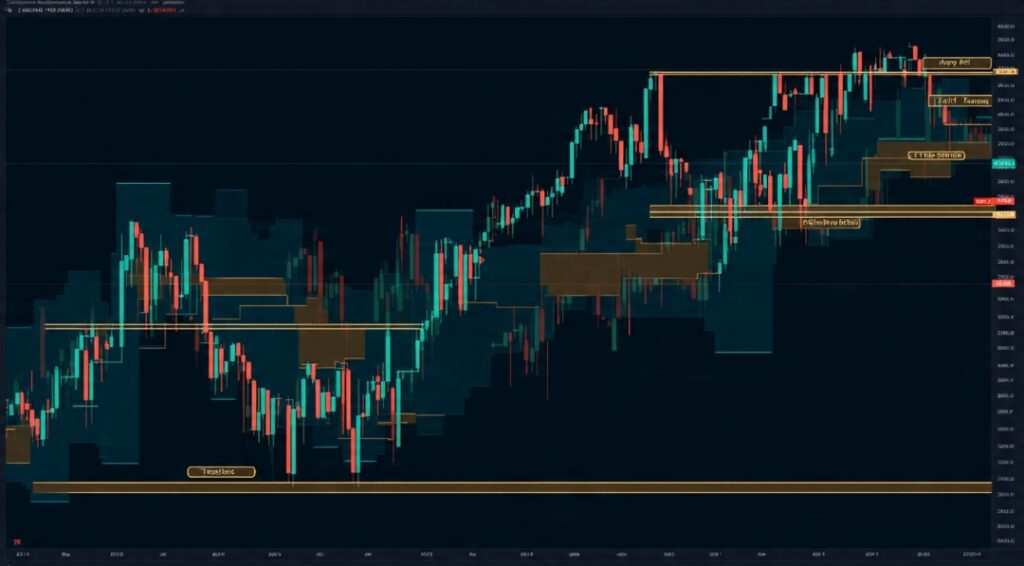
This is the number one mistake. Because the basic definition is so simple, beginners see order blocks everywhere. Every candle before any move becomes an “order block” in their eyes. The result is a chart covered in boxes, most of which are meaningless. Quality over quantity. A few high-quality order blocks beat dozens of low-quality ones. If your chart looks like a checkerboard of boxes, you are doing it wrong.
They Trade Order Blocks Against the Trend
An order block pointing against the dominant trend is far less reliable. Beginners often spot a bullish order block in a strongly bearish market and enter long, only to get crushed as the downtrend continues. Always check the higher timeframe trend first. Trade order blocks that align with the bigger move, not against it.
They Enter Without Confirmation
Blindly entering the moment price touches an order block is a recipe for getting stopped out. Many order blocks get broken. Waiting for some sign that the zone is actually reacting — a rejection, a shift — dramatically improves the odds. Patience for confirmation is a discipline most beginners have not yet developed.
They Think the Concept Alone Makes Them Profitable
Here is the deepest trap. Beginners learn what an order block is and assume that knowledge will make them money. But knowing the concept and trading it profitably are completely different skills. The Data Pips Team has seen this repeatedly: traders who can identify perfect order blocks in hindsight, draw flawless boxes, explain the theory perfectly — and still lose money, because execution under live pressure, with real money and real emotions, is an entirely separate ability that only experience builds. Our guide on why traders confuse being right with being profitable explains this gap in depth.
— Data Pips Team
The Truth About Order Blocks That Nobody Tells Beginners
1. Many Order Blocks Will Fail — And That Is Normal
No order block works 100% of the time. Even high-quality ones fail regularly. This is not a flaw in the concept — it is the nature of probability trading. You are not looking for a setup that always works. You are looking for a setup that works often enough that, combined with good risk management, you come out ahead over many trades. Beginners who expect order blocks to be magic quit the first time a few fail. Professionals expect failures and manage them.
2. They Look Obvious in Hindsight and Hard in Real Time
When you scroll back through historical charts, the good order blocks look obvious — you can clearly see which ones worked. But in real time, on the right edge of the chart, you do not know whether the order block will hold or fail until after the fact. This gap between hindsight clarity and real-time uncertainty is the single biggest reason order blocks feel easy when learning and hard when trading. Respect this difference.
3. Your Stop Placement Matters More Than Your Entry
Beginners obsess over finding the perfect order block entry. But where you place your stop loss determines your survival far more than the precision of your entry. A great order block with a poorly placed stop gets taken out by normal market noise. Place your stops where they are protected by structure, not at the obvious levels that the market is designed to hunt.
4. Simpler Beats Complicated
The trading community has invented endless variations — bullish order blocks, bearish order blocks, breaker blocks, mitigation blocks, propulsion blocks. As a beginner, ignore almost all of this. Master the simple, basic order block first. Trade it well. Add complexity only after you have proven you can execute the basics consistently. The traders who profit use simple, clear setups. The ones drowning in complexity are usually the ones losing.
5. Real Skill Comes From Losses, Not Videos
You can watch a hundred videos about order blocks. They will teach you the concept. But they cannot teach you the skill — that only comes from trading order blocks yourself, taking the losses, journaling what went wrong, and slowly developing the judgment to tell a good order block from a bad one in real time. The losses are not failure. They are the tuition that converts theory into skill. There is no shortcut around this — every profitable trader paid it.
The Beginner’s Order Block Practice Plan
Now It’s Your Move
- Learn to spot the basic order block first. The last candle before a strong move the other way. Practice identifying this simple version on charts until it is automatic.
- Then learn the quality filter. Strong move + break of structure + trend alignment + fresh zone. Only mark order blocks that pass all four. Restraint is the skill.
- Practice in hindsight before risking money. Open historical charts. Find high-quality order blocks. See which worked and which failed. Train your eye to recognize the difference.
- Never enter without confirmation. Wait for price to return to the zone AND show a reaction before entering. Blind entries get stopped out.
- Place stops where they are protected, not where the crowd places them. The obvious stop level is the liquidity the market hunts. Protect your stops with structure.
- Demo trade one order block setup, journaling everything. One model. Every trade logged. After 50 trades, your own patterns will teach you more than any video.
- Accept the failures as part of the process. Order blocks fail regularly. Expect it. Manage risk so that your winners outweigh your losers over many trades. That is how probability trading works.
Frequently Asked Questions
An order block is the last candle in one direction right before price makes a strong move in the opposite direction. For example, the last down candle before a powerful upward move is a bullish order block. The concept comes from ICT (Inner Circle Trader) theory, which holds that this candle marks a zone where large institutions placed significant orders before pushing the market. The idea is that when price later returns to this zone, leftover institutional orders may push price again in the same direction — making the order block a potential entry area for traders.
A high-quality order block has four characteristics: it comes before a strong, decisive move (not a weak drift); the move away breaks market structure (breaks a recent high or low); it aligns with the higher timeframe trend rather than fighting it; and it is fresh, meaning price has not yet returned to it. Most beginners mark every candle as an order block, which produces a chart full of meaningless boxes. The real skill is restraint — marking only the order blocks that pass all four quality filters. A few high-quality order blocks beat dozens of low-quality ones.
The theory is that order blocks mark zones where large institutions built significant positions before pushing the market in their intended direction. Because institutions often cannot fill their entire desired position at once, the idea holds that unfilled orders remain in the order block zone. When price later returns there, those leftover orders get triggered and push price again in the same direction. This is why traders watch for price to return to an order block — they are attempting to enter alongside the institutional orders. Whether this is literally true in every case is debated, but as a practical framework for finding entry zones, order blocks work often enough to be widely used.
No — and expecting them to is one of the biggest beginner mistakes. Even high-quality order blocks fail regularly. Order block trading is probability trading: you are not looking for a setup that always works, but one that works often enough that, combined with good risk management, you come out ahead over many trades. Beginners who expect order blocks to be magic quit the first time a few fail. Successful traders expect failures, manage their risk so that winning trades outweigh losing ones, and judge their approach over a large sample rather than individual trades.
Your stop loss should go just beyond the far edge of the order block — if price slices straight through the block, your trade idea is wrong and the stop protects you. However, avoid placing your stop at the most obvious level where everyone else places theirs, because that is exactly the liquidity the market tends to hunt. Place your stop where it is genuinely protected by market structure. Stop placement matters more than entry precision: a great order block with a poorly placed stop gets taken out by normal market noise, while a protected stop lets a good setup play out.
Order blocks can be a good concept for beginners because the basic idea is simple to understand and they provide a clear framework for finding entry zones. However, beginners should start with the simple, basic order block and master it before exploring the many complicated variations. The biggest challenge is not understanding the concept — it is developing the judgment to tell a high-quality order block from a meaningless one in real time, which only comes from practice and experience. Beginners should also understand that knowing what an order block is and trading it profitably are two different skills separated by real experience and discipline.
Traditional support and resistance are horizontal levels where price has historically reversed, identified by looking for areas price touched multiple times. An order block is a more specific concept — it is a particular candle (the last one before a strong move) representing where institutions are theorized to have placed orders. While both are zones where price may react, order blocks come from the ICT framework’s focus on institutional order flow, whereas support and resistance is a broader, older concept. Many traders use both together, viewing an order block that aligns with a traditional support or resistance level as an especially strong zone.

Now It’s Your Move
Order blocks are one of the most useful concepts in modern trading — and one of the most misused. The basic idea is genuinely simple: the last candle before a strong move the other way, marking a zone where big money likely entered. You can learn to spot the basic version in an afternoon.
But the gap between spotting order blocks and profiting from them is wide, and it is filled with the things no quick video teaches: the discipline to mark only the high-quality ones, the patience to wait for price to return, the restraint to demand confirmation before entering, the wisdom to place stops where they are protected, and the emotional control to accept that many order blocks will fail and that this is completely normal.
Do not cover your chart in boxes. Do not trade order blocks against the trend. Do not enter blindly. Do not expect the concept alone to make you money. And do not quit the first time a few setups fail — because failures are not evidence the concept is broken. They are the tuition that builds your real skill.
Learn the simple version. Apply the quality filter. Practice in hindsight. Demo trade with discipline. Journal everything. And give yourself the years it actually takes — because the trader who masters one concept deeply beats the one who chases twenty concepts shallowly, every single time.
You now understand order blocks better than most beginners ever will. What you do with that understanding over the next months and years is what turns knowledge into skill.
For your next steps, read our complete ICT trading strategy guide, our deeper breakdown of order blocks and fair value gaps together, and our guide on building the mechanical discipline that determines whether any of this knowledge becomes real profit.