Key Takeaways
- There’s no single “best” framework — the right one depends on your goal, your skills, and what you’re building.
- A framework handles the hard plumbing — the agent loop, tools, and memory — so you focus on your idea.
- For beginners who code, a general framework like LangChain is a common starting point for learning the fundamentals.
- For easy multi-agent teams, role-based frameworks are beginner-friendly; for data-heavy agents, data-focused ones shine.
- Not a coder? No-code agent builders let you create simple agents visually.
- Choose by criteria, not hype. The landscape changes fast, so learn to evaluate any framework, not just today’s popular ones.
Once you decide to build an AI agent, you hit an immediate wall of confusion: there are a lot of frameworks, they all claim to be the best, and everyone online swears by a different one. For a beginner, choosing where to start feels paralyzing — and picking “wrong” feels like it’ll cost you weeks. Here’s the freeing truth: there is no single best AI agent framework. There’s only the best one for your goal, your skill level, and what you’re trying to build.
So instead of handing you a hype-driven ranking that’ll be outdated in months, this guide does something more useful and lasting: it teaches you what an agent framework actually does, what to look for as a beginner, the major frameworks worth knowing, and how to confidently pick your first one. The specific tools will keep evolving, but the way you evaluate them won’t — and that’s what will actually serve you.
What Is an AI Agent Framework?
Before choosing one, understand what it does. An AI agent framework is a toolkit that handles the difficult, repetitive plumbing of building an AI agent for you — the control loop, connecting to a language model, wiring up tools, managing memory, and coordinating steps. Without a framework, you’d build all of that from scratch every time. With one, you focus on your agent’s actual purpose while the framework handles the mechanics underneath.
Think of it like building a house: a framework is the pre-made foundation and frame, so you’re decorating and customizing rather than pouring concrete yourself. This is why beginners are almost always better off starting with a framework than trying to hand-build everything — it lets you get a working agent fast and learn by doing.
“A framework won’t make you a better builder by itself. It just removes the boring plumbing so you can spend your energy on the idea instead of the wiring.”
What to Look For in a Beginner Framework
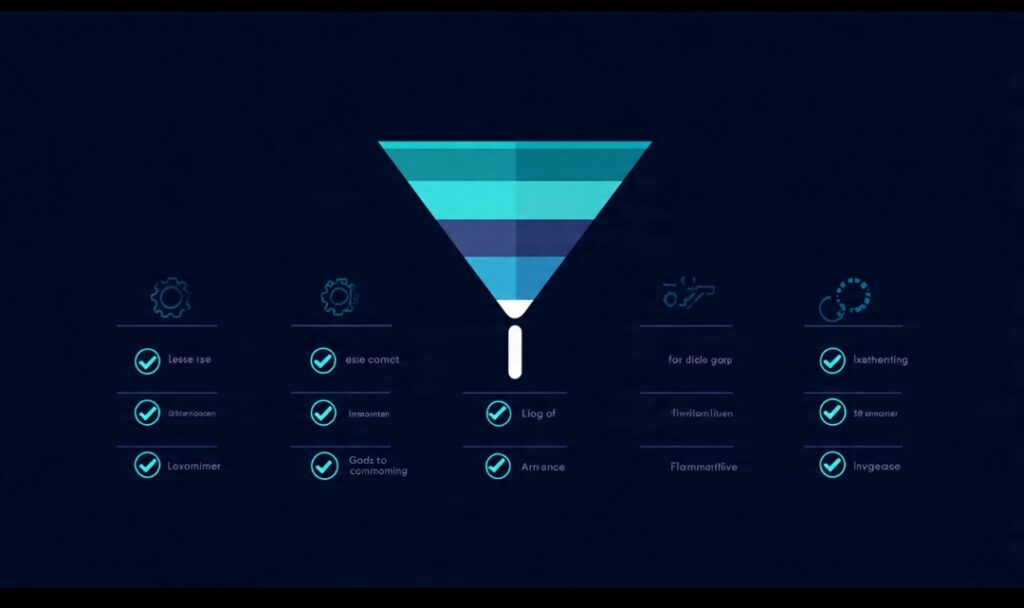
These criteria matter far more than any ranking, because they stay true no matter which tools rise or fall.
Ease of learning. As a beginner, a gentle learning curve beats raw power. A framework you can get a simple agent running with quickly will teach you more than a powerful one you’re stuck fighting.
Documentation and community. Good docs and an active community are gold when you’re stuck — and you will get stuck. A framework with lots of tutorials, examples, and people answering questions will save you enormous frustration.
Fit for your goal. Different frameworks are built for different jobs. Some excel at simple single agents, some at multi-agent teams, some at data-heavy retrieval. Match the tool to what you actually want to build.
Active maintenance. In a fast-moving field, a framework that’s actively developed and updated is far safer to invest your time in than an abandoned one.
Your language and coding comfort. Most frameworks are code-based, so pick one in a language you know. And if you don’t code at all, that points you toward the no-code options rather than a developer framework.
The Major Frameworks Worth Knowing
Here are the frameworks a beginner is most likely to encounter, described by what each is generally known for. Note that this space evolves quickly, so treat this as an orientation, not a fixed leaderboard — always check the current state of any tool before committing.
General-purpose frameworks (like LangChain). The most common starting point for learning. A general framework built around chaining language-model steps together, with a huge ecosystem of components and integrations and a large community. It’s widely used for everything from simple assistants to complex apps, which makes it a solid place to learn the fundamentals — as we broke down in LangChain vs LangGraph.
Stateful workflow frameworks (like LangGraph). Built for agents that need loops, branching, persistent state, and complex control — the graph-based layer you reach for once simple chains aren’t enough. Often used alongside a general framework rather than instead of it.
Data-focused frameworks (like LlamaIndex). Known for connecting language models to your own data and documents. If your agent’s main job is answering questions from a knowledge base — a heavy retrieval-augmented generation use case — a data-focused framework is built for exactly that.
Multi-agent frameworks (like CrewAI or AutoGen). Designed to make building teams of coordinating agents easier, often using intuitive concepts like assigning agents roles in a “crew.” These are beginner-friendly on-ramps specifically for multi-agent systems, handling much of the coordination for you.
Enterprise-oriented frameworks (like Semantic Kernel). Aimed at integrating AI into larger, production software, often favored in enterprise and certain language ecosystems. More relevant once you’re building for a serious application than for a first experiment.
No-code and low-code builders. Visual, drag-and-drop tools that let you build simple agents without writing code at all. For non-programmers or anyone who wants to prototype fast, these are the most accessible entry point of all.
| Framework type | Generally best for |
|---|---|
| General-purpose (e.g. LangChain) | Learning fundamentals, broad range of apps |
| Stateful workflow (e.g. LangGraph) | Complex, looping, stateful agents |
| Data-focused (e.g. LlamaIndex) | Agents that answer from your own data |
| Multi-agent (e.g. CrewAI, AutoGen) | Easy teams of coordinating agents |
| No-code builders | Non-coders and fast prototyping |
So Which Should a Beginner Actually Pick?
Here’s practical guidance, framed around what you want rather than a single verdict.
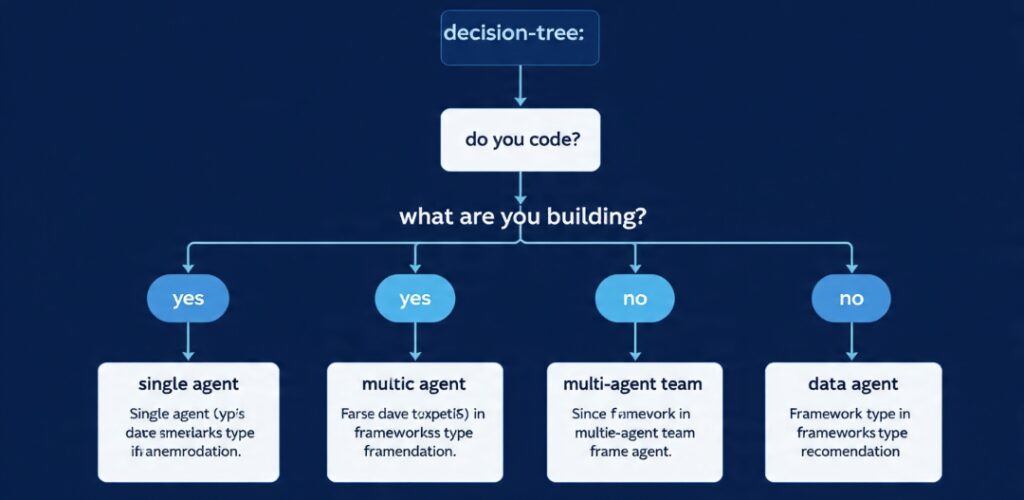
If you can code and want to learn properly: start with a general-purpose framework. It teaches the core concepts — models, tools, memory, chaining — that transfer to every other framework, giving you the strongest foundation.
If you want to build a team of agents easily: a beginner-friendly multi-agent framework with role-based design lets you get a coordinating crew running without wrestling with low-level coordination.
If your agent is mostly about your own data: a data-focused framework will save you time, since it’s purpose-built for connecting models to documents and knowledge bases.
If you don’t code: start with a no-code builder. You’ll learn how agents think and behave without the barrier of programming, and you can always graduate to a code framework later.
What Nobody Tells You About Choosing a Framework
Here’s the perspective that saves beginners months of wasted worry: the framework you pick matters far less than you think. Beginners agonize endlessly over choosing the “perfect” one, when the truth is that any of the popular, well-maintained frameworks will let you build and learn just fine. The time spent debating is time not spent building — and building is what actually teaches you.
Two deeper truths follow. First, don’t framework-hop. Jumping between frameworks chasing the “best” one is like a trader jumping between strategies after every loss — you never get good at any of them. Pick a reasonable one, commit, and build several projects with it. Depth in one framework beats shallow familiarity with five. Second, and most important: the framework is just a tool; the fundamentals are what matter. If you understand what an agent is, how the loop works, and the concepts of tools and memory — grounded in a real grasp of generative AI — you can pick up any framework quickly, including whatever new one becomes popular next year. Learn the concepts deeply, and frameworks become interchangeable; learn only a framework, and you’re lost the moment it changes. This is the same reason understanding agentic AI concepts outlasts any specific tool.
“Stop hunting for the perfect framework. Pick a solid one, commit, and build. The concepts you learn will outlast every tool — and the building is where the real learning happens.”

Now It’s Your Move
The “best AI agent framework” isn’t a single tool — it’s the one that fits your goal, your skills, and what you’re building, and that you’ll actually commit to. Learn what frameworks do, evaluate them on real criteria rather than hype, pick one that matches your situation, and then stop shopping and start building. The concepts you gain will carry across every framework, now and in the future.
- Get the fundamentals first. Make sure you understand agents and language models before picking a tool.
- Know your goal and skills. Are you coding or not? Building a single agent, a team, or a data agent? That decides your category.
- Pick by criteria, not hype. Weigh ease of learning, docs, community, fit, and maintenance over online popularity.
- Commit and build. Choose one reasonable framework and build several small projects with it instead of hopping around.
- Verify current status. Since this space moves fast, check the latest on any framework before you invest serious time.
Don’t let the paralysis of choice stop you before you start. Any solid framework plus a real understanding of the fundamentals is more than enough to build your first agent. Pick one, commit, and go build your first agent — that’s how beginners become builders.
There is no single best framework, since the right choice depends on your goal, your skill level, and what you’re building. For beginners who code and want to learn the fundamentals, a general-purpose framework like LangChain is a common starting point. For easy multi-agent teams, a role-based multi-agent framework works well, and for non-coders, a no-code builder is the most accessible. The best framework is the one that fits your situation and that you’ll actually commit to building with.
An AI agent framework is a toolkit that handles the difficult, repetitive plumbing of building an agent for you, including the control loop, connecting to a language model, wiring up tools, managing memory, and coordinating steps. Without one, you would build all of that from scratch every time. With one, you focus on your agent’s actual purpose while the framework handles the mechanics, which is why beginners are usually far better off starting with a framework than hand-building everything.
Most agent frameworks are code-based and require programming knowledge, so if you code, choose one in a language you know. However, if you do not code, no-code and low-code agent builders let you create simple agents visually with drag-and-drop tools and no programming at all. These are the most accessible entry point for non-programmers, and you can always graduate to a code-based framework later once you understand how agents behave.
Choose by criteria rather than hype. Prioritize ease of learning so you can get a simple agent running quickly, strong documentation and an active community for when you get stuck, and a good fit for your specific goal, whether that is a single agent, a multi-agent team, or a data-heavy agent. Also check that the framework is actively maintained and available in a language you know. These criteria stay useful no matter which tools become popular.
Not as a beginner. Framework-hopping in search of the perfect one means you never get good at any of them, much like a trader who switches strategies after every loss. It is far better to pick one reasonable, well-maintained framework, commit to it, and build several projects, since depth in one beats shallow familiarity with many. Once you are comfortable and have a real reason to explore another, the concepts you have learned will transfer easily.
Far less than most beginners think. Any of the popular, well-maintained frameworks will let you build and learn effectively, so the time spent agonizing over the perfect choice is time not spent building, which is what actually teaches you. What matters much more is understanding the fundamentals: what an agent is, how the loop works, and the concepts of tools and memory. Master those and you can pick up any framework quickly, including new ones.
The AI agent landscape evolves very quickly, so specific frameworks, their features, and their popularity will change over time, and new options will appear. That is exactly why it is wiser to learn how to evaluate frameworks by criteria and to master the underlying concepts rather than betting everything on one tool being permanently best. Always verify the current state of any framework before committing serious time, since what is prominent today may shift.
Disclaimer: This article is for educational and informational purposes only and explains concepts in general terms for beginners. It is not technical or implementation advice and is not affiliated with or endorsed by the makers of any framework mentioned. The AI landscape changes rapidly, and specific tools, features, and their relative strengths shift over time, so always verify the current state of any framework against official, up-to-date sources before choosing or building.