Key Takeaways
- A multi-agent system is a team of AI agents — each with a role — coordinating to solve a problem too big for one.
- The power is specialization. Instead of one agent doing everything, focused agents each handle what they’re best at.
- They coordinate through communication — passing messages and sharing state, usually organized by a supervisor or a pipeline.
- Common roles mirror a human team: a planner, researchers, a writer, a critic that checks the work.
- More agents is not automatically better. Every agent adds cost, complexity, and new ways for errors to spread.
- Start with one well-built agent and only add more when a single one genuinely can’t handle the job.
A single AI agent is like one capable worker — it can take a goal and work through it step by step. But what happens when the job is too big, too varied, or too complex for one worker to handle well? You do the same thing humans do: you build a team. That’s what a multi-agent system is — several AI agents, each with its own role, working together and coordinating to accomplish something none of them could do as well alone.
It’s one of the most powerful ideas in modern AI, and also one of the most over-hyped, with people assuming that throwing more agents at a problem automatically makes it smarter. It doesn’t. This guide explains multi-agent systems clearly: what they are, why you’d use one, exactly how the agents coordinate and communicate, and the honest trade-offs that decide whether a team of agents actually beats a single good one.
What Is a Multi-Agent System?
A multi-agent system is an application built from multiple AI agents that work together, each typically responsible for a specific role or task, coordinating their efforts toward a shared goal. Instead of one agent trying to do everything, the work is divided among several specialized agents that communicate and hand off to each other.
The best analogy is a human team or company. A single generalist can do a lot, but a team of specialists — a researcher, a writer, an editor, a manager coordinating them — can tackle bigger, more complex projects with higher quality, because each person focuses on what they do best. A multi-agent system applies that same logic to AI. Each agent is still a normal intelligent agent built on a language model, but now several of them collaborate, divide the labor, and combine their outputs into a result greater than any one could produce alone.
“One agent is a worker. A multi-agent system is a team — divided into roles, coordinated toward a goal, each doing what it does best.”
Why Use Multiple Agents Instead of One?
If a single agent can already do a lot, why complicate things with several? There are real, specific advantages.
Specialization. An agent focused on one narrow role — just research, or just writing code — can be tuned and prompted to do that one thing extremely well, often better than a generalist agent juggling everything at once. Focus produces quality.
Divide and conquer. Complex problems break naturally into sub-tasks. Splitting a big goal across agents that each own a piece makes the whole thing more manageable, just as breaking a large project into departments does in a company.
Checks and balances. One of the most valuable patterns is having one agent produce work and another agent review or critique it. This built-in quality control catches mistakes a single agent would miss, helping reduce the risk of hallucinated or incorrect output slipping through unchecked.
Modularity. When each agent handles a distinct role, the system is easier to build, debug, and improve. You can upgrade or fix one agent without rebuilding the whole thing, the same benefit modular design gives any software.
How AI Agents Work Together
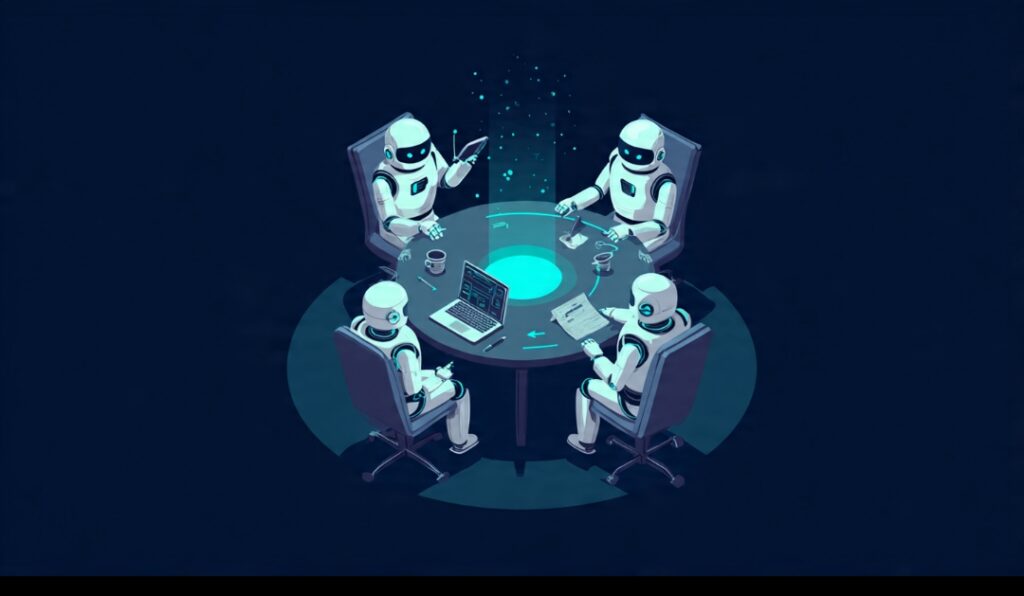
The heart of a multi-agent system is coordination — how the agents actually communicate and organize their work. This happens in two parts: how they talk, and how they’re arranged.
How they communicate
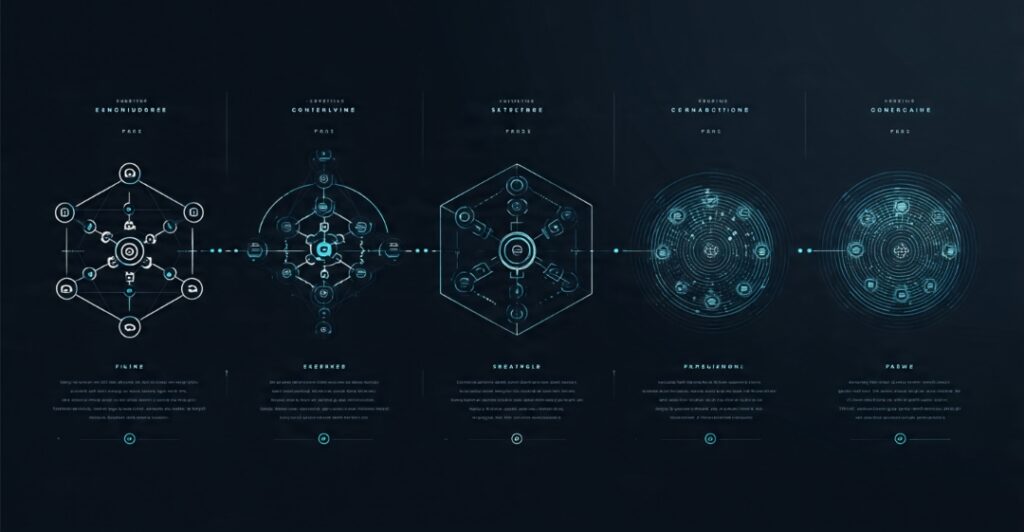
Agents coordinate mainly by passing messages and sharing state. In message passing, one agent sends its output to another as input — the researcher hands its findings to the writer, the writer hands its draft to the critic. In shared state, agents read from and write to a common memory or workspace that all of them can see, so each knows what the others have done. Because all this communication consumes the model’s context and tokens, how information flows between agents has a direct effect on both cost and reliability.
How they’re arranged
The agents also need an organizational structure. A few common patterns:
Supervisor (orchestrator) pattern. One “manager” agent directs the others, deciding which specialist agent handles each part and combining their results. It’s the boss coordinating the team — the most common and intuitive structure.
Sequential pipeline. Agents work in a line, each doing its part and passing the result to the next, like an assembly line: plan, then research, then write, then review.
Hierarchical. Layers of agents, where higher-level agents manage lower-level ones — useful for very large, complex tasks that need multiple levels of coordination.
Collaborative / peer. Agents work as equals, sharing a workspace and contributing together, sometimes even debating or cross-checking each other to reach a better answer.
Building these coordination structures — with their loops, branches, and shared state — is exactly the kind of complex, stateful workflow that tools like LangGraph are designed for, which is why frameworks matter here, as we covered in LangChain vs LangGraph.
“Multi-agent design is really organizational design. You’re not just building agents — you’re deciding who reports to whom, who checks whose work, and how information flows.”
Common Agent Roles
In practice, the roles in a multi-agent system often mirror the roles on a human team:
A planner or orchestrator breaks the goal into tasks and coordinates. Researcher agents gather and analyze information. A writer or generator agent produces the main output. A critic or reviewer agent checks the work for errors and quality. Specialist agents like a coder or a tool-user handle particular technical jobs. Not every system needs all of these — the point is that thinking in roles, exactly as you would when assembling a human team, is how you design an effective multi-agent system.
Single Agent vs Multi-Agent System
| Single agent | Multi-agent system |
|---|---|
| One agent does everything | Specialized agents share the work |
| Simpler and cheaper to run | More capable but costlier and complex |
| No coordination overhead | Needs communication and coordination |
| No built-in second opinion | Agents can check each other’s work |
| Best for focused, contained tasks | Best for large, multi-part problems |
Real-World Examples
Multi-agent systems show up wherever a task naturally splits into specialized parts. In research, a team might have agents that search different sources, one that synthesizes, and one that fact-checks. In software development, one agent plans the code, another writes it, and another tests and debugs it. In content creation, a planner, writer, and editor agent work in sequence. In complex business workflows, different agents handle different stages of a process and hand off between them. In each case, the pattern is the same: divide a big job into specialized roles, coordinate them, and combine the results — a direct application of how foundation models are put to work in the real world.
What Nobody Tells You About Multi-Agent Systems
Here’s the honest truth the hype skips: more agents is not automatically better, and often it’s worse. Every agent you add brings real costs that can quietly outweigh the benefits.
Cost multiplies. Each agent is running a language model, and they’re constantly communicating, so a multi-agent system can cost many times more than a single agent — every message between agents is more model usage you pay for.
Errors can compound across agents. If one agent produces a flawed output, the next agent builds on that flaw, and the mistake can cascade through the whole team. Coordination doesn’t just multiply capability — it can multiply errors too, especially since each agent inherits the underlying model’s tendency to occasionally get things wrong.
Coordination overhead is real. Getting agents to work together reliably is genuinely hard. They can misunderstand each other, produce conflicting outputs, get stuck in loops, or fail to hand off cleanly. The coordination itself becomes a source of complexity and failure that a single agent simply doesn’t have.
So the wise default is to start simple. A single, well-designed agent handles a huge range of tasks perfectly well, and it’s cheaper, simpler, and more reliable. Reach for a multi-agent system only when a task genuinely exceeds what one agent can do — when it truly needs distinct specializations or built-in review. A well-built single agent almost always beats a poorly-coordinated team of five. Understanding this comes back to knowing the strengths and limits of the underlying foundation models that power every agent in the system.
Now It’s Your Move
Multi-agent systems are a powerful extension of the agent idea: take the concept of one AI worker and scale it into a coordinated team of specialists. When a problem is genuinely too big or varied for a single agent, dividing it into roles — planner, researcher, writer, critic — and coordinating them can produce results a lone agent never could. But the power comes with real costs in money, complexity, and new ways to fail, so the goal is never “more agents” — it’s the right number for the job.
- Understand single agents first. Multi-agent systems only make sense once you’re solid on how one agent works.
- Think in roles. When facing a complex task, ask what specialized roles a human team would use — that’s your agent design.
- Pick a coordination pattern. Decide whether a supervisor, a pipeline, or a peer structure fits your problem best.
- Default to simple. Start with one agent, and only add more when it genuinely can’t handle the job alone.
- Watch the costs. Remember that every added agent multiplies cost and adds new ways for errors to spread.
The most impressive AI systems being built today increasingly look less like a single genius and more like a well-run team. Master the idea of coordinating specialized agents — and, just as importantly, the discipline of not over-complicating it — and you understand one of the most important directions agentic AI is heading.
A multi-agent system is an AI application built from multiple agents that work together, each typically responsible for a specific role or task, coordinating toward a shared goal. Instead of one agent doing everything, the work is divided among specialized agents that communicate and hand off to each other. The best analogy is a human team of specialists, where each member focuses on what they do best and their combined effort tackles bigger, more complex problems than any one could alone.
Multiple agents allow specialization, so each focused agent does one thing extremely well, and they enable dividing a complex problem into manageable sub-tasks. They also provide checks and balances, since one agent can review another’s work to catch mistakes, and they make systems more modular and easier to improve. These benefits matter most for large, varied problems, though for simpler tasks a single well-built agent is often the better choice.
Agents coordinate mainly through message passing and shared state. In message passing, one agent sends its output to another as input, such as a researcher handing findings to a writer. In shared state, agents read from and write to a common memory or workspace that all can see, so each knows what the others have done. Because this communication consumes the model’s context and tokens, how information flows between agents directly affects both cost and reliability.
Common patterns include the supervisor or orchestrator structure, where one manager agent directs the others and combines their results; the sequential pipeline, where agents work in a line passing results along like an assembly line; the hierarchical structure, with layers of agents managing lower-level ones; and the collaborative or peer structure, where agents work as equals and may cross-check each other. The right pattern depends on the size and shape of the problem.
No. More agents is not automatically better and is often worse. Every added agent multiplies cost since each runs a model and communicates constantly, introduces coordination overhead that can cause conflicts or loops, and creates new ways for errors to compound as one agent builds on another’s flawed output. A single well-designed agent is cheaper, simpler, and more reliable for most tasks, so multiple agents are worth it only when a job genuinely exceeds what one can do.
Roles typically mirror a human team. A planner or orchestrator breaks the goal into tasks and coordinates, researcher agents gather and analyze information, a writer or generator produces the main output, and a critic or reviewer checks the work for errors and quality. Specialist agents such as a coder or tool-user handle particular technical jobs. Not every system needs all of these, but thinking in terms of roles is the key to designing an effective multi-agent system.
Use one only when a task is genuinely too large or varied for a single agent, such as when it needs distinct specializations or built-in review of the work. For focused, contained tasks, a single agent is simpler, cheaper, and more reliable. The sensible default is to start with one well-built agent and add more only when it clearly cannot handle the job alone, because a good single agent usually beats a poorly coordinated team.
Disclaimer: This article is for educational and informational purposes only and explains concepts in general terms for beginners. It is not technical or implementation advice. Artificial intelligence tools and best practices evolve rapidly, so always verify current approaches against official, up-to-date documentation before designing or building any AI system.