Key Takeaways
- A true emergency cushion comes before a single dollar goes into investing — this order isn’t optional, it’s structural.
- 3-6 months of essential expenses is the standard target, but the right number depends on how stable your income actually is.
- Investing before that cushion exists often forces people to sell investments at the worst possible time when a real emergency hits.
- The cushion should live in cash or a cash-equivalent, not in the market, regardless of how confident the current trend looks.
- Starting small and investing simultaneously in tiny amounts can work — but only once a minimum baseline cushion is already in place.
- The “how much” question matters less than the discipline of having a number and hitting it before moving on.
I’ve watched people get genuinely excited about their first stock purchase, feel like they finally “made it” into the investing world, and then six months later have to sell that same position at a loss because their car broke down and they had nothing else to draw from. The investment wasn’t the problem. The order of operations was.
The question “how much should I save before investing” has a real, calculable answer — not a vague “just save some first” answer. Let’s get into the actual numbers.
The Baseline: 3-6 Months of Essential Expenses
The standard target for a cash cushion is 3 to 6 months of essential expenses — not your full lifestyle spending, just what it actually costs to keep the lights on, feed yourself, and cover housing and minimum debt payments if something interrupted your income tomorrow. This is the foundation behind any credible emergency fund strategy, and it exists for one specific reason: markets and life emergencies have an uncomfortable habit of showing up at the same time.
Where you land in that 3-6 month range depends almost entirely on income stability. Someone with a steady salary and dual-income household can reasonably sit closer to 3 months. Someone with variable income — commission-based work, freelancing, or a single-income household — should be looking at 6 months or more before investing becomes the priority.
“An emergency fund isn’t money sitting idle. It’s the reason your investments never have to be sold at the worst possible moment.”
Why This Order Actually Matters
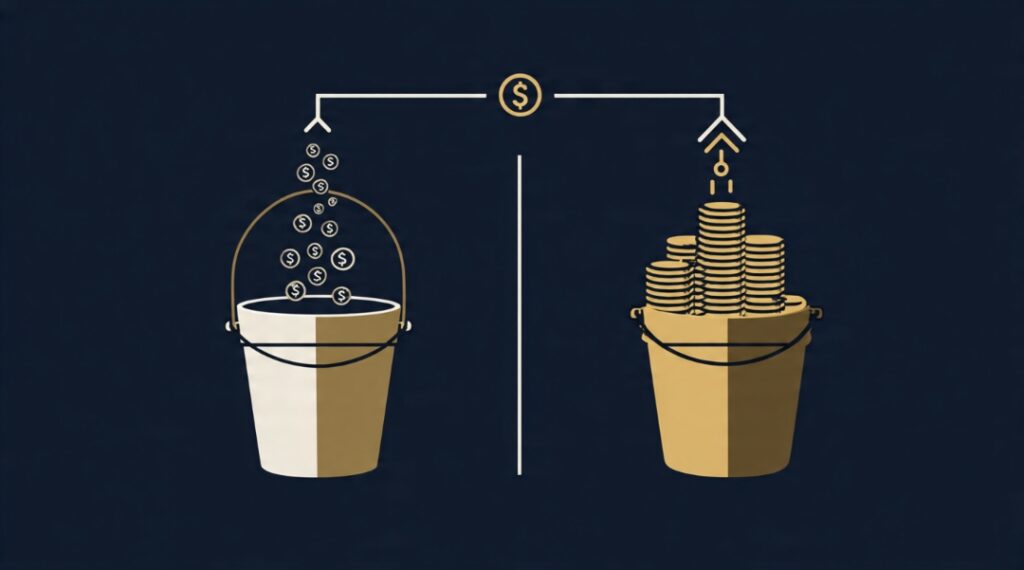
The logic here isn’t about being overly cautious — it’s structural. Without a cash cushion, any real emergency forces a choice between debt or liquidating investments, and liquidating investments rarely happens on your terms. Markets don’t coordinate their downturns around your personal emergencies, and the two have an unfortunate tendency to arrive together during broader periods of economic stress, precisely when investments are most likely to be down.
This connects directly to the sequence explained in cash flow before assets — stabilizing your immediate financial footing has to happen before acquiring anything that carries risk, because a shaky foundation turns every future decision into a forced one rather than a chosen one.
Comparison: Investing Without a Cushion vs Investing After One
| Scenario | No Cash Cushion | 3-6 Month Cushion in Place |
|---|---|---|
| Unexpected Expense Hits | Forced to sell investments or take on debt | Covered from cash reserve, investments untouched |
| Market Downturn Timing | Often forced to sell at a loss during stress | Free to stay invested through volatility |
| Emotional State | Constant low-grade financial anxiety | Freedom to make investment decisions calmly |
| Job Loss Scenario | Portfolio becomes the only fallback | Months of runway before touching investments |
| Long-Term Outcome | Repeated buy-high-sell-low forced cycles | Compounding allowed to work uninterrupted |
What Nobody Tells You
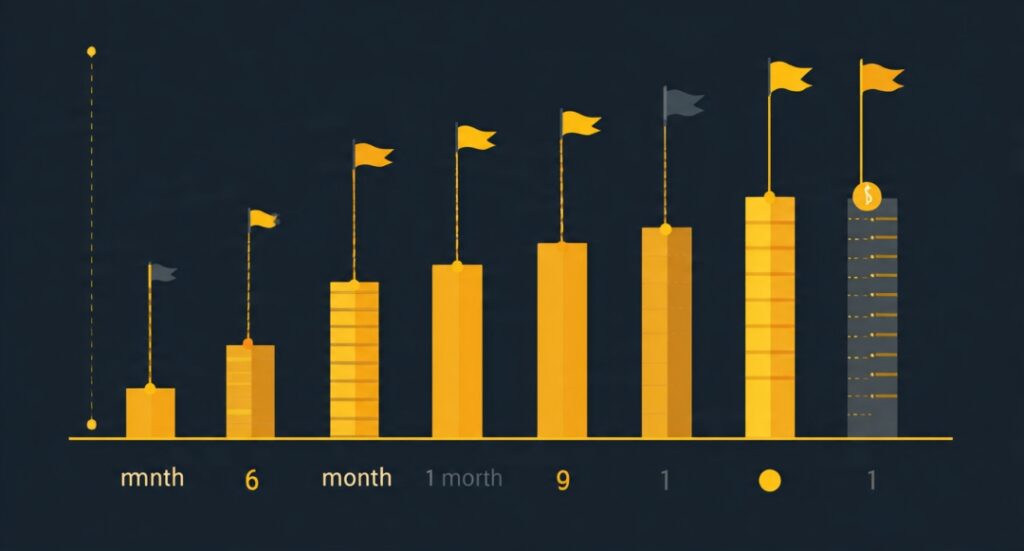
Here’s the part that rarely gets said honestly: the “right” number within the 3-6 month range is less important than actually having a number and treating it as a real milestone rather than an abstract goal you’ll get to eventually. People spend more time debating whether they need 3, 4, or 5 months than they spend actually building toward any of them.
The specific number matters less than the discipline of building it deliberately, the same way most budgeting systems fail not because the framework was wrong, but because the follow-through never happened. Pick a number within the range, automate contributions toward it, and stop relitigating the exact figure every month.
Where the Cushion Should Actually Live
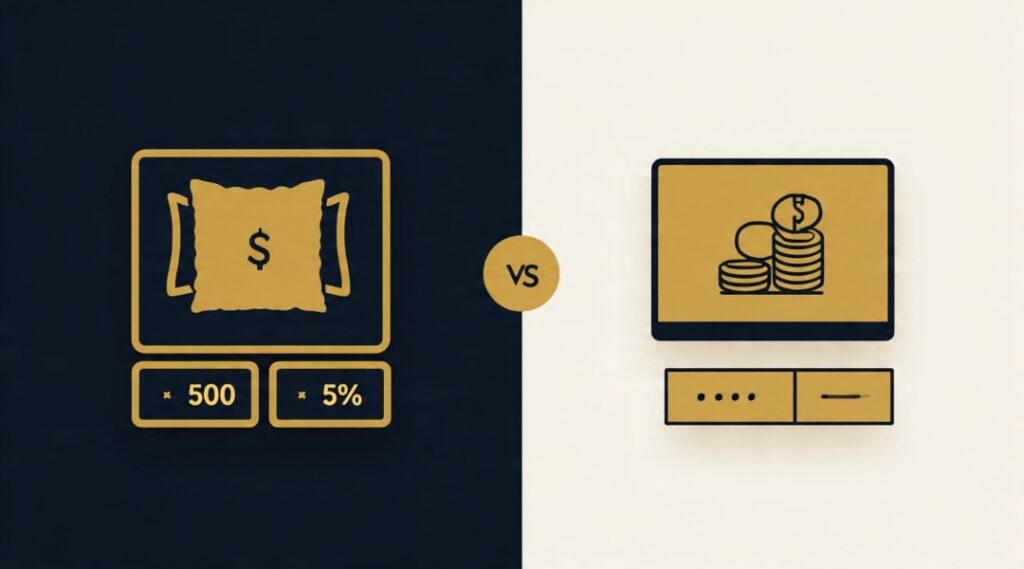
This cash cushion should sit somewhere boring and accessible — a high-yield savings account or equivalent, not the market, and definitely not tied up in anything that requires selling at a specific price to access. The entire point of this money is that it’s available instantly, regardless of what’s happening with valuations that day.
This is where opportunity cost gets misunderstood. Yes, that cash technically earns less than it might in the market long-term. But comparing its “return” to market returns misses the point entirely — its job isn’t growth, it’s guaranteed availability at the exact moment growth-oriented assets are the worst thing to touch.
“You don’t judge a fire extinguisher by its return on investment. You judge it by whether it’s there when the fire starts.”
Can You Invest Small Amounts While Still Building the Cushion?
This is where the strict version of the rule sometimes gets softened reasonably. Some people choose to build the cushion and start very small, automated dollar-cost averaging contributions simultaneously, treating the habit of investing as something worth building early even before the full cushion exists. This can work, provided a genuine minimum baseline — even just one month of expenses — is already sitting in cash first, and the investing amounts stay genuinely small until the cushion catches up.
What doesn’t work is investing a meaningful percentage of income while the cushion sits at zero, hoping to build both simultaneously at equal speed. In practice, that usually means neither goal gets funded seriously, and the first real emergency exposes exactly how thin both were.
Why Compounding Rewards Patience Here Too
Delaying investing by a few months to build a proper cushion feels like lost time to a lot of people, especially once they’ve heard enough about compound interest and the value of starting early. But a portfolio that gets forcibly liquidated during a downturn because there was no cushion loses far more compounding time than a few months of delayed entry ever would.
This ties into the daily compounding habits that actually build wealth — consistency over an uninterrupted timeline matters more than a slightly earlier start date that gets derailed the first time life throws a real curveball at an unprotected portfolio.
Now It’s Your Move
- Calculate your essential monthly expenses — housing, food, utilities, minimum debt payments, transportation — not your full lifestyle spending.
- Multiply by 3 if your income is stable and dual-earner, or by 6 or more if your income is variable or single-earner.
- Open a separate, boring, easily accessible account specifically for this cushion — don’t let it blend into your regular checking account.
- Automate contributions toward that number rather than relying on willpower each month.
- Decide honestly whether to invest small amounts simultaneously, only once at least one month of expenses is already secured in cash.
- Stop relitigating the exact target number once you’ve picked one within the 3-6 month range — consistency matters more than precision here.
- Treat hitting this milestone as the actual starting line for investing, not an optional step you’ll circle back to later.