- A 1% improvement applied daily compounds into roughly 37 times your starting point over a single year — the same exponential math that builds wealth.
- The compound effect is not limited to money. Skill, health, relationships, and habits all follow the identical mathematical pattern.
- Small negative habits compound exactly as powerfully as positive ones, just in the opposite direction.
- The hardest part of this rule is not the math — it’s tolerating months of barely visible progress before the curve becomes obvious.
The 1% rule is deceptively simple to state and genuinely difficult to live by: improve by just one percent each day, and the compounding effect of that tiny improvement produces results that look almost impossible from where you started. This is not motivational language. It is the same exponential math that governs compound interest, applied to skill, health, habits, and virtually every other area of life that responds to consistent, repeated input.
Most people chase dramatic, immediate transformation — the radical diet, the all-or-nothing business launch, the intense short-term effort followed by burnout. The 1% rule works in the opposite direction entirely. It is built on the recognition that tiny, consistent improvements compound into massive results precisely because they are sustainable enough to actually continue for the length of time compounding requires to become visible.
This guide from the Data Pips Team breaks down exactly how this compounding mechanism works outside of pure finance, why it explains both remarkable long-term success and quiet long-term decline, and how to apply it deliberately starting today.

The Math Behind the 1% Rule
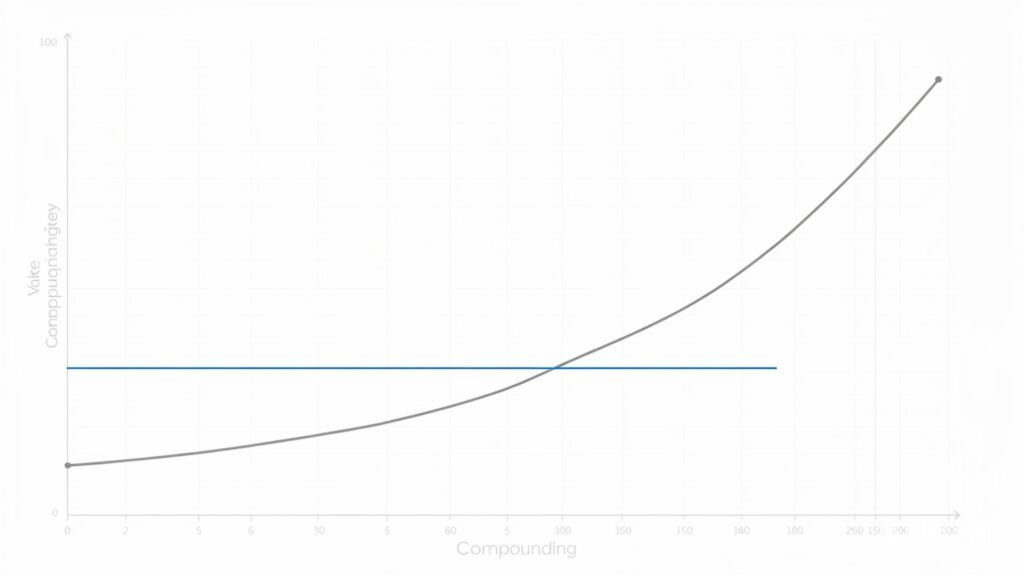
Improving by 1% every single day for a year does not produce 365% total improvement, as simple addition might suggest. Because each day’s improvement compounds on top of all previous improvement, the actual result after one year is approximately 37 times the original starting point — a dramatically larger outcome than linear thinking would predict.
This is the exact mechanism behind compound interest in financial terms — the process where returns generate their own returns over time, meaning growth accelerates rather than staying constant. The same exponential curve applies whether the underlying input is money earning interest, a skill receiving daily practice, or a habit reinforced day after day.
The critical detail most people miss is where the majority of this growth actually happens on the curve. In the early stages — the first weeks or even months — 1% daily improvement looks almost invisible. The dramatic, obvious results cluster heavily toward the later portion of the timeline, which is exactly why so many people abandon consistent improvement efforts right before the compounding curve would have become visible.
The Three Pillars That Make Compounding Actually Work
Three specific ingredients need to be present simultaneously for this kind of compounding to produce real results, whether the domain is financial, physical, or skill-based.
Time as the multiplier. The earlier consistent effort begins, the less total intensity is required to reach a meaningful outcome. Someone who builds a habit early and maintains it for a shorter overall period frequently ends up further ahead than someone who starts later and works harder for longer, simply because compounding rewards duration more than raw intensity.
Consistency as the fuel. Compounding requires steady, repeated input rather than sporadic bursts of effort. A skill practiced inconsistently — heavy effort for two weeks, then abandoned for a month — never builds the continuous curve that produces exponential results. The input has to be regular enough that each day’s small gain has something to compound onto.
Discipline as the shield. The single biggest threat to any compounding process is interruption. Withdrawing accumulated progress — financial savings spent on an impulse purchase, a fitness routine abandoned after a setback, a skill-building habit dropped during a busy period — resets the clock in ways that cost far more than the interruption itself appears to on the surface.
“A 1% improvement feels like nothing on any single day. That feeling is exactly why most people quit before the math has time to work.”
— Data Pips Team
The Compound Effect Is Not Limited to Money
Compounding gets discussed almost exclusively in financial contexts, but the underlying mathematical pattern applies to nearly every domain of human improvement or decline. A skill improved by a small margin daily — through deliberate practice, focused repetition, or incremental learning — produces dramatically larger competence over a year than the same total hours invested sporadically.
This is compounding outside your bank statement — habits, skills, and reputation grow through the exact same feedback mechanism as money, and they stall in exactly the same flat part of the curve.
The same principle works in reverse with equal power. Small negative habits — a slightly poor food choice repeated daily, minutes of avoidable distraction accumulated consistently, small compromises in discipline — compound into significant health, financial, or professional setbacks over the same kind of extended timeframe. The math does not distinguish between positive and negative input; it simply compounds whatever gets fed into it consistently.
The American Psychological Association’s research on habit formation supports this directly, noting that habits form through repeated behavior reinforced over time, with consistency mattering more than the intensity of any individual instance of the behavior.
| Domain | 1% Daily Input | Compounded Result |
|---|---|---|
| Money | Consistent reinvested savings | Exponential wealth growth over decades |
| Skill | Daily focused practice | Mastery that looks sudden from outside |
| Health | Small consistent dietary or activity choices | Significant long-term physical outcomes |
| Negative habits | Small daily compromises | Significant long-term setbacks |
The Founder’s Real Lesson: Financial Planning as an Act of Self-Protection
Financial planning often gets treated as a tedious obligation rather than what it actually is — an act of genuine self-care. A compounded financial cushion, built through consistent small contributions over time, provides real protection during life’s unpredictable moments: medical emergencies, periods of unstable income, or unexpected market downturns.
This connects directly to the discipline required to build an emergency fund — the same consistent, unglamorous contribution pattern that builds skill over a year is exactly what builds genuine financial security. Our complete emergency fund blueprint applies this exact compounding logic specifically to financial protection, transforming money from a recurring source of stress into a stable tool for genuine peace of mind.
Building skill in trading gold and forex markets followed this exact compounding pattern, though it was difficult to recognize in real time. Months of small, consistent improvements in chart reading, risk discipline, and emotional control produced almost no visible change in trading results during that early period — frustrating enough that abandoning the process felt reasonable on several occasions. The visible improvement in consistency and account performance only became obvious well after that quiet period had passed, once the accumulated small daily improvements finally compounded into results that looked, from the outside, like a sudden breakthrough. The breakthrough was never sudden. It was simply the moment the compounding curve became visible.
Why Discipline Matters More Than Motivation in This Process
Motivation predictably fades. The 1% rule cannot rely on it, because the entire mechanism depends on consistency continuing through the long stretch of time before results become obvious — precisely the period when motivation is weakest and discipline has to carry the process instead.
Harvard Business Review’s research on energy management reinforces why systems and structured habits outperform reliance on willpower or motivation alone — sustainable performance comes from managing consistent inputs over time, not from periodic bursts of intense effort followed by exhaustion and abandonment.
This is exactly why interruption is so costly to a compounding process. Our breakdown of the specific mistakes that sabotage compounding covers in detail how seemingly small interruptions — skipping a habit “just this once,” withdrawing savings for a short-term want — quietly reset a process that depended entirely on uninterrupted continuity.

What Nobody Tells You About the 1% Rule
1. The early period feels like proof that the method isn’t working. Because the visible results of compounding cluster so heavily toward the later portion of the timeline, the early months genuinely feel unproductive even when the underlying process is functioning exactly as intended. This feeling is not a signal to stop — it is a predictable, mathematical feature of how compounding curves actually look in their early stages.
2. Comparing your curve to someone else’s visible results is misleading. Observing someone else’s dramatic, visible success captures only the late-stage portion of their compounding curve. It does not show the months or years of invisible, unglamorous consistency that preceded it, which makes the comparison feel discouraging in a way that does not reflect reality.
3. Negative compounding is harder to notice than positive compounding. A 1% daily decline in a habit, relationship, or skill is just as mathematically powerful as a 1% daily improvement, but it tends to go unnoticed for much longer, since each individual day’s decline feels insignificant in isolation. By the time the cumulative effect becomes obvious, significant ground has often already been lost.
4. Interruptions cost more than they appear to in the moment. A single skipped day, a single impulsive financial withdrawal, or a single abandoned practice session rarely feels significant when it happens. The actual cost is not just that single day — it is the broken continuity that often makes resuming the habit considerably harder than maintaining it would have been.
5. The rule works identically regardless of starting point. A common misconception is that compounding only benefits people who already have significant resources, skill, or savings to begin with. Mathematically, the percentage-based nature of compounding means the mechanism works identically at any starting point — the proportional growth rate matters more than the absolute starting size.
Starting Today Matters More Than Starting Big
The most important variable in this entire process is not the size of the starting input. It is simply whether consistent input begins now versus later, because every day of delay is a day of compounding that can never be recovered, regardless of how much intensity gets added afterward.
Whether the starting point is a small daily contribution toward savings, ten minutes of focused skill practice, or a single small improvement to a daily routine, the principle holds the same mathematical weight. Our foundational guide on what compounding actually is covers the broader mechanics this article builds on, and our guide on the 100-day consistency rule provides a practical structure for actually sustaining this kind of daily input long enough for the compounding curve to become visible.
Quick Action Steps: Apply the 1% Rule Starting Today
Step 1: Identify one specific area — a skill, a financial habit, a health routine — where you want to apply consistent daily improvement.
Step 2: Define what a genuinely small, sustainable 1% improvement looks like in that area — small enough that skipping it never feels like a reasonable option due to time or effort constraints.
Step 3: Set up a simple tracking method, even a basic calendar checkmark, to maintain visibility into your consistency over time.
Step 4: Commit to a minimum 90-day period before evaluating results, since the early stages of compounding are mathematically expected to show minimal visible progress.
Step 5: Identify your most likely interruption risk in advance — a specific situation or trigger that has caused you to break consistency before — and create a specific plan to protect against it.
Frequently Asked Questions
What is the 1% rule in compounding?
The 1% rule refers to the principle that improving by a small, consistent margin — roughly one percent — every day compounds into dramatically larger results over time, due to the exponential nature of compounding. A consistent 1% daily improvement can produce roughly 37 times the original starting point after one year.
Does the 1% rule only apply to money and investing?
No. The same exponential compounding mechanism applies to skill development, physical health, habit formation, and many other areas of consistent human effort. The underlying mathematics of compounding does not distinguish between financial returns and other forms of consistent, repeated improvement.
Why does progress feel so slow in the early stages of compounding?
Compounding is mathematically exponential, meaning the majority of visible growth occurs in the later stages of the process rather than evenly throughout. In the early stages, growth is genuinely happening but remains too small to be visually obvious, which is why this period frequently feels unproductive even when the process is working correctly.
Can small negative habits really cause significant long-term damage?
Yes. Negative habits compound through the identical mathematical mechanism as positive ones, just in the opposite direction. A small daily compromise that seems insignificant in isolation can produce substantial long-term consequences once compounded consistently over months or years.
How long does it take to see visible results from the 1% rule?
This varies by domain, but a meaningful window of several months to a year is generally required before compounding produces clearly visible results. Skill-based or health-based compounding may show earlier signs of progress, while financial compounding typically requires a longer timeframe to become dramatically visible.
What is the biggest threat to making the 1% rule work?
Interruption is the most significant threat to any compounding process. Breaking consistency — whether withdrawing savings, skipping practice sessions, or abandoning a habit during a difficult period — resets accumulated progress in ways that cost considerably more than the interruption itself appears to in the moment.
Disclaimer: This article is for educational and informational purposes only and does not constitute financial, health, or professional advice. Individual results from applying consistent habits or financial strategies vary based on personal circumstances and effort. The Data Pips Team makes no guarantees regarding outcomes from applying the principles described in this article.