Key Takeaways
- Motivation is what gets a business started. Discipline is what keeps it running once motivation inevitably fades.
- Inconsistency in a business is almost always a volume problem, not a talent problem — not enough reps, outreach, or effort put in regularly.
- Motivation is genuinely unreliable — it fluctuates with mood, sleep, stress, and circumstances outside your control.
- Discipline doesn’t ask how you feel before showing up. That’s precisely why it produces consistent results motivation can’t match.
- Waiting for motivation to return before doing the work is one of the most common, quietly fatal habits in a struggling business.
- The businesses that survive long enough to succeed are usually run by people who built systems, not moods.
I’ve watched businesses start with genuine excitement — the founder working late nights, posting constantly, reaching out to everyone they could think of — only to go quiet within a few months once the initial burst of energy wore off. The idea wasn’t bad. The execution wasn’t bad. The motivation that fueled the first sprint simply ran out, and nothing was built underneath it to keep the business moving once it did.
This is the actual fork in the road for almost every business that fails to gain traction: not a lack of a good idea, but a reliance on motivation to sustain effort that discipline was always the only real tool for.
Why Motivation Was Never Built to Last
Motivation is emotional and situational by nature. It responds to motivation triggers — a new idea, a recent win, external validation — and it fades just as easily when those triggers disappear. Expecting motivation to reliably carry a business through months or years of unglamorous, repetitive work is expecting an inherently unstable resource to behave like a stable one.
This isn’t a character flaw. It’s simply how motivation functions for almost everyone. The businesses that survive aren’t run by people who never lose motivation — they’re run by people who stopped depending on it being present in order to keep working.
“Motivation is weather. Discipline is climate. One changes daily. The other is what you can actually plan around.”
Why Inconsistency Is a Volume Problem, Not a Talent Problem
When a business feels inconsistent — some weeks producing results, others producing nothing — the instinct is often to question the strategy or the talent behind it. In practice, inconsistency is almost always a volume problem rather than a strategy problem: not enough outreach, not enough content, not enough reps of the core activity that actually moves the business forward.
More repetitions reduce randomness. More consistent output reduces invisibility. More conversations, more pitches, more attempts smooth out the sharp peaks and valleys that make a business feel unpredictable. And the market itself is rarely the limiting factor — one platform, one content style, or one outreach method failing doesn’t mean the whole market has been saturated. It usually just means the volume of genuine effort hasn’t been high enough yet to produce reliable results.
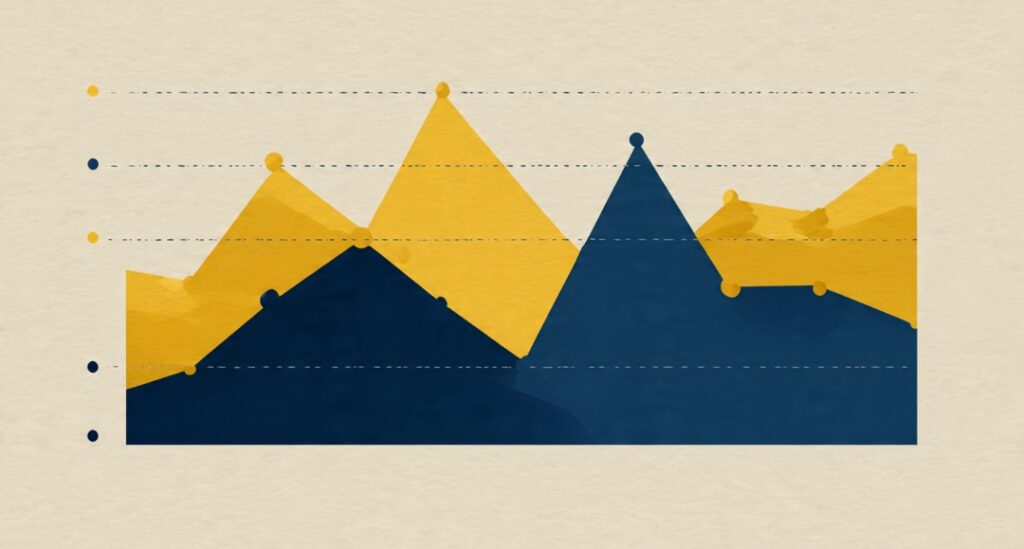
Comparison: Motivation-Driven vs Discipline-Driven Business Building
| Element | Motivation-Driven | Discipline-Driven |
|---|---|---|
| Consistency | Bursts of activity, then long gaps | Steady, predictable output over time |
| Trigger to Work | Feeling inspired or excited | A predetermined schedule or system |
| Response to a Bad Day | Effort drops significantly | Effort continues, possibly at reduced but non-zero output |
| Long-Term Trajectory | Unpredictable, prone to stalling | Compounding, harder to derail |
| Dependence On | Mood, energy, external validation | Systems and pre-committed habits |
What Nobody Tells You
Here’s the part that rarely gets said honestly: successful business owners still lose motivation regularly, often more than people assume. The difference isn’t that they’ve found a way to stay perpetually inspired — it’s that they’ve built systems detailed enough that the business keeps moving even on the days motivation is completely absent. This connects to why discipline functions as a survival mechanism rather than a personality trait some people are simply born with — it’s built through repeated practice of showing up specifically on the days it would be easier not to.
Waiting for motivation to return before resuming the work is one of the most common, quietly fatal patterns in a struggling business. Weeks turn into months, and the business doesn’t fail dramatically — it just slowly stops moving, one skipped day at a time, each one individually justified by low motivation that never fully returns on its own.
Building Systems That Don’t Require Motivation
The practical answer to this problem isn’t finding a way to feel more motivated — it’s designing your business routine so that motivation is no longer a required input. A fixed number of outreach messages sent daily, a set content schedule, a specific block of hours dedicated to the highest-value task, all regardless of mood, replaces the unreliable trigger of motivation with a reliable, repeatable structure.
This mirrors the daily compounding habits that actually build meaningful change — small, consistent actions compound far more reliably than occasional large bursts of motivated effort, precisely because they don’t depend on catching a good mood to happen at all.
“You don’t need to feel ready. You need a system that doesn’t ask whether you feel ready before it runs.”
Why This Matters More in the Early, Unglamorous Stage
Discipline matters most precisely when a business offers the least external reward — the early stage, when results are slow, feedback is sparse, and there’s little to celebrate yet. This is closely tied to choosing discomfort as the actual path to growth — the businesses that survive this stage are usually run by people willing to keep showing up through it, specifically because they’d already accepted that motivation wasn’t going to reliably show up to help them.
This same pattern shows up in the mindset that built empires from zero — nearly every account of building something from nothing includes long stretches where motivation was genuinely absent, and discipline alone carried the business through until results finally arrived.
How Discipline Compounds Into Something Bigger Than Willpower
Discipline sustained long enough eventually starts to feel less like forced effort and more like identity — the version of consistency described in the water-drop-and-stone lesson on consistency, where a single small action does nothing dramatic on its own, but the accumulated repetition of that same action eventually reshapes something solid. This connects closely to grit as a studied trait — sustained passion and perseverance toward long-term goals, distinct from short bursts of motivated enthusiasm.
Over enough time, showing up regardless of motivation stops requiring the same conscious willpower it did at the start. It becomes closer to habit — automatic, less emotionally taxing, and far more resilient to the natural fluctuations that would have derailed a purely motivation-dependent approach.
Why Understanding Motivation Types Still Matters
None of this means motivation is worthless — it can still play a role, particularly in the earliest spark that gets a business started in the first place. Understanding the difference between intrinsic and extrinsic motivation helps explain why relying on external validation, like praise or visible early wins, tends to be especially unreliable — those external triggers are the first to disappear during a slow period, precisely when discipline needs to carry the business instead.
This connects to real resilience versus simply pushing through blindly and the daily thinking patterns of consistently successful business owners — both describe a relationship with effort that doesn’t depend on external circumstances cooperating before showing up is worth doing.

Now It’s Your Move
- Identify the core activity that actually moves your business forward, and track how consistently you’ve been doing it.
- Build a fixed, repeatable schedule for that activity that doesn’t depend on feeling motivated to execute.
- Notice when you’re waiting for motivation to return before resuming work, and treat that as a signal to build a system instead.
- Increase your volume of core activity before assuming your strategy or market is the problem.
- Expect motivation to fade regularly, and plan your systems around that reality rather than being surprised by it.
- Track small, consistent actions over time rather than measuring progress only by occasional big bursts of effort.
- Review your last slow period and identify whether discipline or motivation was actually carrying you through it.