For a few years the story of AI was simple: bigger is better. More parameters, more data, more compute, more capability. That story is quietly being rewritten by a class of models small enough to run on the phone in your pocket — no data center, no internet connection, no per-request bill. They’re called small language models, and the reason they matter isn’t that they’re impressive for their size. It’s that “small” stopped meaning “dumb.” A model that fits in the space of a single song on your phone can now match what a giant model could do just a couple of years ago on a huge range of everyday tasks. Here’s why that shift changes everything about where AI actually lives.
What Is a Small Language Model?
A small language model (SLM) is the compact sibling of the systems most people already know. It’s built on the same underlying transformer architecture as its larger cousins, just with far fewer parameters — the internal numeric “settings” a model learns during training, closely related to the tokens and context windows a model works with. Where a frontier model might carry hundreds of billions or even trillions of parameters, an SLM typically lands somewhere between roughly 100 million and 7 billion. There’s no official cutoff; researchers who survey the field tend to converge on that range as a working convention rather than a hard rule. And crucially, “small” is a moving target — as the frontier keeps growing, yesterday’s “large” quietly becomes tomorrow’s “small.” If you’re new to the underlying technology, our explainer on what a large language model actually is lays the groundwork this article builds on.
SLMs vs LLMs: What You Trade and What You Gain
The difference comes down to parameter count and everything that follows from it. Large models hold vast world knowledge, handle complex multi-step reasoning, and perform well across many domains without task-specific tuning. SLMs give up some of that raw capacity — but in exchange they win decisively on speed, cost, privacy, and the ability to run almost anywhere. This is the same efficiency-versus-capability tension you see in architectural ideas like mixture-of-experts models: the goal isn’t the biggest possible model, it’s the right amount of capability delivered as efficiently as possible. For a huge share of real-world tasks — classification, extraction, summarization, autocomplete, intent detection — the smaller model isn’t a compromise at all. It’s simply the better-engineered choice.
How Do You Shrink a Model Without Making It Useless?
Three techniques do most of the heavy lifting. The first is knowledge distillation, where a large “teacher” model trains a smaller “student” to reproduce its behavior — compressing much of the capability into a fraction of the size. The second is quantization, which reduces the numerical precision of the model’s weights so it takes up dramatically less memory; the more aggressively a model is quantized, the humbler the hardware it can run on, at the cost of a slight quality dip. The third, and maybe the most surprising, is data quality over raw quantity. Microsoft’s Phi line famously argued that training on carefully curated, “textbook-quality” data lets a small model punch far above the size its parameter count would predict. Together these methods are the reason a modern 3-billion-parameter model can rival what took ten times the size just a few years earlier — a genuine understanding of how AI models learn during training makes clear why the quality of the teaching matters as much as the size of the student.

Why Running AI On-Device Changes Everything
The real magic of SLMs isn’t just their size — it’s what their size makes possible. When a model is small enough to run locally on your phone or laptop instead of a remote server, four things change at once:
- Privacy: the model runs on your device, so your text, notes, health data, or work secrets never have to leave it. For sensitive contexts, that’s not a minor perk — it’s a fundamentally different trust model.
- Offline capability: no internet, no problem. A local model still answers on a plane, in a dead zone, or in an air-gapped environment where cloud AI simply can’t reach.
- Low latency: there’s no network round-trip adding hundreds of milliseconds per request, so for many tasks a local model actually feels faster than a far more powerful cloud one.
- Cost: a local model doesn’t meter each request. You run it as much as you want without watching an API bill climb with every query.
This is exactly why edge computing and on-device AI have become such a focus for the whole industry — the value isn’t only in what the model can do, but in where it can do it.
The On-Device Lineup: Who’s Building These?
The supply has caught up with the ambition. As of 2026, there’s a deep bench of capable on-device model families to choose from: Microsoft’s Phi series, Google’s Gemma, Meta’s Llama small variants (down to around 1–3 billion parameters), Alibaba’s Qwen family, and Mistral’s compact Ministral models, among a growing list of others. Many of these run directly on a modern smartphone’s neural processing unit — the dedicated AI chip now built into flagship phones — with no internet connection required. Apple, Google, and Qualcomm all now ship frameworks that let these models run locally on consumer hardware as a native platform feature, not an experiment. The ecosystem has clearly bifurcated into general-purpose small models and highly specialized ones tuned for narrow jobs like math, code, or function-calling.

Where SLMs Still Fall Short
None of this means small models replace large ones — being honest about the limits is what separates a useful understanding from hype. On complex, multi-step reasoning, rare specialized knowledge, or very long documents, frontier models are still clearly ahead. An SLM asked to do genuinely hard logic will often stumble where a large model wouldn’t. The practical rule that’s emerged is refreshingly simple: routine work and anything privacy-sensitive goes to the small local model; genuinely hard reasoning gets escalated to a big one. They’re not really rivals — they’re different tools for different jobs, and the smartest systems use both.
The Agentic Angle: SLMs as the New Default
Here’s where the shift gets most interesting. In 2025, NVIDIA researchers published an argument that landed with real weight in the field: small language models, they contended, are the future of agentic AI. The logic is mechanical, not aesthetic. Inside an AI agent’s loop — parsing an input, calling a tool, formatting a structured result — the work is usually repetitive and narrow, and rarely needs a frontier model’s full horsepower. A small model running locally can handle the bulk of those steps faster, cheaper, and more privately, escalating to the cloud only for the genuinely hard turns. This “SLM-first” routing pattern is becoming a default architecture, and it pairs naturally with techniques like fine-tuning a small model on a narrow domain, where a well-tuned SLM can actually beat a much larger model used without any tuning on that specific task.
The Runtimes Making It Practical
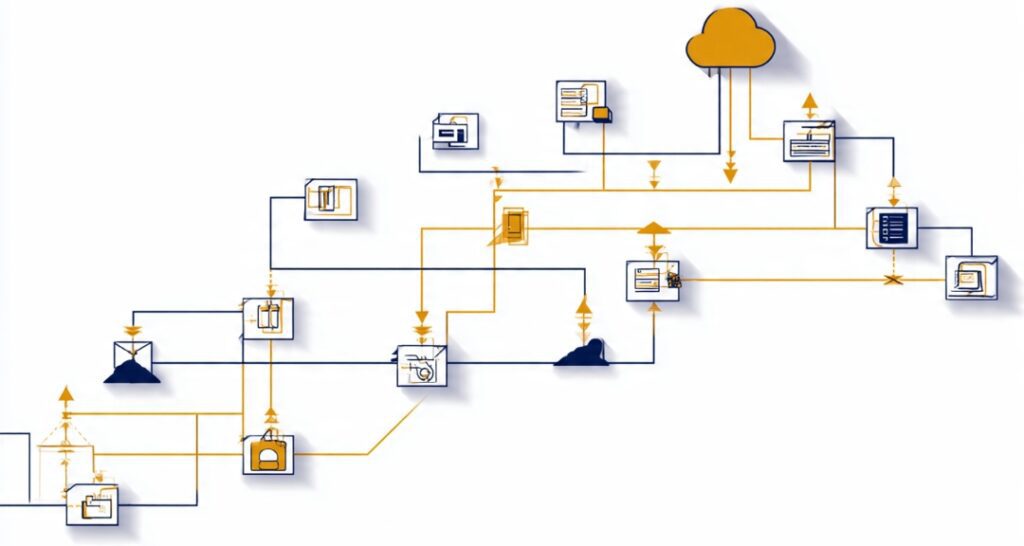
Capable models alone aren’t enough — you need software that makes running them on ordinary hardware genuinely easy, and that layer matured fast. Tools that let anyone download and run a local model with a single command have removed most of the old infrastructure headache, and inference backends optimized specifically for consumer chips (like Apple Silicon) have pushed local speeds to genuinely practical levels. The result is that a developer without any specialized machine-learning infrastructure can now build a real, production-grade AI feature that runs entirely on a user’s device. That accessibility is arguably as important to the on-device revolution as the models themselves. This all sits within the broader family of tools you can explore in our overview of what foundation models are, since many SLMs are compact members of exactly that family.
Why This Really Is the Future of On-Device AI
The trend underneath all of this is that frontier capability and everyday usefulness have quietly decoupled. The smartest model is rarely the one you actually need for the task in front of you. As small models keep closing the quality gap, running near the level of what were considered large models only a couple of years ago, the deciding question is shifting from “which model is smartest” to “which model is cheap, fast, and private enough to run this particular job at the scale I care about.” For an enormous share of real-world AI — the autocomplete, the translation, the summarization, the voice input, the agent loops — the answer increasingly lives on the device, not in the cloud. That’s not a downgrade from the AI future people imagined. It might be the version that actually reaches everyone.
- A small language model (SLM) is a compact transformer, typically 100M–7B parameters — and “small” is a moving target that shifts as the frontier grows.
- SLMs trade some reasoning and world knowledge for major wins in speed, cost, privacy, and the ability to run locally.
- Distillation, quantization, and high-quality training data are what let small models rival much larger ones from a few years ago.
- Running on-device unlocks four things at once: privacy, offline use, low latency, and no per-request cost.
- The practical rule: routine and privacy-sensitive work goes to a local SLM; genuinely hard reasoning escalates to a large cloud model.
- SLM-first routing is becoming a default architecture for AI agents, where most steps don’t need a frontier model.
Frequently Asked Questions
What is a small language model (SLM)?
A small language model is a compact, transformer-based AI model — typically between roughly 100 million and 7 billion parameters — designed to run efficiently on limited hardware like phones, laptops, and edge devices without needing cloud infrastructure.
How is a small language model different from a large language model?
The main difference is size. LLMs have billions to trillions of parameters and generally need powerful cloud hardware, while SLMs are compact enough to run locally. SLMs are faster, cheaper, and more private, but have less general knowledge and weaker complex reasoning.
Can small language models really run on a phone?
Yes. Compact models in the 1–3 billion parameter range can run directly on a modern smartphone’s neural processing unit with no internet connection, which is how many on-device translation, autocomplete, and voice features now work.
How do small models achieve so much with fewer parameters?
Through techniques like knowledge distillation (a large model teaching a smaller one), quantization (reducing numerical precision to save memory), and training on carefully curated high-quality data rather than just more data.
Are small language models replacing large ones?
No — they’re complementary tools. Small models handle the bulk of routine, latency-sensitive, and privacy-sensitive work locally, while large cloud models are reserved for genuinely hard reasoning, rare knowledge, and long documents.
Why are SLMs considered ideal for AI agents?
Most steps inside an agent’s loop — parsing input, calling tools, formatting output — are narrow and repetitive, rarely needing a frontier model. A small local model handles those steps faster, cheaper, and more privately, escalating only the hard turns to the cloud.
What are the main benefits of on-device AI?
Privacy (data never leaves the device), offline capability (works without internet), low latency (no network round-trip), and cost efficiency (no per-request billing), which together make on-device AI attractive across many industries.