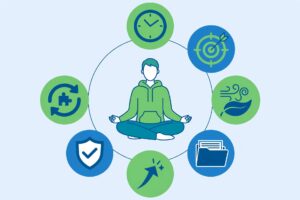
Poor mental wellbeing rarely arrives as one dramatic moment. It usually shows up as a slow drift: you sleep a little worse, you stop replying to messages, small tasks start to feel heavy, and one day you realise you haven’t felt like yourself in weeks. Here are five common signs, what each one looks like in ordinary life, and what you can do about it. None of this is a diagnosis. Only a qualified professional can tell you what is going on for you. But knowing the signs helps you notice the drift early, while it is still easy to act.
What “Mental Wellbeing” Actually Means
The World Health Organization describes mental health as a state of mental well-being that enables people to cope with the stresses of life, realise their abilities, learn and work well, and contribute to their community. It also stresses that mental health sits on a continuum, experienced differently from one person to the next. In plain words, wellbeing is not “no illness”. It is how well you can handle life as it comes.
That framing matters because it removes the idea that you are either fine or broken. Most people move along that continuum all the time. A hard month, a loss, a long stretch of pressure at work can push anyone toward the low end. What counts is whether you notice, and what you do next. The general concept of mental health covers emotional, psychological and social wellbeing together, and all three can slip without a single clear cause.
Sign 1: Your Mood Stays Low, Flat or Irritable
Everyone has bad days. The sign to watch for is a mood that stays down for most of the day, most days, for weeks. The Mayo Clinic lists feeling sad or down, extreme mood swings between highs and lows, and excessive fears, worries or guilt among the common signs of mental health trouble.
In daily life this can look like snapping at people over small things, feeling numb instead of sad, or a constant background worry you can’t name. Irritability is the one people miss most, because it doesn’t feel like a mental health issue. It just feels like everyone is annoying. When your patience disappears for no clear reason and stays gone, that is worth paying attention to.
Sign 2: Sleep and Energy Go Off Track
Sleep is often the first thing to move. You may lie awake with your mind running, wake at 4 a.m. and can’t get back to sleep, or sleep ten hours and still feel flat. Mayo Clinic lists significant tiredness, low energy and problems sleeping as typical signs.
The trap is that poor sleep makes everything else worse. A tired mind handles stress badly, which raises stress, which wrecks the next night’s sleep. If you’ve had broken sleep or heavy fatigue for more than a couple of weeks, treat it as information, not as a personality flaw.
Sign 3: Your Mind Feels Foggy and Simple Tasks Feel Heavy
This one hits people who pride themselves on being capable. You re-read the same paragraph three times. You forget why you walked into a room. Replying to a simple message feels like a big job, so you leave it for days. Mayo Clinic names confused thinking and reduced ability to concentrate, and the National Institute of Mental Health points to concentration problems and an inability to complete routine tasks as reasons to talk to a provider if they last two weeks or more.
If you work for yourself or run a business, this sign can hide behind “I’m just busy”. The difference is that busy people still finish things. Fog means the same amount of work suddenly takes twice the effort.
Sign 4: You Pull Away From People and Things You Used to Enjoy
Cancelling plans once is normal. Cancelling everything, and feeling relief each time, is a pattern. You may stop calling friends, skip the hobby you used to love, or sit through family gatherings feeling like you’re behind glass. Mayo Clinic lists withdrawal from friends and activities as a common sign, and NIMH lists loss of interest in activities you normally enjoy.
Withdrawal feels protective in the moment, since being alone takes less energy. But isolation takes away the very things that normally prop you up. The NHS five steps to mental wellbeing start with connecting with other people for exactly this reason.
Sign 5: Your Coping Is Slipping
When stress goes up and your usual ways of handling it stop working, people reach for quick relief. More scrolling at 2 a.m., more caffeine, more alcohol, skipped meals or constant snacking, more anger than the situation deserves. Mayo Clinic lists an inability to cope with daily problems or stress, major changes in eating habits, excessive anger, problems with alcohol or drug use, and unexplained aches such as stomach pain, back pain or headaches.
That last one surprises people. Stress and low mood often show up in the body first. If your doctor can’t find a physical cause for repeated headaches or stomach trouble, it is fair to ask whether stress is part of the picture.
Find the Source Before You Try to Fix It
When I notice my own mood is off, the mistake I used to make was jumping straight to fixing it: push harder, distract myself, force a positive attitude. It rarely worked, because I hadn’t asked a basic question first: why is it off? Over time I started sorting it into four buckets. Is it my own negative thinking, a loop of overthinking, one specific person, or one specific situation?
The answer changes the response completely. If it’s overthinking, more information won’t help, and writing the thoughts down or going for a walk does more. If it’s a person, the fix is a boundary or a conversation, not a meditation app. If it’s a situation, like a deadline or money pressure, the useful move is a plan. Treating all four the same is like taking the same medicine for every symptom. Naming the source first turns a vague heavy feeling into something you can actually work on, and that is the first step before any of the habits below.
This isn’t a replacement for professional help. It’s a way to understand yourself well enough to describe what is happening, which also makes any conversation with a doctor or therapist more useful.
What You Can Do This Week
None of these are cures. They are small, low-effort steps that support wellbeing, drawn from guidance by NIMH and the NHS:
- Move a little every day. NIMH notes that even 30 minutes of walking can lift mood and improve health.
- Protect your sleep. Keep a regular schedule and cut screens before bed.
- Contact one person. One message or one short call counts. You don’t need a long talk.
- Shrink your to-do list. Pick the one task that matters today. The goal is to finish something, not everything.
- Limit your quick fixes. Notice how much caffeine, alcohol or late-night scrolling you use to get through the day.
If the overload feels like it comes from constant screens and notifications, taking back your attention from dopamine overload is a practical place to start. If you feel pulled in too many directions, the seven areas of life give you a simple way to check which area is draining you, and the seven self-management skills show how to manage your time and emotions when things get heavy.
Comparing yourself with other people’s highlight reels makes a low mood worse, so it helps to read about the comparison trap. And if low confidence is part of what you feel, how to build self-confidence, how to kill self-doubt and real resilience cover the next steps.
When to Talk to a Professional
NIMH advises contacting a healthcare provider if symptoms such as sleep difficulty, appetite changes, concentration problems, loss of interest, irritability or restlessness last two weeks or longer. Mayo Clinic’s advice is simple: if you have any signs of mental illness, see your primary care provider or a mental health professional.
Don’t wait for it to get “bad enough”. Early support is easier and usually shorter than late support. If you ever have thoughts of harming yourself, or you are worried about someone else’s safety, get help immediately. In the US you can call or text 988, the Suicide & Crisis Lifeline, free and available 24/7, or call your local emergency number. Outside the US, contact your local emergency services or a crisis line in your country.
Key Takeaways
- Poor mental wellbeing is usually a gradual drift, not a sudden crash, so the early signs are easy to explain away
- The five signs that matter most: a mood that stays low or irritable, disrupted sleep and energy, foggy thinking, withdrawal from people and interests, and slipping coping habits
- One bad day is normal. Signs that last two weeks or more deserve a conversation with a professional
- Working out why your mood is off, whether thoughts, overthinking, a person or a situation, makes any next step more effective
- Self-help habits support wellbeing but don’t replace professional care when symptoms persist
Frequently Asked Questions
What are the first signs of poor mental wellbeing?
Early signs are usually small changes in sleep, energy, mood and motivation: sleeping worse, feeling more irritable, losing interest in things you normally enjoy, or finding simple tasks harder than usual. They are easy to dismiss at first, which is why noticing a pattern over a couple of weeks matters.
How do I know if it’s stress or something more serious?
Stress usually has a clear cause and eases when the pressure does. If low mood, sleep problems or loss of interest continue for two weeks or more, or get in the way of work, relationships or daily tasks, it is worth speaking to a doctor or mental health professional, who can assess what is going on.
Can poor mental wellbeing cause physical symptoms?
Yes. Mayo Clinic lists unexplained stomach pain, back pain and headaches among the possible signs. If a doctor has ruled out a physical cause, stress or low mood may be playing a part, and it’s worth mentioning to them.
Please note: this article is general information, not medical advice or a diagnosis.
If you are struggling or in crisis, contact a doctor or mental health professional, or call or text 988 in the US or your local emergency number.
About the Author
Shurah writes DataPips on his own, with a background in trading and building businesses rather than clinical training. The pieces here come from research and from lessons he has learned in practice, so treat them as shared experience, not professional guidance.