Take two identical bottles of water. Put one in a dusty corner shop and the other in the minibar of a five-star hotel. Same water, same molecules, yet one sells for pocket change and the other for the price of a meal, and nobody storms the front desk in outrage. This is the entire secret of pricing hiding in plain sight: the number a person is willing to pay has almost nothing to do with what the thing cost to make, and almost everything to do with what is happening in their head at the moment they decide.
Most business owners price like accountants. They add up their costs, tack on a margin, and call it a day. It feels safe and logical, and it quietly leaves enormous amounts of money on the table, because the customer was never doing cost-plus math in the first place. They were feeling their way to a decision. Understanding how they feel their way there is one of the most profitable skills an owner can develop, and it starts with a single uncomfortable idea.
Price Is a Story, Not a Calculation
Here is the shift. To a customer, a price is not a measure of your costs. It is a signal, a piece of information about what the product is worth, who it is for, and what kind of experience to expect. The number itself communicates before the product ever gets a chance to.
Behavioural economists have a name for the reference point people quietly measure against, the anchor. We rarely judge a price in absolute terms; we judge it against whatever comparison is nearby. Nine dollars feels expensive next to a free option and cheap next to a ninety dollar one, even when the product is unchanged. This is why the same coffee feels like a bargain in one setting and a rip-off in another. The coffee did not move. The story around it did. If you have ever wondered why customers barely blinked at a price you were nervous to charge, this is usually the reason, and it is closely tied to why perceived value shapes how a business is treated.
The Levers That Move Willingness to Pay
Once you accept that price is psychological, a whole toolkit opens up. None of these are tricks to deceive people; they are ways of framing genuine value so it is perceived accurately instead of undersold. Used honestly, they help a fair price feel fair.
Anchoring: set the reference first
Show the expensive option before the one you expect most people to buy. A premium tier at the top does not just exist to sell itself; it makes everything beneath it look reasonable by comparison. Restaurants know the most expensive dish on the menu often is not meant to sell, it is meant to make the second-most-expensive look sensible. Whatever number a customer sees first becomes the ruler they measure the rest against.
The decoy effect: make one option obviously smart
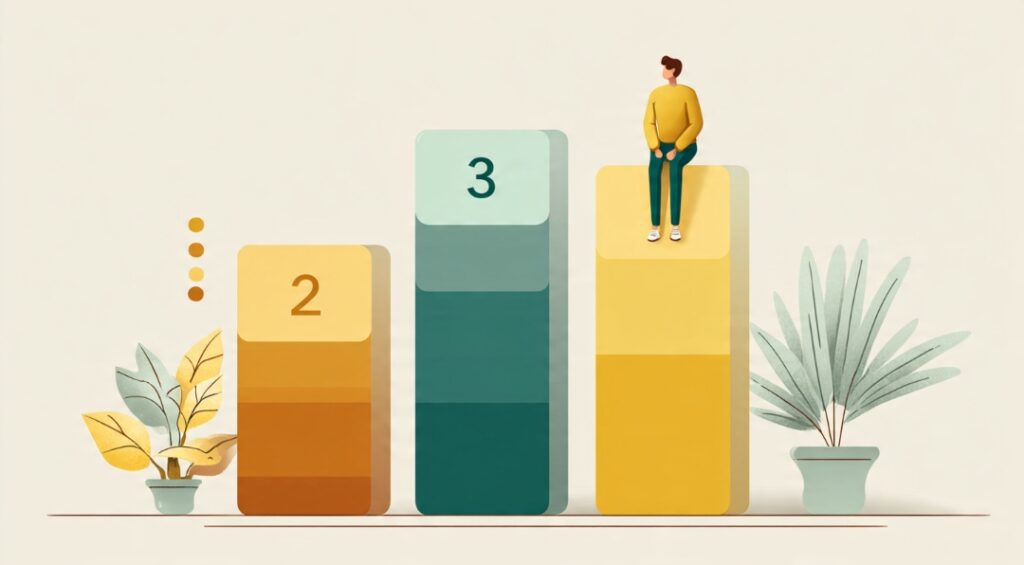
Offer a small for a certain price and a large for only a little more, and the large suddenly feels like a steal, so people trade up. Add a deliberately unattractive middle option and you can steer buyers toward the choice you want them to make, not by force, but by making the maths feel obvious. This is the decoy effect, and it is why three-tier pricing is so common: the tiers are designed to make one of them feel like the clever pick.
Charm pricing: the psychology of the ending
Prices ending in nine or ninety-nine consistently outperform round numbers in many contexts, a pattern known as psychological pricing. Part of it is that we read left to right, so a number feels meaningfully smaller than the round figure just above it. But there is a twist worth knowing: round, clean numbers can actually signal premium quality and confidence. Luxury brands rarely price at ninety-nine, because a clean number says “we do not need to nudge you.” The ending you choose is itself a message about your positioning.
Loss framing: people hate losing more than they love gaining
“Do not miss out” tends to move people more powerfully than “come and get it,” because the pain of a potential loss looms larger than the pleasure of an equivalent gain, a principle called loss aversion. Genuine scarcity, a real deadline, a truly limited run, sharpens this. The critical word is genuine: manufactured fake urgency erodes trust fast, and customers have become very good at spotting it.
Why the Container Changes the Price
Return to the hotel minibar. The water costs more there for reasons that have nothing to do with the water and everything to do with context, and context is something you can deliberately build. The setting, the packaging, the brand, the service around a product, all of it reshapes what the buyer believes they are getting.
A designer who delivers work through a polished process, clear communication and a confident brand can charge multiples of what an equally skilled designer charges while working out of a chaotic inbox. The underlying skill is similar; the perceived value is not. This is the difference between competing on price and competing on positioning, and it is why the least sustainable way to win is to simply be the cheapest, a trap explored in building on connection rather than raw price. When you improve the container, the story, the experience, the trust, you are not fooling anyone. You are genuinely delivering more, and the price is allowed to reflect it.
The Cost of Being Too Cheap
New business owners almost always price too low, and they do it out of fear, fear that a higher number will scare customers away. What they miss is that a low price carries its own message, and often the wrong one.
Price too low and a segment of buyers will assume the quality is poor, because in their mind cheap equals worse. You will also attract the most difficult, least loyal customers, the ones shopping purely on price, who will leave the moment someone undercuts you by a fraction. Meanwhile you exhaust yourself doing high volume at thin margins, with no room to reinvest in the very things that would let you charge more. Underpricing is not humility; it is a slow trap. The healthier path is understanding the small set of numbers that actually drive a service business, which is laid out in the four numbers that can double any service business. Confidence in your price is not arrogance, it is a signal customers read as quality.

Value-Based Pricing: The Grown-Up Approach
The most powerful pricing philosophy flips the entire cost-plus mindset on its head. Instead of asking “what did this cost me, plus a margin?”, you ask “what is this worth to the customer?” This is value-based pricing, and it is how the highest-margin businesses in the world operate.
Consider a piece of software that costs almost nothing to deliver to one more user but saves a company thousands of hours a year. Its price is anchored to the value it creates, not the cost of running it. The same logic applies to a freelancer whose work generates real revenue for a client, or a consultant whose advice prevents a costly mistake. When your price is tied to the outcome you produce rather than the hours you put in, you escape the ceiling that hourly, cost-based thinking imposes. The question stops being “how much did this take me?” and becomes “how much is this result worth to them?” That single reframe is often the gap between a business that scrapes by and one that thrives, and it connects directly to how owners are taught to think about money differently.
Where Psychology Becomes Manipulation
All of this comes with a hard line, and crossing it is bad business as well as bad ethics. Pricing psychology is legitimate when it frames real value so customers perceive it accurately. It becomes manipulation the moment it is used to make people pay for value that is not there.
Fake countdown timers that reset when you refresh. Invented “original” prices that were never charged, so the discount is a lie. Bait pricing that hides the real cost until checkout. These tactics can lift a single sale, and they poison everything after it. Customers who feel tricked do not come back, they warn others, and in a connected world that reputation spreads fast. The durable version of pricing is honest framing of genuine worth. It respects the customer’s intelligence, and it is the only kind that compounds over years instead of burning out after one clever quarter. There is a real superpower in operating this way, closely related to why transparency builds trust in business.

How to Actually Apply This
Theory is useless without a move you can make on Monday. Here is the practical distillation.
- Stop pricing from your costs alone. Costs set your floor, not your price. Start asking what the outcome is worth to the buyer.
- Offer options, not an ultimatum. Two or three tiers turn “yes or no?” into “which one?”, and let anchoring and the decoy effect work in your favour.
- Lead with your premium. Present the highest tier first so it frames everything below it as reasonable.
- Invest in the container. Packaging, process, communication and brand are not fluff, they are perceived value, and perceived value is real value to the buyer.
- Raise prices before you feel ready. Most owners are charging less than the market would happily bear. Test a higher number; you can always adjust.
- Keep it honest. Frame genuine worth, never fabricate it. The trust you protect is worth more than any single sale.
The through-line is simple. People do not pay what a product costs; they pay what it is worth to them in the moment they decide, and that worth is shaped by context, comparison and confidence, all of which you can influence honestly. Master that, and you stop being a price-taker in your own business and start setting the terms, which is exactly the mindset shift at the heart of thinking like an owner rather than an operator waiting to be told the going rate.
🔑 Key Takeaways
- Price is psychological, not arithmetic. Willingness to pay is driven by context and comparison, not your production cost.
- Anchoring rules perception. The first number a customer sees becomes the ruler they measure every other price against.
- Framing tools are legitimate when they help customers perceive genuine value accurately, tiers, decoys, charm pricing and honest scarcity.
- The container changes the price. Packaging, process, brand and experience genuinely raise what a product is worth to the buyer.
- Too cheap is a trap. Low prices signal low quality, attract disloyal buyers, and starve you of margin to reinvest.
- Value-based beats cost-plus, and honesty is the line, framing real worth builds a business that compounds; deception burns it down.
Frequently Asked Questions
Why are people willing to pay more than a product costs to make?
Because buyers do not price things by production cost, they price by perceived value in the moment of decision. Context, comparison, brand, convenience and emotion all shape what a product feels worth. The same item can command very different prices in different settings, which is why cost is only a floor, not the true price.
Is pricing psychology manipulative or unethical?
It depends entirely on how it is used. Framing genuine value so customers perceive it accurately is legitimate and helpful. Using the same techniques to make people pay for value that does not exist, through fake discounts or false urgency, is manipulation and it damages trust and long-term reputation.
What is anchoring in pricing?
Anchoring is the tendency to judge a price against a nearby reference point rather than in absolute terms. If a customer sees an expensive option first, everything cheaper feels reasonable by comparison. Businesses use this by presenting a premium tier before the option they expect most people to buy.
Does charm pricing, ending in 99, actually work?
In many everyday and value-focused contexts, yes, prices ending in nine tend to outperform round numbers, partly because we read left to right and the figure feels smaller. However, clean round numbers can signal premium quality, which is why luxury brands often avoid the 99 ending. The right choice depends on your positioning.
What is value-based pricing?
It is pricing based on what your product or service is worth to the customer, rather than on what it costs you to produce plus a margin. It ties your price to the outcome or value you create, which allows much higher margins, especially for software, expertise and results-driven services.
Why is pricing too low a mistake?
A low price can signal poor quality, attract price-focused customers who show little loyalty, and leave you with margins too thin to reinvest or grow. Many owners underprice out of fear, when a confident, fair price is often read by customers as a sign of quality and reliability.
How do I raise my prices without losing customers?
Raise them alongside a clear improvement in the value you deliver, better process, communication, packaging or outcomes, and present the increase confidently rather than apologetically. Offering tiered options also softens the impact, letting price-sensitive buyers choose a lower tier while others pay for more value.
⚠️ Disclaimer: This article is for educational and informational purposes only and does not constitute financial, legal or professional business advice. Pricing outcomes vary widely by industry, market, region and customer base, and the examples here are illustrative and simplified. Consumer protection and advertising laws, including rules on displaying reference or “original” prices and on urgency claims, differ by jurisdiction, ensure any pricing or promotional practice complies with the laws that apply to you. No specific revenue or business result is promised or implied.