Here is a scene every trader knows. The session opens, price rips hard in one direction, and it looks obvious. A clean breakout. You jump in so you do not miss it. And then, almost the moment you are filled, price stops, turns, and runs the other way, straight through your stop, and keeps going without you. That first move you trusted was a lie. It had a job, and the job was to trap you. In ICT terms, that lie has a name: the Judas Swing.
The Judas Swing is the fake opening move that smart money uses to fool retail traders at the start of a session before the real move begins. Once you understand it, the morning stops looking random and starts looking almost scripted, because in a sense it is. Learn to spot it and you flip from being the one who gets trapped to the one who waits for the trap to spring and then trades the real move. That single shift is one of the more powerful things in the whole ICT toolkit.
What Is the Judas Swing?
The Judas Swing is an early, deceptive price move at the open of a trading session that runs in the opposite direction of where price actually intends to go. It pushes one way just far enough to look convincing, grabs the orders sitting there, and then reverses to make the true move the other way.
The name is the whole point. Judas was the betrayer, and this move betrays the traders who trust it. It is engineered to look like the start of a trend so that breakout traders pile in and stop-losses get triggered, feeding the market the liquidity it needs, right before it turns around and leaves them stranded. It is not a random head-fake. It is a specific, repeatable behaviour that tends to show up at specific times, which is exactly why it can be traded rather than just feared.
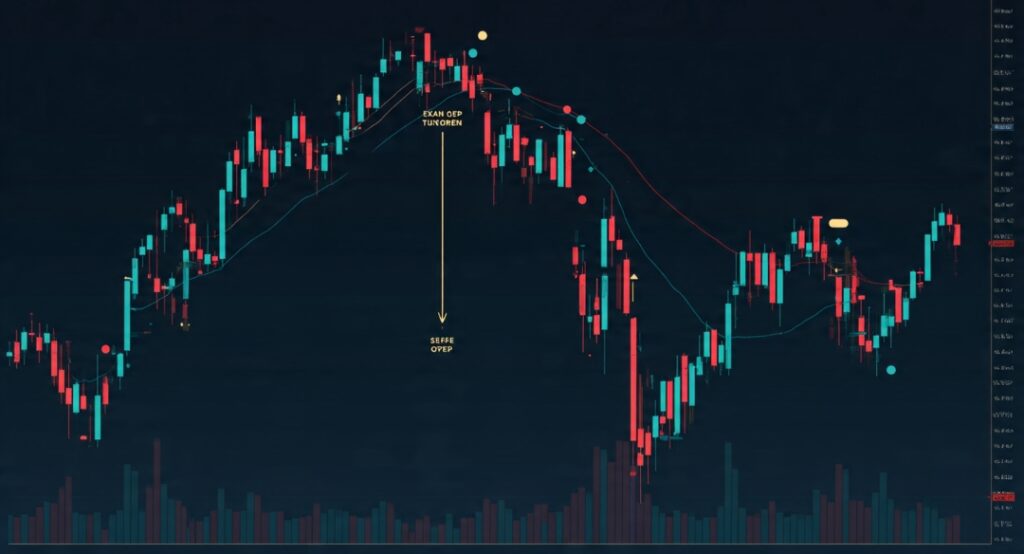
The Power of Three: Where the Judas Swing Lives
To really get the Judas Swing, you have to see where it sits in the bigger picture. ICT frames a session in three phases, often called the Power of Three: accumulation, manipulation, and distribution. First price consolidates quietly in a range while positions are built. Then comes the manipulation. Then the real, sustained move.
The Judas Swing is that manipulation phase. It is the deliberate false push that comes after the quiet accumulation and before the true distribution move. Understanding this sequence is what turns the Judas Swing from a scary surprise into an expected event, because you know it is supposed to come, and roughly when. This whole three-part rhythm is broken down in liquidity, market structure and the Power of Three, and the Judas Swing is the beating heart of the middle phase.
How the Judas Swing Actually Works
Step through it and the mechanics are surprisingly clean. Here is the sequence, in order.
Price consolidates near the open. Before the session properly gets going, price tends to sit in a tight range. This is the accumulation, the calm before the trick.
The false push begins. Price breaks out of that range in one direction, sharply enough to look real. Breakout traders enter, convinced the move has started.
Liquidity gets swept. That push runs just far enough to take out the obvious stops sitting above a recent high or below a recent low. This is a classic liquidity sweep, and it is also a textbook stop run, the very thing described in stop hunting. The market has now collected the orders it wanted.
The reversal hits. With that liquidity taken, price turns. It breaks structure in the opposite direction, a shift that signals the fake is over and the real move has begun. Telling a genuine reversal apart from noise is the skill covered in break of structure versus change of character.
The real move runs. Now price travels in its true, intended direction, toward the opposite pool of liquidity, while the traders caught by the false breakout are stopped out or trapped on the wrong side. Everyone who chased the breakout just handed their orders to the move that ran them over.
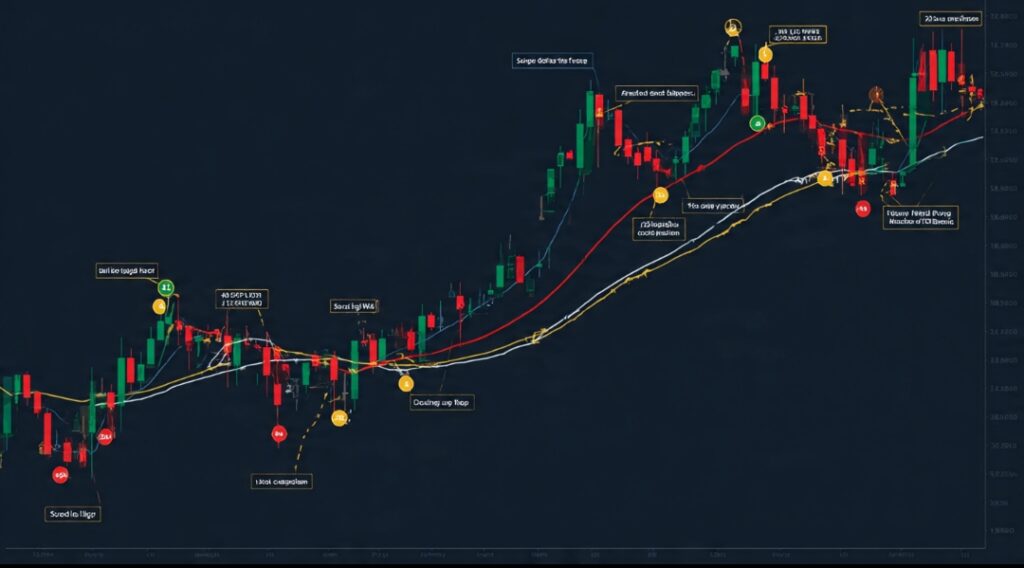
When the Judas Swing Shows Up
The Judas Swing is a creature of the session opens. It most commonly appears around the London open and the New York open, because those are the moments when volume floods in and the market has the fuel to engineer a convincing false move. These windows line up with the high-activity periods known as ICT kill zones, and that is no coincidence, the manipulation needs participation to work, and participation peaks at the opens.
Because the concept is built around the rhythm of these sessions, the timing is usually referenced in New York time, tied to the opening of a major trading session. Wherever you sit in the world, convert those session opens to your own local time and mark them. The Judas Swing tends to play out in the early part of the session, with the real move following as the session matures. It shows up across the global foreign exchange market and on gold, which is exactly why it is worth learning well.
How Not to Get Trapped by It
The Judas Swing only hurts the traders who take the bait. Avoiding it comes down to a few hard rules.
Do not chase the opening move. This is the whole game. The instinct to jump on that first sharp push at the open is precisely what the Judas Swing preys on. The move that looks most obvious at the open is the one most likely to be the trap. Sitting on your hands through it is the entire skill.
Know your bias before the open. If you have already worked out the likely true direction for the day, a false move in the opposite direction becomes a clue rather than a temptation. Instead of thinking “the trend is starting,” you think “there is the manipulation, the real move is the other way.” Building that read is the work of establishing your daily bias.
Recognise the bait for what it is. A false breakout designed to trap you is a form of inducement, the market dangling an obvious-looking entry specifically to catch retail traders. Learning to see that trap forming is covered in how inducement traps retail.
Above all, control the urge to jump in. The Judas Swing is a machine built to trigger exactly one emotion in you, the fear of missing the move. Chasing it is the same impulsive mistake that empties accounts in a dozen other ways, unpacked fully in why chasing entries destroys accounts. Beat the urge and the trap has nothing to catch.
How to Trade With the Judas Swing
Once you stop falling for it, you can start using it. The approach flips the whole thing around: you let the Judas Swing happen, and then you trade the reversal it sets up.
In practice that means waiting for the false move at the open to run and sweep the obvious liquidity. You do not touch it while it is running. You watch for price to take out those stops and then shift its structure in the opposite direction, the signal that the manipulation is done. That reversal is your cue. You enter in the direction of the real move, place your stop beyond the extreme of the false push, the point that would prove the whole read wrong, and target the opposite pool of liquidity, which is where price was always headed. Done right, the same move that traps impatient traders becomes one of the cleaner setups of the day, because you are entering with the real move instead of against it.

Common Mistakes Traders Make
- Chasing the fake move. The single most common error. The obvious opening push is usually the trap, not the trend.
- Trading with no bias. Without a view on the day’s likely direction, every false move looks like a real one, and you have no way to tell the manipulation from the truth.
- Entering before the reversal is confirmed. Jumping in the instant price turns, before structure has actually shifted, just gets you caught in the chop. Wait for the confirmation.
- Confusing a real breakout with a Judas Swing. Not every opening move is a trap. Context, the session, your bias, and whether liquidity was swept are what separate a genuine break from a fake one.
- Revenge trading after being trapped. Getting caught by the false move and then angrily jumping back in is how one trap becomes a blown session. Step back and wait for the real setup.
🔑 Key Takeaways
- The Judas Swing is a fake opening move that runs opposite to price’s true direction, engineered to trap traders before the real move begins.
- It is the manipulation phase of the Power of Three, sitting between quiet accumulation and the real distribution move.
- The mechanics are clean: consolidate, false push, sweep the obvious liquidity and stops, reverse with a structure shift, then run the true move.
- It lives at the session opens, most often the London and New York opens, inside the kill zones where volume peaks.
- Do not chase the open. The obvious first move is usually the trap. Know your bias so a false move becomes a clue, not a temptation.
- Trade the reversal instead: let the Judas Swing sweep liquidity, wait for the structure shift, then enter with the real move toward the opposite liquidity.
Frequently Asked Questions
What is the Judas Swing in trading?
The Judas Swing is a deceptive price move at the start of a trading session that heads in the opposite direction to where price truly intends to go. It is designed to trap breakout traders and trigger stop-losses, gathering liquidity before the market reverses and makes its real move.
Why is it called the Judas Swing?
It is named after Judas, the betrayer, because the move betrays the traders who trust it. It looks like the start of a genuine trend, luring people in, and then reverses against them. The name captures its whole purpose: deception before the real move.
When does the Judas Swing happen?
It most commonly appears at the major session opens, particularly the London open and the New York open, where high volume gives the market the fuel to engineer a convincing false move. These times align with the ICT kill zones. Traders reference the timing in New York time and convert it to their own zone.
How is the Judas Swing related to the Power of Three?
It is the manipulation phase of the Power of Three. That framework describes a session in three parts, accumulation, manipulation and distribution, and the Judas Swing is the deliberate false move that comes after the quiet accumulation and before the real distribution move.
How do I avoid getting trapped by the Judas Swing?
Do not chase the first sharp move at the open, since that is usually the trap. Establish your directional bias beforehand so a false move becomes a clue rather than a temptation, wait for liquidity to be swept and structure to shift, and control the urge to jump in early.
Can you actually trade the Judas Swing?
Yes. Instead of chasing the false move, you let it run and sweep liquidity, wait for price to shift structure in the opposite direction, then enter in the direction of the real move with a stop beyond the false push and a target at the opposite liquidity. It becomes a setup rather than a trap.
Is the Judas Swing only for forex?
No. Although it is often taught on forex, the same behaviour appears on any liquid market that respects these session-based dynamics, including gold and major indices. Anywhere there is enough participation at the session open to engineer a false move, the pattern can occur.
⚠️ Disclaimer: This article is for educational and informational purposes only and does not constitute financial, investment or trading advice, nor a recommendation to buy or sell any instrument. Trading forex, gold and other leveraged products carries a high level of risk and can result in the loss of some or all of your capital; it is not suitable for everyone. Past performance and illustrative examples do not guarantee future results. Concepts like the Judas Swing are interpretive trading frameworks, not certainties. Always use proper risk management, trade only with capital you can afford to lose, and consider consulting a qualified, licensed professional before trading.