Turtle Soup is one of the few trading setups whose name is a joke — and once you know the joke, the entire strategy makes sense in about ten seconds.
In the 1980s, Richard Dennis famously trained a group of novices to trade a simple breakout system and called them the Turtles. Their rules were public and profitable for years. Then other traders noticed something: those breakouts failed often enough that fading the failure was itself an edge. Linda Raschke and Laurence Connors published that fade in Street Smarts and named it Turtle Soup — soup made from turtles. It was a wink at the traders whose stops they were now collecting.
Three decades later, the setup is still traded daily, and the smart-money crowd has rebuilt it in their own vocabulary. Same mechanics, different words.
The Rulebook Everyone Follows Is the Reason This Works
There’s a story from motorsport I keep coming back to when I think about setups like this one.
Racing orthodoxy is absolute on one point: if your car slides sideways through a corner, you’ve lost speed and you’ve lost the race. Every coach teaches it. Then one Japanese driver put that entire rule on the tip of a needle. While wealthier racers ran clean lines on proper circuits, he was throwing his car sideways down dark mountain roads at night. Police chased him. The racing body cancelled his licence. He never stopped — and drifting is now a global motorsport with him as its King.
Markets have the same shape. The rule everybody is taught — price breaks the high, you buy — is exactly what creates the pool of orders that makes fading it profitable. Turtle Soup isn’t clever because it’s contrarian for its own sake. It’s clever because it trades against a rule so widely followed that the crowd’s stops become a predictable target.
That’s the whole thesis. Everything below is mechanics.
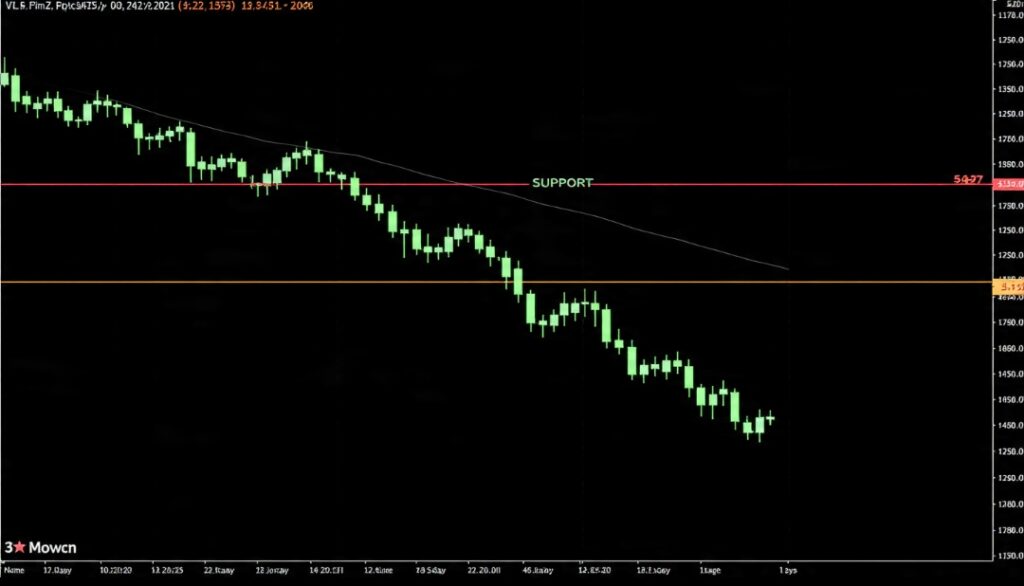
The Original Turtle Soup Rules
The classic version is mechanical and worth knowing precisely, even if you eventually trade the discretionary version. For a buy-side setup:
- Today’s low must be a new 20-day low. Price has genuinely broken down, not just dipped.
- The previous 20-day low must be at least four trading sessions old. This filter matters more than it looks — it separates a meaningful level that has had time to accumulate resting orders from noise made two days ago.
- Enter on a reversal back above the old low. A resting buy stop placed slightly above the previous 20-day low, triggered as price climbs back into the range.
- Stop goes below the new low just made.
- Manage the trade actively — trail the stop, take partials into the first resistance. The original text also describes “Turtle Soup Plus One,” which waits an extra session for the reversal to confirm, trading a slightly worse entry for a better fill rate.
Sell-side setups are the mirror: new 20-day high, prior high at least four sessions old, entry back below it, stop above the spike.
Those 20-day extremes are simply the boundaries of a Donchian channel, the same construct the original Turtle system traded. If you want the orthodox view first, Investopedia’s breakout definition and its companion entry on a failed break cover the two sides of the same coin.
The Same Setup in Smart Money Language
If you trade ICT or SMC concepts, you already know this pattern under different names — and the translation is close to one-to-one.
| Turtle Soup term | Smart money equivalent |
|---|---|
| New 20-day low | Liquidity sweep / raid on sell-side liquidity |
| Prior low at least four sessions old | A level with accumulated resting orders — often equal lows |
| The breakout that traps buyers | Inducement |
| Reversal back into range | Change of character (CHoCH) / market structure shift |
| Entry stop above the old low | Entry at the fair value gap or order block left by the reversal leg |
The reason both frameworks describe the same thing is that both are describing order flow. Stops cluster beneath obvious lows and above obvious highs. Large participants need those resting orders to fill size without moving price against themselves. When price reaches down, takes them, and immediately rejects, you’re watching that fill happen.
If any of those terms are new, three articles will fill the gaps: what a liquidity sweep actually is, why equal highs and equal lows attract price, and how inducement traps retail traders. The confirmation leg is covered in BOS versus CHoCH.
How to Trade It, Step by Step
1. Mark the levels before the session, not during it
Previous day’s high and low, previous week’s high and low, and any obvious equal highs or lows on your timeframe. If you’re marking levels while price is approaching them, you’re already reacting. Everything you need should be on the chart before the market opens.
2. Wait for the sweep, not the break
This is where most traders lose the setup. A break and a sweep look identical for the first thirty seconds. The difference is what happens next: a real break holds below and continues; a sweep gets rejected quickly and closes back inside the range. Patience here isn’t a virtue, it’s the entire filter.
3. Demand a structure shift on a lower timeframe
After the sweep, drop down and look for price to break the most recent lower high (for a long). Without that shift you have a guess. With it you have a sequence: liquidity taken, structure turned, direction declared. This is where the classic version’s “Plus One” delay and the modern CHoCH requirement are solving the same problem.
4. Enter on the retracement, not the impulse
The reversal leg usually leaves an inefficiency behind it. Entering there gives you a tighter stop and a far better ratio than chasing the candle that shifted structure. If that concept is new, start with fair value gaps explained for beginners.
5. Place the stop where the idea dies
Below the sweep’s extreme, with a small buffer. Not at a round number, not at a fixed pip distance. If price returns below that low, the sweep wasn’t a sweep and there is nothing left to hold.
6. Target the opposite liquidity
Price raided one side; the resting orders on the other side are the natural draw. That’s usually the previous day’s high, the range high, or the nearest equal highs — a clean, objective target rather than an arbitrary ratio.
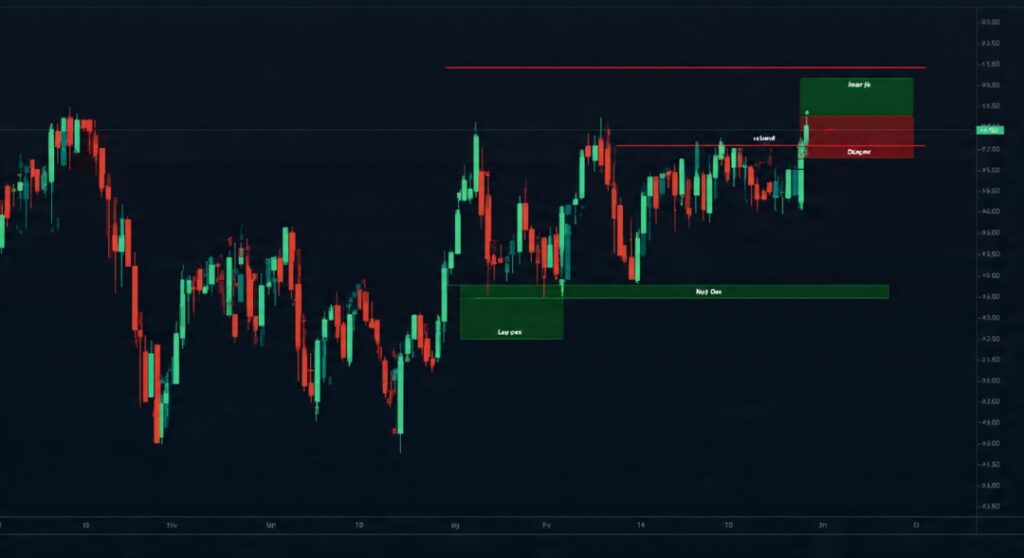
When Turtle Soup Fails
Any strategy that fades breakouts has one obvious failure mode: sometimes the breakout is real. Knowing the conditions where this setup deteriorates is worth more than knowing the entry.
- Strong trending days. In a genuine trend, every “sweep” is just continuation. Turtle Soup performs best in ranging or rotational conditions and worst when a market is repricing hard in one direction.
- High-impact news. A level swept by a scheduled release isn’t an order-flow event, it’s a repricing. There’s a reason I’ve argued that news trading fails so consistently on gold — the mechanics you’re reading disappear when volatility is exogenous.
- Weak levels. A low from two sessions ago hasn’t gathered enough resting orders to be worth raiding. This is exactly what the original four-session filter protects against.
- Wrong session. Sweeps have preferred times. Taking this setup in dead hours produces the pattern without the participation behind it — see kill zones and the best trading times.
- No structure shift. Entering on the sweep alone, before confirmation, is the single most expensive version of this mistake. It converts a high-probability setup into catching a falling knife.
What you’re really doing is reading a stop hunt in context. Context is what separates the trade from the pattern, and context comes from the higher-timeframe picture above all.
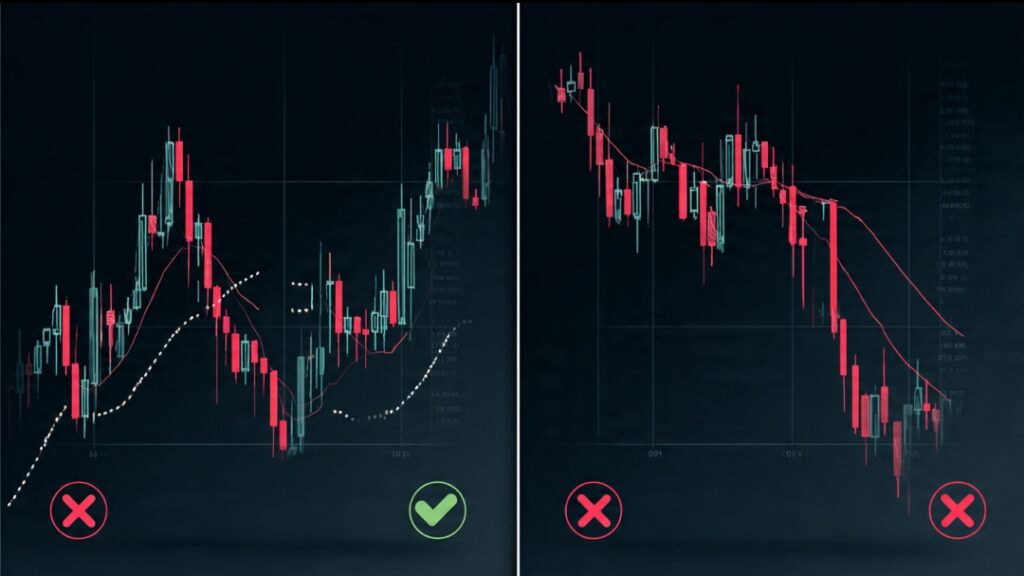
Why This Setup Survives Being Public
A fair objection: if the original Turtle rules stopped working once everyone knew them, why hasn’t Turtle Soup suffered the same fate after thirty years in print?
Because it isn’t really a pattern. It’s a consequence of how order books work. As long as traders place stops beneath obvious lows — and they always will, because that’s where the level is — those orders will be reachable, and someone with size will reach for them. The Turtles’ rules could be arbitraged away because they were a fixed mechanical entry. The behaviour Turtle Soup exploits can’t be, because it’s the crowd itself.
The practical implication is uncomfortable and useful: your own stop, placed exactly where the textbook says, is part of the liquidity somebody else is trading toward. That reframing alone changes where most traders put their stops, and it’s one of the more permanent lessons trading has to offer.
Key Takeaways
- Turtle Soup fades failed breakouts, and it was named as a joke at the expense of the breakout-trading Turtle Traders.
- The classic rules: a new 20-day extreme, with the prior extreme at least four sessions old, entered on the reversal back into range.
- The four-session filter exists to ensure the level has accumulated real resting orders.
- In smart money terms this is a liquidity sweep followed by a change of character, entered at the inefficiency left behind.
- Never enter on the sweep alone — the structure shift is what separates the setup from a guess.
- It degrades badly in strong trends, around scheduled news, and in low-participation sessions.
- The edge survives publication because it exploits crowd stop placement, not a fixed mechanical rule.
Frequently Asked Questions
What is Turtle Soup in trading?
It’s a reversal strategy that trades failed breakouts. Price breaks a significant recent high or low, fails to hold, and reverses back into the range — the trade is taken in the direction of that reversal. It was published by Linda Raschke and Laurence Connors and named as a play on the Turtle Traders’ breakout system.
Is Turtle Soup the same as a liquidity sweep?
They describe the same market behaviour in different vocabularies. Turtle Soup came from a rules-based technical tradition; the liquidity sweep framing came from order-flow and smart money concepts. The practical sequence — level swept, reversal, entry back inside the range — is nearly identical.
What timeframe works best for Turtle Soup?
The original rules were built on daily charts using 20-day extremes. Intraday traders apply the same logic to session highs and lows, previous day levels, and equal highs or lows, usually confirming on a lower timeframe. The principle scales; the specific 20-day parameter does not.
Why does the previous high or low need to be four days old?
Because time is what allows orders to accumulate at a level. A high made yesterday hasn’t attracted meaningful stops or breakout entries yet, so sweeping it achieves little. Older levels are visible to more participants and hold more resting orders, which is what makes the raid worth performing.
Does Turtle Soup work on gold and forex?
Yes, and it’s particularly common on liquid instruments with clear session structure. Gold in particular sweeps prior day levels frequently around session opens. The setup is instrument-agnostic because it depends on stop placement behaviour rather than any specific market.
What is Turtle Soup Plus One?
A variation from the original text that waits an additional session after the failed breakout before entering. It sacrifices entry price for confirmation, filtering out sweeps that continue lower. Modern traders achieve something similar by requiring a lower-timeframe structure shift instead.
What’s the most common mistake with this setup?
Entering the moment the level is swept, without waiting for confirmation that price has actually rejected. Sweeps and genuine breakouts look identical at the start, and the trader who enters early is repeatedly on the wrong side of the ones that keep going.
Disclaimer: This article is for educational purposes only and does not constitute financial or trading advice. Trading leveraged instruments such as forex, gold, indices and CFDs carries a high level of risk and can result in the loss of your entire capital. No setup or strategy described here has a guaranteed outcome, and past performance does not indicate future results. Always test any approach thoroughly on historical data and in a risk-free environment before committing real money, and consider consulting a licensed financial professional.