Key Takeaways
- An AI agent takes a goal and acts on it autonomously — it doesn’t just answer a question, it plans, uses tools, and works toward an outcome.
- The big leap is from “answering” to “doing.” A chatbot responds; an agent decides what steps to take and carries them out.
- Agents run on a loop: perceive the situation, reason and plan, take an action, observe the result, then repeat until the goal is met.
- A language model is the agent’s “brain,” but the agent adds memory, planning, and tools so it can actually get things done in the world.
- Agents are powerful but not magic. They’re only as reliable as their planning, their tools, and the model behind them — and errors can compound.
- You don’t need to be an expert to understand them — just grasp the loop, the components, and the limits.
You’ve almost certainly used an AI chatbot. You type a question, it types back an answer, and the conversation ends there — you’re the one who has to go and actually do something with that answer. Now imagine something different. Instead of asking “what’s a good itinerary for a trip to Japan?”, you say “book me a week in Japan within this budget” — and the AI goes off on its own, searches options, compares prices, fills in the forms, and comes back when it’s done. That jump, from a thing that answers to a thing that acts, is the entire idea behind AI agents.
This is one of the most talked-about ideas in technology right now, and also one of the most hyped and misunderstood. People throw the term “AI agent” around as if it’s magic, or as if it means something completely new and alien. It isn’t, and it doesn’t. At its core, an AI agent is a straightforward concept built on top of the AI tools you already know — and once you understand the simple loop underneath it, the whole thing stops being mysterious and starts making sense.
So let’s cut through the noise. This is a clear, no-hype beginner’s guide to what AI agents are, how they actually work, where they’re used, and — just as importantly — what they can’t do.
What Is an AI Agent?
An AI agent is a system that takes a goal and works toward it autonomously — perceiving its situation, deciding what to do, taking actions, and adjusting based on the results, all with minimal step-by-step human direction. The key words are goal and autonomously. You don’t hand an agent a list of exact instructions; you hand it an objective, and it figures out the steps itself.
The concept of an intelligent agent isn’t new — it’s been a foundational idea in computer science for decades, describing any system that perceives its environment and acts upon it to achieve goals. What’s new is what powers today’s agents: modern language models give them the ability to reason, understand instructions in plain language, and make flexible decisions in messy, real-world situations that older rule-based systems could never handle. The old idea finally got a brain capable of general reasoning.
“A chatbot answers your question. An agent takes your goal and goes to work on it. That single shift — from responding to acting — is the whole revolution.”
Think of it like the difference between a knowledgeable advisor and a capable assistant. The advisor tells you what to do; you still have to do it. The assistant takes the task off your plate entirely, handles the steps, and reports back. AI agents are the move from AI-as-advisor to AI-as-assistant — a system you can delegate to, not just consult.
Chatbot vs Agent: The Crucial Difference
Because almost everyone meets AI through chatbots first, the clearest way to understand an agent is to see exactly how it differs from the chatbot you already know.
A chatbot is reactive and conversational. You send a message, it generates a response, and that’s the complete transaction. It’s a brilliant text generator, but it doesn’t do anything beyond producing words. It can’t check today’s prices, send an email, run code, or take any action in the world — it can only tell you about those things. Every actual step happens on your side.
An agent is proactive and goal-driven. Give it an objective, and it breaks that objective into steps, decides which steps to take, uses tools to actually carry them out, checks whether each step worked, and keeps going until the goal is achieved or it gets stuck. It’s the difference between a system that says “here’s how you could do that” and a system that says “done — here’s the result.” The chatbot is the mouth; the agent is the hands.
Crucially, an agent usually contains a chatbot-style language model at its core — it just wraps that model in extra machinery (planning, memory, tools, and a control loop) that lets it act instead of merely talk. So agents aren’t a replacement for the language models you know; they’re those models, given the power to do things. To really understand agents, it helps to first be comfortable with what a large language model actually is, since that model is the engine inside every agent.

The Core Components of an AI Agent
Every AI agent, no matter how simple or advanced, is built from the same handful of building blocks. Understanding these five parts is understanding agents.
1. The brain (the model). At the center sits a reasoning engine — typically a large language model, often built on a foundation model. This is what understands the goal, thinks through what to do, and makes decisions. Everything else exists to give this brain the ability to sense and act.
2. Perception (the input). The agent needs to take in information about its situation — your instructions, the current state of a task, the results of its last action, data from its environment. This is how it knows what’s going on and what’s already been done.
3. Memory. To work toward a goal over multiple steps, an agent has to remember what it’s already tried, what it learned, and where it is in the plan. Memory is what stops it from going in circles and lets it build on previous steps. This connects directly to the idea of tokens and context windows, which determine how much an agent can “hold in mind” at once.
4. Planning and reasoning. This is the heart of what makes an agent an agent. Faced with a goal, it breaks the goal into smaller steps, decides the order, chooses which tool to use, and figures out what to do when something goes wrong. This planning ability is exactly what a plain chatbot lacks.
5. Tools (the hands). Tools are how an agent actually does things beyond generating text — searching the web, running code, calling other software, reading files, sending messages. Tools are what connect the agent’s reasoning to the real world, turning decisions into actions. An agent without tools is just a chatbot; tools are what give it hands.
“Brain to think, perception to see, memory to remember, planning to decide, tools to act. Strip away the hype and every AI agent is just those five parts working in a loop.”
How an AI Agent Actually Works: The Loop
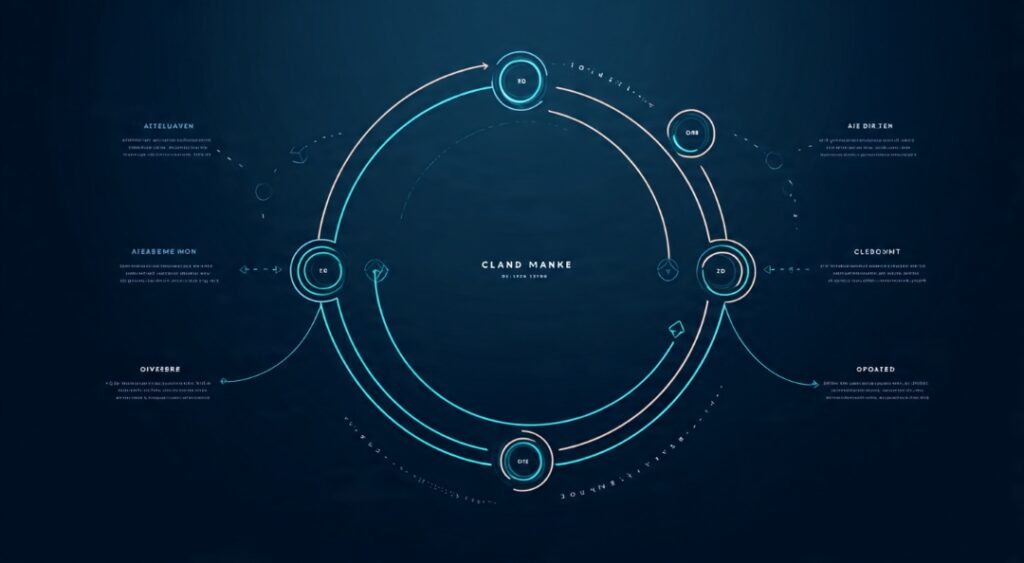
Here’s the part that demystifies everything. Underneath all the impressive behavior, an AI agent runs a simple cycle over and over until its goal is reached. Once you see this loop, agents stop feeling like magic.
Step 1 — Perceive. The agent takes in the current situation: your goal, plus whatever information it has about the task so far.
Step 2 — Reason and plan. The model thinks about what to do next. What’s the goal? What’s been done? What’s the best next step, and which tool does it need?
Step 3 — Act. The agent uses a tool to take that step — runs a search, executes code, sends a request, writes a file.
Step 4 — Observe. It looks at the result of its action. Did it work? What new information came back? Is the goal closer?
Step 5 — Repeat or finish. If the goal isn’t met, it loops back to reasoning with this new information and takes the next step. If the goal is achieved, it stops and reports the result.
That’s it. That’s the engine. The agent perceives, thinks, acts, observes, and goes around again — each loop bringing it closer to the goal, adjusting based on what actually happened rather than blindly following a fixed script. This ability to observe results and change course is what makes agents feel intelligent: they’re not running a rigid program, they’re reacting to reality step by step, the same way you would if you were working through an unfamiliar task. A more complete picture of how these systems get applied in practice is covered in how foundation models are used in the real world.
Types of AI Agents
“AI agent” covers a range of systems, from very simple to genuinely sophisticated. Here’s the spectrum, from least to most capable.
Simple reactive agents. These respond to the current situation with a direct action and little or no planning — useful for narrow, well-defined tasks, but limited. They react rather than strategize.
Goal-based agents. These hold a goal in mind and choose actions specifically to move toward it, planning ahead rather than just reacting to the present moment. This is where genuine agent behavior really begins.
Multi-step autonomous agents. These are the systems most people mean by “AI agent” today — they break a complex goal into many steps, use a range of tools, handle setbacks, and work largely on their own across a long chain of actions before reporting back.

Multi-agent systems. Here, several agents work together, each handling a piece of the problem — one might research, another write, another check the work — coordinating like a team. This is a powerful and fast-growing approach for complex tasks, and it’s a deep topic in its own right worth exploring separately.
You don’t need to memorize these categories. The key insight is simply that “agent” is a spectrum of autonomy, from a simple reactor at one end to a coordinated team of planners at the other — and the more autonomous the system, the more capable but also the more complex and error-prone it becomes.
Where AI Agents Are Actually Used
Agents aren’t a far-future fantasy — the concept is already showing up across real, practical tasks. A few of the most common areas, kept general because the specific tools change constantly:
Coding and software help. Agents can take a programming goal, write code, run it, see the errors, fix them, and repeat — handling multi-step development tasks rather than just suggesting snippets.
Research and analysis. Given a question, a research agent can search multiple sources, gather and compare information, and assemble a synthesized answer — doing the legwork of looking things up across many places.
Customer support. Beyond scripted chatbots, support agents can actually look up an account, check an order, process a request, and resolve an issue end to end, not just describe how to do it.
Personal and business task automation. Scheduling, organizing information, drafting and sending communications, managing repetitive workflows — handing off chains of small tasks that would otherwise eat your time.
The common thread is delegation: agents shine wherever a goal involves several steps and some tool use, and where you’d rather hand off the whole job than supervise each click.
What Nobody Tells You About AI Agents
Now the honest part the hype tends to skip. AI agents are genuinely powerful, but they are not magic, and treating them as flawless will burn you. Here’s what to actually understand.
An agent is only as good as the model behind it. The “brain” is a language model, and it inherits all of that model’s weaknesses — including the tendency to hallucinate, or generate confident but wrong information. An agent doesn’t fix that flaw; in some ways it makes it more dangerous, because the agent acts on its conclusions rather than just telling them to you.
Errors can compound across the loop. This is the big one. Because an agent works in steps, a mistake early in the chain can throw off every step after it. A chatbot’s single wrong answer is contained; an agent’s wrong step can cascade, with each subsequent action built on a flawed foundation. Autonomy multiplies both the usefulness and the potential for things to quietly go off the rails.
Autonomy is not the same as reliability. An agent acting on its own is impressive, but “it did it by itself” doesn’t mean “it did it correctly.” This gap is the central challenge of agentic AI: more independence means less human checking, which means mistakes can slip through unnoticed until they’ve caused real consequences. This is exactly why serious uses of agents keep humans in the loop for important decisions and add guardrails around what an agent is allowed to do.
They cost more than they look. Every step in an agent’s loop is a call to the model, so a task that takes twenty steps costs many times more than a single chatbot reply. Autonomy has a price, in both money and time, that the demos rarely mention.
“The power of an agent is that it acts without you. The danger of an agent is also that it acts without you. Those are the same sentence — and respecting both halves is what separates smart use from blind trust.”
Agents vs the Other AI Terms You’ve Heard
It’s easy to confuse agents with the other buzzwords floating around. Here’s how they relate.
| Term | What it is | Relationship to agents |
|---|---|---|
| Language model (LLM) | The text-understanding “brain” | Sits at the center of an agent |
| Chatbot | A model that answers in conversation | An agent minus the planning and tools |
| RAG | Feeding a model outside knowledge | Often a tool an agent uses to retrieve info |
| Automation | Fixed, scripted task-running | Agents are flexible, decision-making automation |
| AI agent | Goal-driven, tool-using, autonomous system | The model plus memory, planning, and tools |
The clearest way to hold it all together: a language model is the brain, a chatbot is that brain talking, RAG is one way of feeding that brain fresh knowledge, and an agent is that brain given memory, a plan, and hands to act. They’re not competing ideas — they’re layers that stack on top of each other.
How to Start Learning AI Agents
If this has you wanting to go deeper, here’s the sensible path — no rushing into the most advanced tools first.
1. Get solid on the fundamentals first. Before agents, make sure you understand the pieces underneath them: what a language model is, how it’s trained, and concepts like tokens and context. Agents will only make sense once the foundation is clear, which is why starting with the basics of generative AI pays off.
2. Understand the loop before the frameworks. The tools and frameworks for building agents change constantly, but the underlying loop — perceive, reason, act, observe, repeat — does not. Master the concept, and any framework becomes just a way of expressing it.
3. Start small and concrete. When you do build, begin with a tiny agent that does one simple multi-step task with one or two tools. Watching a basic agent loop in action teaches more than any amount of reading about advanced multi-agent systems.
4. Respect the limits as you go. Build in checks, watch where it makes mistakes, and keep yourself in the loop. Learning what agents get wrong is as valuable as learning what they get right.
The Bottom Line
An AI agent is not a mysterious new species of intelligence. It’s a language model given a goal, a memory, a plan, and a set of tools, running a simple loop until the job is done. That’s the whole idea. The shift it represents — from AI that answers to AI that acts — is genuinely significant, and it’s reshaping how people work. But the same autonomy that makes agents powerful is exactly what makes them risky, and the people who use them well are the ones who understand both halves of that truth.
- Remember the one-line definition: an agent takes a goal and acts on it autonomously, using tools, in a loop.
- Hold the loop in your head: perceive, reason, act, observe, repeat — that’s the engine behind every agent.
- Know the five parts: brain, perception, memory, planning, and tools. An agent is just these working together.
- Respect the limits: agents inherit the model’s flaws, errors compound across steps, and autonomy is not reliability.
- Build your foundation first: understand language models and the core concepts before diving into agent frameworks.
You now understand AI agents better than most of the people throwing the term around. They’re not magic, and they’re not a threat to be feared blindly — they’re a powerful new tool with a simple idea at the center and real limits at the edges. Understand the loop, respect the limits, and you’re ready for whatever the next wave of this technology brings.
An AI agent is a system that takes a goal and works toward it autonomously, rather than just answering a question. You give it an objective, and it plans the steps, uses tools to carry them out, checks the results, and keeps going until the goal is reached. The key difference from a chatbot is that an agent acts in the world instead of only producing text, making it something you can delegate tasks to rather than just consult.
A chatbot is reactive and conversational: you send a message and it replies with text, but it cannot take real actions. An AI agent is proactive and goal-driven: it breaks a goal into steps, uses tools to actually do things, observes the results, and continues until the task is complete. An agent usually contains a chatbot-style model at its core but wraps it in planning, memory, and tools so it can act rather than only talk.
An AI agent runs a simple loop: it perceives the current situation, reasons about and plans the next step, takes an action using a tool, observes the result, and then repeats with that new information until the goal is met. This cycle lets it adjust based on what actually happens rather than following a fixed script, which is what makes it feel intelligent. The looping process continues until the objective is achieved or the agent gets stuck.
Every AI agent is built from five core parts: a brain, usually a language model that reasons and decides; perception, which takes in information about the task; memory, which tracks what has been done; planning, which breaks the goal into steps and chooses actions; and tools, which let the agent actually act in the world by searching, running code, or calling other software. Tools are what separate an agent from a plain chatbot.
Not automatically. An agent is only as good as the model behind it and inherits that model’s flaws, including the tendency to produce confident but incorrect information. Because agents work in steps, an early mistake can cascade through every later step, and autonomy means fewer human checks, so errors can slip through. This is why serious uses keep humans in the loop for important decisions and add guardrails around what an agent is permitted to do.
Common uses include coding help, where an agent writes, runs, and fixes code across multiple steps; research, where it searches and synthesizes information from many sources; customer support, where it can look up accounts and resolve issues end to end; and task automation such as scheduling, organizing, and drafting communications. The common thread is delegation, since agents are most useful when a goal involves several steps and some tool use that you would rather hand off entirely.
Start with the fundamentals beneath agents, such as what a language model is and concepts like tokens and context, since agents only make sense once that foundation is clear. Then learn the core loop of perceive, reason, act, observe, and repeat, which stays constant even as specific tools change. Finally, build something small with one or two tools, since watching a basic agent loop in action teaches far more than reading about advanced systems.
Disclaimer: This article is for educational and informational purposes only. It explains AI concepts in general terms for beginners and is not technical, professional, or implementation advice. Artificial intelligence is a rapidly evolving field, and specific tools, frameworks, and capabilities change frequently, so always verify current details against up-to-date and official sources before building or relying on any AI system.