Zero isn’t the worst place to start. Negative is. If you’re reading this with no savings, no investments, and maybe a credit card balance staring back at you, you’re not behind some imaginary schedule — you’re just at the actual starting line most people never admit they’re standing on. I’ve talked to enough people rebuilding from nothing to know the plan that works isn’t complicated. It’s just uncomfortable, and it has to be followed in the right order.
What “Starting From Zero” Actually Means
Most people who say they’re “starting from zero” aren’t at zero — they’re below it. Zero means no assets, but also no liabilities. If you’ve got $3,000 in credit card debt and no savings, your actual net worth is negative $3,000, not zero. That distinction matters, because clearing debt isn’t a detour on the way to wealth building — for most people, it’s step one of it. You can’t compound money you don’t have, and you definitely can’t compound money that’s actively accruing interest against you.
Step 1: Stop the Bleeding Before You Build
Before any wealth strategy makes sense, you need to know where money is actually leaving your life. Not the number in your head — the real number. Track every dollar for thirty days. Most people discover the leak isn’t one big mistake; it’s a dozen small ones that add up to a paycheck’s worth of nothing to show for it. If a structured system like the 50/30/20 rule feels too rigid for where you are right now, that’s fine — the goal at zero isn’t a perfect budget, it’s just knowing your numbers well enough to stop guessing.
Step 2: Build a Starter Buffer Before Anything Else
Before you touch debt payoff or investing, get $500 to $1,000 sitting in a separate account you don’t touch. This isn’t your real emergency fund yet — it’s just enough of a buffer that one flat tire or one broken phone doesn’t send you back to a credit card. People skip this step because it feels slow, then wonder why every debt payoff attempt gets derailed by the first unexpected expense. It won’t be different for you unless the buffer exists first.

Step 3: Attack the Debt That’s Working Against You
Not all debt is equal, and if you’re starting from zero, you need to know the difference between debt that builds you and debt that buries you before you decide what to pay off first. A 24% APR credit card is actively fighting every other financial goal you have. Whether you use the snowball or avalanche method, the point is the same: every dollar sitting in high-interest debt is a dollar that can’t start working for you instead.
The Real Rules for Building Wealth From Nothing
Ask ten people how to get rich from nothing and you’ll get ten different tactics — side hustles, crypto, real estate, a business idea. Almost all of them skip the actual rules for building wealth that make any tactic work: spend less than you make, protect that gap with a buffer, kill debt that costs more than your investments will ever return, and then — only then — let time and consistency do the rest. Nobody wants to hear that the honest path to building a fortune from nothing is this unglamorous. But it’s also the only version of the advice that’s true for someone who genuinely has nothing to start with.
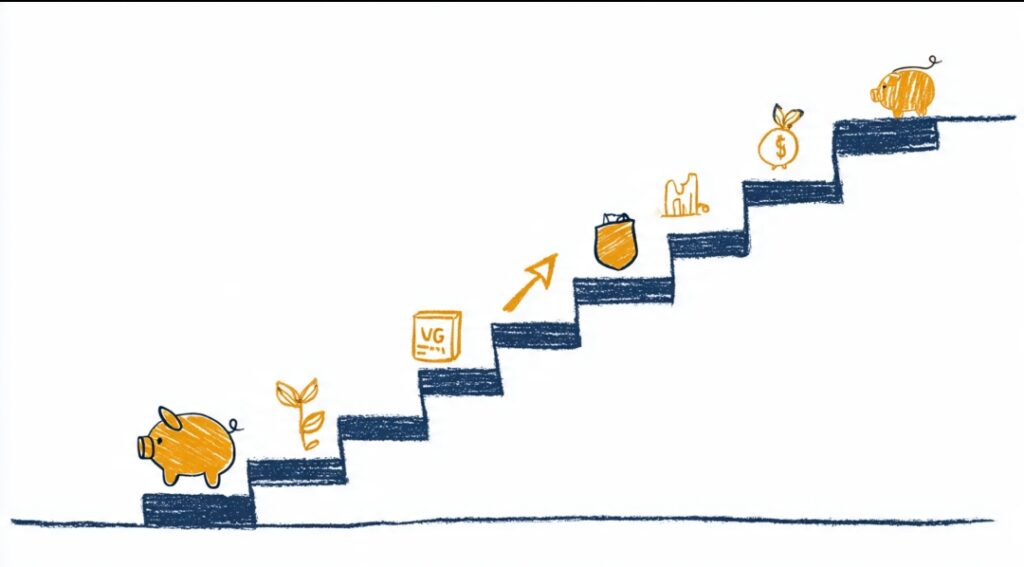
The Age-Bracket Roadmap Nobody Hands You
If you’re young and starting from zero, timing actually matters more than most personal finance content admits. From roughly 14 to 18, the biggest lever you have isn’t money — it’s who you spend your time around; productive, driven people around you shape your habits more than any book will. From 18 to 21, the highest-return investment is in yourself: communication skills, confidence, and the basic discipline that everything financial later depends on. From 21 to 24, the priority shifts to earning, and no honest work should feel beneath you here — three consistent years of showing up, even in a job that isn’t glamorous, can put you far enough ahead that your family stops worrying about your future. From 24 to 30, the focus moves to building systems and skill in whatever field you’ve chosen, to the point where your income doesn’t depend entirely on your daily effort anymore. Whatever bracket you’re in right now, the rule is the same: follow the step that actually matches your age instead of skipping ahead to the one that looks more exciting.
Step 4: Build an Income Floor, Not Just a Savings Habit
Cutting expenses has a ceiling — you can only cut a budget to zero. Earning has no ceiling. If your income barely covers your bills, the fastest path forward usually isn’t a stricter budget, it’s raising the number coming in: a skill you can freelance, a shift you can pick up, a side project you can turn into real income. This is also where rebuilding your credit from zero starts to matter, since a stronger credit profile lowers the cost of every future loan you’ll ever need, from a car to a home.
Step 5: Automate the Habit Before You Trust the Willpower
Willpower runs out by Thursday. Automation doesn’t. The moment your income floor is stable, set an automatic transfer — even if it’s just $20 a week — into a separate savings account the day you get paid. It’s not about the amount yet; it’s about building the reflex before you have real money for it to matter. By the time you’re ready to think about how much to save before investing, the habit will already be muscle memory instead of a new fight every month.

Step 6: Protect the Progress From Your Own Success
The strangest part of building wealth from nothing is that the danger doesn’t disappear once the money starts coming in — it changes shape. The moment your income rises, lifestyle creep quietly eats the exact gap you worked years to create. The person who started at zero and stayed disciplined through the boring middle years is the one who actually ends up wealthy, not the person who earned the most.
Why This Feels Slow (And Why That’s Normal)
For the first year or two, building wealth from nothing looks like almost nothing is happening. Your net worth moves from negative to zero, then from zero to a few thousand dollars, and it feels painfully slow compared to the stories you read online. That’s not a sign you’re doing it wrong — it’s what the early, invisible stage of building anything real actually looks like. The visible growth comes later, and only for the people who didn’t quit during the part where nothing seemed to be happening yet.
- “Zero” often means negative once debt is counted — clearing high-interest debt is usually step one, not a detour.
- Build a small $500–$1,000 buffer before attacking debt seriously, so one emergency doesn’t restart the cycle.
- Raising income has no ceiling; cutting expenses does — don’t rely on budgeting alone if you’re starting from nothing.
- Automate saving before you trust willpower to keep the habit alive month after month.
- Lifestyle creep is the biggest threat once income actually starts rising — protect the gap you fought to create.
- The early stage feels slow because it is — that’s normal, not a sign of failure.
Frequently Asked Questions
How do you build wealth from nothing?
Stabilize spending, build a small buffer fund, clear high-interest debt, raise your income where possible, then automate consistent saving and investing so time does the compounding work for you.
Is it actually possible to become wealthy starting with zero?
Yes, though it takes longer and requires more discipline early on than starting with existing capital. The math and habits are the same; only the starting point and timeline differ.
Should I pay off debt or start saving first when I have nothing?
Build a small starter buffer of $500–$1,000 first, then prioritize high-interest debt before aggressive saving, since that debt is usually costing more than any low-risk saving could earn.
How much money do I need to start building wealth?
You don’t need a specific amount — consistent saving of even $20–$50 a month builds the habit and the account that later, larger contributions will grow from.
What’s the biggest mistake people make when starting from zero?
Trying to invest or chase high-return tactics before stabilizing spending and clearing high-interest debt, which usually undoes any gains from the investment itself.
How long does it take to build real wealth starting with nothing?
The early stabilizing phase typically takes one to two years before progress becomes visible; meaningful wealth building usually compounds over five to ten years and beyond.
Does age matter when starting to build wealth from zero?
Starting earlier gives compounding more time to work, but the same core steps — stabilize, clear debt, save consistently, avoid lifestyle creep — apply at any age.