

In the journey toward financial independence, most people rush to invest in stocks, real estate, or crypto. They spend hours researching the next big opportunity while ignoring the most critical financial asset they can own — the one that keeps you from going broke when life decides to test you.
This asset is not a stock. It is not gold. It is not a business. It is an Emergency Fund. And without it, even the best investment plan in the world can crumble the moment one unexpected expense arrives.
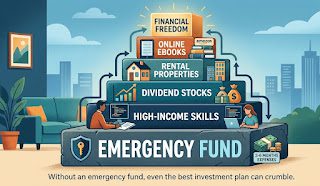
Table of Contents
1. What Is an Emergency Fund and Why Do You Need It?
Financial freedom means having enough income to cover your basic needs without depending on any single source. But before you reach that stage, you need a safety net that protects everything you are building.
An emergency fund is a cash reserve set aside specifically for life’s unexpected events: medical emergencies, sudden job loss, urgent home or car repairs, family crises. It is not an investment. It is not meant to grow dramatically. It is meant to be there — immediately accessible — when something goes wrong.
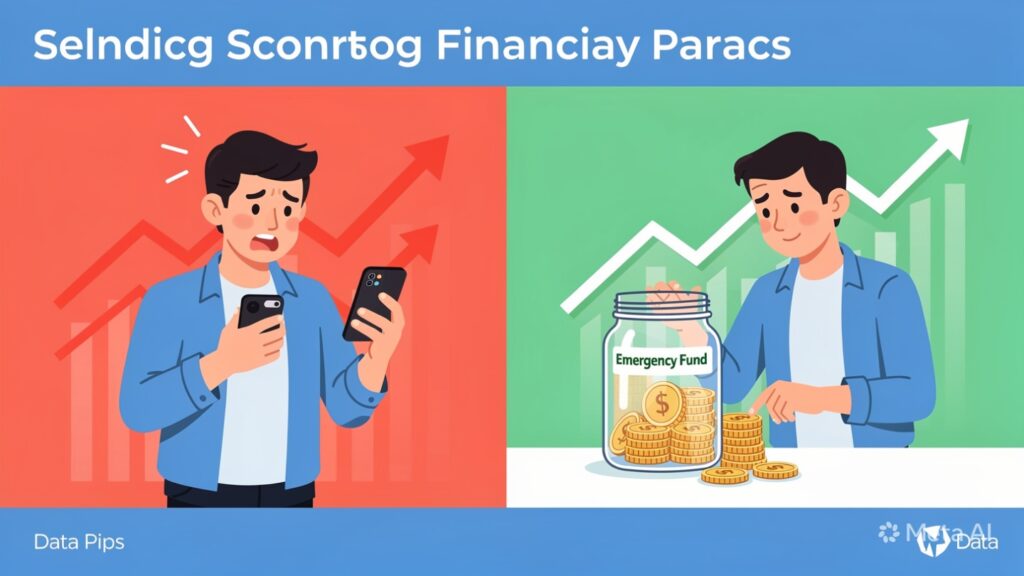
Without it, the math of investing works against you. When an emergency hits and you have no cash reserve, you are forced to either take on high-interest debt or liquidate investments at the worst possible time. Selling a long-term asset during a market downturn to cover an urgent expense locks in losses that compound over time. The emergency fund prevents this entirely — it allows your other assets to keep growing uninterrupted regardless of what life throws at you.
According to a Bankrate survey, more than half of Americans could not cover a $1,000 emergency from savings alone. That statistic represents millions of people whose investment plans are one car repair away from derailing.
2. How Much Should You Save?
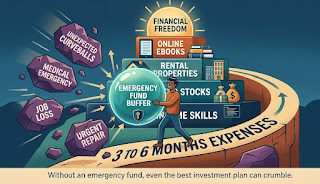
The standard guideline, supported by the Consumer Financial Protection Bureau, is to save 3 to 6 months’ worth of essential living expenses.
Essential expenses include rent or mortgage, utilities, food, transportation, insurance, and minimum debt payments. Discretionary spending does not count.
If your monthly essentials total $2,000, your emergency fund target is between $6,000 and $12,000. For freelancers, traders, or anyone with irregular income, extending that target to 9 or 12 months provides significantly more stability.
3. The 25 Times Rule for Financial Freedom
While an emergency fund covers short-term shocks, true financial freedom requires a larger vision. A common benchmark used in financial independence models is saving 25 times your annual expenses.
- If you need $1,000 a month, you need $12,000 a year.
- 25 times that is $300,000 — enough to generate sustainable passive income using the 4% withdrawal rule.
Your 3 to 6 month emergency fund is not the destination. It is the foundation that makes the journey toward that larger number possible without being derailed at every obstacle. According to Investopedia, building a solid emergency fund is consistently listed as Step 1 in every serious financial independence framework.
4. Where to Park Your Emergency Fund
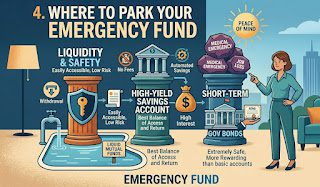
An emergency fund has two non-negotiable requirements: liquidity and safety. It should never be locked in a fixed deposit with penalties for early withdrawal. Never in crypto or individual stocks. And never mentally merged with your investment portfolio.
Best places to keep your emergency fund:
- High-Yield Savings Accounts: Accessible within one to two business days, earning meaningfully more than a standard savings account. Online banks typically offer the highest yields with no minimum balance requirements.
- Liquid Mutual Funds: Low risk, professionally managed, redeemable within 24 hours in most cases. A solid option for those who want their cash reserve working slightly harder without taking on meaningful risk.
- Short-Term Government Bonds or Treasury Bills: Among the safest financial instruments available. Choose short maturities of 30 to 90 days to maintain accessibility.
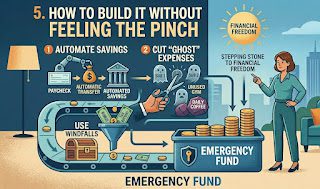
5. How to Build It Without Feeling the Pinch
The most common reason people fail to build an emergency fund is not insufficient income — it is the absence of a system. The solution is automation and structure.
- Automate the Transfer: Set up an automatic transfer from your main account to your emergency fund the same day your income arrives. Treat it like a non-negotiable bill. If the money never sits in your spending account, you will not miss it.
- Eliminate Ghost Expenses: Review every automated payment leaving your account each month. Subscriptions you forgot about, services you no longer use, convenience fees that quietly accumulated. Every dollar freed is a dollar redirected toward financial security.
- Use Windfalls Strategically: Tax refunds, bonuses, unexpected income — direct these toward your emergency fund before they enter your spending account. A single windfall can significantly accelerate your timeline.
- Start Small, Stay Consistent: If three months of expenses feels overwhelming, start with a $500 or $1,000 starter goal. That amount alone covers the majority of common unexpected expenses and provides immediate psychological relief.
6. The Psychological Value of an Emergency Fund
Beyond practical protection, an emergency fund provides something no investment portfolio can: peace of mind.
When you know that three to six months of expenses are sitting safely and accessibly, the way you make decisions changes. You negotiate differently at work because you are not desperate. You take considered risks in business and trading because your foundation is secure.
Research published in Harvard Business Review has shown that financial stress consumes significant cognitive bandwidth — reducing mental resources available for decision-making and long-term thinking. An emergency fund is not just a financial tool. It is a cognitive one. It frees mental energy that was previously consumed by financial anxiety.
Frequently Asked Questions
Q: What is the difference between an emergency fund and savings?
Regular savings are meant for planned future goals — a vacation, a car, a home. An emergency fund is specifically for unexpected, urgent situations only. It should be kept in a separate account and never touched for non-emergencies.
Q: Should I invest my emergency fund to earn higher returns?
No. The purpose of an emergency fund is immediate accessibility and guaranteed value. Investing it in stocks or crypto means its value could drop 30-50% exactly when you need it most. Liquidity and safety come before returns for this specific money.
Q: What if I am in debt — should I still build an emergency fund?
Yes — at least a starter emergency fund of $500 to $1,000 before aggressively paying debt. Without any buffer, one unexpected expense sends you back to taking on more debt. The small fund prevents that cycle.
Q: How long does it take to build a 3-month emergency fund?
It depends on your income and expenses. If you save $200 per month and need $6,000, it takes 30 months. If you save $500 per month, it takes 12 months. Using windfalls and cutting ghost expenses can dramatically accelerate the timeline.
Q: Once I build my emergency fund, then what?
Once your emergency fund is fully funded, redirect those automatic savings toward your investment goals — index funds, gold, forex trading capital, or business investment. The foundation is now solid. Now you build on it.
Q: Is 3 months enough or should I aim for more?
3 months is the minimum for stable employment. Freelancers, traders, entrepreneurs, and anyone with variable income should aim for 6 to 12 months. The more irregular your income, the larger the buffer you need.
Final Thoughts
The road to becoming a successful trader or entrepreneur is paved with risks. An emergency fund is the insurance policy that allows you to take those risks without being one bad month away from financial collapse.
Stop looking for the next opportunity for a moment. Look at your foundation first. If you do not have at least one month of expenses set aside in a liquid, separate account — that is your first financial priority. Not the next trade. Not the next investment. The foundation.
Start today. Even $50 this month is a start. Your future self will thank you.
About the Author
Shurah Beel Hamid is a business enthusiast, active trader, and content creator who transformed his life by training his brain from an electrician’s mindset to an entrepreneur’s mindset. His expertise lies in practical brain training for entrepreneurship, trading psychology, compounding strategies, and elite mindset development. He shares his raw, unfiltered journey — from suicidal thoughts to strategic patience, from blowing trading accounts to consistent profitability — to provide actionable insights for those tired of theoretical advice and ready for real change. His writing combines hard-won experience, neuroscience-backed techniques, and relentless optimism.
Disclaimer: This article is for educational purposes only and does not constitute financial advice. Always consult a qualified financial professional before making significant financial decisions.