Key Takeaways
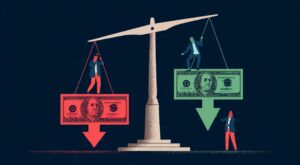
- Debt is a lever, not a villain. It multiplies whatever you point it at — wealth if aimed at assets, losses if aimed at consumption.
- The real test is the direction of the money. Good debt is intended to put money in your pocket over time; bad debt only takes money out.
- Good debt buys assets, income, or earning power. Bad debt finances depreciating things and lifestyle you couldn’t otherwise afford.
- Interest rate can flip the label. Even productive debt turns bad above a certain cost, and high-interest consumer debt is compounding running against you.
- Good debt can still turn bad through over-leverage — the loan must be repaid even if the thing it bought fails.
- Judge the loan by what it buys and what it costs, never by the label on the paperwork.
You’ve heard the advice your whole life, usually delivered with total confidence: “Debt is bad. Avoid it. Stay away from it completely.” It sounds wise. It sounds safe. And it’s lazy enough to do real damage in two opposite directions at once. On one side, it terrifies people away from the kind of borrowing that builds businesses, careers, and genuine wealth. On the other, it gives no warning to the people quietly destroying themselves with the kind of debt that actually does bury you — because they assume “a loan is a loan” and never learn to tell the two apart.
The truth is more useful and more dangerous than the slogan. Some debt is one of the most powerful wealth-building tools that exists. Other debt is a slow financial poison that compounds against you for years. They look similar on paper — both are money you borrowed and have to pay back with interest. But they do opposite things to your life, and the entire skill of personal finance is learning, in seconds, which one you’re looking at.
So let’s settle the good debt vs bad debt question properly — not with a slogan, but with a test you can apply to any loan, any time, for the rest of your life. (This is educational, not personal financial advice; your situation is yours alone.)
Debt Is a Lever, Not a Villain
Here’s the reframe that changes everything. Debt is not inherently good or bad — it’s leverage, and leverage is simply a force multiplier. A lever lets a small push move a heavy weight. Financial leverage lets a small amount of your own money control a much larger amount, magnifying the result of whatever you do with it. And that’s the key word: magnifying. A lever doesn’t care which direction you push. It multiplies the outcome either way.
Point that multiplier at something that grows or pays you, and debt magnifies your wealth — you control a productive asset far bigger than your own cash could buy, and it works for you while you repay it. Point the exact same multiplier at something that shrinks or merely entertains you, and it magnifies your loss — now you’re paying interest on top of watching the thing lose value. Same tool. Same mechanism. Opposite results, decided entirely by what you aim it at.
“Debt doesn’t make you rich or poor. It makes you more of whatever you already are with money. It’s a multiplier — and a multiplier is only as good as the thing you multiply.”
This is why “all debt is bad” is such poor advice. It’s like saying “all fire is bad.” Fire burns your house down or cooks your food and warms your home — the fire is identical; the only variable is control and direction. The people who build serious wealth aren’t the ones who fear debt or the ones who recklessly love it. They’re the ones who learned to aim it.
The Real Test: Which Direction Does the Money Flow?
Forget the labels banks put on loans. There is one question that cuts through every piece of debt instantly: over time, does this debt put money into your pocket, or does it only take money out? That’s it. That single arrow — money flowing in versus money flowing out — is the dividing line between good debt and bad debt, and almost nothing else matters as much.
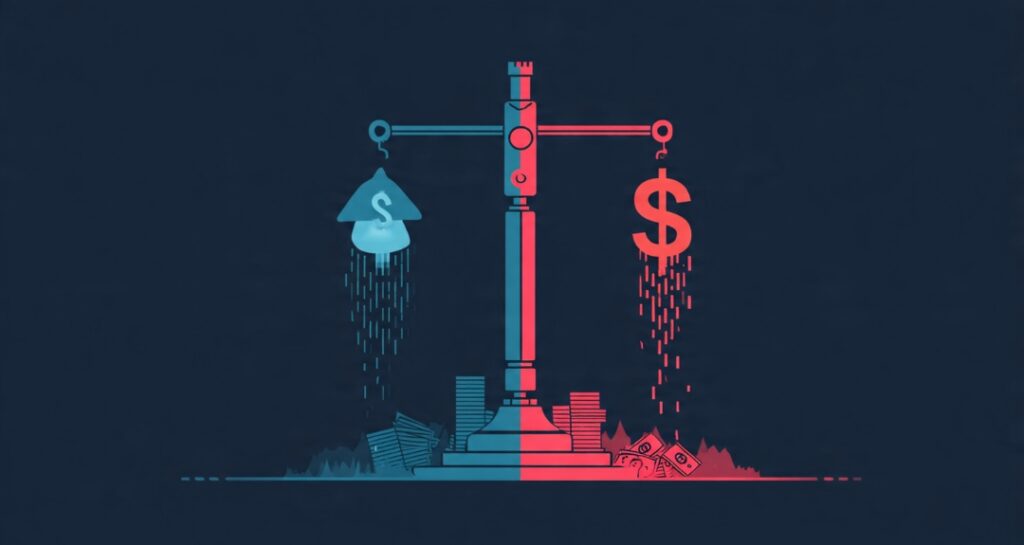
Good debt is borrowing that is intended to generate a return greater than its cost. It buys something that earns income, appreciates in value, or increases your ability to earn — so the asset, over time, more than pays for the debt and leaves you ahead. The money flows toward you. You used other people’s money to acquire something that produces, and the production covers the cost of borrowing and then some.
Bad debt is borrowing to buy things that lose value or produce nothing. It finances consumption — lifestyle, depreciating goods, wants you couldn’t otherwise afford. There’s no return to cover the interest, so you pay the cost of the debt and watch the thing it bought lose value. The money flows away from you in two directions at once: the interest leaving, and the asset’s value sinking. You end up poorer than if you’d simply waited and paid cash, or not bought at all.
What Good Debt Actually Looks Like
Good debt isn’t a specific product — it’s a function. Any borrowing can qualify if it points the lever at something productive. The common shapes it takes:
Debt that buys income-producing assets. Borrowing to acquire something that generates ongoing cash flow — where the income the asset produces is intended to cover the loan payment and leave a surplus. The asset is, in effect, paying off its own debt while building your equity. This is the engine behind serious wealth-building and the logic that underpins acquiring income-producing assets that generate monthly cash flow.
Debt that increases your earning power. Borrowing for skills, qualifications, or tools that meaningfully raise what you can earn — so the lift in income over your lifetime is intended to dwarf the cost of the borrowing. The crucial word is meaningfully: the increased earning has to be real and large enough to justify the debt, not assumed. When it works, you’ve used borrowed money to permanently upgrade your most valuable asset, which is your own ability to produce.
Debt that builds or scales a productive venture. Borrowing deployed into something that generates returns above the cost of the debt — capital that makes more capital. Used with discipline, this is how small operations grow faster than they ever could on their own cash. Used recklessly, it’s also how they implode, which is exactly why direction and control matter so much.
Notice the thread running through all three: in every case, the borrowed money is aimed at something that is supposed to produce more than the debt costs. That’s the whole definition. Good debt is a bet that the thing you bought will out-earn the interest — and good debt becomes great when that bet is conservative, well-judged, and built on assets you understand.
“Good debt borrows from your future to buy something that pays your future back with interest. Bad debt borrows from your future to buy something your future will still be paying for long after the thrill is gone.”
What Bad Debt Actually Looks Like
Bad debt is the mirror image: borrowing aimed at things that produce nothing and usually lose value. It’s the most common kind, because it’s the easiest to fall into — it requires no plan, no asset, just a want and a way to pay later.
High-interest debt on lifestyle and consumption. The classic trap: revolving balances used to fund a standard of living you can’t currently afford — debt quietly bankrolling the same lifestyle creep that already outruns most people’s income. The thing you bought is consumed or worn out long before it’s paid off, and you’re left paying interest on a memory. This is where bad debt is at its most vicious, because the interest itself compounds against you month after month.
Financing things that depreciate. Borrowing to buy goods that lose value the moment you own them — and that produce no income to offset the loss. You take a double hit: depreciation shrinking the thing’s value while interest grows what you owe. By the time it’s paid off, you’ve spent far more than the item ever cost, to own something now worth a fraction of the price.
“Pay later” debt for wants. The modern, frictionless version: splitting a want into easy installments so it feels affordable. The danger isn’t any single purchase — it’s that making consumption painless invites far more of it, and these small, scattered debts stack into a real burden you never consciously decided to take on. It’s the financing of exactly the kind of spending spiral we mapped in the Diderot Effect, except now each link in the chain comes with interest attached.
The defining feature of all bad debt is simple: nothing it buys ever pays you back. There’s no income, no appreciation, no rise in earning power to cover the cost. The money only flows out — first as interest, then as the lost value of whatever you bought. It is, quite literally, paying extra for the privilege of becoming poorer.
The Interest Rate Can Flip the Label
Here’s the dimension most people miss: the cost of the debt can turn good debt bad and make bad debt catastrophic. The interest rate isn’t a detail — it’s half the equation. A piece of borrowing is only “good” if the thing it buys is expected to out-earn its cost, so the higher the cost, the higher that bar climbs.
Borrow at a low rate to buy something expected to return well above that rate, and the gap is your profit — clean good debt. But take that same productive purchase and finance it at a punishing rate, and the interest can swallow the entire return, turning a good idea into a losing one. The asset has to work twice as hard just to break even. This is why the annual percentage rate matters as much as what you’re buying.
And at the high-interest end, bad debt becomes genuinely dangerous, because it’s compounding running in reverse against you. Carry a balance at, say, 22% and you’re being charged roughly $1,100 a year in interest for every $5,000 owed — pure illustrative arithmetic — and if you only make minimum payments, that interest piles onto the balance and starts charging interest on itself. That’s the exact same exponential force that builds fortunes, except pointed at your destruction. We broke down how that silent reverse-compounding collapses people in why compounding feels slow at first — and high-interest debt is that curve bending the wrong way, fast.
What Nobody Tells You: Good Debt Can Quietly Turn Bad
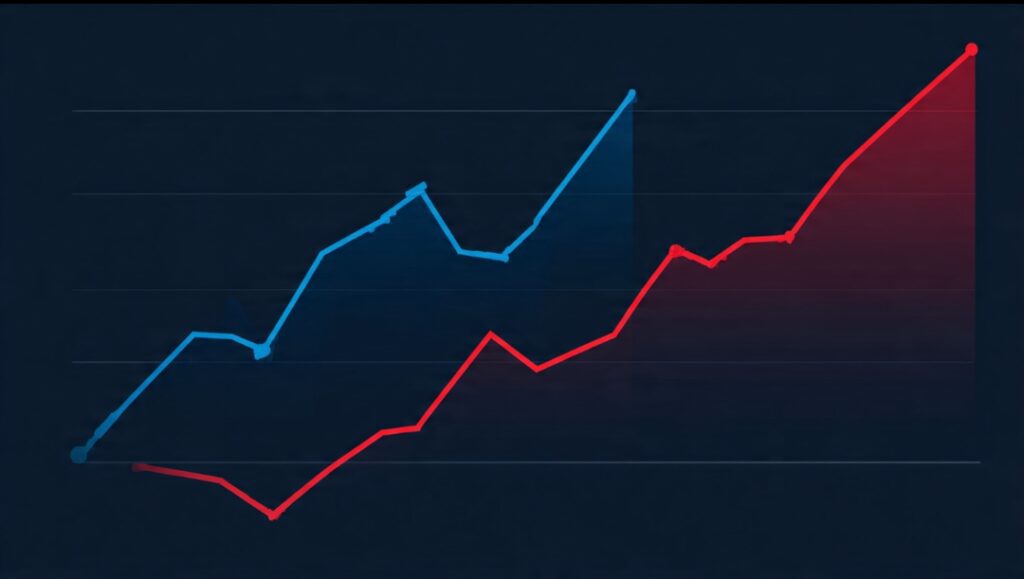
Here’s the part the “good debt is fine” crowd never warns you about. Even genuinely good debt — aimed at a real, productive asset — can bury you, and it happens through one specific failure: over-leverage. The borrowed money has to be repaid whether or not the thing it bought works out. The asset can underperform, sit empty, drop in value, or fail entirely — and the debt doesn’t care. It still demands its payment, on schedule, in full.
This is the trap that destroys people who thought they were being smart. They pointed the lever at a real asset, so they felt safe — but they borrowed so heavily that there was no margin for the asset to stumble. When the income paused or the value dipped, the payments kept coming, and the leverage that was multiplying their gains started multiplying their losses just as fast. The lever is symmetrical. It magnifies the downside with exactly the same power it magnifies the upside, and over-leverage means you’ve removed your own ability to survive the downside.
There’s a second, sneakier way good debt goes bad: using the “it’s an investment” story to justify what’s really consumption. The mind is brilliant at this. It dresses up a want as an asset to make the borrowing feel responsible — the lifestyle upgrade rebranded as “an investment in myself,” the depreciating toy reframed as “a business expense.” Be ruthlessly honest here, because this self-deception is how bad debt sneaks in wearing good debt’s clothing. If the “asset” doesn’t have a real, defensible path to out-earning its cost, it’s not good debt — it’s consumption with a flattering label, and the same emotional machinery behind Parkinson’s Law of Money is happily helping you believe otherwise.
This is also why a buffer matters more than borrowing capacity. The thing that lets good debt stay good is your ability to survive a bad stretch without being forced to sell or default — which is the entire point of having an emergency fund standing between you and disaster before you ever reach for leverage. The cleanest way to build that buffer steadily is to fund it automatically through a reverse-budgeting system that saves before you spend.
How to Judge Any Debt in Under a Minute
You don’t need to memorize categories. Run any potential debt through these questions and the answer reveals itself.

1. What does it buy — does that thing produce or lose? Will what you’re borrowing for generate income, appreciate, or raise your earning power? Or will it sit there consuming value? Producing leans good; losing leans bad.
2. Is the expected return clearly above the interest cost? Be honest and conservative. If the thing can’t realistically out-earn the rate you’re paying, the math doesn’t work no matter how the loan is labeled. A great asset at a terrible rate is still a bad deal.
3. Can you survive if it goes wrong? Could you keep making the payments if the asset underperformed or your income dipped? If one bad stretch would sink you, you’re over-leveraged — and that turns even good debt dangerous. Keep your debt-to-income ratio low enough to absorb a shock.
4. Are you telling yourself the truth about what this is? Strip away the flattering story. Is this genuinely an asset with a path to paying you back, or is it consumption wearing an “investment” costume? The honest answer is the real answer.
| Good Debt (builds you) | Bad Debt (buries you) |
|---|---|
| Money flows toward you over time | Money only flows away from you |
| Buys assets, income, or earning power | Buys consumption that loses value |
| Return expected above the interest cost | No return to cover the interest at all |
| The asset helps repay the debt | You repay it alone, with nothing earning |
| Leaves you wealthier afterward | Leaves you poorer than paying cash |
| Can turn bad if over-leveraged | Almost always bad, worse at high rates |
Now It’s Your Move
“All debt is bad” was always too simple to be useful. The real skill isn’t avoiding debt or chasing it — it’s reading it. Knowing, in the moment, whether the loan in front of you is a lever pointed at your future or a weight chained to your ankle. Master that single distinction and you’ll sidestep the borrowing that quietly buries people while staying open to the borrowing that genuinely builds them.
- Audit your current debts by direction. List every debt you carry and mark each one: does it put money in your pocket over time, or only take it out? The bad-debt pile is your priority target.
- Attack the highest-interest bad debt first. That’s compounding working hardest against you. Killing it is often the highest guaranteed “return” available to you anywhere.
- Run the four questions before any new loan. What does it buy, does the return beat the cost, can you survive a bad stretch, and are you being honest about what it is?
- Refuse to finance depreciation. Make it a rule: things that lose value and produce nothing get bought with cash or not yet at all — never with debt.
- Protect your good debt with a buffer. Keep enough margin and reserves that one bad stretch can’t force your hand. Survivability is what keeps good debt good.
Every loan you’ll ever be offered is a lever someone is handing you. From now on, you don’t take it or refuse it on reflex — you look at where it’s pointed, you check what it costs, and you decide with open eyes whether it’s building you or burying you. That decision, made well and made consistently, is worth more than almost any single financial move you’ll make.
Good debt is borrowing intended to generate a return greater than its cost, by buying assets, income, or increased earning power, so money flows toward you over time. Bad debt finances consumption and depreciating things that produce no return, so money only flows away from you through interest and lost value. The simplest test is the direction of the money: good debt is meant to put money in your pocket, while bad debt only takes it out.
No. Debt is a form of leverage, a multiplier that magnifies whatever you point it at, so it can build wealth or destroy it depending on its use. Pointed at a productive asset that out-earns its cost, debt can accelerate wealth-building; pointed at consumption that loses value, it makes you poorer. The “all debt is bad” slogan is too simple, because it both scares people away from productive borrowing and fails to warn them about genuinely harmful debt.
The interest rate is half the equation, because debt is only good if what it buys is expected to out-earn its cost. A high rate raises that bar and can turn an otherwise productive purchase into a losing one by swallowing the return. At the extreme, high-interest consumer debt becomes compounding running in reverse against you, where unpaid interest is charged interest, which is why the rate matters as much as what you are buying.
Yes, most often through over-leverage. Borrowed money must be repaid whether or not the asset it bought performs, so if you borrow so heavily that there is no margin for the asset to stumble, the same leverage that multiplied your gains will multiply your losses. Good debt also turns bad when people use an “it’s an investment” story to justify what is really consumption, dressing up a want as an asset that has no real path to paying it back.
Ask four questions: what does it buy and does that thing produce or lose value, is the expected return clearly above the interest cost, could you survive the payments if the asset underperformed or your income dipped, and are you being honest that it is a real asset rather than disguised consumption. If the purchase produces, out-earns its cost, leaves you able to survive a bad stretch, and passes the honesty test, it leans toward good debt.
This depends on individual circumstances and is not one-size-fits-all, but a common principle is that paying off high-interest bad debt often provides a guaranteed return equal to that interest rate, which can be hard to beat elsewhere. Lower-cost good debt tied to a productive asset is generally less urgent to eliminate. Because the right balance varies with rates, risk, and goals, this is an area where consulting a qualified professional about your own situation is wise.
Because you take a double hit: the item loses value over time while the interest increases what you owe, and nothing the item produces offsets either cost. You end up paying far more than the original price to own something now worth a fraction of it. Since there is no income or appreciation to cover the borrowing, the money only flows outward, which is the defining feature of bad debt and the reason paying cash or waiting is usually better.
Disclaimer: This article is for educational and informational purposes only and does not constitute financial, investment, legal, or tax advice. The numerical examples shown are simplified arithmetic illustrations, not predictions, promises, or guarantees of any specific outcome. All borrowing and investing involve risk, including the loss of capital, and individual circumstances vary widely. Always do your own research and consult a qualified financial professional before taking on debt or making investment decisions.