Key Takeaways
- Wealth is the gap between what you earn and what you spend — not the size of your income. A bigger income with a bigger lifestyle leaves the gap exactly where it was.
- Lifestyle creep is automatic. Spending quietly rises to swallow every raise, so most people earn far more over a career and never feel any richer.
- Your brain is built to adapt to comfort. Every upgrade feels amazing for a few weeks, then becomes the new normal you can’t imagine living without.
- Expenses ratchet up easily and almost never come back down. That one-way movement is what makes creep so dangerous.
- The fix is to bank the gap first. Decide in advance what share of every raise gets saved before lifestyle ever touches it.
- Looking rich and being rich are opposites. The money spent proving status to others is the exact money that could have bought your freedom.
You got the raise. The one you worked months for, rehearsed the conversation for, lay awake hoping for. The number went up. And for a little while, life felt lighter — a nicer phone, a better car, the apartment with the view, dinners you didn’t flinch at. Then, somehow, a year later, you checked your account at the end of the month and felt the exact same tightness you felt before the raise. Same stress. Same “where did it all go.” More money coming in, and not one extra rupee, dollar, or dirham staying behind.
That’s not bad luck and it’s not a math error. That is a specific, predictable financial force with a name, and almost nobody escapes it without understanding it first. It’s called lifestyle creep, and it is the single biggest reason people who earn good money still hit fifty with almost nothing saved. They spent their whole lives getting raises — and handing every single one straight back.
This is the article about where your raises actually go. Not where you think they go. Where they really go.
Your Income Is Not Your Wealth — The Gap Is
Let’s fix the most expensive misunderstanding in personal finance right now, because everything else depends on it. People believe that earning more money makes you richer. It doesn’t. What you keep makes you richer. Income is the water coming through the pipe. Wealth is what’s left in the bucket after everything leaks out the bottom. You can triple the water and still have an empty bucket if you also tripled the size of the holes.
Real wealth — your actual net worth — is built entirely in the gap between what you bring in and what you spend. A person earning a modest income who keeps 30% of it is building wealth faster than a person earning three times as much who keeps 5%. The second person looks richer. They drive the better car and post the better holiday. But the quiet truth is they’re often one missed paycheck away from collapse, while the “poorer” person is quietly free.
“A raise doesn’t make you wealthier. Only the part of the raise you refuse to spend does. Everything else is just a bigger number passing through your hands on its way to someone else’s.”
Once you understand that wealth lives in the gap, lifestyle creep reveals itself for what it actually is: a machine for keeping your gap permanently small no matter how much you earn. It doesn’t steal your money in one big robbery. It steals it through a hundred small, reasonable, perfectly defensible upgrades that each feel like nothing — and together quietly guarantee you never get ahead.
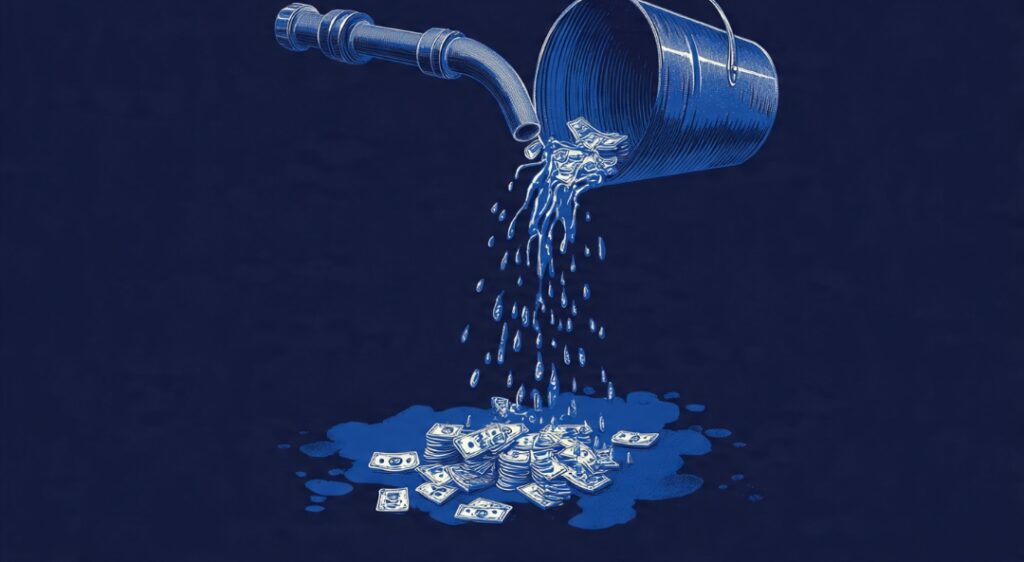
Lifestyle Creep: The Raise That Vanishes Before You Enjoy It
Here is exactly how the machine works, step by quiet step. You get more money. Almost immediately, your definition of “normal” expands to match it. The takeaway coffee becomes a daily ritual instead of a treat. The car you were perfectly happy with suddenly feels embarrassing. The subscriptions multiply. The “I deserve this, I work hard” purchases stack up. None of it feels reckless — that’s the genius of it. Each upgrade is small and justifiable on its own. But added together, your spending rises to perfectly absorb the raise, and your gap snaps right back to where it started.
There’s even an old observation about money that captures this perfectly: Parkinson’s Law, applied to your wallet, says that expenses rise to meet income. Give yourself more to spend and you will, automatically, find things to spend it on — not because you planned to, but because the money was simply there and your lifestyle expanded into the available space like gas filling a larger room.
Watch the arithmetic of it, because the numbers make the trap undeniable. Imagine someone earning $4,000 a month and spending $3,500 — a gap of $500. They get a strong raise to $6,000 a month. That’s $2,000 more, every single month. But over the next year their spending drifts up to $5,500. The new gap? Still $500. They are earning $24,000 more per year and saving the exact same amount as before. The entire raise — every cent of that hard-won $2,000 a month — evaporated into a lifestyle they barely notice and certainly couldn’t downgrade now.
Now look at what that same raise could have done if the gap had been protected instead. Suppose that extra $2,000 a month was invested rather than absorbed, at a steady 7% annual return — pure illustrative arithmetic, not a promised result. Over 20 years, banking $2,000 a month grows to roughly $1.04 million. Banking only the original $500 a month grows to roughly $260,000. Same person. Same career. Same raise. The only difference is whether the raise was allowed to creep into the lifestyle or was caught before it could. That gap — about three-quarters of a million — is the literal price of lifestyle creep over a working life.
“Every raise arrives at a fork. Down one road it becomes freedom you’ll feel in twenty years. Down the other it becomes a slightly nicer Tuesday you’ll forget by Friday. Most people take the Tuesday.”
If that compounding math feels slow or unconvincing in the early years, that’s normal — and it’s exactly the trap we broke down in why compounding feels slow at first. The raises you protect today look like they’re doing nothing for a long time. Then they quietly become the biggest financial decision you ever made.
Why Your Own Brain Is Working Against You
You might be thinking, “fine, I’ll just enjoy the upgrade once and stop there.” You won’t, and it’s not a willpower flaw — it’s how your mind is wired. There’s a well-studied effect called the hedonic treadmill: humans rapidly adjust to improvements in their circumstances and return to a stable baseline of satisfaction. The new car thrills you for a month. Then it’s just your car. The bigger apartment feels like a victory for a few weeks. Then it’s just where you live, and you start eyeing the next one.
This is the cruel engine underneath lifestyle creep. The upgrade never delivers lasting happiness — it delivers a few weeks of novelty and then becomes your new, permanent, more-expensive baseline. So you chase the next upgrade to feel the hit again. You’re running faster and faster on a treadmill, spending more and more money, and arriving at the exact same level of satisfaction you had before — except now it costs you twice as much to stand still. The treadmill doesn’t take you anywhere. It just makes standing still expensive.
Layered on top of that is the second engine: comparison. We don’t measure our lifestyle against our own past — we measure it against the people around us. When your income rises, you don’t just get more money; you usually move into circles where the spending is higher, and suddenly your perfectly good life feels inadequate next to theirs. So you spend to keep pace with a standard that isn’t yours, chasing a finish line that keeps moving because everyone in the race is doing the exact same thing. This emotional pull — spending to manage a feeling rather than meet a need — is the same silent force we examined in how emotional interference quietly kills compound growth.
The Ratchet: Expenses Go Up Easily and Almost Never Come Down
Here’s the property of lifestyle creep that makes it so much more dangerous than people assume: it only moves in one direction. Raising your standard of living is frictionless — it feels good, it happens in a single afternoon, and your brain accepts the upgrade instantly. Lowering it is brutal. Once something becomes your normal, removing it doesn’t feel like saving money; it feels like a punishment, a step backward, a loss. The mind treats the loss of a comfort far more harshly than it ever valued the gain of it.
That one-way movement is called a ratchet — it clicks up and locks, but it won’t click back down. It’s why a person who upgrades their life during three good years can be financially crippled by one bad one: their income dropped, but their locked-in expenses can’t. The big car payment, the premium rent, the private schools, the lifestyle everyone now expects of them — none of it shrinks just because the income did. The upgrades that felt like rewards on the way up become a cage on the way down.
This is the exact mechanism that turns high earners into financial casualties. They were never protected by their big income, because their big income came chained to big fixed costs. The moment the income wobbles, the whole structure cracks. Real protection doesn’t come from earning more — it comes from keeping your fixed costs low enough that a bad month can’t break you, which is the entire logic behind building an emergency fund before you ever need it.

What Nobody Tells You About Looking Rich
Now the part most money articles are too polite to say out loud. A massive share of lifestyle creep isn’t about your own comfort at all — it’s about being seen. The watch, the car badge, the address, the bag, the constant low-grade performance of success for an audience. And here’s the brutal truth underneath it: most of the people you’re spending that money to impress are barely paying attention, and the ones who are will respect you for the status, never for you.
That’s a hard pattern to swallow, but it’s worth sitting with. As you become more visibly successful, people gather around the success, not the human being holding it. Spending heavily to attract that kind of attention is buying the most worthless thing money can purchase — the admiration of people who’d vanish the moment the status did. You are trading your actual freedom for the temporary approval of a crowd that isn’t loyal to you in the first place.
And there’s a deeper inversion most people never grasp: the things that signal wealth and the things that create wealth are usually opposites. The money that goes into looking rich — the depreciating car, the financed luxury, the lifestyle performance — is the exact money that could have been buying assets that pay you. Truly wealthy behavior is often invisible precisely because the wealth is sitting in income-producing assets instead of being worn on the wrist. The loudest spenders are frequently the least wealthy people in the room. The quiet ones already own the room.
“Spending to look rich is the surest way to stay poor. Every dollar spent proving status to strangers is a dollar that could have bought your freedom from ever needing their approval again.”
The people who win this game long-term share one trait: they don’t need short-term applause. They’re comfortable being underestimated. They’ll let you think they’re doing worse than they are, because they understand that where they’ll be in ten years matters infinitely more than who’s impressed today. That patience — the willingness to look ordinary now in exchange for being free later — is the whole game.
How to Beat Lifestyle Creep: Bank the Gap First
Understanding the trap doesn’t free you from it. You need a system that catches your raises before your lifestyle ever touches them. Here’s what actually works.
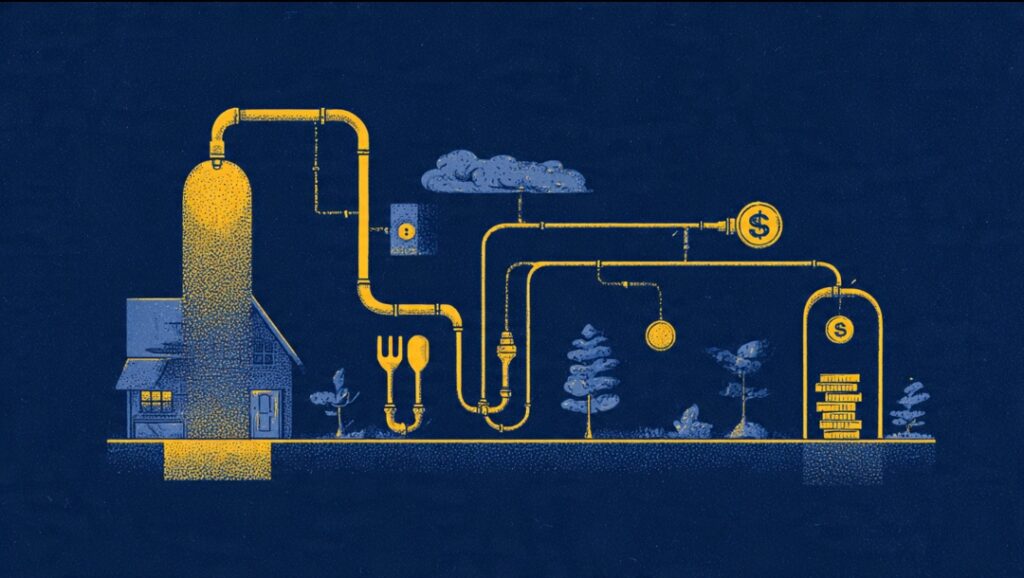
1. Pay yourself first, automatically. The reason creep wins is timing: people spend first and try to save whatever’s left, and there’s never anything left. Flip the order. The moment money arrives, a fixed share moves automatically into savings or investments before you can see it or spend it. This is the old, unkillable principle of paying yourself first, and it works because it removes the decision from your weak, in-the-moment self entirely.
2. Split every raise before it lands. This is the single most powerful anti-creep move. Decide in advance — today, before the next raise — that any future increase gets divided. A common rule: save at least half of every raise and allow yourself to enjoy the rest. This way your life does improve as you earn more (which keeps the plan sustainable), but the bulk of each raise is captured into your gap forever. You feel rewarded and you build wealth at the same time. The raise stops vanishing.
3. Spend lavishly on what you value, ruthlessly cut what you don’t. Beating creep is not about misery or denying yourself everything. It’s about intention. Pick the one or two things that genuinely make your life better and spend on them without guilt — then aggressively cut the dozens of upgrades you only bought on autopilot or to impress someone. Most lifestyle spending isn’t even enjoyed; it’s just absorbed. Cutting it costs you nothing real.
4. Anchor your lifestyle to an old income, not your current one. One of the most effective tricks the quietly wealthy use: keep living roughly like the version of you from a few years and several raises ago, and invest the entire difference. Your lifestyle grows slowly and deliberately while your income grows fast — and that widening gap is where serious wealth is built. It’s the same engine behind moving from active income to passive wealth: the gap you protect today becomes the assets that pay you tomorrow.
5. Turn captured raises into new income, not just savings. The strongest version of this isn’t just hoarding the gap — it’s deploying it. The money you rescue from creep becomes the seed capital for assets and additional income streams built without quitting your job, so your protected raises don’t just sit there; they start earning their own raises. And like all compounding, the early progress feels invisible — which is exactly why the discipline of small consistent daily and monthly habits matters more than any single big financial decision.
| The income-focused person | The gap-focused person |
|---|---|
| Measures success by how much they earn | Measures success by how much they keep |
| Spends the raise, then saves the leftovers | Saves the raise first, spends the leftovers |
| Upgrades lifestyle with every pay rise | Upgrades lifestyle slowly and on purpose |
| High fixed costs, fragile to a bad month | Low fixed costs, survives a bad year |
| Looks rich, often isn’t | Looks ordinary, quietly is |
Now It’s Your Move
Lifestyle creep doesn’t announce itself. It won’t show up as a single bad decision you can point to. It arrives as a hundred reasonable upgrades that each feel earned, and it leaves you, decades later, wondering how someone who earned so much managed to keep so little. You now know the mechanism. So you no longer get to be its victim by accident.
- Calculate your real gap. This week, work out exactly what comes in and what goes out. The difference is your true wealth-building rate. Look at it honestly, even if it stings.
- Automate the gap before you can touch it. Set up an automatic transfer so a fixed share of every paycheck moves to savings or investments the day it lands — not whatever’s left at month’s end.
- Write your raise rule now. Decide today what percentage of your next raise gets captured before lifestyle gets any of it. Half is a strong default. Commit to it before the money exists.
- Audit your autopilot spending. List every recurring expense and mark the ones you’d genuinely miss versus the ones you only barely notice. Cut the second group this month.
- Stop buying status. Identify one thing you spend on mainly to be seen, and redirect that money into an asset that pays you instead. Do it once and watch how little you actually miss the approval.
The next raise is coming, eventually. The only real question is whether it disappears into a slightly nicer Tuesday you’ll forget — or whether you finally catch one, protect it, and let it start building the freedom that a lifetime of vanished raises never could.
Lifestyle creep, also called lifestyle inflation, is the tendency for spending to rise automatically as income rises, so that raises get absorbed into a more expensive standard of living instead of being saved. Each upgrade feels small and justified on its own, but together they keep the gap between earnings and spending permanently narrow. The result is that people can earn far more over a career yet never actually feel wealthier or build meaningful savings.
Because wealth is determined by the gap between what you earn and what you spend, not by income alone. If a bigger income comes with bigger spending, the gap stays the same and no extra wealth is created. A person who keeps a large share of a modest income builds wealth faster than a high earner who spends almost everything they make, because what you keep, not what you earn, is what actually accumulates.
The most effective method is to pay yourself first by automatically moving a fixed share of income into savings or investments before you can spend it. Pair that with a raise rule that captures a set percentage, often around half, of every pay increase before lifestyle touches it. Spending deliberately on the few things you truly value while cutting autopilot upgrades, and anchoring your lifestyle to an earlier income level, all keep the gap wide as you earn more.
Not entirely. Allowing your standard of living to improve gradually as you earn more is reasonable and keeps a financial plan sustainable, because total deprivation rarely lasts. The danger is when spending rises to fully absorb every raise automatically and without intention, leaving no growing gap to build wealth. The goal is not to freeze your lifestyle forever but to make sure it grows slower than your income, so the gap keeps widening over time.
Because lifestyle works like a ratchet that clicks up easily but resists clicking back down. Psychologically, the mind adapts quickly to comforts and then treats their removal as a painful loss rather than a return to normal. An upgrade that felt like a reward becomes a baseline you can’t imagine living without, so cutting it feels like punishment. This one-way movement is what makes high fixed costs so dangerous when income drops.
The hedonic treadmill is the well-documented tendency for people to return to a stable baseline of happiness shortly after a positive change in their circumstances. A purchase or upgrade delivers a burst of excitement that fades within weeks, after which it becomes the new normal and stops providing satisfaction. This is why chasing happiness through bigger and more frequent purchases fails: spending rises continuously while contentment stays flat, costing more and more just to feel the same.
A widely used and effective guideline is to save at least half of every raise and allow yourself to enjoy the other half. This keeps your motivation intact because your life still improves as you earn more, while ensuring the larger portion of each increase is captured into long-term wealth before lifestyle creep can absorb it. The exact split is less important than deciding it in advance and automating it, so the saving happens before the money is ever available to spend.
Disclaimer: This article is for educational and informational purposes only and does not constitute financial, investment, or legal advice. The numerical examples shown are simplified arithmetic illustrations of how saving and compounding work, not predictions, promises, or guarantees of any specific return. All investing involves risk, including the potential loss of capital, and individual circumstances vary. Always do your own research and consult a qualified financial professional before making money decisions.