Most trading strategies fail people for the same reason: they demand a decision at every moment the market is open. Ten hours of screen time, a thousand judgment calls, and by lunch your discipline is shot. The ICT Silver Bullet was built as the opposite of that. It hands you one job, inside one specific hour, and tells you to ignore the rest of the day. That constraint is the entire point, and it is why the setup has become one of the most talked-about ideas in the Inner Circle Trader toolkit.
The name promises a lot. A “silver bullet” is supposed to be the one clean shot that solves the problem. And here is the honest version up front: it is not a magic money printer, and anyone selling it that way is selling you something. What it actually is, is a mechanical, repeatable, time-boxed setup that removes most of the guesswork from when to look for a trade. Learn it properly and you stop staring at charts for eight hours. You show up for one.
What the Silver Bullet Actually Is
Stripped to its core, the Silver Bullet is a time-based Fair Value Gap setup. During a fixed one-hour window, you wait for price to sweep a pocket of liquidity, shift its short-term structure, and leave behind a Fair Value Gap in the direction it now wants to travel. You enter on the retracement into that gap and target a known draw on liquidity. That is the whole engine.
What makes it a “Silver Bullet” rather than just another FVG trade is the time filter. You are not allowed to take this setup whenever you feel like it. It only counts inside specific hours of the day, hours when the market has a strong tendency to make its clean, decisive moves. By marrying a repeatable pattern to a repeatable time, the setup becomes something you can actually practise and measure, which is exactly what a developing trader needs.
The Three Windows: The “One Hour” of the Title
There are three Silver Bullet windows in a standard trading day, and each one is a single hour. They are defined in New York time (Eastern), because the concept is built around the rhythm of the New York trading session. Wherever you are in the world, convert these to your own local time and mark them on your chart.
| Session Window | Time (New York / EST) | Character |
|---|---|---|
| London Silver Bullet | 3:00 AM – 4:00 AM | Rides London-session momentum |
| New York AM Silver Bullet | 10:00 AM – 11:00 AM | The flagship window, most widely traded |
| New York PM Silver Bullet | 2:00 PM – 3:00 PM | Afternoon continuation or reversal |
The 10:00 to 11:00 AM window is the one most traders cut their teeth on. It sits after the New York open has settled, when the early manipulation of the session has often already happened and the “real” move is ready to unfold. These windows are not random, either; they nest neatly inside the broader ICT kill zones, the high-probability periods when institutional activity tends to concentrate.

Why a One-Hour Window Even Works
New traders find it hard to believe that the clock could matter this much. The reasoning goes back to how modern markets move. Price does not wander aimlessly; it is delivered in a way that repeatedly seeks out pools of liquidity, the resting orders sitting above old highs and below old lows. Certain hours of the day are simply when that delivery tends to be most aggressive and most directional, as participation in the global foreign exchange market peaks and overlaps.
The Silver Bullet windows are chosen to sit inside those high-energy periods. Instead of trying to trade a market that is drifting sideways in a dead hour, you deliberately wait for the window when a clean, liquidity-driven move is most likely to appear. It is the trading equivalent of fishing where the fish actually are, rather than casting a line into an empty pond all day.
The Setup, Step by Step
Here is how the trade is actually constructed. None of these steps are optional, and the order matters.
Step 1: Know your draw on liquidity (before the window)
Before the hour even begins, you need a directional thesis. Where is price likely being drawn? An old session high, a previous day’s low, an obvious pool of stops. This is your target, and it also tells you which direction you are hunting. Building this read is a skill of its own, and it is essentially the daily-bias work covered in predicting market direction. Without a draw, you are guessing.
Step 2: Wait for the window to open
Discipline lives here. You do not touch the setup before the window starts. You mark the hour, you wait, and you let the market come to the time. This single rule filters out an enormous amount of impulsive, low-quality trading.
Step 3: Watch for the liquidity sweep
Inside the window, you often see price first run in the “wrong” direction, sweeping a nearby pool of stops before reversing. That liquidity sweep is the manipulation leg, the market grabbing orders before it moves for real. It is a feature, not a warning sign.
Watch out for the Judas Swing — the fake morning move smart money uses to trap retail before the real direction reveals itself.
Step 4: Confirm the structure shift
After the sweep, you want to see price shift its short-term structure in the direction of your draw, a break of a recent swing that signals the turn. This is the difference between a break of structure and a genuine change of character, a distinction laid out clearly in BOS vs CHoCH. The shift is your confirmation that the manipulation is over and the delivery has begun.
Step 5: Enter on the Fair Value Gap
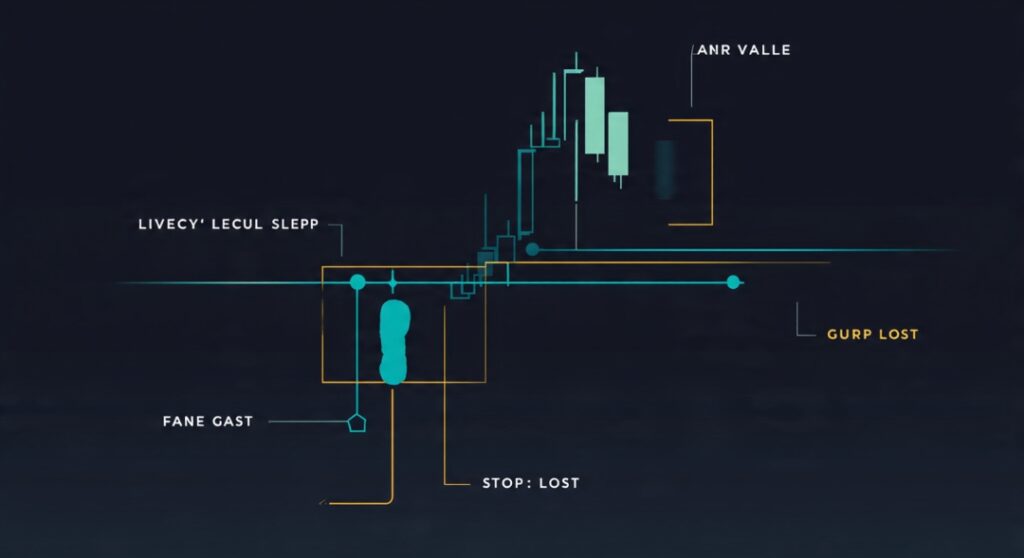
That structure-shifting move almost always leaves a Fair Value Gap behind it, an inefficiency, an imbalance in price. You place your entry on the retracement back into that gap. For added confluence, many traders look for the gap to line up with an order block in the same zone. The FVG is your entry; it is the mechanical trigger that makes this teachable.
Step 6: Stop and target
Your stop goes beyond the swing that created the setup, the point that would prove your read wrong. Your target is the draw on liquidity you identified in Step 1. Because the entry is precise and the stop is defined, this structure often produces a favourable reward-to-risk ratio, which is the entire reason the setup is worth taking.
A Walkthrough on Gold
Let us make it real with the market this setup gets used on most: gold. Say it is approaching 10:00 AM New York time. Overnight, gold has been grinding higher, and just above the current price sits an obvious old session high with a fat pool of stops resting above it. That old high is your draw on liquidity. Your bias is that price wants to reach up and take it.
The window opens. In the first fifteen minutes, gold dips lower and sweeps a small pool of stops beneath a recent low, shaking out the impatient longs. Then it snaps back and breaks the last minor swing high, your structure shift. That aggressive move leaves a clean Fair Value Gap behind it. Price pulls back into the gap, you enter long, your stop sits just under the low that was swept, and your target is that old high above. Price then delivers up into the liquidity, and the trade completes inside the hour. That is the Silver Bullet doing exactly what it is designed to do. Gold’s behaviour around these windows is a topic in its own right, explored further in trading gold with ICT concepts.
The Rules That Keep You Out of Trouble
The setup is simple. Trading it well is not, because the enemy is not the chart, it is you. A few hard rules make the difference between a repeatable edge and a slow bleed.
- Only three windows a day. If a clean setup does not form in the window, you take nothing. No setup, no trade. The absence of a trade is a valid outcome.
- Never trade before the window. Boredom at 9:50 has emptied more accounts than any bad strategy. Wait for the hour.
- One idea, then walk. The window is an hour, not an invitation to keep clicking until something works.
- Risk is fixed and small. The precision of the entry means nothing if a single loss can wreck you. Sound risk management, a small, consistent percentage per trade, is what lets the edge play out over hundreds of trades instead of blowing up on trade number four.

Where Beginners Blow It
The mistakes are painfully predictable. People trade the window with no draw on liquidity mapped, so they have no target and no direction, just a pattern floating in a vacuum. They skip the sweep and the structure shift, entering on the first candle that looks vaguely like a gap. They widen their stop “just this once” to avoid being wrong, turning a defined-risk setup into an open-ended gamble. And most commonly, they cannot sit still, so they trade all day and use the Silver Bullet label to justify whatever they happened to click on.
The setup gives you structure. It cannot give you patience. That part is on you, and it is why the mechanical part of ICT is only ever half the job, the other half being the discipline to follow your own rules when the screen is tempting you to break them. If you get the pattern right but keep losing, the problem is almost never the pattern.
🔑 Key Takeaways
- What it is: A time-based Fair Value Gap setup traded only inside a fixed one-hour window, not a magic system.
- The three windows (New York/EST): London 3–4 AM, New York AM 10–11 AM, and New York PM 2–3 PM. Convert to your local time.
- The flagship: The 10–11 AM AM window is where most traders start, sitting neatly inside the ICT kill zones.
- The sequence: Map the draw on liquidity, wait for the window, watch for a sweep, confirm the structure shift, enter on the FVG, target the liquidity.
- The rules: Only three windows a day, never trade before the window, one idea then walk, and keep risk fixed and small.
- The real edge: The setup supplies structure; patience and risk management are what turn it into an edge.
Frequently Asked Questions
What exactly is the ICT Silver Bullet strategy?
It is a time-based trading setup where, within a specific one-hour window, you wait for price to sweep liquidity, shift its short-term market structure, and form a Fair Value Gap. You enter on the retracement into that gap and target a predefined pool of liquidity. The defining feature is that it is only valid inside set hours.
What are the exact Silver Bullet times?
There are three one-hour windows, defined in New York (Eastern) time: 3:00 to 4:00 AM (London), 10:00 to 11:00 AM (New York AM), and 2:00 to 3:00 PM (New York PM). Traders in other regions convert these to their local time zone.
Which Silver Bullet window is best for beginners?
The 10:00 to 11:00 AM New York window is the most widely used and often recommended starting point. It occurs after the initial New York open volatility has settled, which many traders find produces cleaner, more readable setups.
Do I need a Fair Value Gap for every Silver Bullet trade?
The Fair Value Gap is the core entry mechanism of the standard setup, so in most versions, yes. The gap left behind by the structure-shifting move is what you enter on. Many traders add confluence, such as an order block in the same area, but the FVG is central.
Can the Silver Bullet be used on gold and indices, not just forex?
Yes. Although it is often taught on forex pairs, the concept applies to any liquid market that respects these time-based dynamics, including gold and major indices. Gold in particular is a popular market for this setup.
Is the Silver Bullet a guaranteed or high-win-rate strategy?
No. No trading setup is guaranteed, and losing trades are a normal part of any strategy. The Silver Bullet aims to offer a repeatable, defined-risk structure with favourable reward potential, but its results depend heavily on the trader’s discipline, risk management, and correct execution.
Why does the time of day matter so much?
Markets tend to make their most decisive, liquidity-driven moves during specific high-activity periods of the day. The Silver Bullet windows are positioned inside those periods, so you are looking for setups when clean directional moves are statistically more likely, rather than during quiet, drifting hours.
⚠️ Disclaimer: This article is for educational and informational purposes only and does not constitute financial, investment or trading advice, nor a recommendation to buy or sell any instrument. Trading forex, gold and other leveraged products carries a high level of risk and can result in the loss of some or all of your capital; it is not suitable for everyone. Past performance and illustrative examples do not guarantee future results. Nothing here is a signal or a promise of profit. Always use proper risk management, trade only with capital you can afford to lose, and consider consulting a qualified, licensed professional before trading.