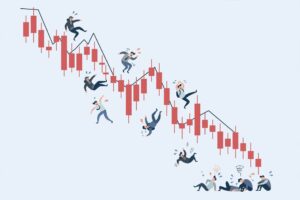
- Being right about market direction and making money are not the same goal, and confusing them is one of the most expensive mistakes a trader can make.
- Trading specifically to prove a prediction correct leads directly to revenge trading the moment that prediction gets temporarily invalidated.
- A trader can be completely correct about direction and still lose everything if risk sizing on the way there was reckless.
- Protecting capital is the first job. Profit is the second job — and the order matters more than most beginners realize.
Every beginner in financial markets eventually faces a deceptively simple question: is it more important to be right about market direction, or is it more important to actually make money? Ask a novice trader directly, and the answer is almost always “being right is everything.” That single belief, more than any indicator or strategy flaw, is where most trading accounts quietly begin their decline.
Years of trading gold and forex reveal a consistent, uncomfortable truth: the market does not care about ego. It does not reward correct predictions on their own. It rewards capital protection and disciplined execution, regardless of how accurate or inaccurate any individual directional call turns out to be.
This guide from the Data Pips Team breaks down exactly why trading to be “right” destroys accounts that trading for profit would have preserved — and the specific discipline required to separate the two permanently.
The Trap of Trading to Be Right
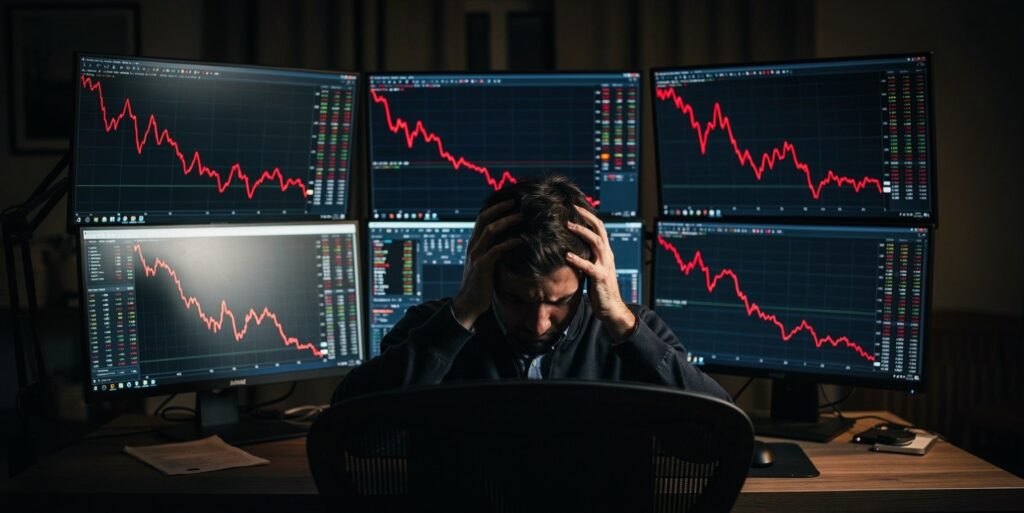
When a trade gets taken specifically to be “right,” ego takes control of every subsequent decision. Picture a market consolidating, with strong conviction that it will break out upward. A buy position gets opened, the market dips and hits the stop-loss, and then — almost mockingly — moves exactly in the originally predicted direction shortly afterward.
A trader focused on being right responds to this with anger, often followed by a revenge trade specifically designed to “prove” the original read was correct all along. A trader focused on profit responds completely differently: accepting the small, planned loss calmly and waiting for the next genuinely valid opportunity, regardless of whether the market eventually validates the original prediction.
The market can remain irrational, or simply move against a correct thesis, for far longer than any individual account can survive funding that thesis. This single reality separates traders who last from traders who do not, almost entirely independent of analytical skill.
“The market is a bully. It does not care about your opinion. Those who fight it to prove a point get crushed — those who trade for profit simply walk away.”
— Data Pips Team
A Hard Lesson: How Ego Destroys Months of Discipline in Hours
One specific stretch of trading a funded account challenge illustrates exactly how quickly ego can undo extended periods of genuine discipline. The early days of the challenge involved a real rollercoaster — a strong early profit followed by giving back a significant portion of it the same evening, purely from chasing the initial momentum past where the original plan called for stopping.
What actually salvaged that phase was not a better strategy. It was forcing a stop once the emotional spiral began, returning the following day with renewed discipline, securing a modest, planned gain, and walking away deliberately rather than pushing for more. Repeating that same restrained pattern on the next session cleared the phase entirely — not through a dramatic trade, but through consistently choosing to stop at a predetermined point rather than chasing further.
The Trap of “Just a Little More”
The second phase of that same challenge introduced a different, equally dangerous pattern: getting close to a target and then refusing to walk away from the remaining small distance. Reaching the overwhelming majority of a profit target and still pushing for the final small remainder, rather than treating the target as effectively met, is a specific form of greed that masquerades as discipline.
That session also included a direct, expensive lesson about trading during specific low-liquidity windows — periods, often around midday in major sessions, where algorithmic activity can behave erratically, frequently triggering stop-losses without establishing genuine directional conviction. Trading during exactly this kind of unreliable window, while chasing a small remaining target, very nearly breached the entire account instead of completing it.
| Trading to Be Right | Trading to Be Profitable |
|---|---|
| Revenge trades after a stop-out | Accepts the loss, waits for the next valid setup |
| Pushes past a met target out of greed | Walks away once the planned target is reached |
| Sizes up to “prove” a directional read | Sizes consistently regardless of conviction level |
| Measures success by being correct | Measures success by account survival and consistency |
The Final Blow: Being Right About Direction, Wrong About Risk
The most expensive lesson from that entire challenge arrived during a high-conviction setup in a historically volatile metal market. Strong directional confidence led to opening multiple positions in an aggressive, all-or-nothing move. The volatility inherent to that specific market produced a sharp dip — just enough to breach the account — before immediately reversing and moving decisively in the originally predicted direction.
The directional call was completely correct. The position sizing relative to that volatility was not. Being right about where the market was eventually headed provided zero protection against the risk taken on the way there. This is the exact mechanism behind our broader guide on why traders should protect personal capital during the learning phase — the lesson costs the same whether it happens on a funded account or personal savings, but the consequences differ dramatically.
After repeating this exact pattern — correct direction, reckless sizing — across multiple separate trading attempts, the underlying issue finally became clear through journaling: the position size was being driven by conviction level rather than by predetermined risk rules. Higher confidence in a setup was leading directly to larger position sizes, which meant the trades with the strongest emotional attachment were also the ones carrying the most risk if they failed before working out. Decoupling position size entirely from conviction level — applying the same fixed risk percentage regardless of how “sure” a setup felt — eliminated this specific failure pattern within a few months of consistent application.
Protecting More Than Just Money
Trading discipline failures rarely stay contained to a trading account. Losing capital through undisciplined decisions tends to produce irritability and frustration that bleeds into daily life — short tempers with family, reduced patience with friends, a general undercurrent of stress that has nothing directly to do with the people absorbing it.
The American Psychological Association’s research on stress and the body confirms that financial stress specifically produces measurable physical and cognitive effects, including impaired decision-making — creating a feedback loop where trading losses produce stress, and that stress then degrades the quality of subsequent trading decisions. Protecting trading capital is, in a very direct sense, also protecting personal peace of mind and relationships outside of trading entirely.
What Nobody Tells You About Right vs. Profitable Trading
1. Win rate and profitability are almost completely unrelated metrics. A trader can be right about direction on the majority of trades and still lose money overall if position sizing and risk management are poor. The reverse is equally true — a trader wrong more often than right can remain consistently profitable with strong risk-reward discipline. Tracking win rate alone provides almost no insight into actual trading health.
2. The desire to be right intensifies, not fades, after a string of losses. Many traders assume confidence and ego pressure decrease after repeated losses. In practice, the opposite frequently happens — each subsequent loss increases the emotional need to finally “prove” competence, which is exactly why revenge trading tends to escalate rather than taper off naturally.
3. Being correct about a low-probability move still feels validating, which makes the lesson harder to learn. When an oversized, poorly managed position eventually moves in the predicted direction despite reckless risk, the emotional reward reinforces the exact behavior that should have been corrected. This intermittent reinforcement — sometimes winning despite poor risk management — makes the underlying pattern significantly harder to break than consistent, predictable losses would.
4. Loss aversion explains why “almost there” targets are so dangerous. Psychology Today’s research on loss aversion confirms that the pain of stopping just short of a goal feels disproportionately significant compared to the actual financial gap involved, which is exactly why pushing past a nearly-met target feels emotionally justified even when it is statistically unnecessary risk.
5. Mechanical position sizing rules feel restrictive right up until they save an account. Fixed risk percentages that do not flex based on conviction level can feel frustratingly conservative during high-confidence setups. Our complete guide on building mechanical discipline covers exactly why this rigidity, uncomfortable as it feels in the moment, is the specific mechanism that prevents the “right but reckless” failure pattern from ever having the chance to occur.

The Path Forward: Discipline Over Mastery
Genuine trading discipline does not require claiming mastery — a trader never truly stops learning, and mistakes continue happening even after years of experience. What separates a recovering, disciplined trader from a perpetually struggling one is not the absence of mistakes, but a consistent refusal to break predetermined rules regardless of how compelling the in-the-moment justification feels.
Three principles consistently protect against the right-versus-profitable trap. Learn the specific low-liquidity windows in your traded markets — the hours where erratic, directionless price action tends to hunt stop-losses without establishing real conviction. Protect capital as the first job, treating profit explicitly as the second job rather than the primary goal. And kill the ego specifically — the market does not care about being right, and fighting it to prove a point consistently ends the same way. Our complete guide on respecting trading capital expands directly on this exact discipline.
According to Investopedia’s research on trading psychology, a trader’s underlying beliefs and emotional discipline consistently outweigh raw technical analysis skill in determining long-term outcomes — confirming that the gap between being right and being profitable is almost entirely psychological, not technical.
Quick Action Steps: Separate Being Right From Being Profitable This Week
Step 1: Review your last 15 trades and categorize each one by whether the exit decision was driven by your original plan, or by a desire to be proven correct.
Step 2: Identify the specific low-liquidity hours in the markets you trade, and commit to avoiding new entries during those windows for the next 30 days.
Step 3: Set a fixed risk percentage per trade that does not change based on how confident you feel, and apply it without exception on your next ten trades.
Step 4: The next time you reach a planned profit target, practice walking away immediately rather than pushing for additional gains.
Step 5: Track your emotional state alongside your trade outcomes this week, specifically noting any moment you felt the urge to “prove” a directional call was correct.
Frequently Asked Questions
What is the difference between trading to be right and trading to be profitable?
Trading to be right means decisions are driven by the desire to validate a directional prediction, often leading to revenge trading or oversized risk when proven wrong temporarily. Trading to be profitable means decisions are driven by consistent risk management and accepting planned losses calmly, regardless of whether the original prediction eventually proves correct.
Can a trader be correct about market direction and still lose money?
Yes, and this happens frequently. Being correct about eventual direction does not protect against poor position sizing or risk management taken to reach that outcome. A sharp, temporary move against a correct thesis can breach an account before the predicted direction ever plays out.
Why is trading during lunch hours or low-liquidity windows risky?
During periods of reduced market participation, such as midday lulls in major trading sessions, price action can become erratic and directionless, frequently triggering stop-losses without establishing genuine trend conviction. This makes these windows particularly risky for entries based on strong directional confidence.
Should I increase my position size when I feel very confident about a trade?
This is generally not recommended. Sizing positions based on conviction level rather than a fixed, predetermined risk percentage tends to put the most capital at risk on exactly the trades with the strongest emotional attachment, which increases the damage when high-confidence setups fail.
How does trading discipline affect life outside of trading?
Undisciplined trading losses frequently produce stress and irritability that extends into personal relationships and daily life. Protecting trading capital through consistent discipline also protects emotional wellbeing and patience in interactions outside of trading entirely.
What is the single most effective fix for ego-driven trading?
Decoupling position size from conviction level is one of the most effective structural fixes. Applying the same fixed risk percentage regardless of how confident a setup feels removes the mechanism that allows ego to translate directly into oversized, account-threatening risk.
Disclaimer: This article is for educational and informational purposes only and does not constitute financial or trading advice. Trading forex, gold, and other leveraged instruments carries substantial risk of loss and is not suitable for all investors. Past performance and behavioral patterns described in this article do not guarantee future results. The Data Pips Team makes no guarantees regarding trading outcomes from applying the strategies described in this article. Always trade with capital you can afford to lose and consult a licensed financial professional before making trading decisions.