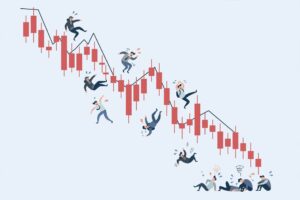
- Adding more money to a stressed, undisciplined mind does not solve a trading problem — it just gives the same mistakes a bigger account to destroy.
- Wealthy people are not “stingy.” They understand that money, once lost, is far harder to recover than almost any other relationship or resource.
- The clarity traders feel after blowing an account was available the entire time — it just took losing everything to access it.
- A structured partial-booking exit removes the fear of “what if it reverses” without forcing an all-or-nothing decision on every trade.
There is a dangerous gap between how financial markets actually work and how social media portrays them. Most newcomers enter trading dreaming of fast, dramatic wealth, while ignoring the most fundamental law that governs every market: it is a mechanism that transfers money from the impatient to the patient, consistently and without exception.
Understanding trading capital psychology is not optional reading for traders who want to last. It is the actual foundation underneath every technical strategy, because no entry signal or chart pattern survives contact with a trader who does not genuinely respect the money they are risking.
This guide from the Data Pips Team breaks down exactly why disrespecting capital destroys trading accounts faster than bad analysis ever could, and the specific structural habits — including a disciplined partial-booking exit strategy — that protect both money and peace of mind.

The Trap of “Revenge Recovery”
After a significant loss, the instinct to “win it all back” feels almost irresistible. This instinct is precisely what destroys far more accounts than the original loss ever did. Injecting additional capital into a stressed, undisciplined mental state does not solve the underlying problem — it simply gives the same flawed decision-making process a larger amount of money to lose.
Genuine recovery does not start with a bigger trade. It starts with acceptance — honestly acknowledging what went wrong without minimizing it or blaming external factors alone. From there, the disciplined path forward involves stepping away from live trading entirely, refining or rebuilding a strategy, and backtesting that approach for a meaningful period — commonly two to three months — before risking real capital again.
Attempting to recover a moderate loss with a single oversized “revenge trade” is one of the fastest ways to convert a manageable setback into a complete account wipeout. Our complete guide on stopping revenge trading covers the specific psychological triggers behind this pattern in significant depth.
The “Heat” of Money and the Clarity That Comes Too Late
There is a specific psychological effect that comes from seeing a healthy account balance — a kind of overconfidence that makes risk feel smaller than it actually is. A strategy might call for a small, defined position size, but the sight of a comfortable balance creates a pull toward sizing up well beyond the original plan. The moment that pull wins, discipline has already been compromised, regardless of how the trade ultimately performs.
There is a striking irony in trading psychology: most traders only achieve genuine clarity about their mistakes after an account hits zero. Once the money is gone, the poor entry, the oversized risk, and the abandoned plan all become obvious in hindsight. The actual professional skill is maintaining that same level of clarity while the account is still healthy — respecting capital while it is still present, rather than only in retrospect.
“The clarity you feel after losing everything was available the entire time you had it. The skill is accessing that same clarity while the account is still full.”
— Data Pips Team
Why Wealthy People Are Often Called “Stingy” — and Why That’s the Wrong Word
Wealthy individuals frequently get labeled as cheap or overly cautious with money. There is a deeper reason behind that behavior that has nothing to do with greed. They understand a specific, hard truth: a damaged relationship can often be repaired through an apology and renewed effort, but money that has left your hands is one of the most difficult things to bring back.
This is not superstition. It reflects a genuine respect for capital as a finite, hard-won resource rather than an abstract number on a screen. Money tends to leave those who treat it carelessly — spending or risking it without calculation, without a plan, without genuine consideration of consequences. Trading success, at its core, requires valuing capital more consistently than ego ever gets valued in the heat of a live decision.
| Mindset | Behavior | Outcome |
|---|---|---|
| Disrespects capital | Sizes up impulsively, chases recovery | Account damage compounds quickly |
| Respects capital | Sticks to defined size, accepts losses calmly | Capital preserved long enough to compound |

The Founder’s Real Lesson: The Fear of Losing Unrealized Profit
Early experience trading a small account produced a direct, memorable lesson in this exact psychological battle. A promising setup moved quickly into a meaningful unrealized gain relative to the account size. Rather than following any predetermined plan, the entire position was closed instantly, purely out of fear that the market would reverse and take the gain away.
Looking back, two separate mistakes were visible in that single decision. The first was risking too much of available margin on one position in the first place. The second, equally damaging, was having no actual plan for managing the trade once it moved into profit — meaning the exit was driven entirely by fear rather than strategy. Closing a position entirely too early carries the same cost, just in the opposite direction, as holding a losing position too long. Our complete guide on why traders exit trades too early explores this exact mechanism in considerably more depth.
That experience produced a lasting conclusion: every trade needs a systematic, predetermined way to exit — not a decision made reactively in the moment based on whatever emotion happens to be loudest.
After repeatedly experiencing the same all-or-nothing exit pattern — either holding too long out of greed or closing too early out of fear — a structured partial booking system was introduced specifically to remove that binary decision. Splitting position closures across several profit milestones, rather than treating every trade as a single all-or-nothing decision, eliminated the paralyzing fear of “what if it reverses” while still preserving room for larger moves to play out. The change was not about predicting price more accurately. It was about removing an emotional decision and replacing it with a mechanical one.
The Partial Booking Strategy: A Professional Exit Framework
One of the most practical fixes for the all-or-nothing exit problem is a structured partial booking approach. The core principle is simple: never risk the entirety of a position’s outcome on a single binary decision made under emotional pressure.
A common structure looks like this: close a portion of the position once an initial profit milestone is reached, securing early gains. Close another portion at a stronger profit level, locking in a guaranteed winning trade regardless of what happens next. Close a third portion at an even higher level. Let the remaining, smaller portion run as far as the trend allows, while trailing the stop-loss behind price to protect the remaining gains.
This structure removes the binary fear of “what if it turns back” without sacrificing the upside potential of a trade that continues running significantly further than the initial target. It converts an emotional, all-or-nothing decision into a mechanical, pre-planned process. Our complete guide on building mechanical discipline in trading covers how this kind of structured exit fits into a broader system of rule-based execution.
What Nobody Tells You About Money Psychology in Trading
1. The instinct to add more capital after a loss is almost always the wrong instinct. The emotional logic feels sound — more capital means more room to recover. The actual mathematics work against this completely, since an undisciplined mind applies the same flawed decision-making to a larger sum, typically producing a larger loss rather than a recovery.
2. Account size changes the feeling of risk far more than it changes the actual risk. The same percentage risk feels dramatically different on a small account versus a larger one, even though the proportional danger to long-term capital preservation is mathematically identical. Recognizing this gap between feeling and reality is essential to maintaining consistent position sizing as an account grows.
3. Loss aversion explains why both fear-driven exits and revenge trades happen. Psychology Today’s research on loss aversion confirms that losses are felt far more intensely than equivalent gains — which explains both the fear that triggers premature exits on winning trades and the desperation that triggers oversized revenge trades after losses. Both behaviors stem from the same underlying psychological mechanism.
4. Financial stress compounds the problem it creates. The American Psychological Association’s research on stress and the body confirms that chronic stress measurably impairs the cognitive functions responsible for patience and rational decision-making — meaning the stress of an account drawdown actively degrades the exact mental clarity needed to recover from it well.
5. Most traders discover their actual risk tolerance only after exceeding it. Theoretical risk tolerance, decided calmly before trading begins, frequently turns out to be inaccurate once real money and real uncertainty are involved. The genuine risk tolerance only becomes clear after a position size or drawdown produces real emotional discomfort — which is precisely why starting conservatively and adjusting gradually beats guessing aggressively from the outset.
Consistency or Exit: The Honest Choice Every Trader Faces
If repeated losses have gradually turned a disciplined approach into pure gambling — chasing one massive recovery trade instead of building consistent, smaller gains — that is a genuine signal worth taking seriously. Markets reward patience and discipline; they do not reward desperation, regardless of how badly a trader needs a specific outcome.
Money genuinely exists to be made in trading. It is not made by chasing rapid, dramatic windfalls. It is made through consistency, emotional steadiness, and an unwavering focus on process over any individual outcome. Our guide on why traders should never learn with their own savings covers a related structural protection for exactly this kind of psychological pressure during the learning phase. According to Investopedia’s research on trading psychology, a trader’s discipline and emotional regulation consistently outweigh raw technical skill in determining long-term outcomes — reinforcing that the capital psychology covered here is not a secondary consideration, but a central one.
A trader unwilling to commit to that level of consistency is, functionally, a temporary guest in the market — waiting, whether consciously or not, to hand their capital over to someone more disciplined. Our complete guide on wealth mindset and money psychology expands on this same discipline-over-desperation principle from a broader personal finance perspective.
Quick Action Steps: Build Healthier Trading Capital Psychology This Week
Step 1: If you are currently in a drawdown, step away from live trading and commit to a backtesting and forward-testing period before risking capital again.
Step 2: Write down your maximum position size rule today, in a calm state, and commit to it regardless of how confident any single trade feels.
Step 3: Build a structured partial booking plan — defined profit milestones for closing portions of a position — and apply it to your next five trades.
Step 4: Reflect honestly on whether your last significant loss was followed by a “recovery trade.” If so, identify what triggered that decision and write a specific rule to prevent it next time.
Step 5: Practice maintaining the same discipline you would have “after losing everything” while your account is still healthy — review your rules weekly regardless of current performance.
Frequently Asked Questions
Why is adding more money to a trading account after a loss usually a bad idea?
Adding capital does not fix the underlying discipline or risk management problem that caused the original loss. An undisciplined decision-making process simply applies the same flawed pattern to a larger sum, which frequently produces a larger loss rather than a recovery.
What is the partial booking strategy in trading?
Partial booking means closing a position in stages at multiple profit levels rather than exiting all at once. A portion is closed at an early profit milestone, additional portions at higher levels, and the final remaining portion is allowed to run with a trailing stop-loss, balancing profit security with continued upside potential.
Why do traders only seem to understand their mistakes after losing everything?
Clarity about a poor entry or oversized risk is often easier to see in hindsight, once emotional investment in the outcome has been removed by the loss itself. The actual skill being developed is accessing that same objective clarity while capital is still present, rather than only after it is gone.
How long should I backtest a new strategy before trading it live again after a loss?
A commonly recommended minimum is two to three months of backtesting and forward testing on a demo account before returning to live trading. This period allows enough trade samples to evaluate whether a strategy is genuinely sound, separate from the emotional pressure of real capital.
How do I know if I’m respecting my trading capital or just gambling?
If your trading decisions are increasingly driven by the desire for one large recovery trade rather than consistent, smaller, planned gains, that pattern signals gambling rather than disciplined trading. Genuine capital respect shows up as consistent position sizing and a willingness to accept smaller, planned losses without escalating risk.
Does account size change how much risk I should actually take?
The proportional risk percentage should remain consistent regardless of account size, even though the same percentage often feels different emotionally on a smaller versus larger account. Maintaining a fixed risk percentage, rather than adjusting based on how safe a larger balance feels, is essential to long-term capital preservation.
Disclaimer: This article is for educational and informational purposes only and does not constitute financial or trading advice. Trading forex, gold, and other leveraged instruments carries substantial risk of loss and is not suitable for all investors. Past performance and behavioral patterns described in this article do not guarantee future results. The Data Pips Team makes no guarantees regarding trading outcomes from applying the strategies described in this article. Always trade with capital you can afford to lose and consult a licensed financial professional before making trading decisions.