A recommerce business can start from something most people throw away without thinking.
Look, let me explain it with a simple example.
You buy a cold drink. You drink it. Then what happens to the empty bottle? Most people throw it away because for them, the bottle is finished.
But here is the interesting part.
That same empty bottle can become someone else’s income. One person throws it away. Another person collects it. A recycler processes it. A company uses it. A product comes back into the market.
Your waste becomes someone else’s business.
That is the real power of a recommerce business.
Honestly, I didn’t understand this mindset early in my life. In my early 20s, I used to start work with excitement. If results didn’t come quickly, I would quit. I thought the problem was in the work.
Later, I realized the real problem was not the work. The problem was my mentality.
If every difficult situation makes you quit, you cannot build wealth. Business, trading, freelancing, content creation, repair work, anything valuable — all of it requires process.
My turning point came when I decided one thing: even if results come late, even if the process is long, even if fear is there, I will not leave the work halfway.
That mindset changed my life.
Today, I still feel fear. Risk still feels real. But now my mind says, “If I picked this work, I will finish the process.” Because honestly, I fear an average life more than failure.
And recommerce is exactly that kind of business. It looks simple from outside, but the people who stay consistent can build real income from products others ignore.
In this article, I’ll break down how to start a recommerce business in 2026, how to find products, how to price them, how to build trust, and how to avoid the mistakes that destroy beginners.
What Is a Recommerce Business
A recommerce business is a business that buys, collects, repairs, refurbishes, or resells used products.
Some people call it reverse commerce. Some call it resale. Some call it second hand business. The idea is simple:
Take something that already exists, improve its value, and sell it again.
This can include used phones, laptops, clothes, furniture, cars, bikes, books, tools, home appliances, shoes, watches, and even waste materials like bottles, plastic, paper, and metal.
Recommerce is not just “old stuff selling.” Good recommerce is about inspection, cleaning, repair, presentation, trust, and smart pricing.
That is where beginners miss the real money.
Simple Recommerce Examples
Here are simple examples you see around you every day:
- A person sells an old phone, and another person repairs and resells it.
- A used car is bought, cleaned, inspected, photographed well, and sold at a higher price.
- Old branded clothes are washed, styled, photographed, and sold as thrift fashion.
- Students sell used books, and another seller bundles them for new students.
- Broken appliances are repaired and sold to people who cannot afford new ones.
- Empty bottles and scrap material are collected and sold into recycling channels.
Platforms like OLX, eBay, Facebook Marketplace, local thrift shops, and used car marketplaces are built around this behavior.
The product may be old, but the business opportunity is fresh.
Why Recommerce Is Growing in 2026
Recommerce is growing because people want cheaper products, brands want sustainability, and waste is becoming a serious global problem.
The World Bank has warned that global waste could grow significantly by 2050 if the world continues with business as usual.
At the same time, the Ellen MacArthur Foundation explains the circular economy model, where products and materials stay in use for longer instead of being wasted.
This is exactly where recommerce sits.
It helps customers save money, helps sellers earn income, and helps products get a second life.
Pro Tip: In 2026, recommerce is not only a low investment business idea. It is also a sustainability trend, a personal finance solution, and a smart business model for people starting from zero.
My Turning Point From Quitting Early to Process Thinking
I want to be honest here.
In my early 20s, I was not naturally consistent. I used to start something with fire. Then if results were slow, I would leave it.
I did this in work. I did this in learning. I did this in trading too.
When I started my journey in 2018, I was in 10th class. I left school and worked as an electrician and plumber for around three years. Later, I worked in AC repair. Then I entered trading through binary options, moved to forex, bought funded accounts, and blew accounts.
Every stage taught me something, but only when I stopped quitting did those lessons start connecting.
The Real Problem Was Not the Work
At first, I thought every failure meant the work was wrong.
Trading didn’t work fast? Change strategy.
Business didn’t grow fast? Change business.
Content didn’t get views fast? Change topic.
But here’s the thing I learned painfully:
If your mentality is weak, every business will look bad after the first difficulty.
A recommerce business also tests your patience. You may list ten products and only sell one. You may buy something and realize the margin is small. You may deal with customers who bargain too much.
If you quit at the first friction, you will never reach the learning phase.
“Success is the sum of small efforts, repeated day in and day out.”
— Robert Collier
That quote became real for me when I stopped chasing quick results and started respecting the process.
I don’t believe in destroying your health for success. Sleep, food, and mental health matter. But I do believe in sacrificing comfort, excuses, and ego.
If you want zero pressure, zero struggle, zero risk, and zero discomfort, then honestly, building something big becomes almost impossible.
The body will one day become dust anyway. But before that day, at least burn your excuses.
How a Recommerce Business Actually Makes Money
A recommerce business makes money from the gap between what a used product is worth to the seller and what it is worth to the next buyer.
That gap exists because people value convenience differently.
One person wants to get rid of an item quickly. Another person wants the same item at a lower price than new. You stand in the middle and create value.
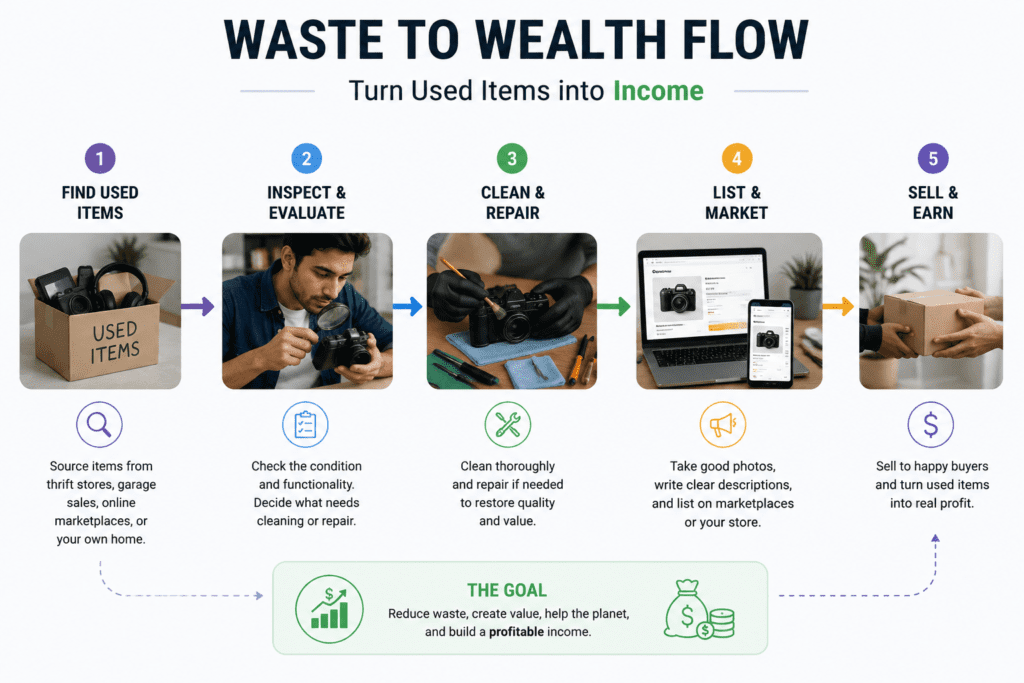
The Waste to Wealth Flow
The basic recommerce flow looks like this:
- Find undervalued products from homes, marketplaces, shops, scrap dealers, or direct sellers.
- Check condition carefully so you do not buy hidden problems.
- Clean or repair the product to improve value.
- Photograph and describe it clearly.
- List it on the right platform where buyers already exist.
- Build trust with honest details, fair pricing, and clear communication.
- Sell and reinvest profits into better inventory.
Simple? Yes.
Easy? Not always.
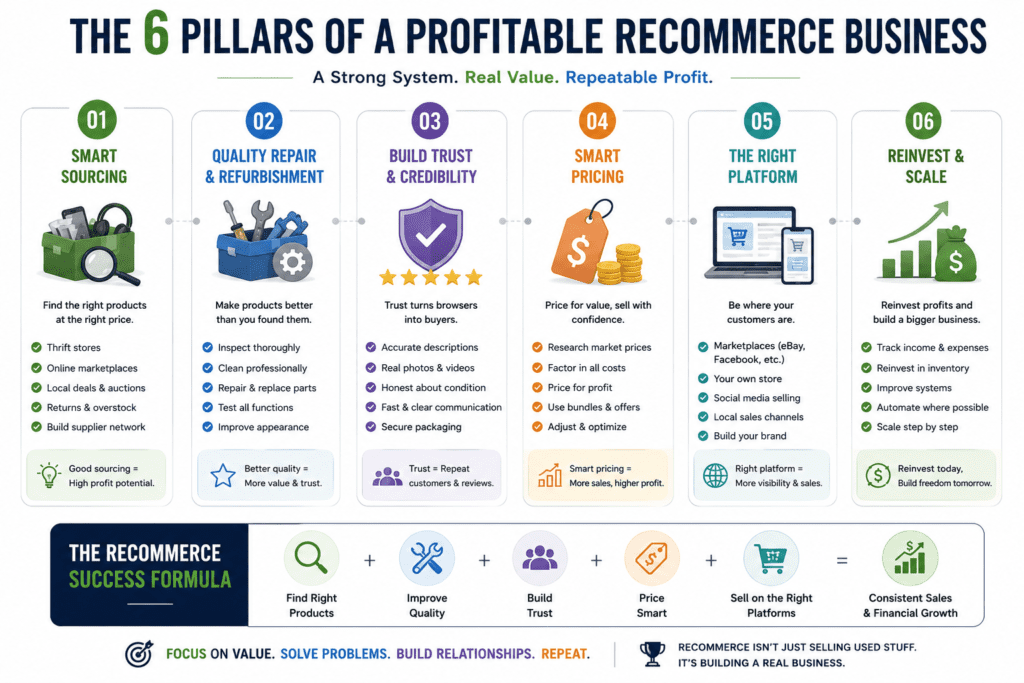
The money is in doing this process better than lazy sellers.
Case Study The Empty Bottle Lesson
The empty bottle example teaches the whole recommerce mindset.
For the drink buyer, the bottle is useless after drinking.
For a collector, it has small value.
For a recycler, it becomes raw material.
For a manufacturer, it can become part of a new product.
That is value chain thinking.
The same logic applies to an old phone. The owner says, “This phone is slow and useless.” But a technician says, “Battery change, screen cleaning, software reset, and this can sell again.”
Different eyes see different value.
Recommerce rewards the person who can see value before others see it.
Best Recommerce Business Ideas for Beginners in 2026
If you are starting with low capital, don’t try to enter every category.
Pick one category. Learn the market. Understand pricing. Build trust. Then expand.
Here are practical recommerce business ideas beginners can explore in 2026.
Used Phones and Electronics
Used phones, laptops, tablets, headphones, cameras, and accessories are strong recommerce categories because demand is constant.
People want technology, but not everyone can afford new devices.
The opportunity is in buying devices with minor issues, checking them properly, fixing small problems, and reselling with honest details.
Example: A used phone with weak battery may look unattractive to a normal buyer. But if you understand repair cost and resale price, you can calculate margin before buying.
Be careful though. Electronics can hide faults. Always test battery, charging, display, speakers, camera, buttons, network, and storage.
Second Hand Clothes and T Shirts
Thrift fashion is growing because people want affordable style and unique pieces.
My own T-shirt business experience in Saudi Arabia helped me understand something important: people don’t just buy cloth. They buy identity, emotion, and relevance.
If you target expats, for example, designs connected to their culture, work life, humor, or community can perform better than random designs.
Second hand clothing can also work if you focus on:
- Clean presentation
- Good photography
- Accurate size details
- Specific niche styles
- Bundles and offers
Don’t sell “old clothes.” Sell affordable style with trust.
Used Books Tools and Home Items
Books, tools, furniture, and small home items are underrated.
Students need used books. New workers need affordable tools. Families need low-cost furniture. Small shops need basic equipment.
Because I worked as an electrician, plumber, and AC repair worker, I know the value of tools personally. A good used tool can still produce income for years.
This is where product knowledge gives you an edge.
If you know which tool brands last longer, which machines break often, or which furniture items resell fast, you can buy smarter than beginners.
Refurbished Cars Bikes and Auto Parts
Cars, bikes, and auto parts can be profitable, but they require more capital and stronger inspection skills.
Companies in the used vehicle space often create value by inspecting, cleaning, documenting, financing, and making the buying process easier.
For beginners, auto parts may be easier than full vehicles.
Examples include:
- Used headlights
- Mirrors
- Rims
- Seats
- Interior parts
- Bike accessories
Start small. Learn demand. Avoid categories where one hidden fault can destroy your profit.
Rule 1 Turn Awareness Into Your Superpower
In business, the biggest enemy is not always competition.
Sometimes the biggest enemy is what you cannot see.
Bad inventory. Hidden product faults. Wrong pricing. Fake demand. Emotional buying. Poor cash flow. These things quietly destroy beginners.
The Mosquito in the Dark Room
Imagine a mosquito in your room.
If the light is on, you can see it and kill it.
If the room is dark, even a tiny mosquito becomes a big problem.
Business problems are the same. Most problems are not impossible. They are just invisible because you are not aware enough.
Awareness is the light.
Before fighting a problem, first see it clearly.
Awareness Checklist Before You Buy Anything
Before buying any product for resale, ask:
- What is the real market price?
- How many similar products are already listed?
- What is the condition?
- What repair cost can appear later?
- How fast can this sell?
- What is my minimum profit after all costs?
- What if it does not sell for 30 days?
- Can I return it or am I stuck?
Pro Tip: In recommerce, profit is often made when you buy, not when you sell. If you buy wrong, selling becomes pressure.
Rule 2 Do Not Use Money to Hide Lack of Clarity
This rule came from my own mistakes.
When beginners are confused, they often throw money at the problem.
No sales? Spend on ads.
No clarity? Buy more stock.
No trust? Make a fancy logo.
But money cannot fix unclear thinking.
First get clarity. Then use money.
My Saudi T Shirt Business Lesson
When I moved to Saudi Arabia and started thinking about a T-shirt business targeting expats, I realized something important.
The business was not just about printing shirts.
The real questions were:
- Who exactly is my customer?
- What emotion does the design trigger?
- Which nationality or community am I targeting?
- Will they wear this publicly?
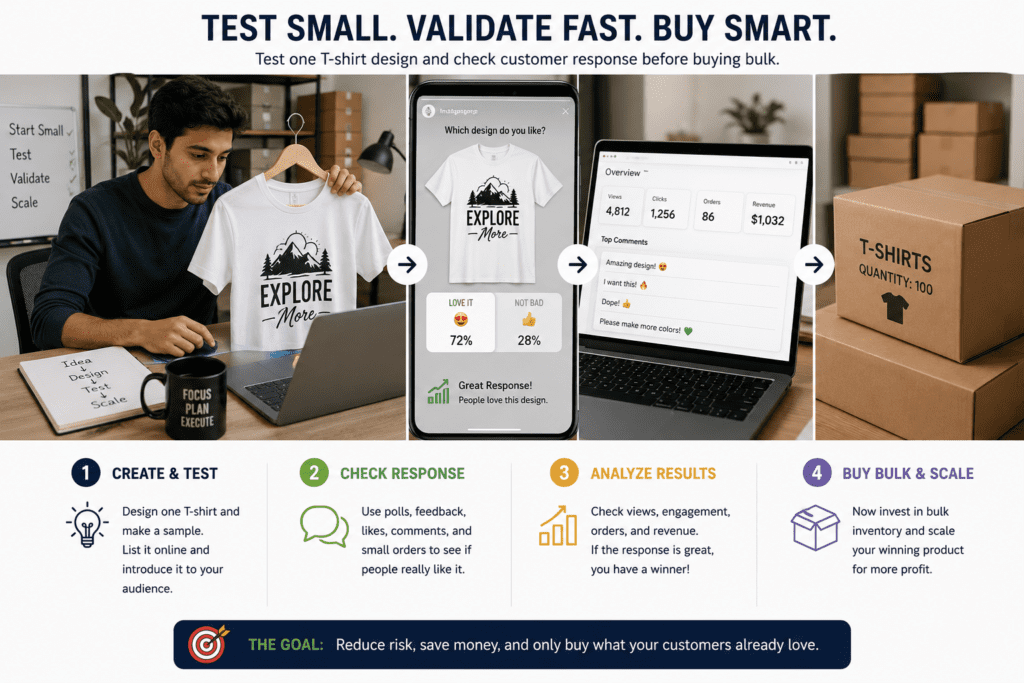
- Can I test one design before printing many?
- Can I take pre-orders before holding stock?
If I had printed large inventory without testing, money could have been stuck.
Testing small saved me.
The same applies to recommerce. Don’t buy 100 items before selling 5.
Start small. Learn fast. Then scale.
Rule 3 Build Trust Because Used Products Need Proof
New products come with brand trust.
Used products come with doubt.
That is why trust is the biggest asset in a recommerce business.
Your buyer is thinking:
- Is this product real?
- Is the condition honestly described?
- Will it stop working after one day?
- Is this seller hiding something?
- Can I return it if there is a problem?
If you reduce buyer fear, you increase sales.
Trust Signals That Increase Sales
Use these trust signals:
- Clear photos from multiple angles
- Video showing the product working
- Honest condition rating
- Visible scratches or faults shown upfront
- Simple return or checking policy
- Real customer reviews
- Clean packaging
- Fast response to questions
- Written warranty for selected items if possible
Don’t hide defects.
In recommerce, hiding defects may help you sell once, but honesty helps you build repeat customers.
Pricing Formula for Recommerce Beginners
Use this simple formula:
Resale Price – Purchase Cost – Repair Cost – Platform Fee – Delivery Cost = Real Profit
Many beginners calculate only purchase price and selling price.
That is a mistake.
You must include all costs.
Example:
- Buy used phone: $80
- Battery replacement: $15
- Cleaning and packaging: $3
- Delivery or platform fee: $7
- Total cost: $105
- Sell price: $130
- Real profit: $25
If the item takes 30 days to sell, also think about cash flow. Slow inventory can trap your money.
Rule 4 Use Leverage but Do Not Gamble
Leverage means using resources beyond your own limited cash.
This can be powerful.
But I learned from trading that leverage without control can destroy you.
In forex, funded accounts, and high-risk trading, the problem is not always the market. Sometimes the problem is that we use big opportunity with small discipline.
The same is true in business.
Good Leverage in Recommerce
Good leverage reduces risk or increases ability without putting you in danger.
Examples:
- Taking pre-orders before buying stock
- Partnering with a repair technician instead of hiring one full-time
- Using free marketplaces before building a website
- Borrowing tools instead of buying everything immediately
- Using customer deposits for custom orders
- Learning from experienced sellers
- Building supplier relationships with flexible payment terms
The U.S. Small Business Administration explains the importance of planning before starting or scaling a business. Even if you are not in the U.S., the principle is useful: don’t scale without a plan.
Bad Leverage That Can Destroy You
Bad leverage looks exciting but increases pressure.
Examples:
- Taking high-interest debt to buy untested inventory
- Borrowing money from family without a repayment plan
- Buying damaged products you do not know how to repair
- Spending heavily on ads before proving demand
- Renting a shop before online sales are consistent
- Using business money for personal lifestyle
Leverage after proof can grow you.
Leverage before proof can bury you.
“Opportunities do not happen. You create them.”
— Chris Grosser
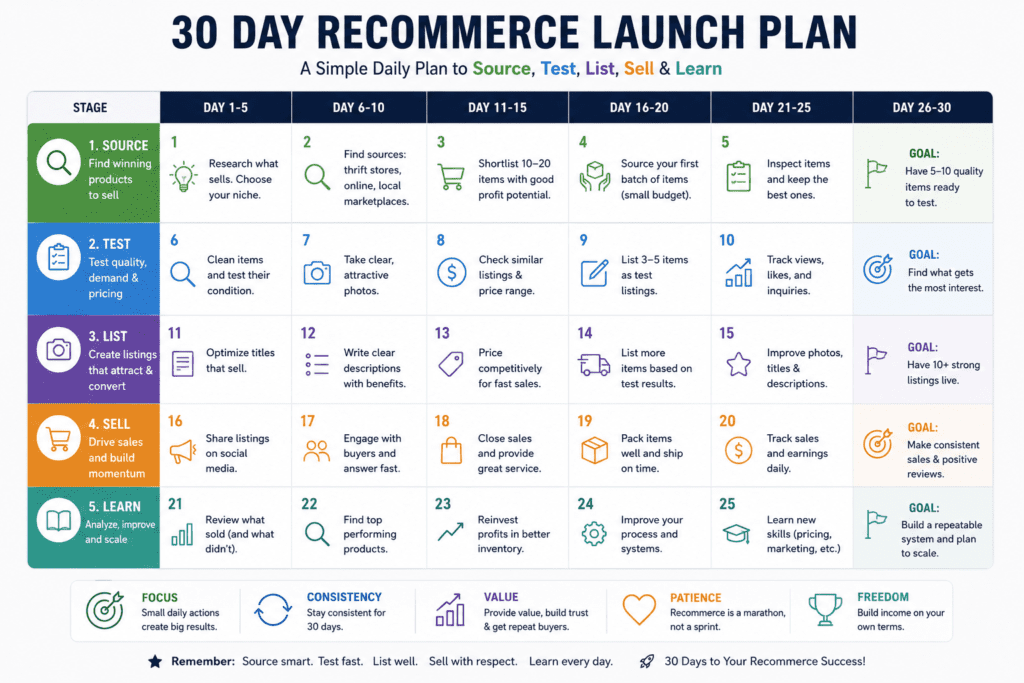
Your 30 Day Recommerce Business Launch Plan
If I had to start a recommerce business from zero today, I would not overthink it for six months.
I would run a 30-day test.
The goal is not to become rich in 30 days. The goal is to learn the market with minimum risk.
Days 1 to 7 Choose One Category
Pick one category only.
Good beginner categories include:
- Used books
- Small electronics
- Basic tools
- Clothes and shoes
- Phone accessories
- Home items
Spend seven days researching prices.
Check marketplace listings. See what sells fast. Notice which photos attract attention. Write down average prices.
Do not buy yet.
First learn the market.
Days 8 to 15 Source and Test
Now find 3 to 5 low-risk products.
Sources can include:
- Friends and family
- Local classified listings
- Garage sales
- Scrap markets
- Repair shops
- Students leaving hostels
- People moving houses
Negotiate politely. Don’t act desperate.
Your job is to buy only when the numbers make sense.
The U.S. Environmental Protection Agency explains how recycling and reuse can reduce waste and conserve resources. Recommerce fits into that same practical idea: use things longer before they become waste.
Days 16 to 30 Sell Learn and Repeat
List your products with better photos and honest descriptions.
Track every message, every offer, every objection.
Ask yourself:
- Which product got the most interest?
- Which price attracted buyers?
- What questions did people ask repeatedly?
- Which item sold fastest?
- Where did I lose money or time?
By day 30, you will know more than someone who only watched business videos for 30 days.
Action creates real education.
Common Mistakes That Kill Recommerce Beginners
Beginners usually don’t fail because recommerce is bad.
They fail because they make avoidable mistakes.
Mistake 1 Buying Too Much Inventory
Inventory feels like progress.
But unsold inventory is trapped cash.
I learned this from business and trading both. In trading, a bad position traps your capital emotionally. In business, bad inventory traps your capital physically.
Start with small quantity. Sell first. Then repeat.
Mistake 2 Ignoring Product Condition
Condition is everything in used products.
A small hidden fault can destroy your entire margin.
Always inspect carefully. If you don’t understand the product, take someone who does.
For electronics, test everything.
For clothes, check stains, tears, size, and fabric quality.
For tools, check performance and safety.
Mistake 3 Quitting Before the Market Teaches You
This was my old mistake in life.
I would start, not get quick results, and leave.
But business teaches slowly at first.
The first few products teach you pricing. The next few teach you customer behavior. Then you understand sourcing. Then you understand repeat demand.
If you quit too early, you leave before the lesson becomes profit.
Before you quit next time, try one more time. Maybe you are closer than you think.
Quick Action Steps
- Choose one recommerce category like phones, books, clothes, tools, or home items.
- Research 30 listings before buying anything.
- Write average market prices in a notebook or Google Sheet.
- Find 3 low-risk products from people around you or local marketplaces.
- Calculate real profit including repair, delivery, and platform fees.
- Take better photos than other sellers in your category.
- Write honest descriptions and show product condition clearly.
- Sell, review, and repeat for 30 days before judging the business.
Key Takeaways
- A recommerce business turns used products, waste, or undervalued items into income.
- The biggest skill is seeing value where others see useless stuff.
- Start with one category instead of trying everything.
- Trust is the main currency in used product selling.
- Profit must include purchase cost, repair cost, platform fee, delivery, and time.
- Leverage is useful only after proof, not before clarity.
- Do not quit before the market teaches you how the game works.
- Small tests are better than big emotional inventory purchases.
- Recommerce fits the circular economy and sustainability trend for 2026.
Frequently Asked Questions
What Is the Best Recommerce Business to Start
The best recommerce business to start is usually a category you already understand. For beginners, used books, small electronics, clothes, tools, and home items are practical because they require lower capital and are easier to test.
How Much Money Do I Need to Start a Recommerce Business
You can start a recommerce business with very low capital if you begin with small items or consignment deals. Instead of buying bulk inventory, start with 3 to 5 products, sell them, learn the market, and reinvest profits.
Is Recommerce Profitable in 2026
Yes, recommerce can be profitable in 2026 because many customers want affordable products and sustainable buying options. Profit depends on sourcing price, product condition, repair cost, trust, photos, platform choice, and inventory turnover.
Where Can I Find Products to Resell
You can find products from local marketplaces, friends and family, garage sales, repair shops, scrap markets, students, people moving houses, thrift shops, and online classified platforms. Always inspect products before buying.
How Do I Build Trust When Selling Used Products
Build trust by using clear photos, product videos, honest condition details, visible defect disclosure, fair pricing, fast replies, customer reviews, and a simple checking or return policy where possible.
Can Recommerce Work as a Side Hustle
Yes, recommerce can work as a side hustle because you can start after work or on weekends. The key is choosing a manageable category, keeping inventory small, and creating a repeatable sourcing and selling system.
What Is the Biggest Mistake in Recommerce
The biggest mistake is buying too much inventory before understanding demand. Beginners should test small, calculate all costs, learn customer behavior, and avoid using debt or leverage before proving the business model.
Final Thoughts on Building a Recommerce Business
A recommerce business is not just about selling old products.
It is about mindset.
One person sees an empty bottle and throws it away. Another person sees material. One person sees an old phone and says it is useless. Another person sees repair value. One person sees used clothes. Another person sees affordable fashion.
The business starts when your eyes change.
But remember this clearly: recommerce will test your patience.
You may not get results in the first week. You may make wrong purchases. You may deal with bargaining customers. You may feel like quitting.
That is where your process mindset matters.
I learned the hard way that if you quit every time life changes the situation, you will never create wealth. Fear will still be there. Risk will still be there. But if you choose the work, respect the process and finish the cycle.
Start small. Buy carefully. Sell honestly. Learn daily. Reinvest wisely.
If this article helped you, share it with someone who wants to start a low investment business in 2026. And if you are serious, take one action today: choose one recommerce category and research 30 listings before sleeping.
That small step can be the beginning of your business journey.
About the Author
Shurah Beel Hamid is a business enthusiast, active trader, and content creator focused on Business Strategies, Forex and Gold Trading, Compounding, Freelancing, Trading Psychology, Elite Mindset, Self-Improvement, and Personal Finance.
Shurah started his journey in 2018 while in 10th class, later working as an electrician, plumber, and AC repair worker before entering trading and business. After facing serious personal pressure, trading losses, funded account failures, moving to Saudi Arabia, and starting small business experiments, he now shares practical lessons based on real experience, not theory.
His goal is to help beginners build income, discipline, awareness, and long-term mindset through honest, actionable content.
Disclaimer
This article is for educational and informational purposes only. It is not financial, investment, legal, tax, business, or trading advice. Starting any business involves risk, and results depend on your market, skills, capital, execution, and decision-making.
Trading forex, gold, stocks, funded accounts, or any financial market involves significant risk and can result in loss of capital. Always do your own research and consult qualified professionals before making financial or business decisions.
If you are facing extreme mental stress or thoughts of self-harm, please contact a trusted person, local emergency service, or qualified mental health professional immediately. Your life is more important than any business, money goal, or failure.



Nice information, I like it
Thank you Very much