Freelancing is no longer just a side hustle — it is a full-blown career path that millions of people around the world are choosing over traditional 9-to-5 jobs. Whether you want to earn extra income on weekends or build a full-time remote career, freelancing gives you the freedom to work entirely on your own terms.
But here is the reality: most beginners either quit too early or never get started because they do not know where to begin. This guide will walk you through every step — from identifying the right skill to landing your first paying client — so you can start freelancing with clarity and confidence in 2026.

What Is Freelancing and Why It Is Booming in 2026
Freelancing means offering your skills or services to clients on a project basis rather than working as a permanent employee. You work independently, set your own rates, choose your clients, and — most importantly — you are your own boss.
The global freelance market is growing faster than ever. According to Statista, the gig economy is projected to reach $455 billion by 2030. With remote work now fully normalized and businesses actively looking to hire specialized talent without long-term contracts, the demand for skilled freelancers in 2026 has never been higher.
Some of the most in-demand freelance skills right now include:
- Content Writing and Copywriting
- Graphic Design and Video Editing
- Web Development and App Development
- Digital Marketing and SEO
- AI Prompt Engineering and AI Tools Management
- Virtual Assistance and Data Entry
- Translation and Transcription
The best part? You do not need a degree. You need a skill, a portfolio, and the right strategy.
Step 1: Choose the Right Freelance Skill
The most important decision you will make as a beginner is choosing what to offer. Do not try to offer everything. Niche down. One skill done well will always outperform five skills done poorly.
Ask yourself these three questions before deciding:
- What am I already good at? Writing, design, coding, communication, data organization?
- What can I learn quickly? Skills like Canva design, social media management, or basic SEO can be learned in 2 to 4 weeks with focused effort.
- What do clients actually pay for? Research platforms like Upwork and Fiverr to see what is in demand and what current rates look like in your chosen skill area.
Pro Tip for Beginners: Do not wait until you feel expert-level. Most successful freelancers started with intermediate skills and improved while working on real projects. Getting started beats being perfect every single time.

Step 2: Build a Simple Portfolio — Even With No Experience
Clients hire you based on proof of your work — not promises. This means you need a portfolio before you can expect clients to trust you with their projects.
According to Forbes, a strong portfolio is the single most important factor in landing freelance clients as a beginner — more important than your rate, your bio, or your platform ranking.
How to build a portfolio from scratch:
- Create sample projects. If you are a writer, write 3 to 5 blog posts on topics you want to work in. If you are a designer, make mock logos or social media posts for imaginary brands.
- Do 1 to 2 free or discounted projects. Offer your services to a small business, nonprofit, or someone in your network in exchange for a testimonial and permission to use the work in your portfolio.
- Use portfolio platforms. Behance for designers, Contently for writers, or even a simple well-organized Google Drive folder works fine when starting out.
You do not need a fancy website on day one. A clean, well-organized PDF or a free Notion page is enough to get started. What matters is that you have something to show — not how impressive the presentation is.

Step 3: Choose the Right Freelance Platform
Not all platforms are created equal. For beginners, the smartest move is to start on a platform where clients are already searching for freelancers — rather than trying to find clients yourself from scratch.
| Platform | Best For | Competition | Verdict |
|---|---|---|---|
| Fiverr | Packaged gigs at fixed prices | High but manageable | ✅ Best for total beginners |
| Upwork | Hourly work and proposals | Medium to High | ✅ Higher rates — great for growing |
| PeoplePerHour | Creative and tech services | Medium | ✅ Less saturated alternative |
| Freelancer.com | Wide range of categories | High | ✅ Large client base |
| Toptal | Expert-level only | Very selective | ✅ Premium clients and rates |
Recommendation for new freelancers: Start with Fiverr or Upwork. Fiverr is easier for total beginners because clients come to you. Upwork requires proposals but rates are typically higher once you build your profile.
Step 4: Write a Profile That Sells
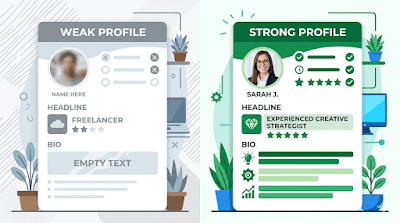
Your freelance profile is your storefront. It is the first thing clients read — and it either builds trust immediately or loses the sale before the conversation even begins.
What a winning profile includes:
- A clear headline that tells clients exactly what you do. Example: “SEO Blog Writer for Health and Wellness Brands” — not “Freelance Writer.”
- A strong bio written in client-focused language. Do not say “I am a writer with 2 years of experience.” Say: “I help brands grow organic traffic by writing engaging, SEO-optimized blog content that ranks and converts.”
- Portfolio samples directly relevant to the niche you are targeting.
- A professional profile photo — clean background, visible face, good lighting. This builds trust more than most people realize.
- Competitive starting rates — slightly below market average when starting, to build initial reviews quickly.
Step 5: Land Your First Client
This is where most beginners get stuck. Here is the honest truth: your first client is the hardest. After that, it gets significantly easier because you have reviews, real experience, and a proven track record — even if it is small.
Proven strategies to land your first client:
On Fiverr:
- Optimize your gig title and tags with buyer-intent keywords
- Offer a beginner-friendly starting package at an accessible price point
- Share your Fiverr gig link on LinkedIn, Facebook groups, and WhatsApp communities
On Upwork:
- Send 5 to 10 personalized proposals per day — consistency is everything
- Read each job posting carefully and address the client’s exact problem in your proposal
- Keep proposals short, specific, and value-focused — never generic
Outside Platforms:
- Reach out to small local businesses via email or Instagram direct messages
- Join Facebook groups in your niche and offer genuine, helpful input before pitching
- Post content on LinkedIn showing your expertise and thinking — not just your services
The key: Do not copy-paste proposals. Personalization wins every time. A proposal that demonstrates you actually read and understood the client’s specific problem will always outperform a generic template.
Step 6: Set Your Rates the Right Way
Pricing is one of the most confusing parts of freelancing. Too low and you undervalue your work and attract difficult clients. Too high as a beginner and you will not land clients. The solution is a strategic middle ground.
According to Upwork’s pricing guide, freelancers who research their market rates before setting prices earn significantly more in their first year than those who price based on gut feeling alone.
- Research market rates on Fiverr and Upwork for your specific skill and niche
- Start at 20 to 30% below average — just enough to be attractive without signaling desperation
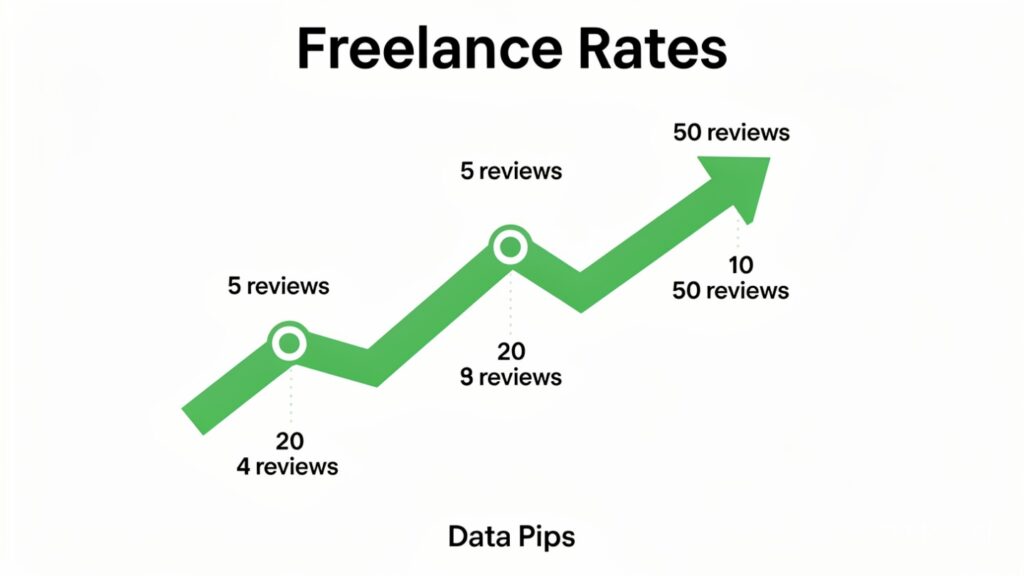
- Increase rates after every 5 to 10 positive reviews
- Never work for free after you have real samples — your time has genuine value
As a rough guide: entry-level content writers can start at $10 to $20 per article, graphic designers at $15 to $30 per project, and virtual assistants at $5 to $10 per hour. Rates increase significantly with experience and niche specialization.
Step 7: Deliver, Get Reviews, and Scale
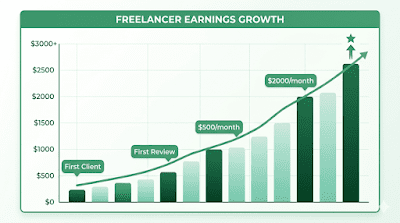
Getting paid once is not the goal. Building a sustainable freelance business that grows month over month is.
After completing every project:
- Deliver on time — or early. This alone sets you apart from 80% of freelancers. Clients remember reliability more than almost anything else.
- Ask for a review — politely and professionally, right after delivery. A simple “If you were happy with the work, a review would mean a lot to me as I’m building my profile” is enough.
- Offer a follow-up. A simple “Let me know if you need anything else” message often leads to repeat work without any additional pitching effort.
- Track what is working. Which services bring the most clients? Which niches pay the most? Which types of clients are easiest to work with? Double down on what works and eliminate what does not.
Research by Bain and Company shows that repeat clients are five times less expensive to retain than acquiring new ones. The freelancers who scale fastest are almost always the ones who build long-term client relationships rather than constantly hunting for new work.
Common Mistakes New Freelancers Make
Even the most motivated beginners make these errors. Learning from them before you make them saves real time and money:
- Offering too many services at once. Pick one service, master it, then expand. Generalists struggle; specialists thrive.
- Ignoring communication skills. Fast, clear, professional replies build client trust instantly. Slow or unclear communication loses work even when the skills are strong.
- Forgetting contracts. Even basic written agreements via email protect both sides. One bad client experience without a contract can cost more than months of income.
- Giving up after rejection. Most proposals do not land. Consistency is everything. The freelancers who succeed are simply the ones who kept going.
- Not saving for taxes. Freelance income is self-employed income. Set aside 20 to 25% for taxes from every payment — before you spend anything else.
Frequently Asked Questions
Q: Can I start freelancing with no experience?
Yes. Start by building sample projects and offering 1 to 2 free or discounted jobs to get your first reviews. Experience comes from doing, not waiting. Every expert freelancer started exactly where you are now.
Q: How long does it take to earn from freelancing?
Most beginners land their first paid client within 2 to 6 weeks if they are actively applying, have a complete profile, and are sending personalized proposals consistently. The timeline shortens significantly with consistent daily effort.
Q: Do I need a PayPal or bank account to receive payments?
Most platforms support PayPal, Payoneer, and direct bank transfers. Payoneer is widely used in Pakistan, Saudi Arabia, and other markets and is accepted on both Fiverr and Upwork without issues.
Q: What is the easiest freelance skill to learn fast in 2026?
Virtual assistance, data entry, social media management, AI tools management, and basic graphic design using Canva are among the fastest skills to learn and monetize. Most can be developed to a marketable level within 2 to 4 weeks of focused practice.
Q: Should I freelance full-time or part-time to start?
Start part-time if you have any existing income source. Build your portfolio, land your first few clients, and establish a track record before making the full transition. Jumping in full-time with no clients or savings creates financial pressure that often leads to poor decisions.
Q: How do I handle a client who is not satisfied with my work?
Stay professional and ask specifically what needs to change. Offer one round of reasonable revisions. Set clear revision policies in your agreements upfront so both sides know what to expect. Most client dissatisfaction comes from misaligned expectations — clear communication before starting prevents most problems.
Final Thoughts: Is Freelancing Right for You?
Freelancing is one of the most accessible ways to earn money online in 2026 — but it is not passive income. It requires discipline, skill-building, and persistence, especially in the first few months.
If you are willing to put in the work, the reward is real: financial independence, location freedom, and the ability to grow your income based entirely on your own effort and the value you deliver to clients.
Start small. Start now. Improve as you go.
About the Author
Shurah Beel Hamid is a business enthusiast, active trader, and content creator who transformed his life by training his brain from an electrician’s mindset to an entrepreneur’s mindset. His expertise lies in practical brain training for entrepreneurship, trading psychology, compounding strategies, and elite mindset development. He shares his raw, unfiltered journey — from suicidal thoughts to strategic patience, from blowing trading accounts to consistent profitability — to provide actionable insights for those tired of theoretical advice and ready for real change. His writing combines hard-won experience, neuroscience-backed techniques, and relentless optimism.
Disclaimer: This article is for educational purposes only. Results vary based on individual effort, skill level, and market conditions.