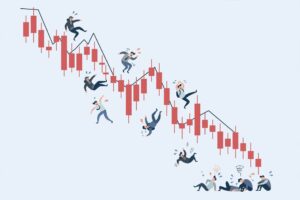
We watched a trader blow $23,000 in four hours. Not because the market crashed. Not because his broker screwed him. Not because his strategy failed. Because he lost $800 in the morning and spent the rest of the day trying to “get it back.”
He knew better. He had rules. He had a journal. He had a strategy with a documented 62% win rate. None of it mattered. The moment that first loss hit, something primitive hijacked his brain — and four hours later, a four-month profitable streak was incinerated. One morning of revenge trading erased 120 days of disciplined execution.
At Data Pips, we’ve seen this pattern destroy more trading accounts than bad strategies, bad brokers, and bad markets combined. And here’s what makes it truly terrifying: the traders who revenge trade the hardest are usually the ones who know exactly why they shouldn’t. Knowledge doesn’t stop it. Willpower doesn’t stop it. Only systems stop it.
In this article, we’re going to rip apart the psychology behind revenge trading, explain exactly why your brain betrays you after a loss, and give you a concrete 5-step system that makes revenge trading structurally impossible — not just theoretically undesirable.

What Revenge Trading Actually Is (And Why the Name Is Perfect)
Let’s define this precisely because a lot of traders confuse revenge trading with simply taking another trade after a loss. They’re not the same thing.
Revenge trading is when you enter a trade not because your strategy signals an opportunity, but because you emotionally need to recover a loss. The trade isn’t about the market. It’s about you. It’s about your ego, your pain, your refusal to accept that the market took something from you.
The name is perfect because it captures exactly what’s happening psychologically. You’re not trading. You’re fighting. You’re trying to punish the market for hurting you. And just like revenge in real life, it almost always hurts the avenger more than the target.
According to Investopedia’s definition, revenge trading is characterized by:
- Increasing position sizes after a loss (to “make it back faster”)
- Abandoning your trading plan and entering random setups
- Trading more frequently than your strategy allows
- Ignoring stop-losses or widening them to “give the trade room”
- Feeling angry, desperate, or personally attacked by the market
If you’ve experienced even two of those after a losing trade, you’ve revenge traded. And if you’re honest with yourself right now, you know exactly how it ended. It always ends the same way.
The Neuroscience Behind Why Your Brain Betrays You
Here’s why telling yourself “just don’t do it” never works. Revenge trading isn’t a discipline problem. It’s a neurological hijacking.
When you take a loss, your brain’s amygdala — the threat detection center — fires up. It interprets financial loss the same way it interprets physical danger. Your body floods with cortisol and adrenaline. Your prefrontal cortex — the rational, planning part of your brain — gets suppressed. You literally become a dumber version of yourself.
In this state, your brain doesn’t care about your trading plan. It doesn’t care about risk management. It doesn’t care about your journal entries from last week where you wrote “I will never revenge trade again.” Your survival brain has taken the wheel, and its only goal is eliminating the pain as fast as possible.
The fastest way your brain knows to eliminate financial pain? Make the money back. Immediately. Hence: bigger positions, more trades, abandoned rules. Your brain isn’t being irrational — it’s being rational within its own framework. The problem is that its framework is designed for escaping predators, not navigating markets.
Research published in the Journal of Behavioral Finance confirms that loss aversion — the psychological tendency to feel losses roughly 2.5x more intensely than equivalent gains — is the primary driver of revenge trading. An $800 loss doesn’t feel like losing $800. It feels like losing $2,000. And your brain will do increasingly reckless things to escape that amplified pain.
We broke down this exact mechanism in our fear and greed trading psychology guide. Understanding the neuroscience doesn’t stop the reaction — but it does help you build systems around it.

The 7 Warning Signs You’re About to Revenge Trade
Revenge trading doesn’t announce itself. It creeps in through micro-decisions that seem reasonable in isolation but form a destructive pattern. At Data Pips, we’ve identified seven early warning signs that signal a revenge trade is loading:
1. You Open the Chart Within Seconds of Closing a Loss
A disciplined trader closes a losing position and walks away — even temporarily. A revenge trader doesn’t close the chart. They immediately start scanning for the next setup. Not because the market is offering one. Because they can’t sit with the pain of the loss for even 60 seconds.
2. You Increase Your Position Size on the Next Trade
This is the most dangerous sign. The logic sounds airtight: “I lost $500, so if I double my lot size, I only need half the move to get it back.” That math is correct. The psychology behind it is suicidal. You’re not sizing up because your strategy demands it. You’re sizing up because your ego demands it.
3. You Abandon Your A+ Setup Criteria
Normally you wait for specific conditions — market structure break, liquidity sweep, proper session timing. After a loss, suddenly everything looks like a setup. That mediocre consolidation break? “Good enough.” That counter-trend trade you’d never take normally? “It looks like it’s turning.” Your standards didn’t lower. Your pain lowered them for you.
4. You Feel Physically Tense or Agitated
Clenched jaw. Tight shoulders. Shallow breathing. Scrolling through charts with frantic energy instead of calm analysis. These are physical symptoms of the amygdala hijack. If your body is tense, your brain is compromised. No trade entered in that state will be your best work.
5. You Start Blaming External Factors
“The market is manipulated.” “My broker is hunting my stops.” “That news spike was unfair.” The moment you start blaming anything outside yourself, you’ve shifted from trader to victim. And victims don’t analyze markets — they attack them.
6. You Skip Your Journal Entry
After a disciplined loss, you document it. After a revenge setup, you don’t want to write it down because writing makes it real. Skipping the journal is your subconscious admitting that what you’re about to do isn’t rational.
7. You Tell Yourself “Just One More Trade”
This phrase is to trading what “just one more drink” is to an alcoholic. It sounds reasonable. It never stops at one. The moment “just one more” enters your vocabulary, close the platform.
The Real Cost of Revenge Trading (Numbers That Should Scare You)
Most traders think revenge trading costs them the amount they lost in that specific session. The actual cost is astronomically higher because it destroys three things simultaneously:
Your Capital
The immediate financial loss. A single revenge trading session can wipe out weeks or months of disciplined gains. We’ve documented cases in our article on why profitable traders blow accounts where a single day of emotional trading erased 6+ months of consistent profits.
Your Confidence
After a revenge trading blowup, you don’t just lose money. You lose trust in yourself. “I knew better and I still did it” is the most psychologically devastating sentence in trading. It creates a self-doubt spiral that affects every trade you take for weeks or months afterward.
Your Compounding Curve
This is the invisible cost nobody calculates. Every dollar lost to revenge trading isn’t just that dollar — it’s everything that dollar would have compounded into over the next 5, 10, 20 years. A $5,000 revenge trading loss at 10% annual compounding costs you $33,637 over 20 years. You didn’t just lose money. You lost time. And time in compounding is irreplaceable.
As we explored in our capital preservation guide, protecting capital isn’t about avoiding losses — it’s about avoiding unnecessary losses. Every planned loss within your strategy is tuition. Every revenge trade loss is arson.

The “Bleeding Knee” Analogy That Changed Everything
We use an analogy at Data Pips that has stopped more revenge trades than any technical rule we’ve ever taught:
Imagine you’re riding a motorcycle. You crash. Your knee is bleeding. Now — do you immediately jump back on the bike and ride faster to “make up” for the crash? Or do you stop the bleeding first?
Every sane person says “stop the bleeding first.” But that’s exactly what revenge trading is — jumping back on the bike with a bleeding knee, riding faster, and wondering why you crash harder the second time.
When you take a loss, your account is bleeding. Your first job isn’t to make money back. Your first job is to stop the bleeding. Close the platform. Walk away. Let the wound stabilize. Then — and only then — come back with a clear head and a clean chart.
As we emphasize in our trading patience and risk management guide: slow growth is the fastest path to success in trading. Trying to recover fast is how you die fast.
The 5-Step Revenge Trading Prevention System
Knowing why revenge trading happens isn’t enough. We’ve seen traders who can lecture on behavioral finance for an hour and still blow an account by lunchtime. Knowledge doesn’t change behavior. Systems change behavior.
Here’s the exact system our team has developed and tested:
Step 1: The Pre-Session Commitment Contract
Before you open your trading platform — every single day — write three numbers on a piece of paper:
- Maximum number of trades today: (We recommend 2-3 maximum)
- Maximum dollar loss for the day: (If you hit this, you’re done. Period.)
- Maximum loss per trade: (0.5-1% of capital. Non-negotiable.)
Sign it. Put it next to your screen. This isn’t a suggestion — it’s a contract with yourself. Breaking it means you’ve decided that your emotions are more trustworthy than your plan. They’re not. They never are.
Step 2: The 90-Second Cool-Down Rule
After any losing trade, close the chart. Not minimize — close. Set a timer for 90 seconds. During those 90 seconds:
- Stand up physically
- Take 5 deep breaths (inhale 4 seconds, hold 4, exhale 6)
- Drink water
- Ask yourself out loud: “Am I about to trade my strategy or my emotions?”
This sounds ridiculously simple. It is. But those 90 seconds create a gap between your amygdala’s panic response and your prefrontal cortex’s rational processing. Without that gap, the survival brain makes the decision. With it, the thinking brain has a chance to intervene.
If you catch yourself replaying the loss on loop, run the ABC method for overthinking — name the loop, slow the body down with a long exhale, then commit to one concrete next action.
Step 3: The Journal-Before-Entry Gate
Before entering any trade after a loss, you must write in your journal:
- What is my specific setup? (Name it precisely)
- Where is my entry, stop-loss, and take-profit?
- Is this trade on my pre-session plan?
- On a scale of 1-10, how emotional do I feel right now?
If you can’t write clear answers to those four questions, you’re not ready to trade. If your emotional score is above 5, you’re definitely not ready. The journal isn’t just documentation — it’s a gate that revenge trades can’t get through.
Mark Douglas, in Trading in the Zone, wrote something that applies perfectly here:
“The best traders have evolved to the point where they believe that anything can happen, and they don’t need to know what’s going to happen next in order to make money.” — Mark Douglas
Revenge traders believe they NEED to know what happens next — specifically, that the next trade must be a winner. That need is the poison.
Step 4: The Hard Daily Cut-Off
This is non-negotiable: if you hit your daily loss limit, you close the platform and you do not reopen it until the next trading session. Not “I’ll just watch.” Not “I won’t trade, I’ll just analyze.” Close it. Walk away. Do something completely unrelated to markets.
We’ve heard every excuse:
- “But there’s a perfect setup forming right now!” — There’s always a “perfect setup” when your ego needs a win. It’s a mirage.
- “I’ll just take one small position to end the day green.” — You’ve never in your life taken “just one small position” after hitting your loss limit. Be honest.
- “The market owes me.” — The market owes you absolutely nothing. It doesn’t know your name. It doesn’t care about your feelings. It will eat your capital with complete indifference.
Your daily cut-off isn’t a guideline. It’s a circuit breaker. Just like electrical systems have circuit breakers to prevent fires, your trading system needs a circuit breaker to prevent account fires.
Step 5: The Weekly Revenge Trading Audit
Every Sunday, review your trading week and answer three questions:
- Did I take any trade that was NOT on my pre-session plan?
- Did I increase position size after a loss at any point?
- Did I continue trading after hitting my daily loss limit?
If the answer to any of these is “yes,” you revenge traded. No justification. No reframing. You broke the system. Identify exactly when and why, and reinforce the specific step that failed.
This weekly audit is like reviewing game tape in sports. You can’t improve what you don’t measure. And most traders never measure their behavioral patterns — only their P&L. Your P&L is a result. Your behavior is the cause. Measure the cause.
The Relationship Between Revenge Trading and Instant Gratification
There’s a connection that almost nobody in trading education talks about, but our team believes it’s fundamental: revenge trading is a symptom of an instant gratification addiction.
Think about it. The revenge trader can’t tolerate delayed resolution. A loss creates a psychological “open loop” — an incomplete story — and their brain demands immediate closure. The fastest closure is another trade. The rational closure — accepting the loss and waiting for the next legitimate setup — takes too long for a brain wired for instant results.
This is why we’ve observed that traders who struggle most with revenge trading also tend to struggle with other forms of instant gratification in their lives. The same neural pathways that make someone check their phone 200 times a day make a trader enter 15 trades when their plan calls for 3.
As we discussed in our forex and gold trading mental discipline guide: trading is a patience game disguised as an action game. The traders who profit consistently are the ones who spend 90% of their time doing nothing — waiting, watching, not touching the keyboard. Revenge traders invert that ratio. They spend 90% of their time acting and 10% thinking. The result is predictable.
What Professional Traders Do After a Loss (The Opposite of Revenge)
We studied the post-loss behavior of consistently profitable traders and found a remarkably consistent pattern — almost the exact opposite of revenge trading:
- They take the loss cleanly. No hesitation. No moving the stop-loss. No “giving it room.” The stop hits, they’re out. The loss is accepted as a business expense, not a personal attack.
- They physically step away. Not for hours — sometimes just 5-10 minutes. But the physical separation from the screen breaks the emotional circuit. They get coffee. They walk around the room. They look out a window. Anything that resets the visual and emotional connection to the chart.
- They journal immediately. Not at the end of the day when the pain has faded. Right then. While the emotions are fresh. They document what happened, whether the setup was valid, and whether they executed correctly. If the setup was valid and the execution was clean, the loss is filed as “correct behavior, negative outcome” — and they feel zero urge to change anything.
- They check their daily limits. Am I still within my daily loss tolerance? Yes? Then I can continue — IF a legitimate setup appears. No? Then I’m done for the day. No negotiation.
- They DO NOT increase position size on the next trade. If anything, some professionals decrease their position size after a loss because they recognize their emotional state may be slightly compromised even after a cool-down.
Notice what’s missing from this list: speed. Urgency. The need to recover. Professional traders treat losses the way surgeons treat complications — with calm analysis, not emotional panic.

The Nuclear Option: When Nothing Else Works
If you’ve tried the 5-step system and you’re still revenge trading, it’s time for the nuclear option. We don’t recommend this lightly, but for some traders, it’s the only thing that breaks the pattern:
Option A: The Forced Cool-Down Period
After any loss day, you do not trade the next day. Full stop. Doesn’t matter if the next day has the setup of the century. You sit out. This makes the cost of revenge trading unbearable — not just the money lost, but the forced inactivity the following day. Your brain starts associating revenge trading with missing opportunities, which creates a new, protective neural pathway.
Option B: The Account Size Reset
Withdraw 50% of your trading capital and put it in a separate savings account. Trade with the reduced capital for 30 days. If you revenge trade with $5,000, the damage is smaller. More importantly, trading with less capital forces you to respect every dollar more carefully — which naturally reduces reckless behavior.
Option C: The Accountability Partner
Find one person — a trading buddy, a mentor, a disciplined friend — and send them your daily trading report. Every trade. Every day. When you know someone is watching, the shame of documenting “I revenge traded after my stop hit” becomes a more powerful deterrent than any self-imposed rule.
As we documented in our guide on why first-time traders fail, accountability is the single most underused weapon in a trader’s psychological arsenal.
“The market is a device for transferring money from the impatient to the patient. Revenge trading is the express lane for that transfer.” — Data Pips Team
⚡ Quick Action Steps: Build Your Revenge Trading Firewall Today
- Right now: Write your pre-session contract template — max trades per day, max daily loss, max loss per trade. Print 30 copies. Use one every trading day this month.
- Today: Set a phone timer labeled “90-SECOND RULE” and commit to using it after every single losing trade. Stand up. Breathe. Ask the question. No exceptions.
- This week: Add four mandatory fields to your trading journal: Setup Name, Entry/SL/TP, Plan Alignment (Yes/No), Emotional Score (1-10). If any entry is missing, the trade isn’t logged — and unlogged trades are automatic violations.
- Configure your platform: Set a daily loss limit alert. Most platforms allow this. When it triggers, close the platform. Not minimize — close. Then physically leave the room where you trade.
- Sunday: Do your first weekly revenge trading audit. Three questions. Honest answers. Document the results. This becomes your behavioral scoreboard — more important than your P&L.
Frequently Asked Questions
1. What exactly qualifies as revenge trading?
Revenge trading is entering a trade motivated by the emotional need to recover a recent loss rather than by a legitimate strategy signal. Specific markers include: increasing position size after a loss, abandoning your setup criteria, trading outside your planned hours, ignoring your daily loss limit, and feeling angry or desperate while entering a position. If the primary thought behind a trade is “I need to make that money back” rather than “my strategy is signaling an entry,” it’s revenge trading.
2. Why do I keep revenge trading even though I know it’s wrong?
Because knowing and doing are controlled by different parts of your brain. Knowledge lives in the prefrontal cortex. Revenge trading is driven by the amygdala — your survival threat center. After a loss, the amygdala suppresses rational thinking and triggers fight-or-flight responses. You don’t revenge trade because you’re stupid. You revenge trade because you’re human. The solution isn’t more knowledge — it’s building structural systems that prevent the behavior before your emotions can override your logic.
3. Is it okay to take another trade immediately after a loss?
Only if ALL of the following are true: your daily loss limit has not been reached, the new trade is on your pre-session plan, it meets your A+ setup criteria independently, you’ve completed the 90-second cool-down, and your emotional score is 5 or below. If any of those conditions aren’t met, the next trade is almost certainly driven by emotion, not strategy. Most professional traders wait at least 15-30 minutes after a loss before considering a new entry.
4. How many trades should I take per day to avoid revenge trading?
Our team recommends a maximum of 2-3 quality trades per day for most retail traders. More than that almost always indicates over-trading or emotional trading. If your strategy genuinely produces 5+ A+ setups daily, fine — but be brutally honest about whether those are real setups or fabricated justifications. Quantity is the enemy of quality in trading. Every additional trade beyond your plan increases the probability of an emotional decision.
5. Does revenge trading happen to experienced traders too?
Absolutely. Experience doesn’t eliminate the neurological response to loss — it only gives you better tools to manage it. Even traders with decades of experience report revenge trading impulses. The difference is that experienced traders have built systems to catch themselves before acting on those impulses. The urge never fully disappears. The system that catches it is what separates professionals from amateurs.
6. What should I do the day after a revenge trading session?
First, do not trade. Take the full day off from live markets. Second, conduct a complete forensic review: list every trade from the revenge session, note where you broke each rule, calculate the total damage, and identify the exact moment the emotional hijack began. Third, write down specifically what system failure allowed it to happen — was it a missing cool-down? An ignored daily limit? A skipped journal entry? Treat it like a plane crash investigation. Find the cause. Fix the system. Then — and only then — return to trading.
7. Can an AI or automated tool help prevent revenge trading?
Yes, and this is becoming increasingly practical. Some platforms allow you to set hard daily loss limits that physically lock you out of trading when breached. AI-powered trading journals can flag emotional patterns in your entries. Automated position-sizing rules prevent you from increasing lots after losses. The best system is one that doesn’t rely on your willpower at all — because willpower is the first thing that fails when the amygdala takes over. We explored the intersection of AI and trading discipline in our AI agent frameworks article — the technology to build personal trading discipline agents already exists.
Conclusion: The Trade You Don’t Take Is Often Your Best Trade
We’ve laid it all out. The neuroscience. The warning signs. The hidden costs. The 5-step prevention system. The nuclear options. Everything our team has learned from watching — and sometimes experiencing — the destructive cycle of revenge trading.
But none of it matters if you don’t build the system and commit to it before your next loss. Because your next loss is coming. It’s not a question of if — it’s a question of when. And when it arrives, the version of you that exists in that moment — emotional, compromised, desperate — will have approximately 3 seconds to decide whether to follow the system or follow the impulse.
Build the system now, while you’re calm. While you’re rational. While you’re reading this article and nodding along. Because the version of you that needs this system most will be in no condition to create it.
At Data Pips, we believe that mental discipline in trading isn’t about being emotionless. It’s about having structures that protect your capital from your humanity. Your emotions are not your enemy. Your lack of systems is.
What’s your revenge trading trigger — the specific scenario that makes you lose control? Be honest in the comments. Our team reads every single one, and naming the trigger is the first step to disarming it.

Disclaimer: This article is for educational and informational purposes only. It does not constitute financial advice, investment advice, or trading recommendations. Trading forex, gold, stocks, and other financial instruments involves substantial risk of loss and is not suitable for all individuals. Past performance does not guarantee future results. The strategies and systems described are based on team experience and behavioral research — they are not guarantees against losses. Always trade with capital you can afford to lose and consult a licensed financial advisor before making trading decisions. Data Pips is not a registered investment advisor and does not manage client trading accounts.