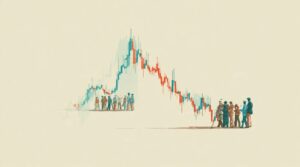
The most educated and smartest people often fail the hardest in trading. Engineers, top graduates, and highly intelligent professionals come into the market with enormous confidence — and leave broken within a year or two. Meanwhile, people who are not “geniuses” but have the right trading psychology keep surviving and eventually succeeding.
This is not theory. This is what happens consistently, repeatedly, across markets and across years of observation.
Trading is not about how much you know. It is about how much you can accept. Here is exactly what happens to most traders on their first attempt — and why the second attempt changes everything.

What Trading Psychology Really Means
Trading psychology is not just about staying calm or controlling emotions in some vague general sense. It is about your ability to accept being wrong — repeatedly, consistently, as a normal part of the process — without letting your ego destroy your account in the process of fighting that reality.
The traders who succeed long-term are the ones who can say “I was wrong” without feeling like a failure as a person. They have separated their self-worth from their trade outcomes. This separation is not natural for most people. It has to be deliberately built through experience — usually painful experience.
As Mark Douglas articulates in Trading in the Zone: “The goal of a successful trader is to make the best trade, not to be right.” That single reframe changes the entire psychological relationship with losses. A loss on a well-executed trade is not failure. A win on a poorly-executed trade is not success. The process is the performance metric — not the individual outcome.
Why Educated Traders Fail Faster Than Average Traders
Here is the uncomfortable pattern: the more educated and successful someone was in their previous field, the harder they typically struggle in trading — at least initially.
Engineers, doctors, lawyers, and top students come to the market with a deeply ingrained belief that has served them extremely well in every other area of life: if you work hard enough and think clearly enough, you will get the right answer. In academia and most professions, this is true. Effort and intelligence produce results in a relatively predictable way.
The market does not work this way. The market does not care about your degrees, your analytical ability, or the hours you spent studying charts. It cares about one thing: how you react when you are wrong.
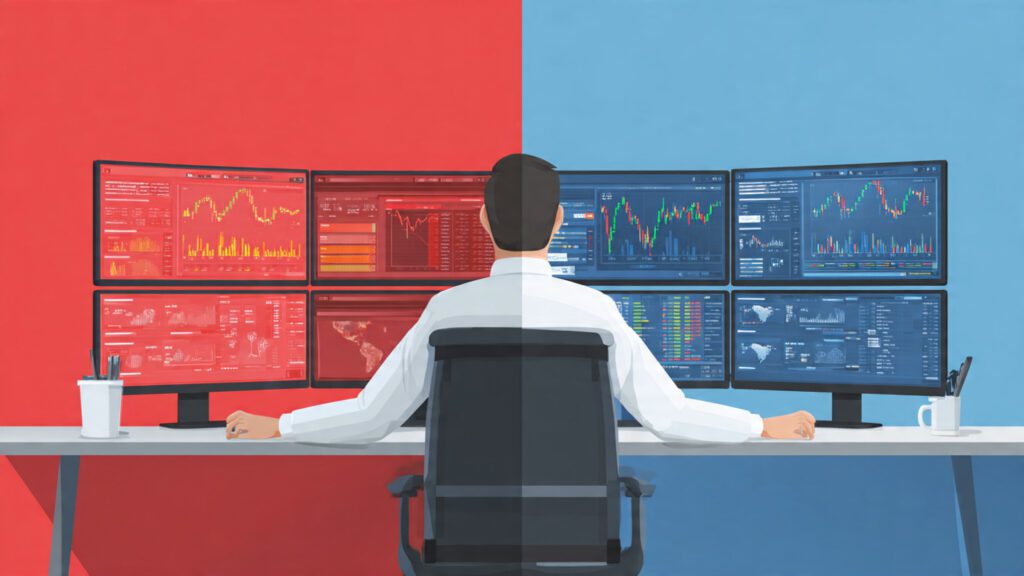
Highly educated traders cannot accept that they can be wrong. They believe that with enough analysis, enough data, and enough intelligence, they should be able to predict the market correctly. When losses come — and they always come — their response is not to accept the loss and move on. Their response is to analyze harder, hold longer, increase position size to “average down,” and refuse to admit that the trade was wrong.
This pattern — driven entirely by ego, not by market analysis — is how intelligent traders turn small, manageable losses into account-destroying positions.
Traders who are not overconfident from the beginning survive longer because they enter with appropriate humility. They accept that they can be wrong. They take small losses before those losses become large ones. That single psychological difference — between “I should always be right” and “I will sometimes be wrong and that is fine” — separates traders who stay in the game from those who blow up.
The First Attempt: What Usually Happens
Most traders come to the market for the first time with fresh capital, big expectations, and genuine enthusiasm. They have studied. They have watched videos. They have paper-traded. They believe they understand how this works.
For the first few months, things might even go reasonably well. Beginner’s luck exists in trading — not because the market rewards beginners, but because beginners often take fewer positions and smaller risks simply out of unfamiliarity. This early success reinforces their confidence and makes the eventual reality check significantly more painful.
Then the losses start coming in sequence. The market moves against multiple positions. A strategy that worked for three months stops working. The trader’s response is to fight — to hold losing positions longer hoping they recover, to increase position sizes to make back losses faster, to abandon the strategy that stopped working and try something new impulsively.
This is the phase where most traders lose not just money but mental peace. They check charts obsessively. They cannot sleep when positions are open overnight. Every market move produces an emotional response. The trading account is bleeding and so is everything else.
The Breaking Point: When Trading Starts Destroying Everything Around It
After one to two years of struggling — losing money, recovering some, losing more, recovering less — something larger happens. The trading problem becomes a life problem.
Relationships with family suffer because the trader is distracted, stressed, and not present. Their physical health declines because chronic financial stress produces chronic physiological stress. Their self-image collapses as the gap between who they believed they were and what the market is telling them grows impossible to ignore.
At this stage, most traders face a binary choice: continue and risk everything, or quit and preserve what is left. Most choose to quit. They leave the market feeling defeated — convinced that trading is simply not for them, that they are not built for it, that the market is rigged against people like them.
Almost all of this is wrong. The analysis of why they failed is almost always incomplete. They blame the market, the broker, the strategy, the timing. They rarely identify the actual cause: psychology.
The Second Attempt: Why It Changes Everything
Here is the most important pattern observed across serious traders: almost every trader who eventually succeeds came back to the market after leaving it.

The second attempt is structurally different in ways that matter:
They have a backup plan. They returned to employment or built another income source during the break. They no longer depend on trading income to survive. This removes the most destructive psychological pressure in trading: the pressure of needing to make money from this specific trade or this specific month.
They take much smaller risks. Not because they are told to — because the first attempt taught them viscerally what happens when position sizes are too large relative to account size and emotional tolerance. The lesson is permanent.
They accept losses immediately. A loss is no longer a personal failure or a market injustice. It is a business expense — expected, budgeted for, and moved past quickly. The stop loss is not negotiated with or moved. It is respected.
They have patience that was impossible before. Because they are not desperate for results, they can wait for genuinely high-probability setups. They can sit on their hands for days without forcing trades out of boredom or pressure. This patience — this ability to do nothing when nothing should be done — is the skill that produces consistency.
Warren Buffett’s observation applies directly: “The stock market is a device for transferring money from the impatient to the patient.” The first attempt produces impatient traders. The experience of the first attempt, processed correctly, produces patient ones.
What Nobody Tells You About Trading Psychology
Every trading course talks about discipline and emotional control. Nobody tells you the specific ways your psychology will sabotage you before you even know it is happening.
Your most dangerous trades will feel like your best ideas. The trade you are most confident about — the one where all the analysis lines up, where everything looks perfect — is often the trade where you size up beyond your rules because “this one is different.” This is precisely when the loss is most damaging, because the confidence-driven oversizing turns what should have been a manageable loss into a significant drawdown. The conviction felt most strongly is often the signal to size down, not up.
Winning early is more dangerous than losing early. The trader who makes money in their first three months is often more damaged by that experience than one who loses immediately. Early success builds the belief that trading is easier than it is — that their analysis is better than it is — that their risk management is conservative enough when it is not. The eventual correction of this belief arrives with force proportional to the overconfidence it destroys.
The market will find every psychological weakness you have. If you have an ego problem, the market will construct situations that trigger it repeatedly until you address it. If you have an issue with patience, the market will produce slow periods that make you force trades. If you have fear of missing out, the market will move without you constantly until you chase it at the worst moment. This is not personal. It is statistical. The market produces all conditions eventually, and your weaknesses determine which conditions destroy your capital.
Most of your losses will come from a small number of psychological failures, not from bad strategy. Review your losing trades carefully. You will find that a disproportionate number of your largest losses came from: moving stop losses, revenge trading after a loss, holding positions overnight without a plan, and sizing up after a winning streak. These are not strategy failures. They are psychology failures wearing the costume of market analysis.
Taking a break is not quitting — it is often the most productive thing you can do. Most traders treat the idea of stopping as failure. But stepping back from active trading for a month or two — reviewing your journal, studying psychology, rebuilding your rules — often produces more improvement than six more months of the same patterns. The market will still be there. Your capital may not be if you keep trading before the psychological issues are addressed.
Frequently Asked Questions
Q: Why do most traders fail on their first attempt?
Because they cannot accept losses without their ego getting involved. They fight the market instead of learning from it. Every loss becomes a personal challenge to be overcome rather than information to be processed. This produces the specific behaviors — revenge trading, moving stops, oversizing — that accelerate account destruction.
Q: Is it true that educated people struggle more in trading?
In the observed pattern, yes — initially. Highly educated traders often arrive with ego structures built through years of success in fields where intelligence and effort reliably produce correct answers. The market disrupts this pattern brutally. The psychological adjustment required is more difficult the more deeply the “intelligence should produce right answers” belief is embedded.
Q: Should I quit trading if I am losing money consistently?
Not necessarily — but you should stop and diagnose before continuing. The question is not whether you are losing, but why. If your losses come primarily from strategy failures, that is addressable through better systems. If your losses come from psychological failures — revenge trading, ignoring stops, oversizing — continuing without addressing the psychology will simply lose more capital.
Q: How do I know if my trading psychology is the problem?
Review your last 20 losing trades. For each one, identify whether you followed your rules exactly. If the majority of your largest losses came from rule violations rather than correct execution that happened to lose, your psychology is the primary issue. Strategy refinement will not solve a psychology problem.
Q: What is the fastest way to improve trading psychology?
A trading journal that records not just entries and exits but your emotional state before, during, and after each trade. Over 30 to 50 trades, patterns emerge that are invisible without the data. You will see which emotional states precede your worst trades. That visibility is the beginning of real psychological change in trading.
Q: Can someone succeed on their first attempt?
Yes — but it requires unusual psychological maturity from the beginning, or the discipline to operate with position sizes so small that losses cannot produce the emotional responses that derail most first attempts. Starting on a demo account until consistent profitability over 100+ trades is demonstrated before committing real capital is the most reliable path for someone committed to succeeding on the first attempt.
1. Review your last 10 losing trades. Identify how many involved a rule violation — moving a stop, oversizing, revenge trading.
2. Commit to a maximum 1% risk per trade — not as a suggestion but as an inviolable rule with no exceptions.
3. Start a trading journal that includes your emotional state before and after every trade, not just the technical details.
4. If you are actively struggling, consider a structured break — not quitting, but stopping to diagnose before continuing.
5. Write this somewhere visible: “I can be wrong and still be a good trader.” Read it before every session.
Final Thoughts
Trading psychology is not something learned from books alone. It comes from real losses, real frustration, and the specific discomfort of watching your account decline because of decisions you made that you knew were wrong even as you made them.
If you are on your first attempt right now and struggling, you are not alone and you are not uniquely broken. Almost every serious trader went through this exact phase. The good news is that the experience, if processed correctly rather than simply endured, produces the psychological foundation that the second attempt is built on.
Calmer. More patient. Genuinely humble about what the market can and cannot be predicted to do. That version of you — built through the experience you are currently having — is the trader who eventually succeeds.
Disclaimer: Trading forex, stocks, and precious metals involves substantial risk of loss and is not suitable for every investor. Past performance is not indicative of future results. Always conduct your own research before making any trading decisions.