What Is Agentic AI? The Next Evolution Beyond Chatbots
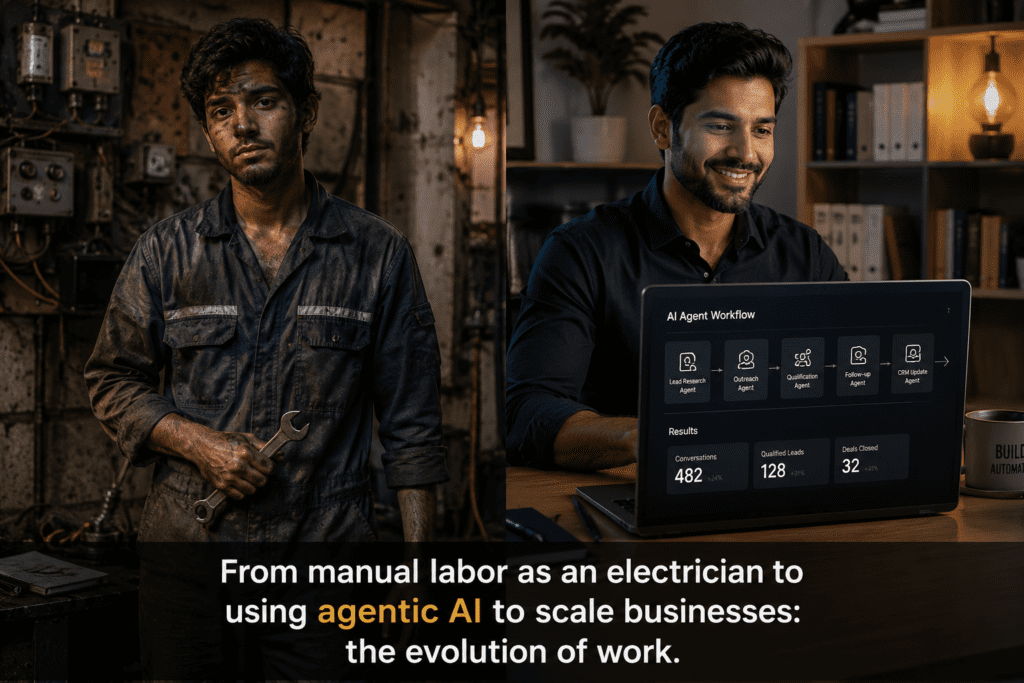
Look, I’m not a tech bro. I didn’t grow up coding, and I didn’t study computer science in college. In 2018, I was a 10th grade dropout working as an electrician and plumber, spending 12 hours a day fixing wiring, repairing AC units, and doing the same repetitive, back-breaking tasks over and over. I used to wish I had a helper that could handle all the boring, manual work so I could focus on solving bigger problems, or even just have time to think.
Fast forward to 2026, and that helper exists. It’s called agentic AI.
Honestly? When I first heard the term, I wrote it off as just another fancy AI buzzword. I’d already tried dozens of AI tools for my trading, my T-shirt business, and my content creation, and most of them were just glorified chatbots that only worked when I gave them very specific, step-by-step instructions. But agentic AI is different. It’s not just another chatbot. It’s the next evolution of AI that can think, plan, and take action on its own to achieve a goal you set.
Today, I’m going to break down exactly what agentic AI is, how it works, and how you can use it to scale your business, automate your trading, or grow your side hustle — no tech degree required. This isn’t just for Silicon Valley engineers. It’s for every entrepreneur, freelancer, and small business owner who’s tired of wasting time on repetitive work.
What Agentic AI Actually Is (And How It’s Nothing Like the Chatbots You Use Today)
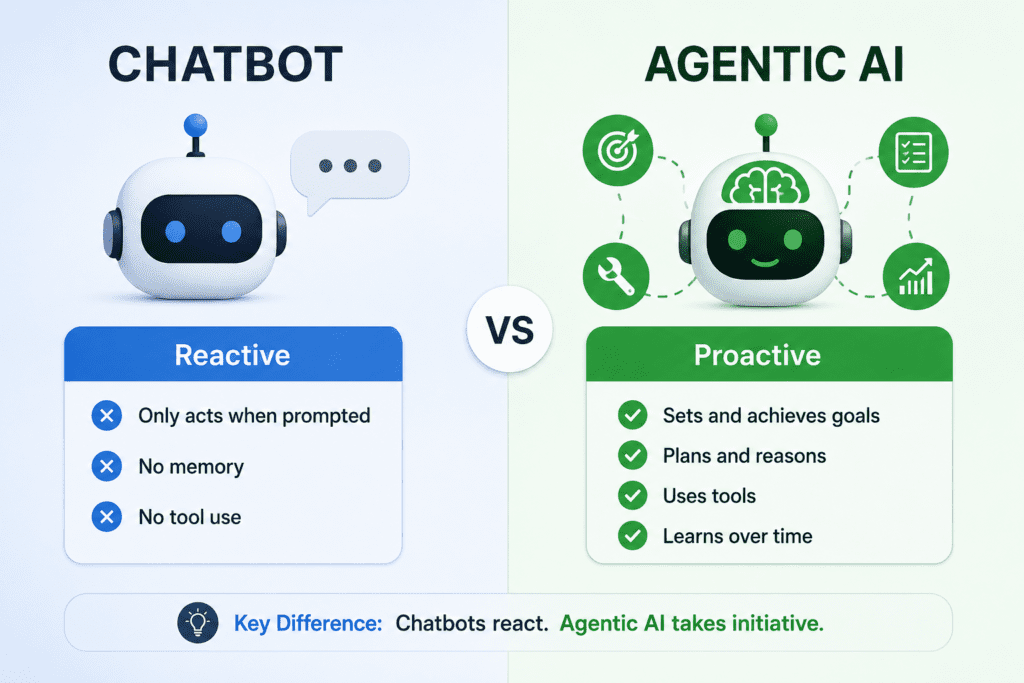
Here’s the thing: most people have used AI chatbots. You ask ChatGPT a question, it gives you an answer. You ask it to write an email, it writes an email. But that’s it. It’s reactive. It only acts when you prompt it.
Agentic AI is proactive. It doesn’t wait for you to tell it what to do every step of the way. You give it a clear goal, and it figures out how to get there on its own.
Let me give you a real example from my T-shirt business days. If I asked a regular chatbot to “increase my T-shirt sales by 20% this month”, it would give me a generic list of tips: “Post more on Instagram, run ads, offer discounts.”
If I gave that same goal to an agentic AI connected to my store, social media accounts, and ad accounts, it would: 1. Analyze my past 6 months of sales data to find my best-selling designs and customer segments 2. Create 10 social media posts featuring those top designs 3. Schedule the posts for peak engagement times 4. Adjust my ad spend to target lookalike audiences of my best customers 5. Track results daily, and tweak the posts/ads if they’re underperforming 6. Send me a weekly report of what worked and what didn’t
All of that without me having to micromanage a single step. That’s the difference between a chatbot and an agentic AI. One answers questions. The other gets work done.
This isn’t a futuristic concept. Gartner named agentic AI the top strategic technology trend for 2026, predicting that 40% of enterprise applications will include autonomous AI agents by the end of the year. And it’s not just for big corporations — small business owners and solo entrepreneurs are already using it to save 10+ hours a week.
The 4 Core Traits That Make an AI “Agentic”
Not every AI tool that calls itself an “agent” is actually agentic. Here are the 4 non-negotiable traits that separate real agentic AI from marketing hype:
- Goal-Oriented: It works toward a specific outcome you set, not just responding to individual prompts. If your goal is “increase sales by 20%”, it will align every action to that goal, not just answer random questions about marketing.
- Planning & Reasoning: It can break down a big, complex goal into small, actionable steps, and adjust its plan if something goes wrong. If a social post underperforms, it will test a new headline instead of just repeating the same mistake.
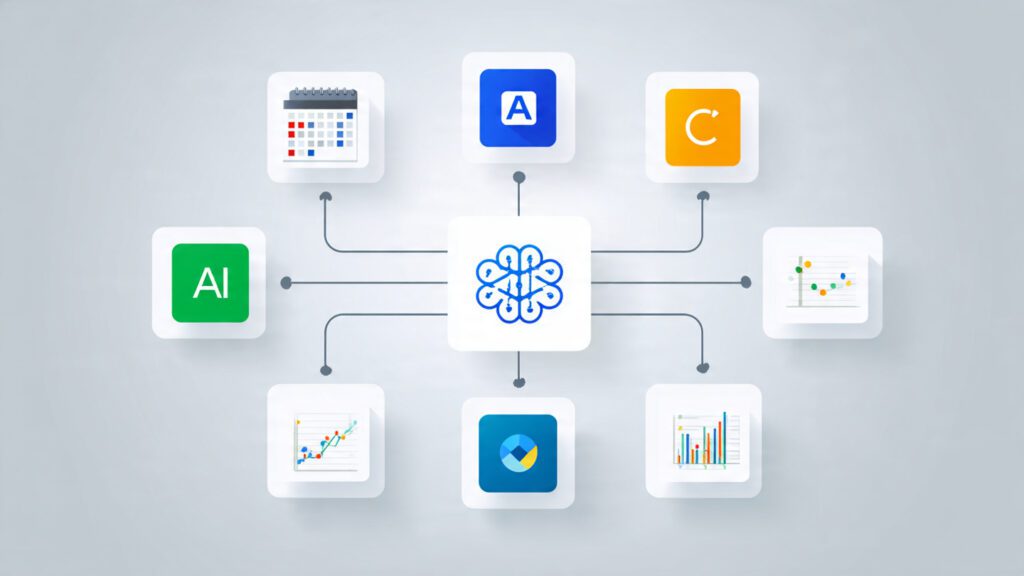
- Tool Use: It can connect to other apps, tools, and APIs to get work done. It can pull data from your Shopify store, post to your Instagram account, send emails via Gmail, and update your Google Sheet — all without you switching between tabs.
- Memory & Learning: It remembers past interactions and results, so it gets better over time. If a certain ad copy performed well last month, it will use that data to create better copy this month.
Real Agentic AI Use Cases For Entrepreneurs, Traders, and Small Business Owners (2026)
You don’t need to be a tech giant to use agentic AI. Here are the most practical, high-impact use cases for people like you and me:
For Small Business Owners
If you run a small shop, e-commerce store, or local service business, agentic AI can automate the boring, repetitive work that eats up 10+ hours of your week:
- Inventory Management: The AI tracks your stock levels, alerts you when popular items are running low, and even auto-orders new stock from your supplier when levels drop below a threshold.
- Customer Support: It answers FAQs, processes returns, and follows up with customers after purchase — all in your brand voice, 24/7.
- Marketing Automation: It creates social media posts, schedules them, runs ad campaigns, and adjusts your budget based on performance, all without you having to lift a finger.
A 2024 McKinsey study found that small businesses using agentic AI for workflow automation saw a 35% increase in productivity and 28% higher revenue growth than peers that didn’t use the technology.
For Freelancers & Solopreneurs
If you trade time for money, agentic AI can help you scale without working more hours:
- Client Outreach: The AI finds potential clients matching your ideal customer profile, sends personalized outreach emails, follows up with leads, and even books discovery calls on your calendar.
- Project Management: It sends invoice reminders, tracks project deadlines, and follows up with clients for feedback after a project wraps up.
- Admin Automation: It organizes your files, logs your expenses, and even prepares weekly reports for your clients.
For Traders (My Personal Use Case)
As an active forex and gold trader, I used to spend 6-8 hours a day staring at charts, scanning for setups, and journaling trades. It was exhausting, and I often made impulsive, emotional trades when I was tired.
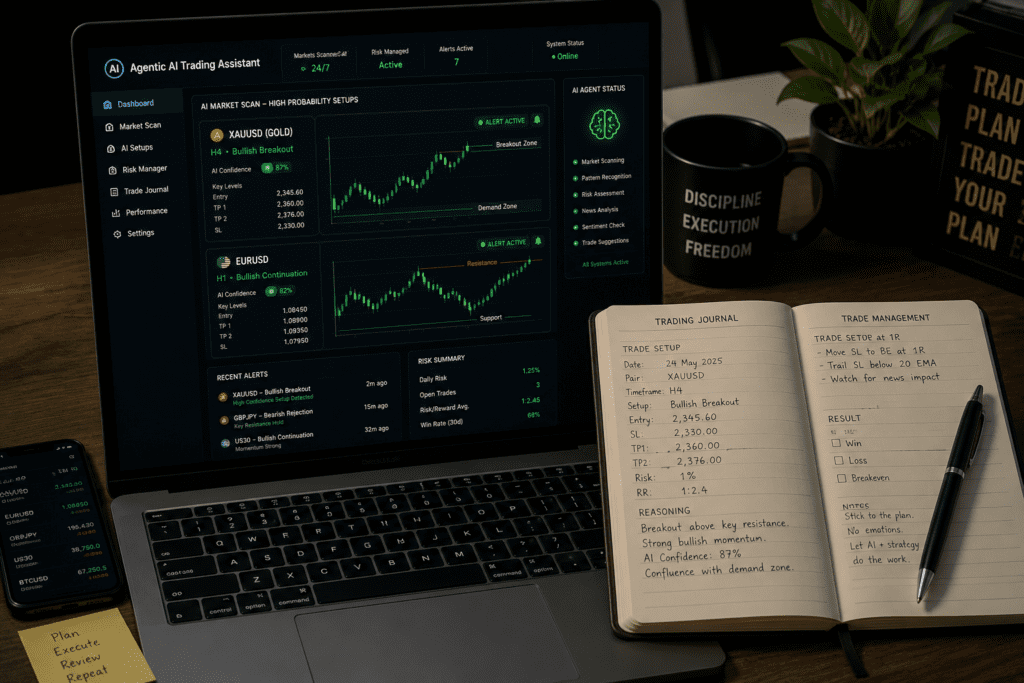
Now I use an agentic AI agent connected to my TradingView account. I set clear guardrails: only trade gold and EUR/USD, risk 1% per trade, no trading 1 hour before and after high-impact news events. The AI scans the markets 24/7, only alerts me when there’s a high-probability setup that matches my strategy, auto-journals every trade with entry/exit reasons and emotions, and sends me a weekly performance report.
I still review every trade before executing it, but I don’t have to waste hours staring at a screen anymore. My win rate has gone up 12% in 6 months, and I have way more time to focus on my other businesses. That’s the power of agentic AI for traders: it removes the repetitive, emotional work, so you can focus on high-impact decisions.
How I Use Agentic AI In My Own Business & Trading (No Hype, Just Results)
I don’t just write about agentic AI — I use it every single day. Here are the exact workflows I’ve built to save time and scale my work:
- Trading Workflow: As I mentioned earlier, my agentic AI scans markets, alerts me to setups, and journals trades. It also sends me a daily summary of market conditions, so I don’t have to read 10 different news sources every morning.
- Content Repurposing Workflow: I write one long-form blog post a week. My agentic AI takes that post, turns it into 10 Twitter threads, 5 LinkedIn posts, 3 YouTube video scripts, and an email newsletter. I review and edit the output, but the repetitive repurposing work that used to take me 4 hours now takes 30 minutes.
- Personal Finance Workflow: I have an agentic AI connected to my bank accounts and investment portfolio. It categorizes my expenses, tracks my net worth, alerts me if I’m overspending in a category, and even suggests where to invest extra cash based on my risk profile.
None of these agents are perfect. I still have to review their work, adjust their rules, and fix mistakes sometimes. But they free up 15+ hours a week for me to focus on high-impact work: learning new trading strategies, creating content for my audience, and planning my next business venture. That’s the real value of agentic AI: it doesn’t replace you. It augments you.
The Brutal Truths About Agentic AI (It’s Not All Magic)
Let’s be honest: the internet is full of hype about agentic AI being a “set it and forget it” tool that will make you rich while you sleep. That’s garbage. Here are the hard realities no one talks about:
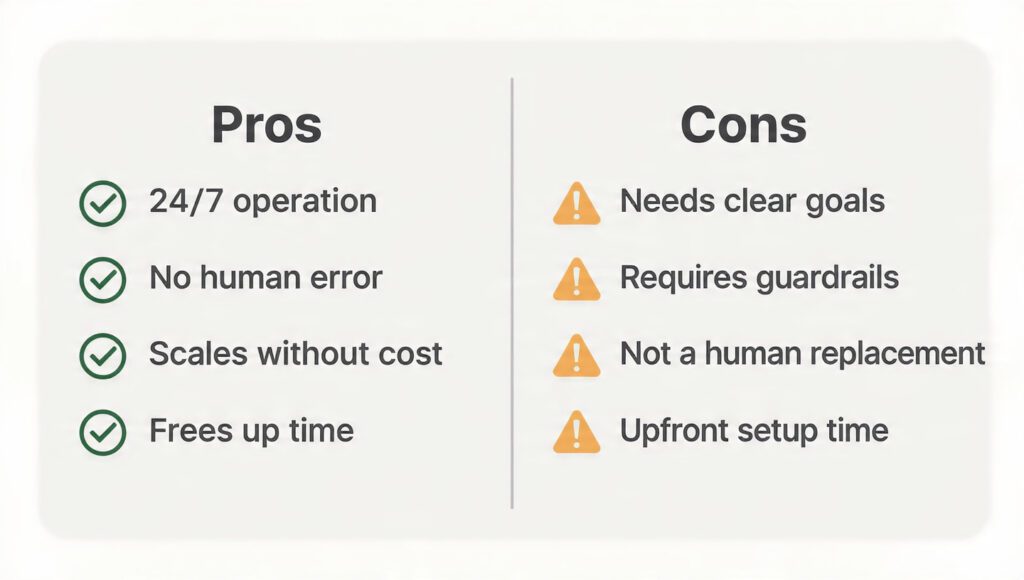
1. It’s Only As Good As The Goals You Set
If you give an agentic AI a vague goal like “make more money”, it will fail. You need to give it specific, measurable, time-bound goals: “increase T-shirt sales by 20% in 30 days by running Instagram ads for top-selling designs”. The more specific you are, the better the results.
2. It Can Make Costly Mistakes If You Don’t Set Guardrails
When I first set up an agentic AI to manage my T-shirt business ad spend, I forgot to set a daily budget cap. It overspent by 2,000 PKR in one day promoting a design that wasn’t converting. Now I always set strict limits: “don’t spend more than 100 PKR per day on ads”, “don’t discount products by more than 10%”. Guardrails are non-negotiable.
3. It’s Not A Replacement For Human Judgment
The AI can suggest a trade, but you have to approve it. It can write a social post, but you have to make sure it matches your brand voice. It can analyze sales data, but you have to make the final call on product changes. Agentic AI is a tool, not a co-founder.
4. It Requires Upfront Work To Set Up
It’s not a “set it and forget it” tool. You’ll spend 2-3 hours the first week setting up the agent, connecting your tools, writing clear prompts, and setting guardrails. But that upfront work pays off 10x in the long run, when the agent is doing 10 hours of work for you every week.
How To Get Started With Agentic AI In 2026 (No Coding Required)
If you’re ready to try agentic AI but don’t know where to start, here’s my step-by-step framework for beginners:
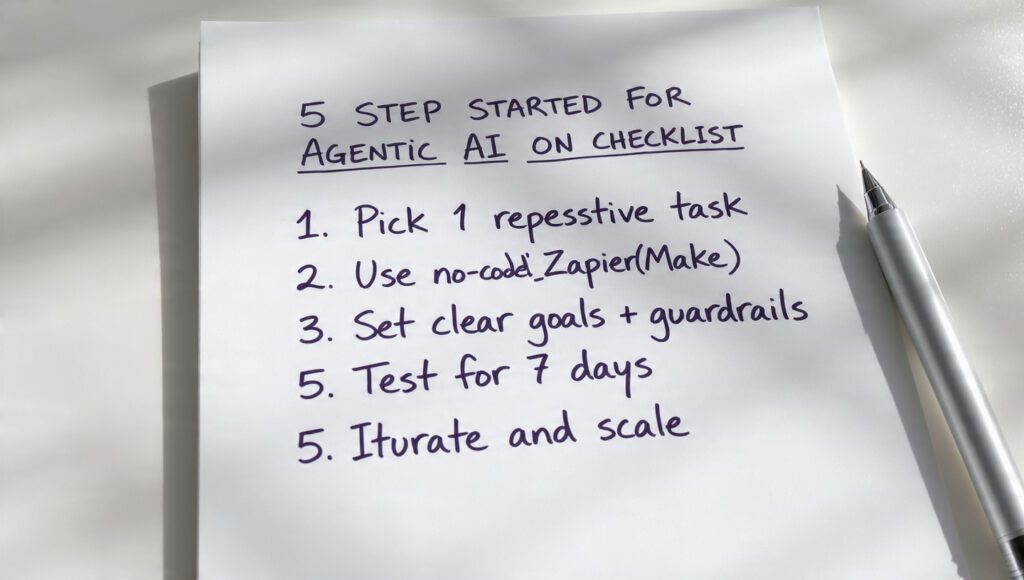
- Pick One Small, Repetitive Task You Hate Doing: Don’t try to automate your entire business at once. Start with one tiny task: sending follow-up emails to past clients, scanning trading charts for setups, repurposing your blog posts into social media content.
- Use A No-Code Tool: You don’t need to code. For beginners, I recommend Zapier AI Agents, Make.com AI Agents, or custom GPTs with the “Actions” feature enabled. These tools let you build agents by dragging and dropping, no coding needed.
- Set Clear Goals And Guardrails: Be as specific as possible. Instead of “manage my social media”, say “post 3 Instagram posts a week about my T-shirt designs, use only top-performing designs from the past 3 months, don’t spend more than 50 PKR per day on ads”. Set hard limits to avoid costly mistakes.
- Test And Iterate: Run the agent for 7 days, review the results, adjust your prompts and rules, and run it again. The first version will never be perfect — that’s normal.
- Scale Slowly: Once your first agent is working reliably, add a second one for another repetitive task. Don’t try to automate 10 things at once — you’ll get overwhelmed and quit.
Here’s the thing: you don’t need to be a tech expert to use agentic AI. You just need to be willing to experiment with one small task, and learn from your mistakes. That’s how I learned — by blowing a few ad budgets and making a few bad prompts, until I got it right.
FAQ: Agentic AI Questions, Answered
Q1: What is the difference between agentic AI and regular AI chatbots?
Regular AI chatbots are reactive: they only respond when you prompt them, and can’t take action on their own. Agentic AI is proactive: you give it a goal, and it plans, uses tools, takes actions, and learns from results to achieve that goal without constant human input.
Q2: Can agentic AI replace my job?
No. Agentic AI replaces repetitive, low-value tasks, not human judgment, creativity, or strategy. It frees you up to do higher-impact work that actually moves the needle for your business or career. The people who use agentic AI to augment their work will outperform those who don’t — but the AI won’t replace them.
Q3: Is agentic AI safe for small businesses to use?
Yes, as long as you use reputable tools and set strict guardrails. Most no-code agentic AI tools (like Zapier, Make) have enterprise-grade security, and you can set limits on what the AI can and can’t do (e.g., don’t send emails to more than 10 people a day, don’t spend more than X amount on ads). Always review the AI’s actions for the first few weeks to make sure it’s following your rules.
Q4: How much does agentic AI cost for small businesses?
You can get started for as little as $20-$50 a month. No-code tools like Zapier AI Agents start at $20/month for small use cases, and custom GPTs with actions are even cheaper if you only need basic workflows. The ROI is almost immediate: if the AI saves you 10 hours a week, that’s 10 hours you can spend on revenue-generating work.
Q5: Can I use agentic AI for forex and gold trading?
Yes, but with strict guardrails. Agentic AI can scan markets, alert you to setups, and auto-journal trades, but you should always approve every trade before it’s executed. Never let an AI trade on autopilot without your oversight — the markets are too unpredictable. I only use agentic AI for analysis and journaling, not for executing trades without my approval.
Q6: Do I need coding skills to build an agentic AI agent?
No. No-code tools like Zapier, Make, and custom GPTs with Actions let you build fully functional agentic AI agents by dragging and dropping, no coding required. You can build a basic agent in 30 minutes with these tools.
Q7: What is the future of agentic AI in 2026 and beyond?
IBM predicts that agentic AI will handle 80% of routine business workflows by 2028, from customer support to inventory management to financial analysis. For small businesses and entrepreneurs, this means you’ll be able to scale your operations without hiring more staff, and compete with much larger companies. The earlier you start experimenting with agentic AI, the bigger your competitive edge will be.
Conclusion: Agentic AI Isn’t The Future — It’s Already Here
“The goal of technology is not to replace human effort, but to free human effort to do work that matters.” — Satya Nadella, CEO of Microsoft
Look, I’ve been at the bottom. I’ve spent 12 hours a day doing back-breaking manual labor, feeling like there was no way out. I’ve blown trading accounts, failed at side hustles, and felt like I was stuck in a cycle of hard work with no progress.
But I also know what it’s like to find a tool that changes everything. Agentic AI isn’t a magic bullet. It won’t make you rich overnight, and it won’t fix a broken business. But if you use it right, it will free up 10, 20, even 30 hours a week of your time — time you can spend on the work that actually moves the needle for you.
Your business is already compounding. Your time is already compounding. The question is: are you going to waste your time on repetitive, low-value work, or use agentic AI to free yourself up to do the work that matters?
Start today:
- Pick one small, repetitive task you hate doing (e.g., sending follow-up emails, scanning trading charts).
- Build a simple agentic AI agent for that task using a no-code tool like Zapier or Make.
- Test it for 7 days, adjust the rules, and watch how much time you save.
The future doesn’t belong to the people with the most tech skills. It belongs to the people who are willing to experiment with new tools to work smarter, not harder. And agentic AI is the most powerful tool to do that in 2026.

Key Takeaways / Quick Action Steps
- ✅ Agentic AI is proactive, not reactive: It works toward a goal you set, instead of only responding to prompts like regular chatbots.
- ✅ Start small: Pick one repetitive task you hate, and build a simple agent for it using a no-code tool. Don’t try to automate everything at once.
- ✅ Set strict guardrails: Always set limits on what the AI can do (budget caps, approval requirements) to avoid costly mistakes.
- ✅ It’s a tool, not a replacement: Use it to augment your work, not replace your judgment. Always review the AI’s output before acting on it.
- ✅ The earlier you start, the bigger your edge: Most small business owners are still using regular chatbots. Using agentic AI now will give you a massive competitive advantage in 2026 and beyond.
Author Bio
Shurah Beel Hamid is a business enthusiast, active trader, and content creator who turned a life of manual labor and mental health struggles into a mission of building unshakable financial independence. His expertise lies in cutting through the noise of get-rich-quick schemes to focus on the timeless principles of compounding, trading psychology, and elite mindset, plus practical, actionable AI tools for entrepreneurs. He shares his real, unfiltered journey—from electrician to entrepreneur—to provide practical insights for those building their own path. His writing is a blend of hard-won experience, strategic analysis, and relentless optimism.
Disclaimer
The content on this website is for educational and informational purposes only and does not constitute financial, business, or technical advice. Agentic AI tools carry risks, including but not limited to data privacy risks, incorrect outputs, and financial loss if used without proper guardrails. You are solely responsible for your own use of AI tools and any decisions made based on their output. Trading involves significant risk of loss; never use AI to execute trades without your own oversight and approval. The author’s personal experiences are not a guarantee of results for any individual.