Look, I’ll be honest with you. A few years ago, when I started my journey in Forex trading and business, I was drowning. Staring at charts for 12 hours a day, manually analyzing gold prices, while simultaneously trying to write content for my blog. I was burnt out, stressed, and going nowhere fast.
I thought the only way to succeed was to work harder. I was wrong.
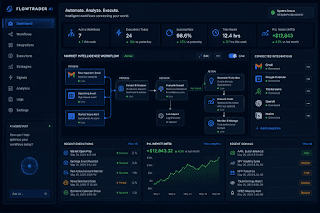
Everything changed when I stopped treating AI and technology as a cool toy and started using it like an employee. Today I have systems that watch the market for me. I use AI to structure my thoughts before I write. I’ve taken back my time — and my results.
If you want to understand how AI in trading and business can transform your life in 2026, keep reading. I’m going to show you exactly how I do it.
The Reality: Why You Are Falling Behind
The gap between people who use AI and people who don’t is growing every single day. And it’s not slowing down.
I remember one specific week in early 2024. I was trying to research Gold investment strategies manually. It took me six hours to compile data from different news sources. By the time I was ready to make a move, the market had already moved on without me.
Then I used an AI tool to scrape sentiment data from financial news sites. Same job. 30 seconds.
That’s what AI actually is — not laziness, but efficiency. It handles the grunt work so you can focus on the decisions that actually make money.
How I Use AI for Forex & Stock Analysis
As an active trader, I know emotions are the enemy. This is where AI becomes your edge. I don’t let AI execute my trades blindly — that’s a fast way to blow an account — but I use it for confluence.
1. Sentiment Analysis
Before I take a position on EUR/USD or Gold, I run news headlines through an NLP tool. It tells me whether market sentiment is leaning fearful or greedy. That helps me align my trading psychology with what the market is actually doing — not what I want it to do.
2. Pattern Recognition
I use AI-powered charting tools that automatically highlight support and resistance zones. It saves me from chart blindness — that thing that happens when you stare at screens for too long and start seeing setups that aren’t there.
Pro Tip: Never rely 100% on an AI signal. Use it as a second opinion. If your own analysis says “Buy” and the AI says “Sell” — stay out. Cash is also a position.
Automating My Business Workflow
Beyond trading, I run a content creation business. Managing DataPips and other projects requires serious organization — the kind that used to eat up my entire day.
In the past, I was manually replying to emails, scheduling posts, and doing data entry by hand. Now I use AI automation workflows to handle all of it.
- Content Ideation: I use LLMs to brainstorm 50 blog topics in 5 minutes based on trending keywords. What used to take a full afternoon now takes a coffee break.
- Drafting: I dictate my rough thoughts out loud and AI cleans up the grammar and structure. That’s exactly how this article started.
- Data Entry: Tools automatically extract data from invoices and drop them into Excel. No more manual typing. No more errors.
This frees me up for the only thing that actually grows a business: strategy and execution.
AI for Freelancers: Ranking Faster
I get asked this a lot: “Shurah, how do beginners actually rank on Upwork or Fiverr?”
The answer is quality delivered fast. Clients want results yesterday. Here’s how I tell my students to use AI in freelancing:
- Proposal Writing: Don’t copy-paste generic proposals. Use AI to analyse the client’s job description and write something that speaks directly to their problem. That alone puts you ahead of 80% of applicants.
- Skill Upgrading: Want to learn Python for data analysis? Use AI as your personal tutor. It explains complex code better than most textbooks — and it never gets impatient.
- Portfolio Creation: Use generative AI to create visuals for your portfolio if you’re a designer or marketer. You don’t need a big budget to look professional.
The Exact Tech Stack I Use
You don’t need expensive software to get started. These are the tools that give me the best return on my time and money:
- Writing & Brainstorming: ChatGPT-4o and Claude — essential for keeping a natural tone.
- Trading Analysis: TradingView with community scripts, plus financial news aggregators for sentiment.
- Automation: Zapier or Make.com — these connect your apps together so they work without you.
- Images: Midjourney — for high-quality blog thumbnails that don’t look generic.
The Future: AI Agents (Not Just Chatbots)
We’re way past simple chatbots now. In 2026, the real conversation is about AI Agents.
An AI Agent doesn’t just answer questions — it takes action. Imagine an agent that monitors the Gold market 24/7, and the moment a specific setup appears, it sends a detailed report to your phone and drafts a trade plan for you to review. That’s not science fiction. That’s where we are right now.
I’m currently testing agents that manage my calendar and prioritise my emails by urgency. It genuinely feels like having an executive assistant who never sleeps.

Final Thoughts
Using AI and technology isn’t about replacing your instincts — it’s about making them sharper.
In trading, it gives you clarity when the market is noisy. In business, it gives you time when you have none. In freelancing, it gives you an edge when everyone else is guessing.
My advice? Start small. Pick one thing you hate doing — analysing charts, writing emails, whatever it is — and find an AI tool that handles it. Once you see the difference, you won’t go back.
Follow DataPips for more real talk on trading psychology, business mindset, and using modern tools to actually get ahead.
About the Author
Shurah Beel Hamid is a trader, entrepreneur, and content creator. He built DataPips to share real, experience-based insights on trading psychology, Forex markets, and using AI for business growth — without the fluff.
Disclaimer: This article is for educational purposes only. Trading involves significant risk. Always do your own research before making financial decisions.
Frequently Asked Questions
1. Can AI predict stock market movements accurately?
No AI can predict the future with certainty. But it can analyse historical data and news sentiment far faster than any human — which means better probability, not guaranteed profit.
2. Is using AI in trading considered cheating?
Not even close. Institutional banks and hedge funds have been running algorithms for decades. Using AI tools as a retail trader just levels the playing field a little.
3. What is the best AI tool for beginners?
For general tasks, start with ChatGPT or Gemini. For trading specifically, the built-in indicators on TradingView are more than enough to begin with.
4. Will AI replace freelancers?
AI will replace freelancers who refuse to adapt. The ones who learn to control and direct AI will become more valuable — not less.
5. How do I start learning AI for business?
Automate one small thing first. Sort your emails. Generate social media captions. Don’t try to build a complex system from day one — start where the pain is biggest.

[…] you earn a great profit from a Gold trade. You feel rich. You go out, buy expensive things, lifestyle creep sets in. Two […]
[…] of reinvesting it, you don’t just lose that amount — you lose all the future growth that money could have generated. I call this “eating the seed before it […]
[…] article is my honest breakdown of how to stay consistent, why focus and consistency beat motivation, how urgency can make you faster, and why becoming hard […]
[…] that “safe players” become wealthy. Let me tell you something: The people who build empires are the ones with […]