Look, let’s get one thing straight right from the start: Most people don’t have a “money problem.” They have a mindset problem.
I’ve seen people make millions in a single month through trading, only to lose it all in a week. I’ve seen entrepreneurs build massive companies and then watch them crumble because they couldn’t manage a simple bank account.
The truth is a bit harsh: Success isn’t for the timid. It isn’t for those who play it safe and wait for luck. Success belongs to those who have the guts to take calculated risks and the discipline to manage what they have.

Personal finance in 2026 is not just about earning more money — it is about developing financial discipline, building smart money management habits, and focusing on long term wealth creation. People who master their money mindset and control their spending habits are far more likely to achieve lasting financial success.
If you want to win in 2026, stop thinking about “getting rich” and start thinking about mastering your money. If you can’t manage a thousand dollars, you will never manage a million. The math doesn’t lie.
1. The Guts Factor: Why Risk is Required
There is a common myth that “safe players” become wealthy. Let me tell you something: The people who build empires are the ones with guts.
In my experience, the biggest barrier to wealth isn’t a lack of capital — it’s a paralyzing fear of being wrong. People tell you to “get a job and stay safe.” And sure, a job provides stability, but stability is often the enemy of extraordinary growth.
To build wealth, you have to be willing to step into the unknown. You have to be willing to be misunderstood. You have to have the courage to invest in yourself, in your business, and in the markets when everyone else is running for cover. Fortune favors the bold, but it rewards the prepared.
2. Personal Finance in 2026 Starts with Managing Small Numbers
Here is the reality check most “wealth gurus” skip: If you cannot manage your own pocket money, you will never manage a corporation’s budget.
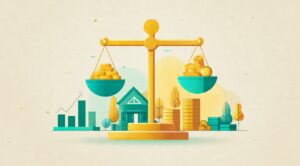
I have seen people dream of managing a million-dollar trading portfolio, but they can’t even track their monthly subscriptions or grocery spending. Personal finance is a scale — if the foundation is weak, the entire structure collapses when the wind blows.
Whether you are a freelancer, a trader, or a CEO, your ability to control your cash flow is your most important skill. You must learn to:
- Track every cent: If you don’t know where it’s going, you don’t own it — it owns you.
- Distinguish between Assets and Liabilities: An asset puts money in your pocket. A liability takes it out.
- Build a Buffer: Financial management is about survival during the dry months so you can thrive during the wet months.

3. The Smart Investor vs. The Reckless Gambler
In the world of Forex and stock investing, there is a very dangerous trap. It’s called the “Easy Profit Trap.”
I’ve seen it happen a hundred times. A trader enters the market, everything goes perfectly. They make a profit almost instantly. They feel like a genius. They feel like they’ve cracked the code.
Listen carefully: If you are making profits too easily, the market is likely just letting you stay so it can take it all back later.
The market is a predator. It waits for your ego to grow. It waits for you to stop respecting risk. When you become overconfident, that is exactly when it strikes. A smart investor is not someone who wins every time — a smart investor is someone who manages their losses so they can stay in the game.
How to be a Smart Player:
- Respect the Loss: When you lose, accept it, learn the lesson, and move on. Don’t revenge trade.
- Don’t Get High on Profits: When you win, stay humble. The market doesn’t owe you anything.
- Risk Management is King: Never risk more than you are willing to lose on a single move.
4. Personal Finance in 2026: The Math of Wealth Building
Most people live in a state of Addition. They work a day, get paid, spend. Linear. Slow. Exhausting.
The elite live in a state of Multiplication.
There is a mathematical secret to wealth that most people ignore. If you commit to getting just 1% better every single day, you don’t just end the year slightly better. Because of the power of compounding, you end the year 37 times better than when you started.
- Addition: Doing the same thing every day and expecting the same result. Stagnation.
- Multiplication: Learning something new today and connecting it to what you learned yesterday. Exponential growth.
When you multiply your efforts with technology, knowledge, and smart investments, your growth stops being a straight line and starts becoming a curve that shoots toward the sky.
Personal finance in 2026 requires consistency, discipline, and smart decision-making. The people who achieve long term wealth are those who build strong financial habits and stay committed to smart money management.
“Success is not a sudden event — it is the compound interest of your daily habits.”
Quick Action Steps
- Audit Your Spending: For the next 30 days, track every single penny. Knowledge is power.
- Master One Skill: Pick one financial skill — Trading, Tax, or Budgeting — and master it this month.
- The 1% Rule: Identify one way to be 1% more efficient or more knowledgeable today.
- Build Your Buffer: Before you invest in big things, make sure your emergency fund is rock solid.
Frequently Asked Questions
Q: Is it better to save money or invest it?
You must do both, but in order. Build an emergency fund first so you are never forced to sell your investments during a market crash.
Q: How do I handle a massive financial loss?
Do not act on emotion. Step away from the screen. Analyze the error without ego. The loss is only a failure if you fail to learn from it.
Q: Can I really become wealthy through the 1% rule?
Yes. Compounding works in knowledge just as much as it works in money. Small, consistent improvements lead to massive shifts over time.
Q: Why is personal finance so hard to master?
Because it is 20% math and 80% psychology. Controlling your impulses is much harder than calculating a spreadsheet.
Q: Should I invest in Gold or Stocks in 2026?
A diversified portfolio is best. Gold acts as a hedge against inflation, while stocks and business ventures provide growth. Balance is key.
Final Thoughts
The world is going to keep spinning and the markets will keep moving. You can either be the person who gets swept away by the current, or the person who learns how to surf the wave.
Stop waiting for the perfect moment. Stop waiting for more luck. Start managing what you have, start building your guts, and start multiplying your efforts. The path builds itself as you move.
If you want to master the elite mindset and learn how to navigate the complex world of finance and business, follow DataPips — we are just getting started.
About the Author:
Shurah Beel Hamid is a trader, entrepreneur, and content creator specializing in Forex, entrepreneurship, and the psychology of wealth. He provides actionable insights for those looking to bridge the gap between surviving and thriving in the modern economy.
Disclaimer: This content is for educational purposes only. Trading Forex, stocks, and other financial instruments involves significant risk. Always conduct your own research or consult a certified professional before making financial decisions.


[…] can give 45 minutes. Fine. Some days all you can manage is 5 minutes, one page, one paragraph, one trade review, one note. That still […]
[…] You wake up, do your job, come home, sleep. Repeat. You are adding days to your life but not multiplying your value. This is how most people live — and wonder why nothing […]
[…] use AI-powered charting tools that automatically highlight support and resistance zones. It saves me from chart blindness — that thing that happens when you […]
[…] When you use it as motivation instead of letting it become resentment, jealousy can be one of the strongest forces you […]
[…] started compounding my silver savings very consistently — a small amount every single month regardless of price. Today I have 3 kilograms. That […]