Look, I’m going to be honest with you. Most people think that making money is the hardest part. They think if they just hit that jackpot in Forex or land a high-paying freelance gig, all their problems will vanish.
I learned the hard way that they are wrong.
You can make a million dollars, but if you don’t have Personal Finance skills, you will lose it all. I’ve seen traders make huge profits in a week and lose everything the next because they had no idea how to manage what they had.
Today I want to share the raw truth about money management. Whether you are trading Gold, running a business, or just starting your first job — these rules apply to everyone. Let’s talk about building an Elite Business Mindset around your wallet.
The Mindset Shift: Nuts vs. Guts
There is a saying I live by: “Good kids don’t make much. The ones who make it are the ones with guts.”
In the world of business and entrepreneurship, playing it safe often means staying average. But here is the catch — having guts doesn’t mean being reckless. It means having the courage to take calculated risks while protecting your downside.
I see so many young people who want to be entrepreneurs. They have the passion, but they lack the discipline. Real success isn’t just about the big bold move. It’s about the boring, daily discipline of managing your resources — even when nobody is watching.
Why Personal Finance is Non-Negotiable
Let’s talk about the elephant in the room. You might be thinking — “Shurah, I’m here to learn how to make millions in Forex, why are we talking about budgeting?”
Here is the thing: If you cannot manage $100, you cannot manage $1,000,000.
I always tell people around me — go ahead, get a job, start a business, do whatever you have to do. But if you don’t learn Financial Management, you are building a castle on sand. It will look impressive until the first storm hits.
The Leakage Problem
Imagine you earn a great profit from a Gold trade. You feel rich. You go out, buy expensive things, lifestyle creep sets in. Two months later the market dips and you have nothing saved. You are back to zero — except now you also have new expenses.
Personal Finance is the art of plugging those leaks. It doesn’t matter if you are a freelancer or a CEO — if you can’t manage your own cash flow, you will eventually crash.
My Rule: Treat your personal finances with the same seriousness as your trading capital. If you wouldn’t throw money away on a bad trade, don’t throw it away on bad spending habits.

The Smart Trader’s Secret: Handling Losses
This is a lesson I learned directly from the charts. In trading we talk a lot about “Smart Money.” But being a Smart Trader isn’t just about technical analysis — it’s about psychology.
When I am in profit, I feel like a king. I can withdraw money, buy gifts, enjoy life. That part is easy. Anyone can spend money when they are winning.
But what happens when you are in a loss?
This is where the real test begins. If you are in a drawdown or a losing streak and you still try to maintain that high lifestyle, you are digging your own grave. I’ve seen it happen to traders far more talented than me.
The Market Trap
Here is a harsh reality: sometimes when you are losing, the market will let you win a small trade. It gives you a little profit. Do not be fooled.
If you are not disciplined, the market is just keeping you in the game long enough to take even more from you. A smart trader knows that during tough times, you tighten your belt. You protect your capital above everything else.
- Amateur: Wins a trade after a loss → Spends the profit immediately → Blows the account later.
- Pro: Wins a trade after a loss → Secures the capital → Re-evaluates the strategy → Waits for the right setup.
Protect your downside, and the upside will take care of itself.

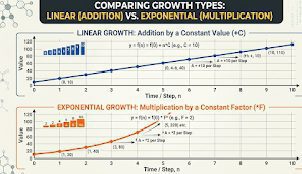
I want to share a concept that genuinely changed how I think. It’s about how you view your daily growth.
People say success is luck. I say success is Compounding.
There is a well-known idea: if you get just 1% better every day, by the end of the year you will be 37 times more capable than when you started. But how do you actually do that? You have to understand the difference between Addition and Multiplication.
Addition Mode (The Trap)
Addition means doing the same work every day and expecting the same result. You wake up, do your job, come home, sleep. Repeat. You are adding days to your life but not multiplying your value. This is how most people live — and wonder why nothing changes.
Multiplication Mode (The Growth)
Multiplication means learning something new every day and connecting it to what you already know.
- Today you learn about Forex patterns.
- Tomorrow you learn about Global Economics.
- You connect the two. Your analysis becomes sharper. Your edge grows.
When you multiply your efforts, your growth compounds. Don’t just work hard — work smart by constantly upgrading your most important tool: your mind.
Quick Action Steps for 2026
Here is your practical checklist — no fluff, just action:
- Audit Your Spending: Look at last month’s expenses. Where did the money leak? Most people are shocked when they actually look.
- Build a War Chest: Before you invest in risky assets like Crypto or Forex, make sure you have 3 to 6 months of living expenses saved in cash. This is non-negotiable.
- Learn 1% Daily: Read one page of a finance book or watch one educational video every single day. Small inputs, massive output over time.
- Respect the Loss: If you have a bad month in trading or business, cut your lifestyle costs immediately. Survive to fight another day.
Frequently Asked Questions
1. Why is personal finance important for traders?
Trading involves risk. If your personal finances are a mess, you will trade with scared money — money you cannot afford to lose. That leads to emotional decisions and almost always to losses.
2. What is the 1% rule in self-improvement?
It is the idea of marginal gains. Improving by just 1% every day leads to massive results over a year because of the compounding effect — roughly 37 times better than where you started.
3. How do I start managing money if I have debt?
Focus on either the Avalanche Method — paying highest interest debt first — or the Snowball Method — paying the smallest balance first. Either works. The important thing is to pick one and stay consistent.
4. Is success luck or hard work?
Luck plays a role, but consistent success comes from preparation meeting opportunity. The people who show up every day, keep learning, and multiply their efforts — they are the ones who catch the lucky breaks too.
Conclusion
Becoming wealthy isn’t about hitting one home run. It’s about staying in the game long enough to let compounding do the heavy lifting.
Master your Personal Finance. Develop the guts to take risks but the wisdom to manage them. Never stop multiplying your knowledge. That is the real path to an elite mindset — and everything that comes with it.
Ready to take control? Start today. Track your expenses, learn one new thing, and build your empire brick by brick. Nobody else is going to do it for you.
About the Author
Shurah Beel Hamid is a trader, entrepreneur, and content creator. With hands-on experience in Forex, stock markets, and Gold trading, he built DataPips to share practical, experience-based insights — not theory. He believes the right mindset is always the first investment.
Disclaimer: This article is for educational purposes only and does not constitute financial advice. Trading involves significant risk.



[…] strategies manually. It took me six hours to compile data from different news sources. By the time I was ready to make a move, the market had already moved on without […]
[…] men who truly earn respect are the ones who build from zero. They don’t coast on someone else’s hard work. They go […]
[…] had 3 kilograms of silver. My trading account was growing slowly but steadily. I felt the power of compounding for the first time in my […]
[…] is exciting, when the results are visible, and when your mood is high. The problem is that real growth does not happen only on those days. Real growth also asks you to work when the task is boring, when […]
[…] finance in 2026 is not just about earning more money — it is about developing financial discipline, building smart money management habits, and focusing on long term wealth creation. People who […]