Key Takeaways
- Everyone is a long-term investor until the market crashes. The real test of your strategy is your behavior in the storm.
- Your brain is wired to panic-sell — loss aversion, fear, and herd instinct all scream “get out” at the worst possible moment.
- A crash is a paper loss; selling makes it permanent. You only truly lose when you convert fear into an action.
- Missing the recovery is the real danger, since the biggest rebound days often cluster right after the worst declines.
- The crash isn’t the risk — your reaction is. Fortunes are made and destroyed by behavior, not by the market itself.
- You win by controlling emotion — zooming out, pre-committing, and letting your long time horizon do its job.
Everyone is a calm, rational, long-term investor — right up until the moment the market falls off a cliff. When the numbers are green and rising, staying invested feels easy and obvious. But when a crash hits and your portfolio is bleeding red, down twenty, thirty, forty percent, with headlines screaming catastrophe and everyone around you selling in a panic, something primal takes over. Your heart races, your stomach drops, and every instinct in your body howls one word: sell. That moment — not the bull market — is where investing is actually won or lost.
Here’s the uncomfortable truth: the biggest threat to your long-term returns isn’t the crash itself. It’s you — specifically, what your panicking brain does during the crash. This is a look at the psychology behind why staying invested feels impossible when markets crash, why your instincts betray you at exactly the wrong moment, and the mental framework that lets disciplined investors hold the line while everyone else sells at the bottom.
Why Your Brain Screams “Sell”
To master crash psychology, you first have to understand why your own mind turns against you. When markets plunge, several powerful psychological forces fire at once, and together they create an almost overwhelming urge to sell.
First is loss aversion — the pain of a loss is felt about twice as intensely as the pleasure of an equal gain. In a crash, that doubled pain becomes an emotional emergency your brain desperately wants to end, and selling feels like the way to make the hurting stop. Second is our ancient survival wiring: a rapidly falling portfolio triggers the same fight-or-flight alarm as a physical threat, and flight means sell. Third is herd behavior — when you see everyone else panicking and selling, your brain interprets the crowd’s fear as confirmation that selling is the safe, correct thing to do. Add in recency bias, where your mind assumes the recent downward trend will continue forever, and you have a perfect psychological storm. Every one of these instincts is screaming the same thing, and panic selling feels less like a choice and more like survival.
“In a crash, your brain treats a falling portfolio like a predator at the door. Selling feels like survival — which is exactly why so many people do the single most destructive thing at the worst possible time.”
The Math Your Panic Ignores
Here’s what your fear conveniently hides in the moment. During a market crash, your losses are only on paper. Your investments have fallen in value, but you haven’t actually lost anything until you sell and convert that paper loss into a real, permanent one. As long as you hold, a decline is just a temporary number — painful to look at, but not yet a realized loss. The act of selling is what makes it permanent.
And this points to the truly destructive part of panic selling: it doesn’t just lock in your loss, it takes you out of the market right before the recovery. Historically — though never guaranteed — markets have recovered from crashes and gone on to new highs over long enough time frames. Crucially, the strongest rebound days tend to cluster in the period right after the worst declines, so the panicked seller who flees at the bottom often misses the very best days of the recovery, permanently crippling their returns. They sell low out of fear, then watch from the sidelines as the market climbs back without them. This is why time in the market has historically mattered far more than trying to time it, and why a steady approach like dollar-cost averaging keeps working through the fear.
The Mental Reframes That Keep You Invested
Staying invested during a crash isn’t about having no fear — it’s about not letting the fear drive. These reframes rewire how you experience a crash.
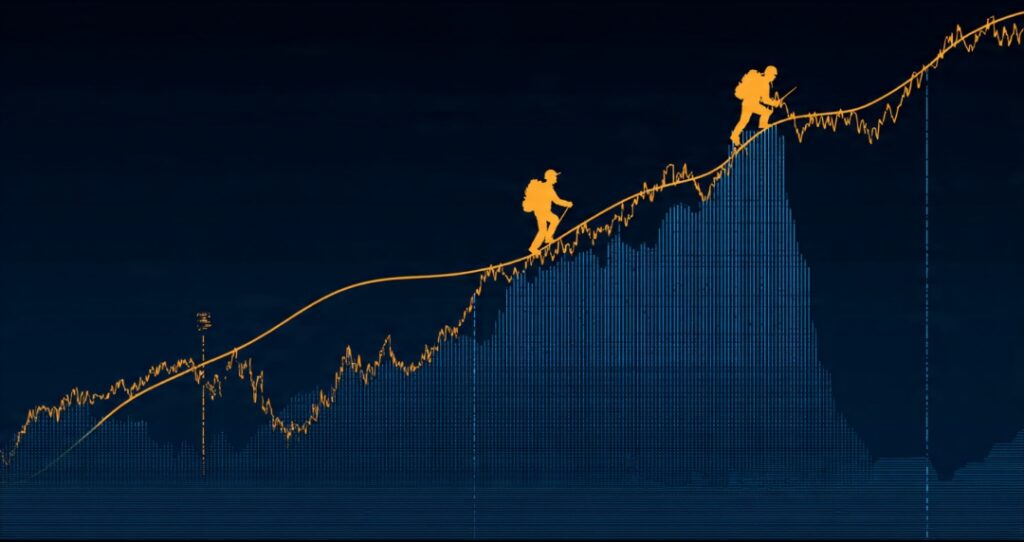
Zoom out. Fear lives in the daily chart. Pull back to a decades-long view and today’s terrifying crash becomes a small dip on a long upward climb. The wider your time frame, the smaller the crash looks and the quieter the panic gets.
Remember crashes are normal. A bear market is not a freak catastrophe — it’s a recurring, expected part of investing that every long-term investor lives through many times. Treating a crash as a normal, survivable event rather than the end of the world instantly lowers the panic.
You only lose if you sell. Burn this into your mind before a crash ever comes. Holding through a decline costs you nothing permanent; selling is the only action that turns fear into real loss. When you truly internalize this, the urge to sell loses its grip.
Reframe the crash as a discount. For anyone still investing, a crash means the same assets are now on sale. Instead of a disaster, it becomes an opportunity to buy more at lower prices — the exact opposite of the panic reaction. This calm, opportunity-focused mindset is the heart of investing well during uncertainty.

What Nobody Tells You: It’s an Emotional Game, Not an Intelligence Test
Here’s the truth that separates those who build wealth from those who don’t: surviving a crash has almost nothing to do with intelligence or market knowledge, and almost everything to do with emotional control. The math of why to stay invested is simple enough for anyone to understand. The hard part is executing it while your heart is pounding and your instincts are screaming. Plenty of brilliant people panic-sell at the bottom, and plenty of ordinary people build fortunes simply by staying calm and doing nothing.
This is a lesson driven home in every high-stakes arena where money and emotion collide. The person who can keep their emotions in check and give their decisions room to breathe consistently outperforms the more knowledgeable person who acts on impulse. When you make decisions in the grip of intense emotion, you make them badly — you overreact, you act too fast, you do the destructive thing. But when you build in space and a predetermined plan, your decisions become calculated rather than emotional, even when things look bad. The disciplined investor isn’t smarter than the panicking one; they’ve simply removed emotion from the driver’s seat, which is the entire game. It’s the same principle that separates the professional from the gambler, as we broke down in moving from gambler to professional through mechanical discipline. This is also why emotional interference is the silent killer of long-term compound growth.
“Surviving a crash isn’t an intelligence test — it’s an emotional one. The calm investor who does nothing beats the brilliant one who panics. Removing emotion from the driver’s seat is the whole game.”
Practical Tactics to Hold the Line
Reframes help, but in the heat of a crash you also need concrete defenses.
Stop looking. Constantly checking a falling portfolio feeds the panic. During a crash, simply looking less — checking rarely instead of obsessively — dramatically reduces the emotional pressure to act.
Pre-commit before the crash. Decide now, while calm, exactly what you’ll do when markets fall: “I will not sell during downturns; I will keep investing on schedule.” A decision made in advance by rational you protects against panicked you, the same defense that beats present bias.
Automate everything. If your investing is automatic, you keep buying through the crash without a frightened human deciding to stop. Automation removes you from the emotional decision entirely — the single most reliable defense there is.
Anchor to your time horizon. If you don’t need this money for years or decades, a crash today is largely irrelevant to your actual goal. Remembering your real time horizon shrinks the importance of any single crash, and connects directly to how patience compounds wealth even on an ordinary income.
| The panic reaction | The disciplined reaction |
|---|---|
| Sells at the bottom out of fear | Holds, knowing losses are only on paper |
| Obsessively watches the falling numbers | Looks less, reduces the pressure |
| Follows the panicking herd | Sticks to a pre-committed plan |
| Sees a disaster | Sees a temporary discount |
| Misses the recovery | Is invested when it rebounds |

Now It’s Your Move
A market crash is not primarily a financial event — it’s a psychological one. The market will fall and, historically, recover regardless of what you do; the only variable you control is how you behave while it’s falling. And that behavior, more than any stock pick or clever strategy, is what ultimately determines your long-term results. The crash isn’t the risk. Your reaction to it is.
- Decide your crash plan now. While markets are calm, commit in writing to holding and continuing to invest through any downturn.
- Automate your investing. Remove yourself from the emotional decision so you keep buying through the fear.
- Zoom out when panic hits. View any crash against your full time horizon, where it shrinks to a blip.
- Look less. During a crash, check rarely instead of obsessively to starve the panic.
- Remember: you only lose if you sell. Make this your anchor phrase when fear peaks.
The investors who build lasting wealth aren’t the ones who avoid crashes — that’s impossible. They’re the ones who stay calm and stay invested while everyone else panics, letting time and compounding do their slow, powerful work through every storm. Master the psychology, remove emotion from the driver’s seat, and a crash stops being the thing that destroys your wealth and becomes just another storm you were built to weather.
Because several powerful psychological forces fire at once. Loss aversion makes the pain of falling values feel about twice as intense as equivalent gains, ancient survival wiring triggers a fight-or-flight urge to flee, herd behavior makes the crowd’s panic feel like confirmation that selling is safe, and recency bias convinces you the decline will continue forever. Together these create an almost overwhelming urge to sell, making panic feel less like a choice and more like survival, even though holding is usually wiser.
Generally, panic selling during a crash is one of the most destructive things a long-term investor can do. During a crash your losses are only on paper and become permanent only when you sell. Selling also tends to take you out right before the recovery, since the strongest rebound days often cluster after the worst declines, so panicked sellers frequently miss the best days. For long-term investors, staying invested and sticking to a plan has historically served far better than selling in fear.
Historically, broad markets have recovered from crashes and gone on to new highs over long enough time frames, though this is never guaranteed and past performance does not predict the future. What matters is that selling at the bottom locks in losses and risks missing the recovery, while staying invested keeps you positioned for any rebound. Because recoveries and their strongest days are unpredictable, trying to time an exit and re-entry is extremely difficult, which is why disciplined investors tend to stay the course.
Yes, until you sell. When markets fall, your investments drop in value, but you have not realized an actual loss while you continue to hold them. The decline is a temporary number on paper, painful to look at but not yet permanent. The act of selling is what converts that paper loss into a real, locked-in loss. Understanding this distinction is one of the most powerful ways to resist the urge to panic-sell, since holding costs nothing permanent.
Decide your plan in advance while calm, committing to hold and keep investing through any downturn, and automate your investing so you are removed from the emotional decision. During a crash, look at your portfolio less to reduce the pressure to act, zoom out to your full time horizon so the crash shrinks to a blip, and anchor to the phrase that you only lose if you sell. These defenses take the decision out of the panicked moment, which is where the damage happens.
Not really. Surviving a crash has far more to do with emotional control than with intelligence or market knowledge. The math of why to stay invested is simple, but executing it while fear is peaking is the hard part, and many highly intelligent people still panic-sell at the bottom. The calm investor who does nothing often beats the brilliant one who acts on impulse. Removing emotion from the driver’s seat, through pre-commitment and automation, is what actually determines success.
For long-term investors who are still contributing, a crash can be reframed as a discount, since the same assets are available at lower prices, making it an opportunity to buy more rather than a disaster to flee. This opportunity-focused mindset is the opposite of the panic reaction and is how disciplined investors treat downturns. That said, this requires emotional control and a genuine long time horizon, and no one should invest money they may need in the near term or cannot afford to lose.
Disclaimer: This article is for educational and informational purposes only and does not constitute financial or investment advice. All investing involves risk, including the loss of capital, and markets can fall significantly and may not recover on any particular timeline. Past performance and historical patterns do not guarantee future results. Never invest money you cannot afford to lose or may need in the near term, and consider consulting a qualified financial professional before making investment decisions, especially during periods of market stress.