How Loss Aversion Quietly Destroys Your Compounding
Look, let’s get something straight before we waste each other’s time. The biggest enemy of your wealth is not the market. It’s not inflation. It’s not your salary. It’s the wiring inside your own head. And the most expensive piece of that wiring is called loss aversion. Once you understand how loss aversion compounding damage works, you’ll realize you’ve probably been bleeding money for years without even noticing.
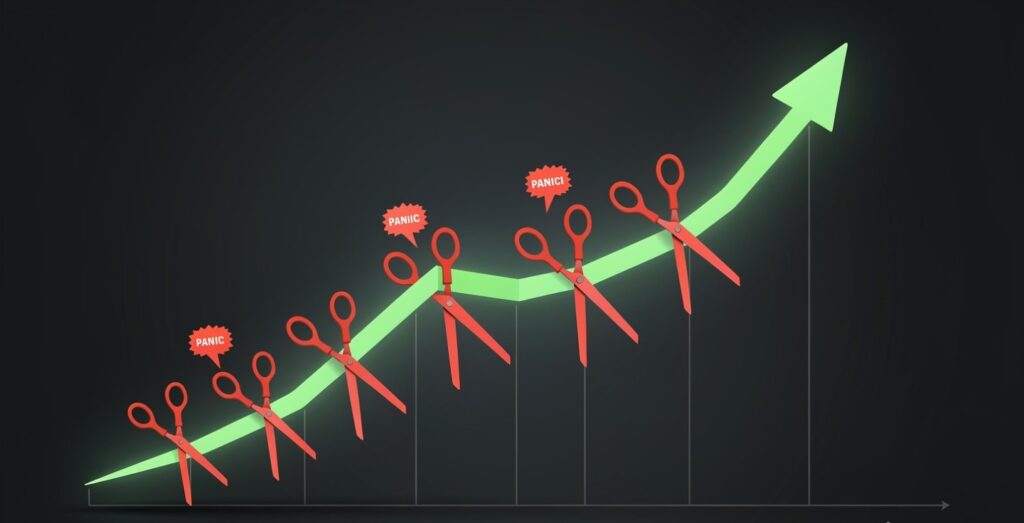
Here’s the brutal part. You don’t lose this money in one big crash. You lose it slowly, decision by decision, exit by exit, panic by panic. It’s death by a thousand small cuts. And by the time you see the damage, decades are gone.
This article is going to be uncomfortable. Good. Comfort never built anyone a fortune.
Key Takeaways
- Loss aversion means the pain of losing $100 feels roughly twice as strong as the joy of gaining $100 — and that imbalance quietly destroys your compounding.
- Most investors sell winners too early and hold losers too long. Both behaviors come from the same broken instinct.
- Compounding only works if you let time do its job. Loss aversion makes you interrupt the process exactly when patience matters most.
- The fix is not “feel less fear.” The fix is building a system that ignores your fear when it lies to you.
What Loss Aversion Actually Is (No Textbook Nonsense)
Honestly, most people throw around the term “loss aversion” without understanding it. So let our founder break it down the way an older brother would, not a professor.
Loss aversion is a simple psychological fact: humans hate losing far more than they enjoy winning. Losing $1,000 hurts you about twice as much as gaining $1,000 makes you happy. This isn’t an opinion. It’s documented behavioral science.
The concept came from Daniel Kahneman and Amos Tversky’s Prospect Theory — work that literally won a Nobel Prize in Economic Sciences. You can read a clean breakdown on Investopedia’s loss aversion page if you want the formal version.
But here’s the thing nobody tells you. This instinct kept our ancestors alive. Losing food in the wild could mean death. Avoiding loss was survival. The problem? That same survival code is now wired into how you handle money — and in the modern world of investing, it’s actively killing your returns.
“Your brain was built to keep you alive in a jungle. It was never built to make you rich. Stop trusting it with your money.”
Why Loss Aversion And Compounding Are Mortal Enemies
Compounding is the slowest, most boring, most powerful force in finance. If you don’t fully understand it yet, go read our breakdown on what is compounding first, then come back here. Seriously.
Compounding has one non-negotiable rule: you must stay invested long enough for growth to feed on growth. Interruptions kill it. Exits kill it. Panic kills it.
Now guess what loss aversion does. It forces you to interrupt, exit, and panic — at the exact worst moments.
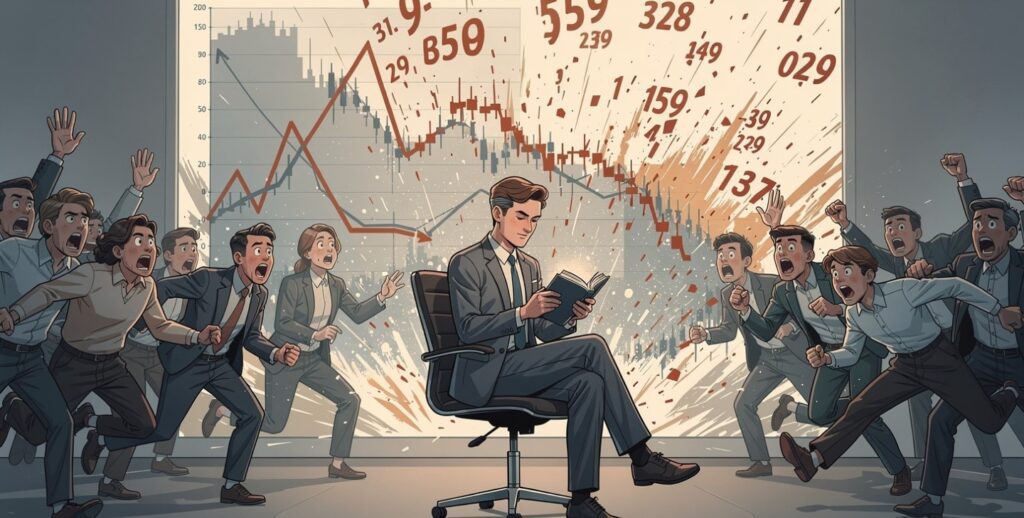
Picture this. Your portfolio drops 20% in a bad month. Logic says hold. History says recover. But your brain screams “PROTECT YOURSELF, GET OUT NOW.” So you sell. You lock in the loss. And then the market recovers without you.
That single move just chopped years off your compounding curve. Do that three or four times in a lifetime, and you’ve handed away a fortune to fear.
The Math Of Interrupted Compounding
Let’s make this real with numbers. Say you invest $10,000 at an average 10% annual return.
| Scenario | Behavior | Value After 30 Years |
|---|---|---|
| Investor A | Stays invested, ignores fear | ~$174,000 |
| Investor B | Panics out twice, misses 2 best years | ~$118,000 |
| Investor C | Sells every dip, sits in cash often | ~$45,000 |
Same starting money. Same market. The only difference is loss aversion compounding behavior. Investor C didn’t get unlucky. He got scared. Over and over. And it cost him roughly $129,000 compared to the disciplined version of himself.
That’s the price of fear. And nobody sends you an invoice for it. It just quietly disappears from your future.
The Two Faces Of Loss Aversion That Wreck Investors
Here’s where it gets sneaky. Loss aversion doesn’t show up one way. It shows up in two opposite-looking behaviors that come from the exact same root.
Face 1: Selling Winners Too Early
You buy something. It goes up 15%. Your brain whispers, “Lock it in before it disappears.” So you sell. You feel smart. You “secured the gain.”
But that winner was the seed of your biggest compounding tree. You just cut it down for firewood. The fear of giving back a small gain made you sacrifice a massive future one.
Face 2: Holding Losers Too Long
Now the opposite. You buy something. It drops 30%. Logic says cut it. But selling means admitting a loss — and your brain refuses to feel that pain. So you “wait for it to come back.” It keeps falling. You hold dead money for years.
Both behaviors are loss aversion. One avoids the pain of a future loss. One avoids the pain of a present loss. Either way, your compounding gets butchered.
We covered related self-sabotage patterns in detail here: sabotaging compounding mistakes. Read it twice.

Where Most People Go Wrong
Let’s be brutal. The damage from loss aversion isn’t usually one stupid decision. It’s a pattern of small, “reasonable” decisions that each feel safe in the moment and devastating over decades.
1. They Check Their Portfolio Too Often
The more you stare at your balance, the more chances your brain gets to panic. Daily checking turns every normal dip into an emotional crisis. People who check once a quarter outperform people who check every hour — not because they’re smarter, but because they give fear fewer opportunities to act.
2. They Confuse Activity With Control
When markets get scary, people feel an urge to “do something.” Selling feels like control. But in compounding, doing nothing is often the most profitable action you’ll ever take. We broke this down completely in why compounding rewards doing nothing.
3. They Let One Bad Trade Rewrite the Whole Plan
A single loss triggers the survival code, and suddenly the entire long-term plan gets thrown out for short-term emotional relief. This is the same broken instinct that drives fear and greed in trading — and it doesn’t matter whether you’re a trader or a 30-year investor, the wiring is identical.
4. They Think the Solution Is to Feel Less Fear
This is the biggest mistake of all. You will never delete fear. It’s hardwired. People who wait until they “feel ready” or “feel calm” wait forever. The fear doesn’t leave. You just stop letting it drive.
What Actually Works: Building a System That Ignores Your Fear
Here’s the truth nobody wants to hear. You cannot win this fight with willpower. In the heat of a crash, your willpower is gone. Your logical brain shuts off and the survival brain takes the wheel.
So you don’t fight fear in the moment. You make decisions in advance — when you’re calm — and then you obey those decisions when you’re scared. That’s it. That’s the whole game.
1. Automate Everything You Can
Set up automatic investing. Same amount, same day, every month, no exceptions. When the decision is automated, fear gets no vote. The market drops? Money still goes in. The market rips? Money still goes in. You remove your trembling hands from the steering wheel.
2. Write Your Rules Down Before You Need Them
Decide in advance: “I will not sell during a drop. I will hold for X years. I will only adjust on these specific conditions.” Write it on paper. When panic hits, you don’t make a new decision — you follow the old one made by the calm, smart version of you.
3. Make Selling Hard and Buying Easy
Add friction to panic. Some of the best investors deliberately make it annoying to sell — a waiting period, a written reason required, a 48-hour rule before any exit. That gap between impulse and action is where fortunes are saved.
4. Reframe a Drop as a Discount
When prices fall, your survival brain sees danger. The wealthy brain sees a sale. Same event, opposite reaction. This single reframe — taught to our founder by a 72-year-old American real estate investor whose entire philosophy was “I buy, and then I wait” — separates the people who get rich during downturns from the people who get wiped out by them.
5. Zoom Out Constantly
Loss aversion lives in the short term. The fear of a 20% monthly drop disappears when you look at a 20-year chart. Train yourself to think in decades, not days. The psychology behind your money decisions changes completely the moment you stretch your timeline.
Case Study: The Two Investors Who Lived Through the Same Crash
Let’s make this concrete. Two people. Both invested $50,000. Both hit the same brutal market crash where their portfolios dropped 35% in three months.
| The Reactor | The System Follower | |
|---|---|---|
| During the crash | Panicked, sold to “stop the bleeding” | Did nothing, kept auto-investing |
| Locked-in result | Turned a paper loss into a real one | Bought more at lower prices |
| When market recovered | Sat in cash, missed the rebound | Rode the full recovery up |
| After 5 years | ~$38,000 | ~$92,000 |
Same crash. Same starting money. The Reactor wasn’t dumb. He was scared, and he had no system to protect him from himself. The System Follower wasn’t braver — he simply removed his own fear from the decision before the crash ever arrived.
The market didn’t punish the Reactor. His own nervous system did.
The Real Cost Is Invisible Until It’s Too Late
Here’s what makes loss aversion so dangerous. A bad credit card debt shows up on a statement. A wasted purchase sits in your closet. But the wealth you lose to fear? It never appears anywhere. It’s the fortune you would have had — the compounding that got interrupted, the winners you cut, the recoveries you missed.
You don’t feel it today. You feel it in 30 years when you compare where you are to where you could have been. And by then, there’s no rewind button.
This is exactly why so many otherwise smart, hardworking people end up with so little. They didn’t lack income. They lacked a system to stop their own instincts from sabotaging them. If you want the deeper layer on this, read why investors sabotage their own compounding — it pairs directly with everything here.
Quick Action Steps
- Automate your investing today — same amount, same day, every month, no manual decisions.
- Write your rules on paper — exactly when you’ll sell and when you won’t, decided while calm.
- Add a 48-hour rule before any sell decision. Force a gap between panic and action.
- Stop checking daily. Move to monthly or quarterly. Starve fear of opportunities.
- Reframe every drop as a discount, not a disaster. Train the wealthy brain.
- Zoom out to the 20-year chart whenever fear spikes. Think in decades, not days.
Frequently Asked Questions
What is loss aversion in simple terms?
Loss aversion is the tendency for the pain of losing money to feel about twice as strong as the pleasure of gaining the same amount. It’s a survival instinct that once kept humans alive but now sabotages financial decisions by pushing people to avoid losses even when the math says hold.
How does loss aversion hurt compounding?
Compounding requires staying invested so growth can build on growth. Loss aversion forces you to interrupt that process — selling during dips, cutting winners early, and sitting in cash out of fear. Each interruption chops years off your compounding curve and can cost you a fortune over decades.
Why do investors sell winners too early?
The fear of giving back a gain triggers loss aversion. The brain treats a paper profit as something to protect, so it pushes you to lock it in. But selling a winner early cuts off its future compounding — you trade a massive long-term gain for a small short-term one.
Can you completely get rid of loss aversion?
No. It’s hardwired into human psychology. The goal isn’t to delete fear but to build systems — automation, written rules, friction on selling — that prevent fear from controlling your decisions when it lies to you.
What’s the best way to beat loss aversion?
Make your decisions in advance, while calm, then obey them when scared. Automate your investing, write down your rules, add a waiting period before selling, and reduce how often you check your portfolio. Remove emotion from the moment of action.
Is loss aversion the same as risk aversion?
No. Risk aversion is a general preference for safer outcomes. Loss aversion is more specific — it’s the disproportionate pain of losses compared to equivalent gains, which can actually cause people to take irrational risks just to avoid realizing a loss.
How often should I check my portfolio?
For long-term investors, monthly or quarterly is enough. Daily checking simply gives your fear more chances to act on normal market noise, increasing the odds of panic-driven mistakes that damage your compounding.
Stop Letting a Caveman Manage Your Money
You’ve now seen it clearly. The enemy was never the market. It was the survival code running in the back of your skull — the same instinct that helped your ancestors hunt and now quietly robs your future.
You can’t out-feel fear. You can’t out-willpower it in the moment. But you can out-system it. Decide while calm. Automate the action. Write the rules. Then obey them when your brain starts screaming.
Nobody is coming to protect your compounding from you. Not your broker, not the market, not luck. Only the system you build today.
So do this now, not next week. Set up one automatic investment. Write one rule on paper about when you will not sell. That’s the first cut against decades of fear-driven bleeding. The disciplined version of you in 30 years is built by the decision you make in the next ten minutes. Make it.
Disclaimer: This article is for educational and informational purposes only and does not constitute financial, investment, or legal advice. All examples and figures are illustrative and not guarantees of future performance. Always consult a qualified financial professional before making investment decisions. Any disputes arising from this content shall be governed by the Courts of Singapore.