Key Takeaways
- The wolf mindset is real mental strength — calm, disciplined self-reliance, not aggression or rage.
- Rule 1: Hunt your own food. Take radical ownership; nobody is coming to save you, and that’s the most freeing truth there is.
- Rule 2: Kill your excuses before they kill you. Most excuses are comfort-zone defenses your brain invents, not facts.
- Rule 3: Choose your pack, don’t follow the herd. Be willing to be misunderstood — but stay loyal to the few who match your hunger.
- The “lone wolf” is a myth. Real wolves are fiercely loyal pack animals; their strength is self-reliance plus the right pack, not isolation.
- True strength is quiet. The loud, cold, ruthless version is weakness pretending to be power.
The wolf does not wait for permission. It does not beg for the hunt to be easier. It does not whine that the winter is cold or that the prey is fast or that the other animals had it better. It wakes up hungry, it owns its survival completely, and it moves — calm, focused, relentless. There is no drama in the wolf. There is only the decision to do what must be done, and then the doing of it. That quiet, unshakeable self-reliance is what people are reaching for when they talk about the wolf mindset.
But most of what gets sold as the “wolf mindset” online is garbage — chest-thumping, rage, fake toughness, and a glorification of being cold and alone that has nothing to do with actual mental strength. Real strength isn’t loud. It doesn’t need to announce itself. The strongest people you’ll ever meet are usually the calmest, because they’ve stopped wasting energy on performance and put all of it into the work. This article cuts through the noise to the real thing: three brutal rules that build genuine mental strength — brutal not because they’re cruel, but because they demand total honesty with yourself.
So let’s get into it. Not the cartoon version. The real one.
What the Wolf Mindset Actually Means
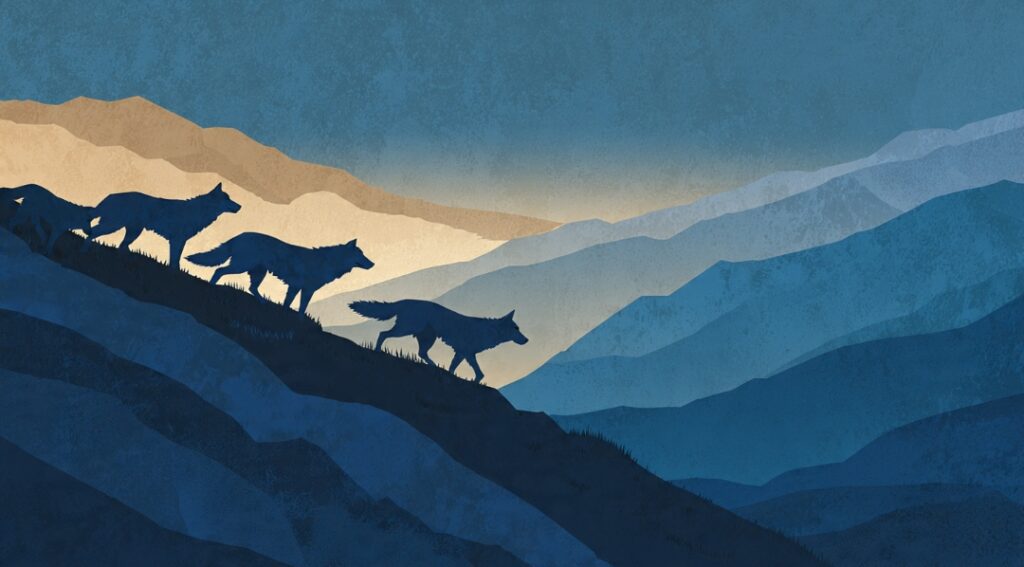
Before the rules, we have to kill a myth — because the entire popular idea of the “lone wolf” is built on a lie. In reality, wolves are intensely social, loyal pack animals. The image of the noble loner surviving entirely alone is mostly fiction; a wolf cut off from its pack is not at its strongest, it’s at its most vulnerable. The wolf’s real power comes from a combination most people miss: complete self-reliance and deep loyalty to the right pack. It can hunt alone when it must, but it thrives within a tight group that shares its hunger.
That nuance changes everything, because it means the wolf mindset is not about isolation, coldness, or cutting everyone off. It’s about mental toughness built on three things: taking total ownership of your own life, refusing the excuses that keep you weak, and being selective about who you let close. It’s calm, not angry. Disciplined, not dramatic. Self-reliant, not isolated. The wolf isn’t trying to prove anything to anyone — and that, paradoxically, is exactly where its strength comes from.
“The strong wolf isn’t the one howling loudest about how strong it is. It’s the one quietly doing the work the howlers are too busy performing to touch.”
Real mental strength, like the kind we explored in our guide to real resilience, is not a feeling of toughness. It’s a set of behaviors you choose, again and again, especially when you don’t feel like it. With that foundation clear, here are the three rules.
Rule 1: Hunt Your Own Food
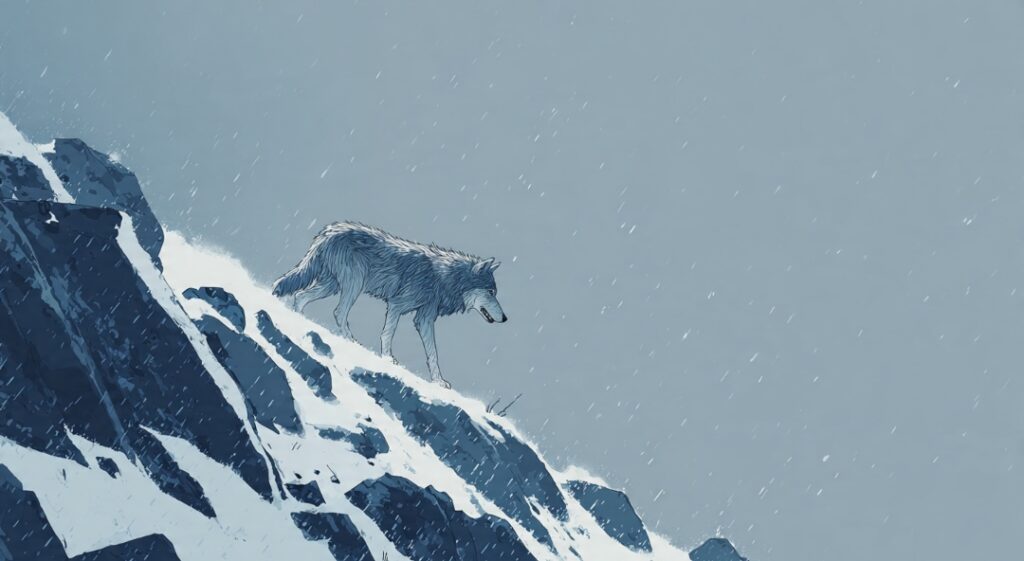
The first and most fundamental rule of the wolf mindset is radical ownership. The wolf does not wait for food to be delivered. It does not blame the forest for being empty. It does not expect another animal to share its kill out of kindness. The wolf understands a brutal, liberating truth: its survival is entirely its own responsibility. And so it hunts.
For you, “hunting your own food” means taking complete ownership of your life — your results, your circumstances, your growth, your failures. It means killing the part of you that waits to be saved, that blames other people, that expects the world to hand you what you want because you deserve it. Nobody is coming. No rescue is on the way. And the moment you truly absorb that, it stops being depressing and becomes the most empowering realization of your life — because if nobody is coming to save you, then everything is in your own hands. You’re not at the mercy of luck or others; you’re the hunter.
This shift, from waiting to owning, is what psychologists call moving toward an internal locus of control — the deep belief that your actions, not external forces, shape your outcomes. People with this belief are more resilient, more driven, and more successful, precisely because they spend their energy on what they can control instead of complaining about what they can’t. The wolf wastes no energy resenting the hunt. It just hunts. This is the same ownership mentality that runs through how successful people think differently every day.
“Nobody is coming to save you. Sit with that until it stops scaring you and starts freeing you — because it means your life was never in anyone’s hands but your own.”

Rule 2: Kill Your Excuses Before They Kill You
The second rule is where most people’s strength quietly dies — not in a dramatic failure, but in a thousand small, reasonable-sounding excuses. The wolf has no excuses. It cannot tell itself “I’ll hunt tomorrow,” or “the conditions aren’t right,” or “I’m too tired today.” If it did, it would starve. For you, the stakes feel less immediate, which is exactly why excuses are so dangerous: they kill you slowly, comfortably, without you ever noticing the funeral.
Here’s the brutal truth you have to face: most of your excuses are not facts. They are defenses your brain invents to protect you from discomfort. “I don’t have time.” “I don’t have money.” “I don’t have the resources.” “I’m too busy.” “I’m too old.” “I don’t have the right equipment or connections.” These feel like honest assessments of reality, but listen closely and you’ll hear what they actually are — the brain’s automatic machinery for keeping you safe inside your comfort zone. The mind is wired to avoid discomfort, and generating a believable excuse is its favorite tool. The excuse isn’t the truth about your situation; it’s the lie that lets you off the hook.
The wolf-minded person learns to catch these lies in the act. When you hear yourself reach for an excuse, stop and ask: is this actually true, or is this my brain protecting me from the discomfort of trying? Nine times out of ten, it’s the second one. The “no time” is really “I haven’t made it a priority.” The “no money” is really “I haven’t found a way yet.” The “too old, too busy, not ready” are really just fear wearing the costume of reason. The instant you stop lying to yourself, the fog clears and you start seeing your real options — which were there the whole time, hidden behind the excuse. Silence the internal voice that whispers “I can’t,” and the path forward appears.
This doesn’t mean ignoring genuine constraints — some limits are real. It means refusing to let manufactured ones run your life. The wolf-minded test is simple and merciless: if this excuse vanished, could I find a way? If the answer is yes, it was never a reason. It was just fear, and fear is not allowed to drive. Building this kind of unshakeable discipline is the same muscle we trained in reprogramming the mind toward discipline.
“Your excuses aren’t facts about the world. They’re defenses your brain built to keep you comfortable. Stop believing them, and you stop being trapped by them.”
Rule 3: Choose Your Pack, Don’t Follow the Herd
The third rule is the most misunderstood, because people hear “wolf” and think “loner.” That’s the myth again. The real lesson isn’t to be alone — it’s to be deliberate about who you run with, and to never let the comfort of the herd dictate your direction.
A herd moves together for safety. It goes where everyone else goes, believes what everyone else believes, wants what everyone else wants — not because it’s right, but because it’s safe and requires no thought. The wolf-minded person refuses to outsource their direction to the crowd. They’re willing to be misunderstood, to take the unpopular path, to walk away from “what everyone does” when it doesn’t serve them. They don’t need the herd’s approval, and that freedom from needing to be understood is a quiet superpower. While the herd is busy seeking validation, the wolf is busy building. We went deep on this freedom in building your own name instead of chasing the crowd.
But — and this is the part the lone-wolf crowd gets dangerously wrong — refusing the herd does not mean refusing all connection. The wolf’s strength comes from its pack. The rule isn’t “trust no one and walk alone forever”; that’s not strength, it’s a wound. The rule is to choose your pack with ruthless care. Surround yourself with a small number of people who share your hunger, who push you, who match your standards — and be fiercely loyal to them. Cut the energy-drainers, the constant complainers, the ones who pull you back toward the herd. But replace them with a real pack, because two strong wolves hunting together don’t just add their strength — they multiply it. Self-reliance gets you survival; the right pack gets you an empire.
So Rule 3 has two edges: stop following the herd, and start choosing your pack. Most people get only the first half and end up isolated and calling it strength. The wolf gets both — independent enough to walk alone when needed, wise enough to know it shouldn’t have to.
What Nobody Tells You About the Wolf Mindset
Now the part that separates real mental strength from the cheap imitation flooding your feed. The loud, aggressive, “alpha” version of the wolf mindset — all rage, dominance, and cutting everyone off — is not strength. It’s weakness wearing strength’s costume. Genuine power doesn’t need to perform. The person constantly broadcasting how tough, how lone, how ruthless they are is almost always compensating for the opposite.
Real psychological resilience is quiet. It looks like calm under pressure, not explosive anger. It looks like steady discipline, not dramatic intensity. It looks like a person who has nothing to prove, because they’ve stopped seeking the herd’s approval entirely. The truly strong don’t rage at obstacles — they assess them coldly and move. They don’t announce their independence — they simply live it. The wolf doesn’t post about being a wolf. It’s too busy hunting.
And here’s the truth that completely breaks the cartoon version: the wolf rests. Strength is not relentless grinding until you collapse. Wolves conserve energy, sleep, recover, and play — then hunt with full power when it counts. The mindset that glorifies never resting, never feeling, never connecting isn’t the wolf mindset; it’s a path to burnout dressed up as discipline. Real mental strength includes the wisdom to recover, to feel your emotions without being ruled by them, and to protect your own wellbeing — because a depleted wolf catches nothing. Sustainable strength, not self-destruction, is the goal. This is the same lesson woven through why failure is not the opposite of success: the strong aren’t the ones who never fall, but the ones who recover and keep moving.
“The loudest ‘wolves’ are usually the weakest. Real strength doesn’t roar — it rests when it needs to, moves when it counts, and never wastes a breath proving itself.”
How to Build the Wolf Mindset
Mental strength isn’t a personality you’re born with — it’s built, daily, through deliberate practice. Here’s how to train it, the same way you’d rewire your mindset from zero.
1. Take ownership of one thing you’ve been blaming. Pick something you’ve been blaming on circumstances or other people, and consciously take full responsibility for your part in it. Ownership is a muscle — start lifting.
2. Run an excuse audit. For one week, catch every excuse you make and ask: is this true, or is this fear in disguise? Just noticing how many of your “reasons” are manufactured begins to dissolve their power over you.
3. Do hard things on purpose. Mental strength grows under load, the same way muscle does. Deliberately do small, uncomfortable things — the cold start, the hard conversation, the workout you don’t feel like — to train your self-control and the kind of long-term grit that carries you when motivation runs out.
4. Audit your pack. Honestly assess who you spend the most time with. Are they pulling you up toward your standards or down toward the herd’s comfort? Invest in the ones who push you; create distance from the ones who drain you.
5. Build quiet discipline, not loud intensity. Forget the dramatic motivation. Real strength is built in unglamorous, repeated daily action — the same compounding principle behind the 1% rule of daily habits. Show up, do the work, repeat. That’s the whole secret.
| The herd mind | The wolf mind |
|---|---|
| Waits to be saved, blames circumstances | Takes full ownership and hunts |
| Believes its own excuses | Catches excuses as fear in disguise |
| Follows the crowd for approval | Chooses its pack, ignores the herd |
| Performs toughness loudly | Carries strength quietly |
| Grinds to burnout or never starts | Works hard, rests, recovers, repeats |
Now It’s Your Move
The wolf mindset, stripped of all the noise, comes down to three brutal rules: own your life completely, kill the excuses that keep you weak, and choose your pack instead of following the herd. None of it requires rage, isolation, or performance. It requires something harder and quieter — total honesty with yourself, and the daily discipline to act on it. That’s what real mental strength is. Not a roar. A decision, made every single day.
- Own one thing today. Take full responsibility for something you’ve been blaming on the world. Feel how much power comes back to you.
- Kill one excuse. Catch a “reason” you’ve been hiding behind, name it as fear, and act against it this week.
- Audit your pack. Identify who lifts you and who drains you. Invest in the first group, create distance from the second.
- Do one hard thing on purpose. Train your strength under load with a small, deliberate discomfort today.
- Choose quiet over loud. Stop performing strength and start practicing it — in unglamorous, repeated daily action.
The herd is comfortable, safe, and going nowhere in particular. The wolf is hungry, focused, and entirely its own. You already have everything you need to make the shift — it was never about becoming someone new, only about dropping the excuses and the need for approval that were never really yours to begin with. Stop waiting. Stop blaming. Stop performing. Own it, hunt, and choose your pack. The rest takes care of itself.
The wolf mindset is a form of genuine mental strength built on calm, disciplined self-reliance rather than aggression. It rests on three core rules: taking radical ownership of your life, refusing the excuses that keep you weak, and choosing your pack carefully instead of mindlessly following the herd. Despite the popular image, it is not about being cold or alone, since real strength is quiet and the wolf draws power from both self-reliance and loyalty to the right people.
No, and that is the biggest misconception. Real wolves are intensely social, loyal pack animals, and a wolf cut off from its pack is at its most vulnerable, not its strongest. The wolf mindset is about combining complete self-reliance with deep loyalty to a carefully chosen pack. The lesson is to stop following the herd for approval while still investing in a small group of people who share your hunger and push you higher.
Rule one is to hunt your own food, meaning take total ownership of your life since nobody is coming to save you. Rule two is to kill your excuses before they kill you, recognizing that most excuses are comfort-zone defenses your brain invents rather than facts. Rule three is to choose your pack rather than follow the herd, being willing to be misunderstood while staying loyal to the few who match your standards and hunger.
Start by recognizing that most excuses are not facts but defenses your brain generates to avoid discomfort. When you catch yourself reaching for one, pause and ask whether it is genuinely true or simply fear in disguise. Use the test: if this excuse vanished, could I find a way? If the answer is yes, it was never a real reason. Running an excuse audit for a week, noticing each one, steadily dissolves their power over you.
No. The loud, aggressive, ruthless version is actually weakness wearing strength’s costume, since genuine power does not need to perform. Real mental strength is quiet: calm under pressure, steady discipline, and having nothing to prove. The truly strong assess obstacles coldly and move rather than raging at them, and they live their independence instead of announcing it. Aggression and constant broadcasting usually signal insecurity, not strength.
No, and believing so leads to burnout dressed up as discipline. Wolves conserve energy, sleep, recover, and play, then hunt with full power when it counts. Real mental strength includes the wisdom to rest, to feel your emotions without being ruled by them, and to protect your wellbeing, because a depleted person performs poorly. Sustainable strength that includes recovery, not relentless grinding until collapse, is the actual goal.
Mental strength is built through deliberate daily practice, not born. Take ownership of something you have been blaming on others, run a weekly audit to catch excuses as fear in disguise, and deliberately do small hard things to train your self-control under load. Audit who you spend time with and invest in those who push you, and focus on quiet, repeated discipline rather than dramatic bursts of motivation. Consistency in unglamorous action is what truly builds it.
Disclaimer: This article is for educational and motivational purposes only and is not psychological, medical, or professional advice. Building mental strength is a personal journey, and if you are struggling with your mental health or wellbeing, please consider reaching out to a qualified professional or someone you trust. Strength includes knowing when to ask for support.