Trading is not just about charts and numbers. It is about discipline, psychology, and protecting what matters most — not just to you, but to the people whose trust you carry when you enter the market.
Many traders enter the market as messiahs, trying to save dying stocks or catch falling knives, convinced that they see something the market has missed. Most of them end up losing money that took real effort to build. This guide is about making the strategic shift from emotional gambling to professional, disciplined investing.
1. Aligning with Infrastructure: The Government-Backed Strategy
Instead of manually hunting for the “next big thing” based on tips, hype, or hope, the most consistently successful long-term investors follow the Macro Trend.
When a government initiates massive infrastructure projects — motorways, metro systems, industrial corridors, energy networks — it creates a predictable ripple effect through the economy. The companies that supply materials, provide services, or benefit directly from that infrastructure tend to grow alongside the project itself.

- Early Entry: Invest when the project is in its early stages — before the headlines, before the crowd, before the price reflects the full potential.
- Correlated Growth: As the project gains traction and generates economic activity, the value of associated stocks rises naturally alongside it. You are not chasing momentum — you are riding a structural wave.
- The Logic: You are not betting on a random ticker. You are betting on the direction a government has publicly committed to funding. That is a fundamentally different risk profile from speculating on individual company fortunes.
This approach requires patience — sometimes years of it. But it produces the kind of steady, compounding growth that eventually becomes impossible to ignore. The investors who built real wealth over decades did not do it by finding secret stocks. They did it by identifying structural trends early and staying positioned long enough for the trend to play out.
2. The Lifecycle of a Stock: Peak, Range, and Decay
Every stock has an era of relevance. Looking at market history from 1990 to 2026, a clear and painful pattern emerges. A stock that surged massively in the 1990s might now be a zombie — either delisted, stuck in a flat range with no institutional interest, or slowly bleeding toward irrelevance.
This is not a coincidence. It reflects the fundamental reality that industries evolve, business models become obsolete, and the capital that once drove a stock’s glory moves on to new opportunities.
- Avoid the “Old Glory” Trap: A stock that was once at $100 and is now at $5 is not automatically a bargain. The question is not where it has been — it is whether there is a genuine reason for institutional capital to return. If the answer is not clearly yes, the answer is no.
- Volatility is a Sign of Life: If a stock has not moved meaningfully in years, it has lost institutional interest. Dead markets can stay dead for a very long time. Do not invest in a corpse expecting a resurrection.
The most dangerous phrase in investing is: “It used to be worth so much more — it has to come back.” The market does not owe any stock a recovery. Plenty of once-great companies have simply never recovered. Your job is to invest in where capital is flowing, not where it once flowed.
3. Stop Being a Messiah for Dead Stocks
This is perhaps the most common and most expensive mistake in retail investing: the Hero Complex.
A trader sees a stock that crashed from $50 to $4. The logic seems sound: “Surely it will bounce to $10 at some point. That would be a 150% return.” They buy in, feeling clever. The stock continues to fall. They buy more to “average down.” It continues to fall. Eventually they either cut the loss or watch it reach zero.
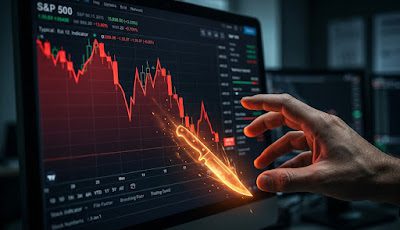
Here is the reality: your $5,000 or $10,000 investment is invisible in a market with a multi-million dollar capitalization. You are not saving the stock. You are not causing a recovery. The institutions and market makers who drove that stock’s former glory have already exited. Your capital is simply being absorbed into the market’s indifference.
Follow the smart money. If institutional investors have exited a stock, ask yourself honestly: what do you know that they do not? If a stock has been in a sustained downtrend for two to three years with no structural change in the underlying business, it is not a discount. It is a warning.
My personal lesson from 2018: I bought a crypto coin after it had already dropped from $15, thinking it was cheap. I watched it continue bleeding every month. I held, convinced it would recover. Eventually it was delisted on every major exchange. My “heroism” cost me real money — money that could have been deployed somewhere with actual momentum.
The market taught me something I now carry into every investment decision: a falling price is not automatically an opportunity. Sometimes it is just the market correctly pricing in that something is dying.
4. Capital Preservation: The Most Underrated Trading Skill
We are conditioned to think that a profitable trader is someone who doubles their account every month. That idea is not just unrealistic — it is actively dangerous because it leads people to take risks that are incompatible with survival.
Here is a perspective that changed how I approach trading: if you trade for a full year and end the year at break-even — your profit and loss at zero — you are a successful trader. Here is why.
The market is designed, structurally, to transfer capital from undisciplined retail participants to disciplined institutional ones. The statistics confirm this. The majority of retail traders lose money. Surviving a full year without net loss means you have navigated that structure successfully. You have gained experience, identified your patterns, and protected your capital — all without paying the market’s tuition fee in the form of significant losses.
- Whose money is it really? For many traders, the capital in their account represents not just their own savings but their family’s trust. Parents’ hard work. Siblings’ future. Money set aside for emergencies. Treating that capital with appropriate reverence — not gambling it on signals and hopes — is the first act of professional trading.
- The professional mindset: A true professional does not manage numbers. They manage responsibility. Every position they enter is a decision made on behalf of everything that capital represents.
This mindset shift — from “how do I maximize return” to “how do I protect and grow this responsibly” — is what separates the traders who last from the ones who blow up and disappear.
5. Smart Money Principles for Long-Term Survival
These are the principles I have found most reliable for building and protecting capital over time:
- Trade with the macro trend, not against it. Government-backed growth, technological adoption, demographic shifts — these are the large forces that move capital over years. Position yourself with them, not against them.
- Never try to save a stock that institutional money has abandoned. Follow where the smart money is going, not where it has been.
- Define your invalidation level before entering any position. Know exactly what would have to happen for you to be wrong, and respect that level when it is reached. Hope is not a risk management strategy.
- Treat break-even as a win during learning phases. Protecting capital while gaining experience is how professional traders are built. The education is happening whether or not the account is growing.
- Review your decisions, not just your outcomes. A trade can be well-executed and still lose money due to factors outside your control. A trade can be poorly executed and still win by luck. Judge your process, not just your results.

Conclusion: The Path Forward
Stop looking for cheap stocks and start looking for value, momentum, and government-aligned growth. Stop trying to save what the market has already decided to leave behind. Stop measuring success only by monthly returns and start measuring it by the quality of your decisions and the safety of your capital.
The traders who are still standing five years from now are not the ones who took the biggest risks. They are the ones who took the right risks — calculated, structured, and always with one eye on protecting what they already have.
Protect your capital like a hawk. Build your knowledge like a long-term investment. And approach the market with the same seriousness you would bring to any responsibility that involves other people’s trust.
1. Align with macro trends and government-backed growth — bet on direction, not individual tickers.
2. A falling price is not automatically a buying opportunity. Follow institutional money, not nostalgia.
3. Break-even after a year of trading is success. You survived a market designed to take from you.
4. Your capital represents more than a number — treat it with the respect it deserves.
5. Review your process, not just your profits. Good decisions can lose. Bad decisions can win. Only the process is within your control.
If this gave you something useful — share it with one trader who needs to hear it.
About the Author
Shurah Beel Hamid is a trader, entrepreneur, and content creator who writes about trading psychology, capital preservation, and the long-term mindset behind building real financial independence.
Disclaimer: This article is for educational purposes only and does not constitute financial advice. Trading and investing involve significant risk of loss. Always conduct your own research and consult a professional before making financial decisions.