I still remember the day I made my first dollar online. I was barely 19, sitting in a small room with a laptop that barely worked, trying to land my first freelance writing gig. Zero clients. Zero portfolio. Honestly, zero clue what I was doing. But I started anyway.
Today, years later, freelancing has become one of the biggest parts of my life — alongside trading and content creation. And the question people ask me most often is this: “How old do you have to be to start freelancing?”
The answer might surprise you. There is no perfect age. Some people start at 16, others at 35 or even 50. What matters is not your age — it is your willingness to learn and show up consistently.

What Freelancing Actually Means in 2026
Freelancing means offering your skills and services to clients on a project basis instead of working a traditional 9-to-5 job. You set your own rates, choose your own clients, work from wherever you want, and grow your income based entirely on the value you deliver.
In 2026, the most in-demand freelance skills include content writing, graphic design, video editing, web development, digital marketing, virtual assistance, and AI-related services. According to Statista, the global freelance market continues to grow at double-digit rates year over year — and shows no signs of slowing down.
The beauty of freelancing is that platforms like Upwork, Fiverr, and Freelancer.com have made it possible for anyone with an internet connection and a marketable skill to start earning. Age is rarely the barrier people assume it is.
Legal Age Requirements Around the World
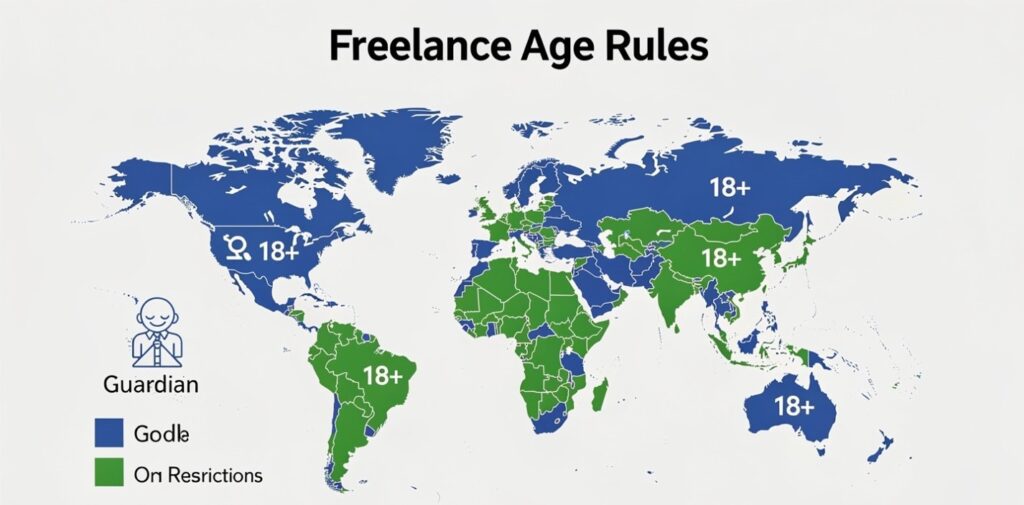
While there is no universal age limit for freelancing, there are some practical and legal considerations worth understanding before you begin:
- Under 18: Many platforms require parental consent or a guardian to set up an account and receive payments. This varies by platform and country.
- 16 to 17 years old: Possible on some platforms with parent or guardian approval and proper documentation. Fiverr and Upwork both have provisions for minors with guardian involvement.
- 18 and above: You can freely create accounts on almost every major freelance platform without any restrictions.
In most countries, you can start freelancing as soon as you have a skill and access to the internet. The real limit is not age — it is skill, consistency, and the willingness to keep going when results are slow.
My Personal Story: Starting Freelancing at 19
When I started freelancing at 19, I was still figuring out my life. I had just begun learning about forex trading and content creation. No fancy degree. No years of experience. What I had was time, curiosity, and the stubbornness to not quit when things did not work immediately.
My first few proposals on Upwork were rejected. I remember the specific feeling — that quiet discouragement of putting effort into something and watching it go nowhere. But I kept improving my profile, creating sample work, and refining how I communicated my value to potential clients.
Within three months, I landed my first paid gig for $50. That small win — fifty dollars I earned entirely on my own terms — gave me the confidence to keep going.
Today, freelancing has helped me build financial independence alongside my trading journey. The skills I developed through freelancing — discipline, client communication, delivering results under pressure — have directly translated into better trading psychology and better business decisions. The skills compound across areas of life in ways I did not expect when I started.
Best Age to Start Freelancing — The Honest Truth
The best age to start freelancing is now — whatever age you are today.
Starting young between 16 and 22 gives you more time to experiment, make mistakes with lower stakes, and build a portfolio before anyone expects you to be an expert. Starting later in life — in your 30s, 40s, or beyond — often brings better life experience, clearer goals, and professional skills from previous work that translate directly into higher-value freelance services.
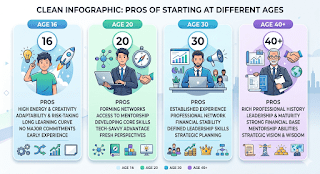
There is no perfect age. What matters most is your mindset and how seriously you treat freelancing as a real business rather than a hobby or a backup plan.
As Harvard Business Review research on entrepreneurship shows, success in self-employment correlates far more strongly with consistency and learning orientation than with age. The same principle applies directly to freelancing.
Pros and Cons of Starting Young vs Starting Later
Starting Young — Ages 16 to 25
Advantages:
- More time to build skills, experiment, and develop a portfolio before financial pressure arrives
- Lower financial responsibilities mean you can afford to take lower-paying early projects without stress
- Fast learning curve — younger people often adapt to new platforms and tools more quickly
- More time to compound the experience and reputation you build
Challenges:
- Lack of real-world professional experience that some clients look for
- May need parental support for payment accounts and contracts if under 18
- Some clients default to preferring freelancers who appear more established
Starting Later — Ages 30 and Beyond
Advantages:
- Clearer goals, better self-knowledge, and more developed communication skills
- Existing professional experience from previous jobs that can be directly monetized
- Greater discipline, work ethic, and understanding of professional standards
- Industry knowledge that can command premium rates immediately
Challenges:
- Less time for extended trial and error before needing results
- Higher financial pressure — bills, family responsibilities, mortgages do not pause
- May need to unlearn some corporate habits around communication and speed
Both windows have genuine advantages. The honest answer is that neither is inherently better — they are simply different starting points with different assets and different constraints.
How to Start Freelancing at Any Age — Step by Step
- Choose a skill. Pick something you are already good at or genuinely willing to invest time in learning. Writing, design, video editing, coding, marketing, virtual assistance — all are viable starting points.
- Build a portfolio. Create 3 to 5 sample projects even if you have no paying clients yet. Proof of work matters more than credentials.
- Create profiles. Set up accounts on Upwork, Fiverr, and LinkedIn at minimum. Complete every section — incomplete profiles lose clients before the conversation starts.
- Start small. Take lower-paying or even free introductory gigs to get real reviews and real portfolio pieces. Your first job is to build credibility, not maximize income.
- Learn consistently. Spend at least 1 to 2 hours daily improving your skill. The freelancers who grow fastest are the ones who treat skill development as non-negotiable.
- Deliver results. Focus on over-delivering so clients come back, leave reviews, and refer you to others. Your reputation compounds faster than any marketing strategy.
Pro tip from my experience: In the first 3 to 6 months, treat freelancing like a full-time commitment even if you are earning very little. The foundation you build in the beginning determines how fast everything accelerates later. The people who quit in month 2 never find out what month 6 would have looked like.
Real Examples of Successful Young Freelancers
I have personally seen several beginners who started at 17 to 20 years old go on to build real income streams. One started with simple data entry and within 18 months was earning over $2,000 per month as a virtual assistant. Another started with basic graphic design at 19 and now runs a small design operation with multiple retained clients.

The common thread in every success story I have witnessed is not talent, not age, not the perfect niche. It is consistency. They did not wait for the right age or the right moment. They started with what they had and kept improving every single week without waiting for permission.
Beyond personal examples, Upwork’s Freelance Forward research found that younger freelancers — particularly Gen Z — are now the fastest-growing demographic on major platforms, with many reporting that freelancing became their primary income source within their first year of consistent effort.
The Mindset That Actually Determines Your Success
After years of freelancing, trading, and mentoring beginners, I can tell you with confidence: the biggest predictor of freelancing success is not skill level, not age, not platform, not niche.
It is the ability to keep going when nothing is working yet.
Every successful freelancer went through a period — usually 2 to 4 months — where they were putting in real effort and seeing minimal results. The proposals were not landing. The profile was not converting. The skill was still developing. Most people quit during this phase and conclude that freelancing does not work.
The ones who keep going discover that the results come — not suddenly, but gradually, then all at once. The profile gains traction. The reviews start accumulating. The referrals begin. The income becomes real and then grows.
Age has nothing to do with this. The 17-year-old who keeps going will succeed. The 40-year-old who quits after 6 weeks will not. The variable is mindset, not age.
Frequently Asked Questions
Q: Can I start freelancing at 16 or 17?
Yes — but you will likely need a parent or guardian to help set up accounts and receive payments on most major platforms. Some platforms like Fiverr allow minors with parental involvement. The skill and work itself is entirely accessible at any age.
Q: Is 30 too late to start freelancing?
Absolutely not. Many people successfully transition to freelancing in their 30s, 40s, and even 50s. Life and professional experience often become a significant advantage — particularly for clients who value maturity, reliability, and domain expertise.
Q: Do I need a degree to start freelancing?
No. Clients care about your skills and the results you deliver, not your formal qualifications. A strong portfolio of real or sample work matters far more than any certificate or degree.
Q: How long does it take to start earning from freelancing?
In my experience and observation, most consistent beginners land their first paid clients within 2 to 6 months. The key word is consistent — daily effort on profiles, proposals, and skill development shortens that timeline significantly.
Q: What is the best skill to start freelancing with in 2026?
Content writing, graphic design, video editing, social media management, virtual assistance, and AI prompt engineering are currently in strong demand. The best skill is the one you can develop quickly and genuinely enjoy doing — because motivation matters when results are slow.
Q: Can I freelance while studying or working a full-time job?
Yes — and this is actually the recommended approach for most people starting out. Begin with 1 to 2 hours daily. Build your portfolio and land your first clients before making any significant financial commitments. The evidence of income comes before the leap, not after.
Q: What if I get rejected on every proposal I send?
This is completely normal in the beginning. Most early proposals do not land. Review what you are writing, compare it to successful freelancers in your niche, and make one specific improvement each week. The rejection rate drops steadily as your profile, portfolio, and proposal quality improve. Rejection is not failure — it is data.
Final Thoughts
Age is just a number when it comes to freelancing. Whether you are 16, 25, 35, or 50 — you can start today. The only real requirements are the courage to begin and the discipline to keep going even when results are slow.
I started at 19 with almost nothing. The first months were discouraging. The first win was small. But it compounded into something real. If I can do it, so can you.
The water drop does not need to be big. It just needs to keep falling.
If this article gave you clarity — what age are you, and what skill are you planning to start with? Every journey starts with one honest answer to those two questions.
About the Author
Shurah Beel Hamid is a business enthusiast, active trader, and content creator who transformed his life by training his brain from an electrician’s mindset to an entrepreneur’s mindset. His expertise lies in practical brain training for entrepreneurship, trading psychology, compounding strategies, and elite mindset development. He shares his raw, unfiltered journey — from suicidal thoughts to strategic patience, from blowing trading accounts to consistent profitability — to provide actionable insights for those tired of theoretical advice and ready for real change. His writing combines hard-won experience, neuroscience-backed techniques, and relentless optimism.
Disclaimer: Results from freelancing depend on individual effort, skills, and consistency. This article shares personal experiences and general guidance only.