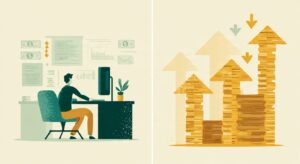
Most of you are not traders. You are gamblers wearing a suit of delusions.
You spend your days hunting for the magic signal in Telegram channels, hoping to catch the absolute bottom and sell the absolute top. You watch YouTube gurus flash Lamborghinis and think that is what trading looks like. You open positions based on someone else’s screenshot and call it a strategy.
Let me be direct with you: you are the liquidity for the big players. While you are staring at a 1-minute chart in the middle of a university lecture, the market is preparing to take everything you put in. I have been in those shoes. I have seen the highs and tasted the bitter ash of the lows. If you do not change your perspective today, the next two years will not bring you wealth. They will bring you a lesson you could not afford to learn.
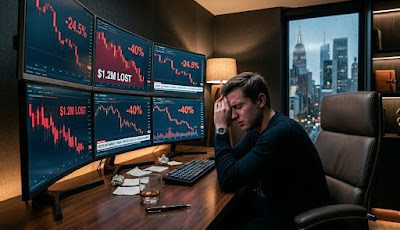
1. The Signal Trap: A Shortcut to Zero
If you are entering trades because some anonymous account on Telegram told you to, you have already lost — even if the trade happens to win. Because winning a trade you do not understand does not make you a trader. It makes you lucky. And the market has a way of collecting back everything it lends to lucky people.
Real trading is built on Risk Management and Psychology. It is not built on copy-pasting entries from someone whose real identity you do not know, whose track record you have never verified, and whose motivation for sharing signals is almost certainly not your financial wellbeing.
When you trade without knowing why you are in the market, you are not investing. You are throwing dice with money that took real time and real effort to earn.
Stop looking for tips. Start building knowledge. If you are in your early 20s, your primary job right now is to sharpen your understanding of how markets actually work — not to watch your account get liquidated while you figure it out the expensive way.
What to do instead: Before entering any trade, write down three things — why you are entering, where your stop loss is, and what would have to happen for you to be wrong. If you cannot answer all three, you are not ready to be in that trade.
2. Mutual Funds: The Ego Check You Actually Need
Here is something most trading content will never tell you: for the majority of people — especially those balancing education, a job, or family responsibilities — mutual funds are not a downgrade from trading. They are the smarter choice.
If you cannot yet manage your emotions in the market, you have no business touching a leverage button. Full stop.
- Professional Execution: Your money is managed by teams with decades of experience, risk systems, and institutional discipline — not by you at 2 AM after reading a Reddit thread.
- Passive Wealth Building: You build your financial future without it consuming your present. Your attention stays on the skills and career that will generate your actual wealth.
- The Hard Reality: A steady 12 to 15 percent annual return, compounded consistently over 20 years, will outperform most retail traders who chase big wins and blow accounts in cycles. The math is not even close.
There is no shame in recognizing that you are not yet ready to trade actively. The shame is in pretending you are ready when you are not — and paying for that pretense with money you cannot afford to lose.
3. The Bitcoin Delusion
You see Bitcoin at $120,000 and you think it is a one-way ticket to the moon. You hear stories of people who bought at $10,000 and feel like you missed the train and need to jump on now before it leaves again.
Then it drops to $75,000 in a matter of weeks. Do you have the stomach for a $45,000 per coin drawdown? Do you have the capital structure to survive it without panic selling at the bottom? Do you have the emotional discipline to hold while everyone around you is screaming that it is going to zero?

Most people reading this do not. They are trading with rent money, savings they cannot afford to lose, or funds their family trusts them with. That is not bravery. That is irresponsibility dressed up as ambition.
Volatility is not inherently bad. But volatility with money you cannot afford to lose is not trading — it is financial self-harm. If you cannot protect your capital, you do not deserve to grow it. That sounds harsh. It is meant to be.
The rule that matters: Never trade with money whose loss would change your life circumstances. If losing it would mean you cannot pay rent, cannot eat properly, or cannot look your family in the eye — that money should not be in the market.
4. The Power of Compounding: The Slow Path Is the Only Path
Real wealth is not made in a lucky week. It is built over years of discipline, reinvestment, and the patience to let time do the heavy lifting.
I have seen the peak — the accounts that look impressive on a screenshot. I have also seen the fall — and what it actually takes to rebuild from zero. It is not quick. It is not exciting. It is grinding through months of slow, steady, unglamorous consistency while everyone around you seems to be getting rich faster.

The compounding principle is simple: reinvest your returns, protect your capital, and stay in the game long enough for time to multiply your efforts. A 15 percent annual return sounds boring next to a story about someone who 10x’d their money in a month. But compounded over 20 years, 15 percent turns $10,000 into over $160,000 without a single dramatic move.
That is what real wealth looks like. Not a screenshot. Not a month. Twenty years of not quitting.
Do not wait for a total loss to teach you the value of what you had. That is the most expensive education available — and unlike most expensive educations, it does not come with a certificate at the end.
5. Why Trading Psychology Is the Real Subject
Everything I have written above comes down to one thing: the market does not destroy most retail traders because the strategies are wrong. It destroys them because the psychology is not ready.
Fear makes you close winning trades too early. Greed makes you hold losing trades too long. Hope replaces analysis. Ego prevents you from accepting that you were wrong. And the combination of all four, repeated across hundreds of trades, produces the result that statistics already tell us: most retail traders lose money.
This is not a secret. The brokers know it. The institutions know it. Now you know it.
The traders who survive long enough to actually build wealth are not the ones with the best indicators or the fastest executions. They are the ones who have done the psychological work — who have learned to detach from individual trade outcomes, who have built rules they actually follow, and who have developed the emotional maturity to treat a loss as data rather than a disaster.
That work takes time. It cannot be shortcut. But it is the most important investment you will ever make in your trading career.
The Reality Check: You Owe It to Yourself
Recovery from financial mistakes is possible. I am living proof of that. But it requires one thing before anything else: you have to kill the gambler inside you first.
The gambler believes in tips. The trader believes in process. The gambler wants to be lucky. The trader wants to be consistent. The gambler measures success by the last trade. The trader measures success by the last hundred trades.
Which one are you right now? And which one do you want to be in five years?
Final Verdict: The Choice Is Yours
I have laid out the hard truths so you do not have to learn them the same way I did — through actual loss, actual pain, and the actual experience of rebuilding from nothing.
You can continue chasing signals in Telegram groups and hoping the next trade will be the one that changes everything. Or you can start building a foundation that is slow, unglamorous, and genuinely works.
Success in this field is not about being the fastest to make a million. It is about being the one who is still standing — and still growing — five years from now.
Stop gambling. Start investing. Protect your future.
1. Never trade with money whose loss would change your life.
2. If you cannot explain why you are in a trade, you should not be in it.
3. A 15% consistent annual return beats a 100% loss followed by a restart every single time.
4. The signal is not the edge. The discipline is the edge.
5. The market will always be there. Your capital, once gone, may not be.
About the Author
Shurah Beel Hamid is a trader, entrepreneur, and content creator who writes about trading psychology, capital preservation, and the mindset required to build lasting financial independence — from real experience, not theory.
Disclaimer: This article is for educational purposes only and does not constitute financial advice. Trading involves significant risk of loss. Always do your own research before making any financial decisions.