A man earns $120,000 a year. He drives a financed luxury car, lives in a rented apartment that costs 40% of his income, eats out five times a week, and has $4,300 in his savings account. On Instagram, he looks rich. In reality, he is one missed paycheck away from disaster.
This is the cash flow trap. And it is silently destroying more wealth than any market crash ever could.
At Data Pips, we’ve studied money behavior across continents, income levels, and cultures. Our founder went from earning almost nothing as a plumber to managing multiple income streams across countries. And the single most important lesson he learned wasn’t about how to make money — it was about why most people who make money still end up broke.
If you’re earning well but never seem to get ahead, this article is the mirror you’ve been avoiding. Look into it honestly. The cash flow trap doesn’t care about your salary. It only cares about your behavior.

Table of Contents
What Exactly Is the Cash Flow Trap?
The cash flow trap is simple to define and devastating to experience: it’s the cycle where your spending automatically expands to match — or exceed — your income, no matter how much you earn.
Psychologists call it the “hedonic treadmill.” You get a raise, you upgrade your lifestyle. You earn a bonus, you buy something nicer. Your income doubles, and within six months, your expenses have doubled too. You’re running faster but arriving nowhere.
Here’s the brutal math that nobody wants to face:
- Person A earns $50,000 and spends $42,000. They save $8,000 a year.
- Person B earns $150,000 and spends $148,000. They save $2,000 a year.
Person B earns three times more. But Person A is building wealth three times faster. Income is not wealth. Income minus expenses is wealth. And most six-figure earners have forgotten this elementary truth.
The Federal Reserve’s Survey of Consumer Finances consistently shows that a significant percentage of households earning over $100,000 have less than three months of emergency savings. They are not building wealth. They are performing wealth. And there is a massive difference. (Source: Federal Reserve – Survey of Consumer Finances)
The Three Types of Money Behavior (And Which One Is Destroying You)
Our team has observed a pattern that repeats across every country, culture, and income bracket we’ve encountered. Money behaves differently depending on whose hands it lands in. And understanding which category you fall into is the first step to escaping the cash flow trap.
The Spender’s Hand
Money arrives and vanishes. A new phone, branded clothes, a car payment that stretches the budget thin. The goal is to feel rich for a day. This behavior is most common among people who grew up without money and are now trying to prove — to themselves and everyone else — that they’ve “made it.” The spending isn’t about the product. It’s about the identity.
The Saver’s Hand
Money is stashed away, protected, never touched. It sits in a savings account losing value to inflation every single year. This person feels safe but never grows. Fear of loss overshadows the power of multiplication. The saver avoids the cash flow trap but falls into a different trap — the stagnation trap.
The Investor’s Hand
Every dollar that arrives gets interrogated: “How can you make more of yourself?” Money is not for spending or hiding. It’s for deploying. This person builds assets, creates systems, and lets compounding do the heavy lifting over time.
Most six-figure earners are spenders who think they’re investors. They buy a house and call it an investment while ignoring the mortgage interest, maintenance, and property taxes that eat their returns. They buy a car and call it an asset while it loses 20% of its value the moment they drive it off the lot.
If you want to understand the deeper psychology behind these behaviors, our guide on wealth mindset and money psychology breaks this down further.

The Status Illusion: Why Your Neighbors Are Secretly Broke
There is a disease in the middle and upper-middle class that nobody diagnoses. At Data Pips, we call it Status Illusion Syndrome. It works like this:
You don’t buy the luxury car because you love engineering. You buy it because your colleague bought one. You don’t move to the expensive neighborhood because you need the space. You move because your cousin moved there first. You don’t take the vacation to relax. You take it because the photos will look good.
Our founder observed this pattern firsthand while working in Saudi Arabia. Expat workers earning decent salaries would send money home to build massive houses in their villages — houses they’d visit twice a year. Meanwhile, their cousin would build a slightly smaller house next door. Neither could truly afford it. Both were trapped in a competition that had no finish line.
The cash flow trap feeds on comparison. Every time you measure your life against someone else’s highlight reel, you make a financial decision based on ego instead of mathematics. And ego is the most expensive emotion you will ever finance.
Here’s a test. Look at your last five major purchases. For each one, ask: “If absolutely nobody could ever see this — no social media post, no family gathering, no neighbor noticing — would I still have bought it?” If the answer changes for even two out of five, you’re not spending money. You’re spending identity. And identity spending is the fastest route to the cash flow trap.
The Invisible Expenses That Drain Six-Figure Incomes
Most people think they know where their money goes. They don’t. The cash flow trap doesn’t operate through obvious waste — it operates through invisible, normalized expenses that feel reasonable individually but are catastrophic collectively.
1. Lifestyle Creep
Every raise gets absorbed by a slightly better apartment, slightly nicer groceries, slightly more expensive coffee. You never consciously decide to spend more. It just happens. Within two years of a 30% raise, your savings rate is exactly where it was before.
2. Subscription Bleed
Streaming services, gym memberships you don’t use, premium apps, cloud storage, software tools you forgot about. Individually, each costs $10-$50 a month. Collectively, they can drain $500-$1,000 a month — $6,000 to $12,000 a year — on things you barely notice.
3. Convenience Tax
Food delivery instead of cooking. Ride-sharing instead of driving. Pre-cut vegetables instead of chopping them yourself. Each convenience costs 30-200% more than the alternative. For a busy professional, this “convenience tax” can silently consume $500+ every month.
4. Social Obligation Spending
Weddings you can’t afford to attend. Dinners you feel pressured to host. Gifts that match someone else’s standard, not your budget. This category is the hardest to cut because it’s wrapped in relationships and guilt.
5. Debt Service Disguised as Normal Life
Car payments, student loans, credit card minimums, personal loans. When debt payments consume more than 30% of your income, you’re not living — you’re servicing your past decisions. And every dollar that goes to interest is a dollar that will never work for you.
If you want a structured approach to fixing this, our financial literacy and cash flow guide provides a framework for understanding where your money actually goes.

The 72-Year-Old Who Taught Us What Wealth Actually Looks Like
One of the most formative relationships in our founder’s journey was with a 72-year-old American real estate investor. This man had built a quiet empire — multiple properties, steady rental income, and a calmness about money that was almost unsettling.
When asked why he didn’t trade stocks or chase higher returns, he said something that still shapes how Data Pips thinks about wealth: “You’re playing the other guy’s game.”
He wasn’t trying to beat the market. He wasn’t trying to impress anyone. He wasn’t checking his portfolio every hour. He had built a system where his assets paid him to exist, and he spent his time living instead of performing.
This is what escaping the cash flow trap actually looks like. It’s not about earning more. It’s about building a machine that generates money without your constant involvement. It’s about shifting from being the engine to being the owner of the engine.
Most six-figure earners are the engine. They trade hours for dollars, and when the hours stop, the dollars stop. The wealthy build systems — rental properties, businesses, dividend portfolios, royalties — that generate dollars whether they show up or not.
How to Escape the Cash Flow Trap: The 5-Step System
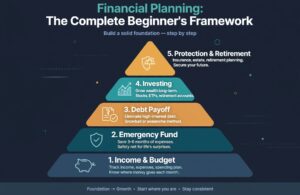
Understanding the trap is not enough. You need a system to escape it. Here’s the framework our team uses and teaches:
Step 1: Calculate Your Real Hourly Worth
Take your annual income. Subtract taxes, commuting costs, work clothes, convenience spending caused by work exhaustion, and work-related stress spending (therapy, retail therapy, alcohol). Divide what’s left by your total work hours including commute and overtime. The number will shock you. This is your real hourly worth, and it’s probably lower than you think.
Step 2: Define Your “Enough” Number
Write down three numbers:
- Survival Number: Bare minimum to keep the lights on and food on the table.
- Comfort Number: The amount where life feels genuinely good.
- Enough Number: The point where more money stops improving your daily well-being.
Most people have never calculated their Enough Number. Without it, every dollar earned gets absorbed by lifestyle expansion. With it, you have a finish line. And finish lines create freedom.
Step 3: Automate the Gap
The difference between your income and your Enough Number is your wealth-building gap. Automate it. Set up automatic transfers to investment accounts the day your salary hits. If you wait until the end of the month to save what’s left, there will be nothing left. Pay your future self first, then live on what remains.
Step 4: Build One Income-Generating Asset This Year
Not a purchase. An asset. Something that puts money in your pocket without requiring your daily presence. It could be a rental property, a dividend portfolio, a digital product, a small business system, or a skill-based service that you can eventually delegate. The specific asset matters less than the principle: shift from earning to owning.
Our guide on the rules of money and wealth building provides deeper context on how to think about asset acquisition.
Step 5: Audit Your Circle
If your five closest friends measure success by what they consume, your financial behavior will mirror theirs. If your circle discusses assets, systems, and long-term compounding, your behavior will shift in that direction. You cannot escape the cash flow trap while surrounded by people who celebrate it.

“The cash flow trap doesn’t announce itself. It feels like success. It looks like progress. It tastes like the good life. And by the time you realize you’re trapped, you’ve spent a decade running in place.” – Data Pips Team
⚡ Quick Action Steps: Escape the Cash Flow Trap This Week
- Track every dollar for 7 days: Not estimated — actual. Use an app or a notebook. The truth will be uncomfortable. That’s the point.
- Calculate your Enough Number: Sit down for 20 minutes and define your three numbers: Survival, Comfort, and Enough. Write them where you’ll see them daily.
- Cancel 3 subscriptions today: Open your bank statement. Find three recurring charges you barely use. Cancel them. That’s $30-$150 a month redirected to your future.
- Set up one automatic transfer: Even if it’s $50 a week. Automate it to an investment or savings account. The amount matters less than the habit.
- Ask the mirror question: Before your next purchase over $100, ask: “If nobody could ever see this, would I still buy it?” If the answer is no, walk away.
The Uncomfortable Truth About “Earning More”
Here’s the lie that keeps the cash flow trap alive: “I just need to earn more, and then I’ll be fine.”
No, you won’t. If you can’t manage $5,000 a month, you won’t manage $15,000 a month. The problems scale with the income. The car gets more expensive. The neighborhood gets pricier. The vacations get longer. The expectations get heavier.
Our team has seen this pattern destroy people at every income level. A freelancer earning $3,000 a month who spends $2,900 is in the exact same trap as a corporate executive earning $25,000 a month who spends $24,500. The numbers are different. The prison is identical.
The exit is not more income. The exit is better behavior.
If you want practical strategies for building wealth regardless of your current income, our article on how to build wealth from nothing covers the foundational principles.

Frequently Asked Questions
1. What exactly is the cash flow trap?
The cash flow trap is the cycle where your spending automatically expands to match or exceed your income, regardless of how much you earn. It’s driven by lifestyle inflation, status spending, and normalized expenses that feel reasonable individually but prevent wealth accumulation collectively. High earners are especially vulnerable because their larger income creates the illusion that they’re building wealth when they’re actually just moving more money through their hands.
2. Why do six-figure earners often have less savings than lower-income people?
Because higher income triggers higher lifestyle expectations. A person earning $150,000 often feels entitled to a luxury car, a premium apartment, expensive vacations, and high-end dining. These expenses consume nearly all of their income, leaving little for savings. Meanwhile, someone earning $50,000 with disciplined spending habits may save a higher percentage of their income. Wealth is not determined by what you earn but by what you keep and deploy.
3. How can I tell if I’m in the cash flow trap?
Three clear signs: First, your savings rate has not increased despite earning more over the years. Second, you feel financial anxiety despite having a “good” income. Third, you cannot cover three months of expenses from your savings if your income stopped tomorrow. If any of these apply to you, you’re in the trap regardless of your salary figure.
4. Is it wrong to enjoy the money I earn?
No. Enjoying your earnings is not the problem. The problem is when enjoyment becomes the default allocation for every extra dollar you earn. The goal is not deprivation — it’s intentionality. Spend on what genuinely improves your life. Cut what you spend only to maintain an image. The difference between enjoying money and being trapped by it is awareness.
5. What’s the fastest way to start escaping the cash flow trap?
Automate your savings and investments before you see the money. Set up a transfer that moves 15-20% of your income to an investment account the day you get paid. Then live on what remains. This forces your lifestyle to fit within your actual wealth-building budget instead of expanding to consume everything. For a step-by-step approach, read our complete guide to smart money moves.
6. How does social pressure contribute to the cash flow trap?
Social pressure is the invisible engine of the cash flow trap. When your peers measure success by visible consumption — cars, houses, vacations, brands — you unconsciously adopt the same metrics. Every purchase made to impress someone else is a dollar stolen from your future freedom. The hardest financial decision you’ll ever make is choosing to look average to people whose opinions don’t pay your bills.
7. Can I escape the cash flow trap without drastically changing my lifestyle?
Yes, but it requires honesty. Start by tracking every expense for one month. Identify the 20% of spending that brings you the least actual happiness. Redirect that 20% to investments. You won’t feel the cut, but over ten years, that redirected money — compounded — can become the foundation of your financial independence. You don’t need a dramatic overhaul. You need a consistent redirect.
Conclusion: The Trap Only Works If You Don’t See It
The cash flow trap is not a conspiracy. It’s not a punishment. It’s a pattern — predictable, repeatable, and entirely avoidable once you recognize it.
At Data Pips, we believe that financial freedom is not reserved for those who earn the most. It belongs to those who understand the difference between income and wealth, between looking rich and being free, between running faster and actually moving forward.
You now have the framework. You know the three money behaviors. You understand the invisible expenses. You’ve seen the five-step escape system. The information asymmetry that keeps most people trapped no longer applies to you.
The only question left is whether you’ll act on it or bookmark it and forget it like every other article you’ve read about money.
Your future self is watching what you do next. Make it count.
Share this with someone who earns well but never seems to get ahead. And tell us in the comments: what’s one invisible expense you’re going to cut this week? We read every comment.

Disclaimer: This article is published by the Data Pips Team for educational and informational purposes only. It does not constitute financial, investment, or tax advice. Individual financial situations vary significantly. Always consult a licensed financial advisor before making any investment or financial decisions. Past performance of any investment strategy does not guarantee future results.