- True financial security comes from owning assets that generate income independently of your active work hours, not from working harder at a single job.
- The difference between wealthy and average earners is rarely how much they make — it is how consistently they invest what they make.
- Passive income assets range widely in risk, from government-backed savings instruments to advanced strategies that require real technical skill.
- Diversifying across multiple income-generating assets reduces dependence on any single income source, including your primary job.
Relying on a single paycheck in today’s volatile global economy is a genuinely risky strategy. Real financial security does not come from working longer hours — it comes from owning assets that continue generating income whether or not you are actively working that day. This is the foundation of passive income.
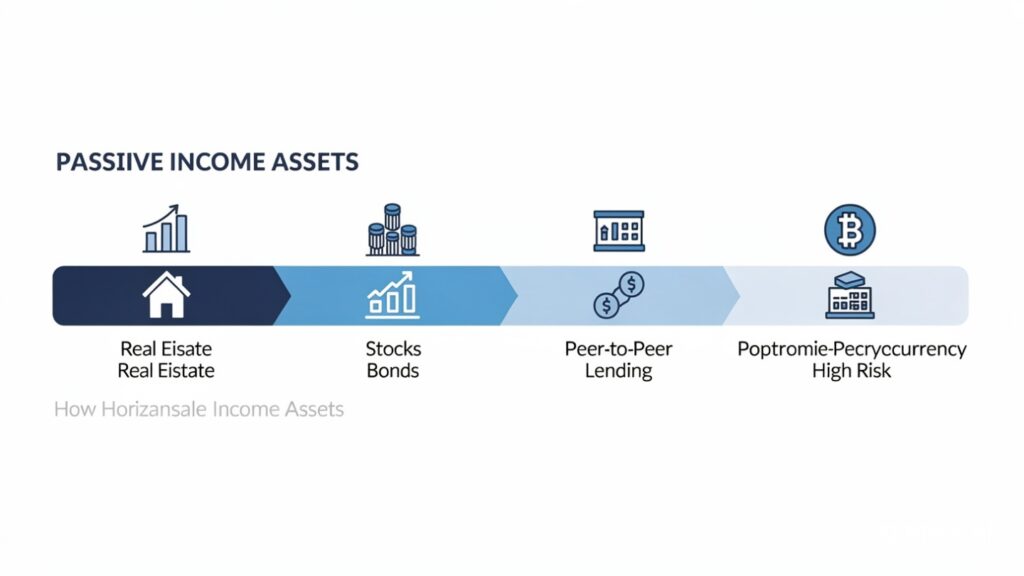
Whether the goal is supplementing a salary or building a long-term retirement corpus, choosing the right combination of income-generating assets matters significantly. Below are ten passive income assets accessible to investors across most global markets, each with a different risk profile, return potential, and level of involvement required.

1. Real Estate Investment Trusts (REITs)
Becoming a property owner no longer requires substantial capital upfront. REITs allow investors to buy units in a trust that owns income-generating commercial real estate — shopping centers, office buildings, warehouses, and similar properties — for a fraction of the cost of buying property directly.
Investopedia’s explanation of REITs confirms that these trusts are required to distribute the large majority of their taxable income to shareholders as dividends, which is exactly why REITs have become one of the most accessible passive income vehicles available through standard brokerage accounts worldwide. Investors receive a share of collected rent as regular dividends, while also benefiting from potential long-term property value appreciation.
2. Infrastructure-Focused Investment Trusts
If REITs represent buildings, infrastructure investment trusts represent the physical backbone of an economy — toll roads, power grids, pipelines, and similar large-scale infrastructure projects. These trusts collect usage fees or tolls and distribute the majority of profits to investors, often producing higher yields than traditional savings instruments due to the steady, contracted nature of infrastructure cash flows.
Availability of specific infrastructure trust structures varies significantly by country, so investors should research what is accessible through their local or international brokerage platforms.
3. High-Yield Dividend Stocks
Investing in established, financially stable companies that consistently share profits with shareholders remains one of the most time-tested wealth-building approaches available. Look specifically for companies with a long, consistent track record of dividend payouts rather than chasing unusually high yields, which can sometimes signal underlying financial instability.
Investopedia’s explanation of dividends confirms that dividend payments represent a direct share of company profits returned to shareholders, separate from any gains tied to the stock’s price movement. Beyond the cash dividends received, dividend investors also retain ownership in a growing business, combining income generation with long-term capital appreciation potential.
“The difference between the wealthy and the average earner is rarely how much they make. It is how consistently they invest what they make.”
— Data Pips Team
4. Senior Secured Corporate Bonds
For investors seeking fixed returns with stronger security than unsecured debt, senior secured corporate bonds offer an alternative to standard savings accounts or basic fixed deposits. Many investment-grade companies offer meaningfully higher annual yields than typical bank savings products, while senior secured status means the bond is backed by specific company assets, providing additional protection in the event of financial distress.
| Asset | Risk Level | Involvement Required |
|---|---|---|
| REITs | Moderate | Low |
| Dividend Stocks | Moderate | Low to moderate |
| Secured Corporate Bonds | Low to moderate | Low |
| Government Savings Instruments | Very low | Very low |
| Algorithmic / Option Strategies | High | High |
5. The Power of Systematic Investing and Withdrawal
The most reliable way to build a meaningful investment corpus over time is through systematic, consistent monthly contributions into diversified funds — commonly structured as a Systematic Investment Plan, or SIP, depending on the platform and region. The real passive income transformation, however, happens in the second phase: a systematic withdrawal approach, where a fixed monthly amount is withdrawn from the accumulated corpus while the remaining balance stays invested and continues growing.
This two-phase approach — accumulation through disciplined contributions, followed by structured withdrawal — mirrors the broader compounding principle that applies across nearly every long-term wealth-building strategy. Our guide on the 1% rule and daily compounding habits covers the underlying mathematics that make this kind of patient, consistent approach so effective over long timeframes.
6. Government-Backed Fixed Income Schemes
Most countries offer some form of government-backed savings instrument designed specifically for conservative investors seeking guaranteed, predictable income. These typically involve depositing a lump sum and receiving fixed periodic interest payments, often monthly or quarterly, with the principal protected by government backing.
While returns on these instruments are generally lower than market-based investments, the near-total safety makes them a valuable component of a diversified portfolio, particularly for capital that cannot tolerate market volatility. Specific scheme names, rates, and eligibility requirements vary significantly by country, so checking locally available government savings instruments is essential.
7. Fixed-Income Instruments for Retirees
Many countries offer dedicated fixed-income savings instruments specifically designed for retirees or those approaching retirement, often providing some of the highest interest rates available among low-risk government-backed options. These instruments typically pay interest on a quarterly basis, providing a steady, predictable income stream for those who depend on investment income rather than active employment.
8. Long-Term Tax-Advantaged Savings Certificates
Many tax jurisdictions offer savings certificates or bonds that combine modest, compounding interest with tax advantages, making them useful tools for long-term financial planning even though they are not primarily marketed as “passive income” products. Interest typically compounds over the holding period and is paid out at maturity, functioning as a reliable, low-maintenance asset within a broader portfolio. Specific tax treatment and available products vary by country, so consulting local tax guidance is essential before relying on these instruments for planning purposes.
Building income through freelancing and trading alongside more traditional savings instruments demonstrated directly how relying on a single income source creates unnecessary fragility. During periods when freelance client work slowed, having modest income generated from dividend-paying investments and fixed-income instruments provided a stabilizing cushion that reduced pressure to take on rushed, poorly priced freelance work or oversized trading risk. The lesson was not that any single passive income asset needed to be large — it was that having multiple, uncorrelated income sources meaningfully reduced overall financial fragility.
9. Professional Option Selling
This represents a significantly more advanced strategy reserved for investors with genuine market knowledge and disciplined risk management. Unlike buying options, which carries high risk relative to the capital deployed, option selling positions the investor closer to an insurance provider — collecting premiums from other market participants in exchange for taking on defined risk.
This approach can generate consistent weekly or monthly income when executed properly, but it requires deep technical understanding of options pricing, volatility, and risk management. Without that foundation, option selling can produce significant capital erosion rapidly, making it unsuitable as a starting point for passive income building.

10. Automated Algorithmic Trading
Algorithmic trading uses predetermined rules to execute trades automatically, removing emotional decision-making from the process entirely and allowing strategies to operate continuously during market hours without constant manual monitoring. This represents the most technically demanding option on this list, requiring genuine strategy development, backtesting, and ongoing oversight rather than a true “set and forget” passive approach.
The advantage is real — removing human emotion from trade execution addresses one of the most common causes of poor trading outcomes. The reality check is equally important: algorithmic trading is not a guaranteed income generator. It requires a genuinely robust, tested strategy and continued monitoring of changing market conditions to remain effective over time.
What Nobody Tells You About Building Passive Income
1. “Passive” rarely means zero effort, especially at the start. Investopedia’s definition of passive income clarifies that even classic passive income sources typically require significant upfront capital, research, or active setup before becoming genuinely low-maintenance. Understanding this prevents the disappointment that leads many people to abandon legitimate passive income strategies too early.
2. Diversification across these assets matters more than picking the single “best” one. Investopedia’s explanation of diversification confirms that spreading capital across asset types with different risk profiles and return drivers reduces the impact of any single asset underperforming. No single item on this list should represent an entire passive income strategy on its own.
3. Higher-yield options almost always carry hidden complexity or risk. Assets offering unusually attractive returns compared to safer alternatives typically compensate for that higher yield with additional risk, reduced liquidity, or genuine technical complexity. Evaluating yield in isolation, without understanding what risk is being compensated for, leads to poorly informed decisions.
4. Tax treatment varies dramatically by country and asset type. The same passive income asset can have very different after-tax returns depending on jurisdiction, making generic international advice insufficient for actual financial planning. Consulting a local tax professional before committing meaningful capital to any of these assets is essential, not optional.
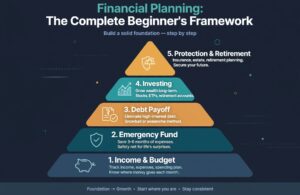
5. The most overlooked passive income asset is reduced spending, not a new investment. Building genuine financial cushion often starts before any of these assets become relevant — our complete emergency fund blueprint covers the foundational financial protection that should generally exist before deploying capital into higher-risk passive income strategies on this list.
Make Your Money Work as Hard as You Do
Building genuine passive income is rarely about finding one perfect asset. It is about deliberately combining several of these options based on individual risk tolerance, available capital, and financial goals, creating multiple income streams that collectively reduce dependence on any single source — including a primary job. Our guide on building multiple income streams without quitting your job covers how to structure this diversification practically alongside existing work commitments.
During periods of broader economic uncertainty, having genuinely diversified passive income sources also provides meaningful stability. Our framework for investing during global uncertainty builds directly on the diversification principles covered throughout this guide.
Quick Action Steps: Start Building Passive Income This Month
Step 1: Confirm your emergency fund is fully funded before allocating meaningful capital toward any passive income asset on this list.
Step 2: Research which of these asset types are accessible through your local or international brokerage platform, since availability varies significantly by country.
Step 3: Start with one or two lower-risk options — dividend stocks or government-backed savings instruments — before considering higher-complexity strategies like option selling or algorithmic trading.
Step 4: Set a fixed monthly contribution amount toward your chosen passive income assets, treating it as a non-negotiable line item rather than leftover money.
Step 5: Review your passive income portfolio quarterly, checking diversification across asset types rather than concentration in any single option.
For a deeper framework on risk management across your broader investing approach, read our complete smart investing strategies guide.
Frequently Asked Questions
What is the easiest passive income asset for a beginner to start with?
Dividend-paying stocks and REITs are generally the most accessible starting points for beginners, since they require relatively low capital, are available through standard brokerage accounts, and do not require specialized technical knowledge compared to options like algorithmic trading or option selling.
How much money do I need to start building passive income?
Many passive income assets, including REITs and dividend stocks, can be started with relatively modest amounts through standard brokerage platforms. Government-backed savings instruments and corporate bonds may have higher minimum investment requirements depending on the specific country and product.
Is passive income truly passive, or does it require ongoing work?
Most passive income sources require meaningful upfront effort, research, and capital before becoming low-maintenance. Even after setup, periodic review and rebalancing remain necessary. True “zero effort forever” passive income is rare and should be approached skeptically when marketed that way.
Should I diversify across multiple passive income assets or focus on one?
Diversification across multiple asset types generally provides more stable, resilient income than concentrating in a single passive income source. Different assets respond differently to economic conditions, so spreading capital reduces the impact of any single asset underperforming.
Are higher-yield passive income assets always better?
Not necessarily. Higher yields typically compensate for additional risk, reduced liquidity, or technical complexity. Evaluating an asset’s yield without understanding what risk is being compensated for often leads to poorly informed investment decisions.
Do I need to consult a financial advisor before building a passive income portfolio?
Consulting a licensed financial advisor is strongly recommended, particularly given how significantly tax treatment, available products, and regulations vary by country. A professional can help tailor a passive income strategy to your specific jurisdiction and financial circumstances.
Disclaimer: This article is for educational and informational purposes only and does not constitute financial or investment advice. Specific financial products, tax treatments, and regulations vary significantly by country and change over time. The Data Pips Team makes no guarantees regarding financial outcomes from applying the strategies described in this article. Always consult a licensed financial advisor and conduct independent due diligence before committing capital to any investment.