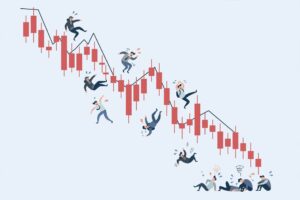
- The human brain is wired for survival, not probability — which is precisely why it makes terrible trading decisions under pressure.
- Mechanical execution means following entry and exit rules regardless of how the market “feels” in the moment, not removing emotion entirely.
- A trading journal that tracks emotional state alongside technical data is the fastest way to identify recurring, expensive mistakes.
- Consistency is not found in chart patterns. It is found in the discipline of the person reading them.
Most beginners trading forex and gold spend months searching for a flawless strategy — the perfect indicator combination, the ideal entry signal, the system that wins every time. Experienced traders eventually arrive at a different, less exciting conclusion: trading success is roughly 20% strategy and 80% psychology, and no amount of strategy refinement compensates for a mind that cannot execute consistently under real pressure.
This is not a vague mindset platitude. It describes a specific, mechanical transition every serious trader eventually has to make — from reacting emotionally to market movement, to executing a predetermined plan regardless of what that movement makes them feel in the moment.
This guide from the Data Pips Team breaks down exactly why the brain works against good trading decisions by default, what mechanical discipline actually looks like in practice, and how a structured trading journal becomes the tool that turns gradual self-awareness into measurable improvement.

Why the Brain Is Naturally Wired Against Good Trading
The human brain evolved to handle immediate physical threats efficiently, not to navigate the probabilistic, delayed-feedback environment that financial markets actually present. This mismatch is the root cause of nearly every emotional trading mistake, regardless of how intelligent or well-informed the trader is.
When a trade moves into drawdown, the brain registers this as a threat requiring immediate resolution. Fear takes over, and traders frequently close losing positions too early — not because the original technical analysis was wrong, but because the discomfort of an open loss becomes intolerable before the trade has had genuine time to play out. Conversely, when a trade moves into profit, a different but equally damaging instinct activates: the fear of losing unrealized gains, which causes traders to exit winning positions well before their planned target, capping the very wins that make a strategy profitable over time.
According to Investopedia’s research on trading psychology, a trader’s underlying beliefs and emotional discipline consistently influence outcomes more heavily than raw technical analysis skill — confirming that this is not a minor factor to address eventually, but the central variable determining long-term trading success.
The Trap of Emotional Trading in Practice
Emotional trading rarely announces itself clearly. It shows up as small, individually reasonable-seeming deviations from a plan — closing a trade “just to be safe,” moving a stop-loss slightly to avoid an uncomfortable loss, entering a position slightly early because waiting felt unbearable. None of these individual decisions feels reckless in the moment. Compounded across hundreds of trades, they consistently separate traders who survive long-term from those who do not.
Psychology Today’s research on loss aversion confirms the underlying mechanism — losses are felt significantly more intensely than equivalent gains, which explains why fear during drawdowns consistently overpowers rational analysis, and why protecting unrealized profit feels more urgent than letting a winning trade reach its full statistical potential.
“A winning strategy without a disciplined mind is a recipe for disaster. Consistency is not found in the charts — it is found in the mirror.”
— Data Pips Team
What Mechanical Discipline Actually Means
Mechanical discipline does not mean eliminating emotion entirely — that is neither possible nor genuinely desirable. It means building a decision-making structure robust enough that emotion does not get to make the final call on whether a trade is entered, held, or closed.
Accepting defined risk before entry. Never risking more than a small, fixed percentage of total capital — commonly one to two percent — on a single trade ensures that no individual loss, however emotionally significant it feels, threatens the overall account in a way that triggers panic-driven decisions on subsequent trades.
Following the plan regardless of feeling. Entry and exit rules, once established during a calm, objective state, need to be followed even when the market “feels” like it is about to do something different. The feeling is frequently wrong; the predetermined plan was built without that emotional noise present.
Practicing patience for valid setups. Waiting for price to genuinely reach a planned entry zone — such as a Fair Value Gap or Order Block — rather than chasing price that has already moved away from that zone, prevents the kind of impulsive, poorly positioned entries that consistently produce worse risk-reward outcomes. Our complete guide on order blocks and fair value gaps covers exactly this kind of patient, structured entry approach in significant technical detail.
| Emotional Trader | Mechanically Disciplined Trader |
|---|---|
| Closes losers early out of fear | Respects a predetermined stop-loss |
| Closes winners early out of anxiety | Lets the trade reach its planned target |
| Chases price that has already moved | Waits for price to reach a planned zone |
| Reacts to how the market “feels” | Follows rules set before entering the trade |

The Founder’s Real Lesson: Treating Trading Like an Actual Business
The shift from emotional trading to mechanical execution rarely happens through willpower alone. It happens through structure — treating every trading decision the way a disciplined business owner treats an operational decision, removing personal feeling from the process as much as realistically possible.
Years of trading gold and forex reinforced one specific lesson directly: the trades that caused the most lasting damage were never the ones that followed the plan and lost anyway. They were the trades where the plan got abandoned mid-execution because of a feeling — fear during a drawdown, anxiety during unrealized profit, frustration after a previous loss. Our complete guide on treating trading as a business rather than a lottery expands on this exact reframe in considerably more depth.
For several months, trading results in gold remained inconsistent despite a technically sound strategy that backtested well. Introducing a detailed journal — tracking not just entry, exit, and outcome, but emotional state at the moment of each decision — exposed a pattern that had been completely invisible without that documentation. The vast majority of losing trades were not failures of the strategy itself. They were trades where a valid setup was abandoned early due to fear, or where an invalid setup was taken anyway out of impatience or frustration following a previous loss. Once that specific pattern became visible in writing, addressing it directly produced a more significant improvement in results than any change to the underlying strategy ever had.
The Power of a Trading Journal as a Discipline Tool
A professional trader treats their activity like an actual business, and businesses do not operate without records. Maintaining a detailed journal of every trade — including the emotional state present during entry, the reasoning behind the decision, and the eventual outcome — is consistently the fastest way to identify recurring, expensive mistakes that would otherwise remain invisible.
The technical data alone — entry price, exit price, profit or loss — tells only half the story. Without the emotional and psychological context attached to each trade, it becomes nearly impossible to distinguish between a loss caused by genuine market unpredictability and a loss caused by an emotional override of a perfectly sound plan. Our guide on negative visualization and trading psychology habits covers additional practical techniques for building this kind of self-awareness systematically rather than relying on memory alone.
A risk-reward ratio of at least 1:3, combined with strict per-trade risk limits, forms the mathematical backbone that makes mechanical discipline worthwhile in the first place. Investopedia’s explanation of risk-reward ratio confirms why this structure allows a trader to be wrong on the majority of individual decisions and still remain profitable overall — but only if the discipline to actually follow that structure holds under real pressure.

What Nobody Tells You About Building Mechanical Discipline
1. Discipline feels worse before it feels better. Following a rule mechanically when every emotional instinct says otherwise is genuinely uncomfortable, particularly in the early stages of building this habit. The discomfort does not indicate the rule is wrong — it indicates the emotional instinct is exactly the thing the rule was built to override.
2. Backtesting cannot fully prepare a trader for live emotional pressure. A strategy can perform excellently in historical testing, where no real money and no real emotion are involved, and still struggle in live execution purely because of the psychological pressure that real capital introduces. This gap is not a sign the strategy failed — it is a sign the discipline side of the equation still needs development.
3. Most traders underestimate how much a journal will reveal about themselves. Many traders avoid detailed journaling because reviewing past mistakes feels uncomfortable or unproductive. In practice, the discomfort of seeing a clear, documented pattern of emotional override is precisely what creates the motivation needed to actually change that pattern going forward.
4. Mechanical discipline does not mean rigid inflexibility forever. The goal is not to follow rules blindly regardless of new, genuinely valid information. It is to ensure that any deviation from a plan comes from objective technical reasoning, documented and reviewable, rather than from an untracked emotional impulse in the moment.
5. The transition from emotional to mechanical trading is rarely linear. Traders who have built strong discipline still experience occasional emotional overrides, particularly during periods of personal stress or unusual market volatility. Our guide on stopping revenge trading covers exactly this kind of relapse pattern and how to interrupt it before it compounds into larger account damage.
From Gambler to Professional Market Participant
The distinction between gambling and professional trading is not the presence of risk — both involve genuine uncertainty. The distinction is whether decisions are made through a structured, repeatable process with defined risk parameters, or through impulsive reaction to whatever feeling the market happens to produce in a given moment.
The transition has a litmus test — the one tell that separates a trader from a gambler: a professional expects regular losses inside a tested edge, while a gambler reads one loss as the strategy breaking.
Mastering this transition is a longer process than mastering any single technical strategy, which is exactly why it deserves to be treated as the primary skill being developed, not a secondary consideration behind chart analysis. Our complete twelve-month trader roadmap places this exact psychological development at the center of a structured, sequential learning process rather than treating it as an afterthought.
Quick Action Steps: Build Mechanical Discipline This Week
Step 1: Write down your specific entry and exit rules today, in a calm state, before your next trading session begins.
Step 2: Set a fixed risk percentage — one to two percent of capital — for every trade, and commit to it regardless of how confident any individual setup feels.
Step 3: Start a detailed trading journal this week that includes your emotional state at entry, not just technical data and outcome.
Step 4: Review your last 15 trades and identify how many deviated from your original plan due to feeling rather than objective technical reasoning.
Step 5: For your next five trades, practice waiting specifically for price to reach a planned entry zone rather than chasing movement that has already happened.
Frequently Asked Questions
What does mechanical discipline mean in trading?
Mechanical discipline means following predetermined entry and exit rules consistently, regardless of how the market feels in the moment. It does not mean eliminating emotion entirely, but building a structure that prevents emotion from overriding a rational, pre-planned decision.
Why is psychology more important than strategy in trading?
A technically sound strategy still requires consistent execution to be profitable. Without psychological discipline, even an excellent strategy gets abandoned, oversized, or executed inconsistently under real financial pressure, which is why beliefs and emotional discipline consistently outweigh raw technical analysis skill in determining long-term outcomes.
What should I track in a trading journal beyond entry and exit prices?
Tracking emotional state at the time of entry, the specific reasoning behind the decision, and whether the trade followed or deviated from a predetermined plan provides far more useful data than technical details alone. This context reveals patterns of emotional override that pure price-based records cannot show.
How much of my capital should I risk on a single trade?
A common guideline among disciplined traders is risking no more than one to two percent of total trading capital on any single trade. This ensures that no individual loss, however uncomfortable it feels emotionally, threatens the overall account in a way that triggers panic-driven decisions on subsequent trades.
Can a backtested strategy fail in live trading even if the analysis was correct?
Yes. Backtesting removes the psychological pressure of real capital and real-time uncertainty, which means a strategy can perform well historically and still struggle in live execution due to emotional interference. This gap reflects a discipline issue rather than a flaw in the underlying technical analysis.
How long does it take to develop real mechanical discipline in trading?
This varies significantly by individual, but consistent journaling and rule-following over several months typically produces measurable improvement. The process is rarely linear, and occasional emotional overrides, particularly during stressful periods, remain common even among experienced, generally disciplined traders.
Disclaimer: This article is for educational and informational purposes only and does not constitute financial or trading advice. Trading forex, gold, and other leveraged instruments carries substantial risk of loss and is not suitable for all investors. Past performance and behavioral patterns described in this article do not guarantee future results. The Data Pips Team makes no guarantees regarding trading outcomes from applying the strategies described in this article. Always trade with capital you can afford to lose and consult a licensed financial professional before making trading decisions.