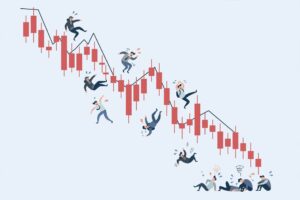
- Fear in trading is not one feeling — it shows up as hesitation on good setups and panic-closing winning trades far too early.
- A losing trade is not a personal failure. It is an operating expense, exactly like rent or staff salaries are for a physical business.
- Practicing on a demo account that does not match your real available capital teaches you nothing useful about your actual psychology.
- A mentor who only teaches entry signals is not teaching trading. Survival rules matter more than secret strategies.
The market does not trade currencies, commodities, or stocks. It trades human emotion, packaged as price movement. Years of trading forex and gold reveal one undeniable truth eventually: a trader can have the most technically sound strategy available and still lose consistently, simply because their mind was never trained to handle the emotional weight of real risk. Trading is roughly 20% strategy and 80% psychology — and most traders spend their entire learning curve focused on the smaller number.
This is not abstract theory. It is the specific, repeating pattern of failure that shows up across nearly every new trader’s account history — hesitation that costs good setups, panic that closes winning trades too early, and ego that turns a single manageable loss into an account-ending spiral.
This guide from the Data Pips Team breaks down exactly how these psychological failures happen, and more importantly, the specific mindset shift — treating trading as a real business rather than a game of chance — that actually fixes them.

The Anatomy of Fear: Why Most Traders Actually Fail
Fear in trading is not a single emotion. It is a spectrum of distinct, predictable bad decisions, each one expensive in its own specific way.
The hesitation trap. This is the fear of pulling the trigger on a valid setup. It typically develops after a string of losses or a period of poor risk management. A genuinely good setup appears on the chart, but the fear of repeating a previous mistake freezes the decision. By the time enough courage builds to act, the move has already happened without the trade ever being taken.
Profit panic. A trader sets a clear profit target, reaches a meaningful portion of it, and suddenly becomes convinced the market is about to reverse and take that unrealized profit away. The trade gets closed early, only for price to continue directly toward the original target anyway. This fear of losing what already feels “owned” prevents traders from ever capturing the larger wins that make a strategy profitable over time. Our complete breakdown of why traders exit winning trades too early covers this exact mechanism in significantly more depth.
Psychology Today’s research on loss aversion confirms why this happens — the brain processes the pain of losing something already gained far more intensely than the pleasure of an equivalent future gain, which is exactly why floating profit triggers premature exits.
“Fear doesn’t stop you from trading. It stops you from following the plan you already made when you weren’t afraid.”
— Data Pips Team
The Ego Trap and the Revenge Trade
After a loss, many traders enter what can be called an ego phase. There is a quiet, often unconscious feeling that the market “owes” them a win back. Watching price hit the original take-profit level shortly after closing a trade early intensifies this feeling into genuine frustration.
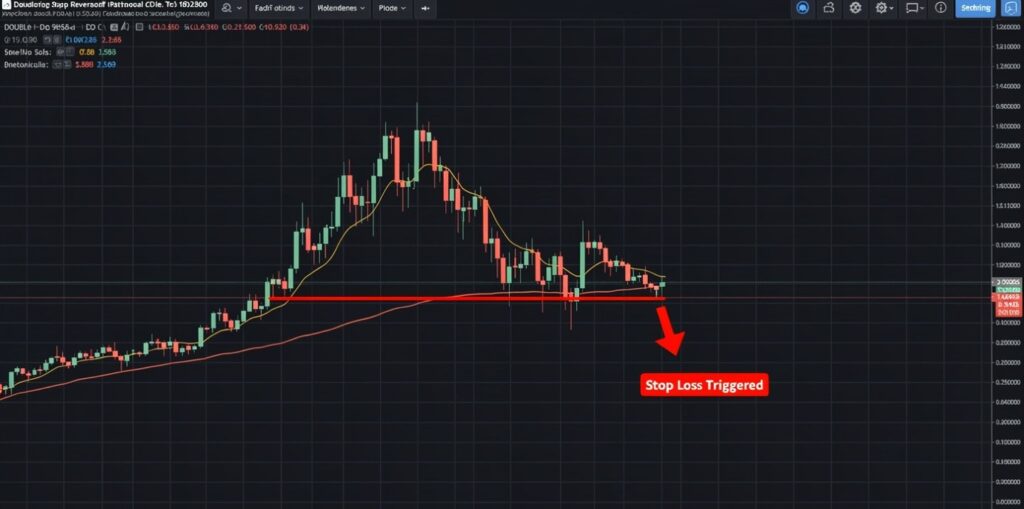
That frustration frequently leads directly into the next trade, taken with significantly larger position size than usual, driven by the conviction that “the market must move in this direction now.” If that trade also fails — particularly through a common reversal pattern like a double top — the combination of oversized risk and abandoned risk management rules can damage an account far more severely than the original loss that triggered the cycle in the first place.
This pattern is entirely predictable and entirely avoidable, but only with rules established and committed to before the emotional trigger occurs. Our complete guide on stopping revenge trading covers the specific structural fixes for this exact cycle.
| Emotional Trigger | Common Behavior | Actual Cost |
|---|---|---|
| Hesitation after losses | Freezing on a valid setup | Missed profitable trades |
| Profit panic | Closing winners far below target | Reduced average win size |
| Ego after a loss | Oversized “revenge” trade | Compounded, accelerated losses |
| Demo-to-real mismatch | Practicing with unrealistic capital | False confidence that collapses with real money |
The Paper Trading Delusion
A common and misleading pattern in trading content involves demo account screenshots showing impressive percentage gains on accounts of $50,000 or more, while the trader’s actual available capital is a fraction of that amount. This mismatch creates a dangerous illusion of skill that does not transfer to real conditions.
The reality check is simple: if real available trading capital is $2,000, practice should happen on a $2,000 demo account, not an inflated one. Demo money needs to be treated with the same psychological weight as real money — as if it were genuinely the last available capital — for the discipline built during practice to actually transfer to live trading.
The reverse also holds true and matters just as much. When transitioning to real money, the goal is maintaining the same clinical detachment that existed on the demo account. The moment focus shifts from “is this setup valid” to “how much money could I lose,” the quality of decision-making deteriorates immediately, regardless of how sound the underlying strategy is.
Trading Is a Business, Not a Lottery
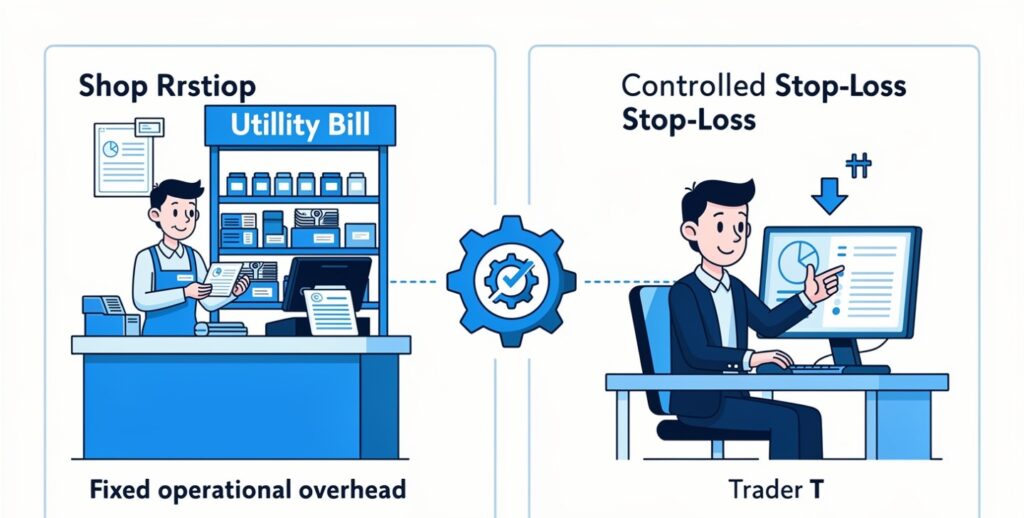
This single reframe changes how losses get processed psychologically, more than almost any other piece of trading advice. Imagine starting a small retail shop — investing capital into inventory and the physical space, hiring staff with a fixed monthly salary. If the first month produces no sales, the rational response is not to quit immediately. Rent and salaries get paid from available capital, because that is simply the cost of operating a business while it establishes itself.
Trading follows the exact same logic, even though it rarely gets framed this way. A stop-loss functions as the equivalent of a shop’s monthly rent. Losing days function as ordinary business overhead, expected and budgeted for rather than treated as evidence of failure. If a loss cannot be accepted as a normal, necessary operating expense, the underlying business mindset required for trading has not yet developed. Many legitimate businesses take two to three years to become consistently profitable — trading realistically requires the same long-term patience, not a shortcut around it.
The mindset shift only works on a solid definition — what trading actually is before strategy matters covers the mechanism, the asset classes, and the trading-vs-investing line.
Early in a trading journey through gold and forex, each individual loss carried significant emotional weight — treated as a personal failure rather than a normal part of operating costs. This emotional weight directly fed into the ego and hesitation patterns described earlier, creating a cycle of frustration after losses and overcaution after wins. The shift that actually changed outcomes was not a new strategy. It was consciously reframing every stop-loss hit as a budgeted business expense, the same way a shop owner budgets for a monthly utility bill, rather than as evidence that something had gone fundamentally wrong. That reframe alone reduced both hesitation and revenge trading significantly within a few months.
Why a Real Mentor Teaches Survival, Not Secrets
A mentor who only teaches “where to buy” or “when to enter” is not teaching trading in any complete sense. A genuine mentor teaches money management first — the structural rules that determine whether a trader survives long enough to ever benefit from a good entry signal.
Before asking any mentor or course for a secret strategy, the more valuable question is what their personal rules of survival actually are. Protecting capital has to come before growing it, in every legitimate trading approach. Investopedia’s explanation of risk-reward ratio reinforces this directly — a strategy with a strong entry signal but poor risk-reward structure will still lose money over time, regardless of how accurate the entries are individually.
This principle extends beyond trading specifically. Whether building a content business that requires investing in equipment, or trading gold with real capital, the underlying discipline is identical: protect the investment first, and let growth follow from that protection rather than from chasing growth directly.
What Nobody Tells You About Trading as a Business
1. No investment, including cash itself, is genuinely risk-free. Even money held in a bank carries risk, since institutions themselves can fail under extreme circumstances. The goal in trading is never to eliminate risk entirely — it is to manage it deliberately, the same way any legitimate business manages operational risk rather than pretending it does not exist.
2. Most “fast profit” demo screenshots are quietly misleading. A large demo account producing impressive percentage gains says very little about how that same trader would perform with their actual, much smaller real capital. Position sizing and emotional pressure both change dramatically once real money replaces simulated money, even when the percentage gains look identical on paper.
3. The discipline-as-business mindset feels boring compared to the lottery mindset. Treating trading like a slow, patient business with budgeted losses lacks the excitement of chasing a single life-changing trade. This is precisely why so many traders resist the reframe even after understanding it intellectually — the lottery mindset is more emotionally appealing, even though it consistently produces worse financial outcomes.
4. Ego damage often outlasts financial damage. A single oversized revenge trade can cost meaningful capital, but the longer-term damage frequently comes from the erosion of self-trust that follows. Traders who have blown an account through ego-driven decisions often struggle with hesitation for months afterward, which creates an entirely new cycle of missed opportunities layered on top of the original financial loss.
5. Survival rules matter more than win rate. New traders consistently search for the entry strategy with the highest possible win rate, when in reality, a trader with a moderate win rate and strict risk management will outperform a trader with a high win rate and no risk discipline over a large enough sample of trades. Investopedia’s research on trading psychology confirms that beliefs and discipline around risk management consistently outweigh raw strategy accuracy in determining long-term outcomes.
Building the Three Rules Into Daily Practice
Three simple rules summarize the entire mindset shift required to trade with genuine discipline. First, treat demo capital exactly like real capital, and treat real capital with the same detached precision practiced on demo. Second, address ego before it has the opportunity to damage an account — recognizing the specific feeling of “the market owes me” as a direct warning sign rather than a justified reaction. Third, accept losses as a normal, budgeted cost of operating a trading business, not as evidence of personal failure.
None of these rules are complicated to understand. All three are genuinely difficult to apply consistently under real financial pressure, which is exactly why they require deliberate practice rather than passive agreement. Our breakdown of why even smart, capable traders fail their first serious attempt shows how this exact mindset gap, not a lack of intelligence or strategy knowledge, explains most early trading failures.
Quick Action Steps: Apply the Business Mindset This Week
Step 1: Adjust your demo account balance to match your real available trading capital exactly, and practice exclusively at that size for the next 30 days.
Step 2: Write down your specific ego warning sign — the exact thought or feeling that signals “the market owes me” — and commit to a mandatory pause whenever that thought appears.
Step 3: Reframe your next stop-loss hit deliberately as a budgeted business expense rather than a personal failure, and track how that reframe affects your next trading decision.
Step 4: Review your last ten trades specifically for profit panic — winning trades closed well before their planned target — and calculate the realistic cost of that pattern.
Step 5: If you currently follow a mentor or course, evaluate whether they teach survival and risk management as thoroughly as they teach entry signals.
For the complete twelve-month framework that builds this kind of discipline systematically, read our full trader roadmap, and for the specific mental rehearsal techniques that support this mindset under real pressure, see our guide on negative visualization.
Frequently Asked Questions
Why is trading psychology more important than strategy?
A technically sound strategy still requires consistent, disciplined execution to be profitable. Without psychological control over fear, ego, and impatience, even the best strategy gets abandoned, oversized, or executed inconsistently — which is why beliefs and emotional discipline play a larger role in long-term trading outcomes than raw technical analysis skill.
What is the “profit panic” pattern in trading?
Profit panic happens when a trader closes a winning trade well before its planned target out of fear that the market will reverse and take back the unrealized profit. This pattern is driven by loss aversion — the brain’s tendency to feel the pain of losing existing gains more intensely than the pleasure of additional future gains.
How do I stop revenge trading after a loss?
Establish a specific, written rule before any loss occurs — such as a mandatory cooling-off period or a hard cap on position size for the next trade — and commit to following it regardless of how confident the next setup feels in the moment. Recognizing the specific “the market owes me” feeling as a warning sign, rather than a valid signal, is also essential.
Should my demo trading account match my real trading capital?
Yes. Practicing on a demo account significantly larger than your actual available capital builds false confidence and unrealistic position sizing habits that do not transfer to real trading conditions. Matching demo capital to real capital ensures the psychological lessons learned during practice are genuinely applicable later.
How long does it typically take to become consistently profitable in trading?
There is no universal timeline, but treating trading like a real business — similar to how many legitimate businesses take two to three years to become consistently profitable — sets more realistic expectations than searching for fast results. Patience applied consistently over this kind of timeframe is far more reliable than chasing shortcuts.
What should I look for in a trading mentor?
A mentor who teaches money management, risk control, and survival rules alongside entry strategies is significantly more valuable than one who only teaches when to buy or sell. Protecting capital is the foundation that allows any entry strategy to actually have time to work over a meaningful number of trades.
Disclaimer: This article is for educational and informational purposes only and does not constitute financial or trading advice. Trading forex, gold, and other leveraged instruments carries substantial risk of loss and is not suitable for all investors. Past performance and behavioral patterns described in this article do not guarantee future results. The Data Pips Team makes no guarantees regarding trading outcomes from applying the strategies described in this article. Always trade with capital you can afford to lose and consult a licensed financial professional before making trading decisions.