Every trader braces for losing streaks. Nobody braces for winning ones. That’s the trap. A losing streak hurts, and pain is a warning system — it makes you cautious, tightens your discipline, and pulls you back toward your rules. A winning streak feels wonderful, and that good feeling is exactly why it’s more dangerous. There’s no pain signal telling you to slow down. Confidence quietly swells, your sense of your own edge inflates past what’s real, and the account damage that follows arrives with no warning at all. This is the silent account killer — and it doesn’t strike when you’re losing. It strikes right after you’ve been winning.
Why Winning Is More Dangerous Than Losing
Losing streaks are self-correcting. Each loss stings, and that sting naturally makes most traders more careful — they double-check setups, size down, and respect their stops. Winning streaks are self-reinforcing. Each win feels like proof that you’ve figured something out, so instead of pulling you back toward caution, it pushes you further toward risk. The exact same market variance that makes you cautious on the way down makes you reckless on the way up. That asymmetry is why the damage from overconfidence is so often worse than the damage from fear, and it’s a close cousin of the mechanics behind why even profitable traders blow their accounts — it’s rarely the losing that kills them, it’s what the winning convinced them to do.
The Cognitive Biases Doing the Damage
This isn’t a character flaw — it’s a set of well-documented mental shortcuts from behavioral finance firing at exactly the wrong moment. The overconfidence effect is the tendency to overestimate the accuracy of your own judgment, and a string of wins pours fuel on it. Underneath it sits self-serving bias: the brain’s habit of crediting wins to your skill and blaming losses on bad luck. That single distortion is devastating for a trader, because it means winning streaks feel earned while losing streaks feel unfair — so you learn the wrong lesson from both. Add the hot-hand belief, the sense that you’re “on fire” and can’t miss, and you have a mind primed to take risks it would never take with a clear head.
The Illusion That You’ve “Figured It Out”
The most seductive part of a winning streak is the story your brain writes about it. Five or six wins in a row and a quiet voice starts insisting you’ve finally cracked the code — that your reads are sharper now, that you can see what others can’t. This is the illusion of control: mistaking a favorable run of variance for a genuine increase in skill. Markets deliver streaks to everyone purely by chance, the same way a fair coin will sometimes land heads six times running. But the streak doesn’t feel random from the inside — it feels like mastery. And a trader who believes they’ve transcended their own strategy is a trader about to abandon the very rules that produced the wins.

The Behavioral Drift: How It Actually Shows Up
Overconfidence rarely announces itself as one dramatic decision. It leaks in as a slow drift of small deviations, each one feeling reasonable in the moment:
- Position sizes creep up. Half a percent more here, a little more there — because the setup “looks obvious” and you’re clearly in form.
- Stops get wider or vanish. You give trades “more room to breathe,” quietly removing the protection that kept the wins safe.
- You take setups you’d normally skip. The strict criteria loosen, because when you’re hot, everything looks like an opportunity.
- You over-trade. The winning feels good, so you chase more of it, taking marginal trades just to stay in the action.
Every one of these is a small, individually-defensible choice — and together they rebuild your risk profile into something your original plan never sanctioned. It’s the mirror image of the emotional spiral behind revenge trading after losses: the same wiring that makes you chase losses to get even also makes you press winners past the point of sense. Overconfidence and revenge are the same broken compass pointing in opposite directions.
The Math: How Size Creep Silently Multiplies Damage
Here’s what makes it a genuine account killer rather than just a bad habit. Picture two traders, both starting at $10,000, both taking the exact same 5 winning trades followed by the exact same ordinary 3-trade losing cluster. Trader A holds a disciplined 2% risk the entire time. Trader B lets the wins inflate position size from 2% up to 6%, and stays there as the losses hit.
| Trader A (Disciplined) | Trader B (Overconfident) | |
|---|---|---|
| Peak after 5 wins | $11,593 | $13,369 |
| Given back in the 3-loss cluster | $682 | $2,265 |
Same wins. Same losses. The only difference was position-size discipline — and that alone made the identical losing cluster do 3.3 times more damage to Trader B. And this is the optimistic version, because it assumes overconfidence only inflated size and didn’t also produce the extra reckless trades and removed stops it usually brings. In reality those pile on top, which is how a great week quietly becomes the setup for a brutal one. Understanding position sizing under exactly these conditions is why risk management beyond the basics treats a winning streak as a risk event, not a reward.
Why It’s “Silent”: No Pain Signal to Stop You
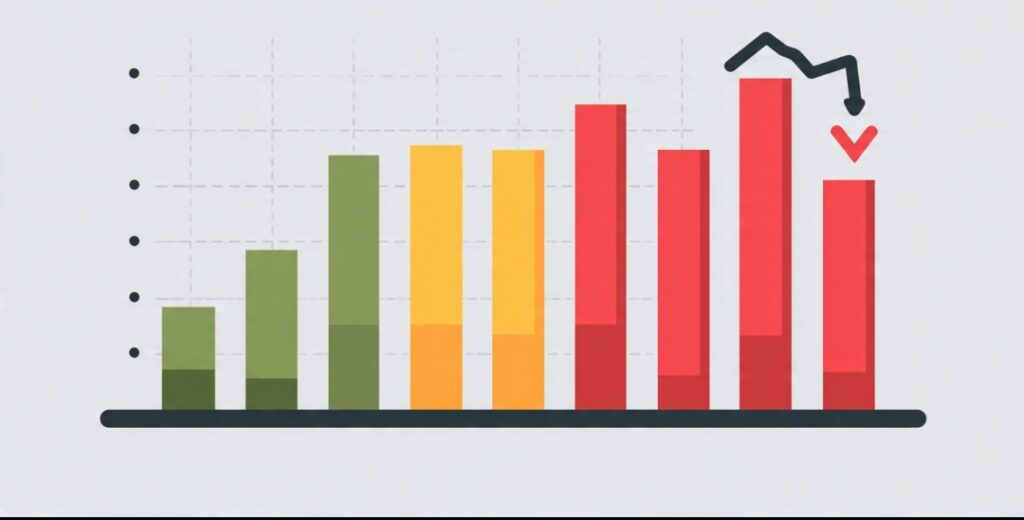
The reason this killer is silent is purely psychological. When you’re in a drawdown, the losses hurt, and that discomfort acts as a brake — it makes you want to stop, reassess, and protect what’s left. When you’re on a winning streak, every signal your brain receives is pleasurable. There’s no discomfort to trigger the brake, so nothing internally tells you to slow down at the precise moment your risk is quietly escalating. This is the same emotional machinery explored in the interplay of fear and greed — but greed during a winning streak is far more dangerous than fear during a losing one, because fear protects capital and unchecked greed spends it. You feel invincible right up until the market reminds you that you never were.
The Setup-for-a-Fall Pattern in Gold and Fast Markets
This dynamic gets amplified in fast-moving, volatile markets where wins can come quickly and feel especially validating. A trader who catches a few sharp moves in a row can develop outsized confidence rapidly, then size up right into the kind of sudden reversal these markets are known for. It’s a recurring theme in why most gold and XAUUSD traders lose money — the very volatility that hands out fast wins is the same volatility that punishes the inflated position those wins encouraged. The faster the market rewards you, the faster overconfidence can build, and the harder the eventual correction lands.
How to Defend Against Your Own Winning Streak
You can’t stop the biases from firing — they’re wired in. What you can do is build a system that ignores how you feel and treats a winning streak as the risk event it actually is:
- Fix your position size in writing, independent of streaks. Your risk per trade should be identical whether you just won six or lost six. Remove the decision from the moment entirely.
- Institute a cooling-off rule after a win streak. After a defined number of consecutive wins, step back, reduce size, or take a short break — precisely when you least feel like it.
- Journal the emotional state, not just the trades. Writing “I feel unstoppable right now” is a data point that lets you catch the drift before it costs you.
- Treat a hot streak as a yellow flag, not a green light. The moment you notice yourself feeling like you’ve “figured it out” is the moment to re-read your rules.
The traders who survive long-term aren’t the ones who never feel overconfident — everyone feels it. They’re the ones who built rules that don’t care how they feel, the same disciplined mindset behind practices like negative visualization for trading discipline, which deliberately keeps the possibility of loss present even when everything is going right.

The Mindset That Actually Lasts
The healthiest way to hold a winning streak is with a kind of respectful suspicion. Enjoy the results, but distrust the feeling they produce. A professional treats a run of wins as partly earned and partly luck, never fully crediting their own genius, because that humility is what keeps the position sizing honest. The goal isn’t to suppress confidence — it’s to make sure your confidence never gets a vote on your risk. When your rules stay fixed regardless of your streak, the winning stops being a threat and simply becomes what it should have been all along: profit you actually get to keep. That steadiness is the heart of why your mindset is your real trading edge — not the wins themselves, but what you refuse to let them talk you into.
- Losing streaks are self-correcting (pain makes you cautious); winning streaks are self-reinforcing (pleasure makes you reckless) — which is why wins are more dangerous.
- Overconfidence is driven by real biases: the overconfidence effect, self-serving bias, the hot-hand belief, and the illusion of control.
- The damage arrives as a slow “drift” — sizes creep up, stops widen, standards loosen, over-trading begins.
- Size creep alone can make an identical losing cluster do 3x+ the damage — and that’s before the extra bad trades overconfidence adds.
- It’s “silent” because winning produces no pain signal to trigger caution at the exact moment risk is escalating.
- Defense is systematic, not emotional: fixed position size regardless of streak, cooling-off rules, and journaling your emotional state.
Frequently Asked Questions
Why do traders become overconfident after winning?
A string of wins triggers the overconfidence effect and self-serving bias, causing traders to credit the wins to their own skill rather than partly to normal market variance. This inflates their sense of edge and encourages bigger risks.
Why is a winning streak more dangerous than a losing streak?
Losing streaks cause discomfort that naturally makes traders more cautious, while winning streaks feel good and provide no warning signal to slow down. So risk quietly escalates during wins with nothing internally braking it.
What is the hot-hand fallacy in trading?
It’s the belief that a recent run of successful trades means you’re “on fire” and will keep winning, when in reality streaks occur by chance for everyone. It leads traders to take risks they’d avoid with a clear head.
How does overconfidence actually damage a trading account?
It causes position sizes to creep up, stops to widen or disappear, trading standards to loosen, and over-trading — so when a normal losing cluster arrives, it lands on inflated positions and does far more damage than it otherwise would.
How much extra damage can position-size creep cause?
In a simple illustration, letting wins inflate size from 2% to 6% made an identical losing cluster do roughly 3.3 times more damage than staying at a disciplined fixed size — and that’s before accounting for the extra reckless trades overconfidence usually adds.
How can I stop myself from getting overconfident after wins?
Build systematic rules that ignore your emotional state: fix your position size in writing regardless of streaks, institute a cooling-off rule after a set number of consecutive wins, and journal your emotional state to catch the drift early.
Is overconfidence related to revenge trading?
Yes — they stem from the same emotional wiring pointed in opposite directions. Revenge trading chases losses to get even, while overconfidence presses winners past the point of sense; both involve abandoning your rules based on recent results.