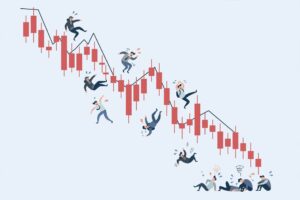
Everyone teaches you about candlesticks, support and resistance, and entry signals. But nobody sits you down and tells you the truth:
Trading will mess with your mind in ways you are not prepared for.
I know this because I have lived it. When I first started trading Forex and Gold, I did not even have a decent phone or a laptop. At one point, I seriously considered selling my blood — literally going to a blood bank — just to earn $70 to $80 for a second-hand laptop. In the end, I sold my phone and borrowed money to get started. I traded from a borrowed hotspot. My starting capital was less than $40.
And still, there were moments — many of them — when I almost quit. Not because I did not understand the market. Because I could not handle what the market was doing to my mind.
This article is not about strategy. It is about what happens between your ears when you trade Forex and Gold. And it is the most important thing you will ever learn about this profession.
Why 80% of Forex Traders Lose — And It Is Not the Strategy
Most people believe they lose money in the market because their strategy is wrong. Regulatory data consistently shows that between 70% and 89% of retail Forex traders lose money. According to ESMA’s research on retail CFD trading, the majority of retail traders lose money across all major brokers — and the percentage has remained consistent for years.
But here is what those numbers do not tell you: the majority of those traders had a working strategy. They knew the setups. They understood the risk rules in theory.
They lost because they could not execute their plan emotionally.
Fear made them close trades too early. Greed made them hold losers too long hoping for a recovery that never came. A single bad day triggered a revenge-trading spiral that wiped out weeks of gains in hours. The strategy was not the problem. The psychology executing the strategy was.
This is the real problem in trading. And it is almost entirely psychological.
The Mental Weight of a Losing Streak
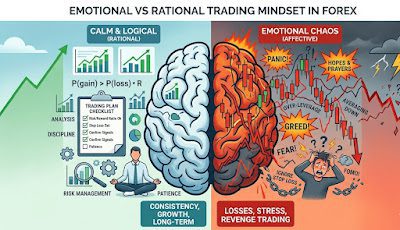
Let me describe exactly what happens when you take four consecutive losses. Not the theory — the actual experience.
The first loss is painful but manageable. Your brain immediately starts calculating: how do I get this back? By the second loss, thinking starts to change. You begin second-guessing your setup — was the entry wrong? Was the analysis flawed? By the third loss, you are no longer trading your plan. You are reacting to what just happened rather than executing what you prepared. By the fourth loss, your rational mind has largely disengaged.
You are running on emotion now.
This is the state where traders make their worst decisions. They over-leverage to make back losses faster. They skip stop losses because “this one will come back.” They enter trades with no valid setup because sitting out feels like giving up. They cannot sleep at 2 or 3 in the morning because their mind will not stop running through every decision they made.
I have been in that exact place. Many times.
The traders who survive are not the ones who never experience losing streaks. They are the ones who can take four losses, close the laptop, and return the next day with a clear head — without carrying the emotional residue of yesterday’s losses into today’s decisions.
The Problem With Holding Trades
One of the most underrated psychological challenges in Forex and Gold trading is this specific failure: you cannot hold a trade to its target.
The market does not move in a straight line to your target. It retraces. It tests your patience. It makes you feel like you were wrong even when your analysis is correct. And the moment a trade starts pulling back against you — even slightly, even within the normal range of expected movement — your brain starts screaming at you to get out and protect what you have.
So you close early. And then the market moves exactly where you said it would. Without you in it.
This pattern — correct analysis, poor execution, no profit — is one of the most demoralizing experiences in trading and one of the most common reasons traders with genuinely good strategy still lose money. Here is what actually helped me break this pattern:
Solution 1: Pre-set your exit at a specific liquidity zone before you enter the trade. Decide where you are getting out. Write it down. Then do not touch the trade until it hits that level or your stop loss. The decision about where to exit should be made when your mind is calm — not when you are watching the position move against you in real time.
Solution 2: Scale out partially at an intermediate target. If you are targeting 200 pips, consider taking half off at 100 pips and letting the rest run with a moved stop loss. This removes the all-or-nothing emotional pressure — you have already secured some profit, which changes the psychological experience of watching the remaining position fluctuate.
Solution 3: Normalize your profit targets through journaling. The market will only allow you to hold what feels psychologically normal to you. If a $1,000 profit feels huge and life-changing, your brain will panic and close early every time it approaches that level. Reconditioning your relationship with profit numbers requires consistent journaling and very gradual position scaling — not just deciding to be less emotional.
The Family Pressure Problem Nobody in Trading Discusses

Here is something I want to say directly because I never see it discussed in trading content — and it is one of the most psychologically damaging pressures a developing trader faces.
When I was building my trading career, the pressure did not only come from the market. It came from home. Family members questioned my choices constantly. Relatives mocked the idea of trading as a serious profession. Some told me directly that I was wasting my time and should get a real job. There were moments when I was ready to quit — not because the market defeated me, but because the sustained skepticism from the people around me was exhausting in a way that bad trades never were.
If you are going through this, hear this directly:
The market will test your strategy. The people around you will test your character. Both require you to be mentally strong. And the second test is often harder than the first.
I did not quit. I held on through both. Trading is now my profession, my business, and my platform for helping others. But reaching that point required a level of emotional resilience that no chart pattern can teach you — the kind that is built through years of showing up despite doubt, both internal and external.
5 Rules for Building Unbreakable Trading Psychology
After 8 years of trading Gold, Silver, and Forex pairs — and after experiencing most of the psychological failures that exist in this profession — here are the mental disciplines that separate surviving traders from those who quit:
Rule 1: Your Emotional State Is Your Risk Management
Before you look at a chart, check your mind. If you are angry, sleep-deprived, dealing with a personal problem, or emotionally activated by anything outside of trading — do not trade. Your emotional state will affect every decision you make, from which setups you see to how long you hold positions to whether you respect your stop loss. A compromised mental state is as dangerous as entering a trade with no stop loss and three times normal position size.
Rule 2: Losses Are the Cost of Being in Business
No trader wins every trade. Not even consistently profitable ones with years of experience and excellent systems. Losses are not exceptions — they are built into the statistical reality of any probabilistic edge. Accept them as part of the process. The goal is not to avoid losses. The goal is to manage them so that your winning trades outweigh them over a large enough sample. One bad trade should never be able to destroy your account.
Rule 3: Set Specific Exit Rules Before You Enter
Decide before you enter the trade: where is my stop loss? Where is my target? At what level am I partially exiting? Write it in your journal. Then execute the plan. The time to make clear decisions is before the trade is open — not while you are watching candles move against you with real money at risk and emotions running high. Decisions made in calm, analytical states are consistently better than decisions made in reactive states.
Rule 4: Protect Your Focus Like Capital
The traders who are consistently losing often share one pattern: they are constantly distracted. Social media during trading hours. Constant checking of positions. News consumption that triggers emotional reactions. Focus is a finite, depletable resource. Protect it deliberately. Give your trading sessions genuinely uninterrupted time — no phone, no social media, no background noise. In a world of engineered distraction, the ability to focus deeply is a genuine competitive advantage.
Rule 5: Build Mental Toughness Deliberately
The market will reward you and it will punish you — sometimes in the same week, sometimes in the same day. You cannot be emotionally fragile and be a trader. Mental toughness is not something you are born with or do not have. It is built through specific practices: consistent journaling that separates process from outcome, voluntary exposure to discomfort in other areas of life, and the repeated experience of taking a loss correctly and surviving it without catastrophic consequences.
The Two Types of Risk — Choose Deliberately
Every trader operates in one of two fundamentally different risk frameworks. The difference between them determines outcomes over the long term more reliably than any technical edge.
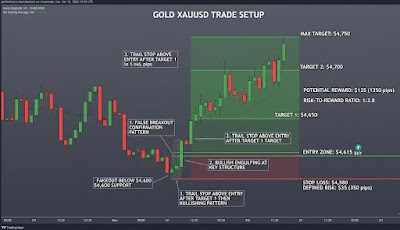
Risk Type 1: High potential upside, very high downside. Large positions without disciplined sizing. No predefined stop losses, or stop losses moved when the trade goes against you. Decisions made based on how a trade feels rather than what the pre-trade analysis indicated. This approach feels exciting. The occasional large win reinforces it psychologically. It almost always ends in significant account damage or complete account loss.
Risk Type 2: Controlled upside, limited downside. Smaller positions sized according to a consistent percentage of account capital. Pre-defined risk-reward ratios that are respected regardless of how the trade feels in the moment. Consistent process applied over many trades rather than optimized individual decisions. This is boring. It does not produce dramatic screenshots. It is what actually produces sustainable profitability over time.
Every consistently profitable trader I have observed over years operates in Risk Type 2. The traders operating in Risk Type 1 are either already gone or will be eventually — regardless of how talented they are technically.
What Nobody Tells You About Trading Psychology
Every trading course covers the basics of emotional control. Nobody covers the specific ways your psychology will sabotage you in ways you will not recognize until after the damage is done.
Your best trading days psychologically are often your worst days technically. The days when you feel most confident, most clear, most certain about a setup — those are precisely the days to be most careful about position size. Overconfidence produces oversizing. Oversizing turns a normal losing trade into an account-damaging event. The feeling of certainty is not correlated with the probability of being right. It is correlated with how much the trade confirms what you already believed.
Revenge trading does not feel like revenge trading when you are doing it. It feels like a valid trade with genuine analysis. Your brain is extremely good at constructing post-hoc justifications for emotional decisions. The revenge trade feels real and logical in the moment. The only way to catch it is to notice your emotional state before entering — not to evaluate the trade setup, which your biased mind will always approve.
The winning streak is as dangerous as the losing streak. After several consecutive winning trades, most traders make one of two mistakes: they increase position size because they feel invincible, or they abandon the rules that produced the wins because they feel those rules are unnecessary for someone performing at their current level. Both mistakes produce the same outcome. The winning streak ends badly rather than naturally.
The hardest trade to take is often the most valid one. After a losing streak, when your confidence is at its lowest, your brain will produce maximum resistance to the next valid setup. You will find reasons it might not work. You will hesitate on the entry. You will size down so much the win barely registers. Meanwhile, the trader who has not been through a losing streak takes the same setup cleanly and profits from it. The psychological damage of recent losses directly impairs your ability to execute the trades most likely to recover them.
Frequently Asked Questions
Q: Is trading psychology more important than technical analysis?
They are not separable in practice, but psychology determines whether technical knowledge produces results. Most traders who lose consistently have sufficient technical knowledge to be profitable. The gap is in execution — which is entirely psychological. Improving your technical analysis while ignoring your psychology produces no improvement in results.
Q: How do I stop revenge trading after a loss?
Build a hard rule: after any losing trade, a minimum 30-minute break before the next entry. Use that time to review whether the loss was a rule violation or a correctly executed trade that simply lost. If the former, identify specifically which rule was violated. If the latter, recognize that expected losses are part of a functioning system. The break changes your physiological state enough to reduce the revenge impulse significantly.
Q: How do I know if my emotional state is compromised before a session?
Rate your emotional state on a 1 to 10 scale before every session — where 1 is extremely distressed and 10 is completely calm. Set a threshold below which you do not trade — most experienced traders use 7 as their minimum. Track this rating in your journal alongside your trade outcomes. Over 30 to 50 sessions, you will see the correlation between your pre-session rating and your results. The data will convince you more effectively than the concept ever could.
Q: What is the fastest way to build trading discipline?
Journal every trade with four pieces of information: what the setup was, what your emotional state was before entering, whether you followed your rules exactly, and what the outcome was. Do this for 30 consecutive trading sessions. The patterns that emerge from this data — which emotional states precede rule violations, which rule violations produce the largest losses — will tell you exactly where to focus your psychological development.
Q: How do I handle family pressure while building a trading career?
Protect your focus environment and limit trading discussion with people who do not understand the profession. Results — not arguments — are the only convincing response to skepticism from family members. Focus on building a consistent track record over 6 to 12 months. The evidence of sustained profitability speaks in a way that explanations never will. Until that evidence exists, minimize the psychological drain of trying to defend a career path to people who are evaluating it based on their own experience and risk tolerance, not yours.
Before every session: Rate your emotional state 1-10. Below 7, do not trade.
Before every trade: Write down your stop loss, target, and partial exit level. Do not enter without this.
After every loss: 30-minute break minimum. Identify whether it was a rule violation or an expected loss.
After every session: Journal your emotional state patterns, not just your trade results.
Weekly: Review your journal for patterns between emotional states and outcomes. The data will teach you more than any book.
A Final Word from Someone Who Started with $30 and a Borrowed Hotspot
I am not writing this from theory. I started with almost nothing. I sold my phone to get a laptop. I used someone else’s internet to make trades. I faced doubt from my family, from people around me, and from myself.
But I stayed in the market long enough to understand one fundamental truth that I carry into every session:
Surviving in trading is itself a skill. And it is mostly mental.
If you can control your emotions, protect your capital, and stay consistent when everything around you is telling you to quit — you will have an edge that the majority of traders never develop. Not because they lacked technical knowledge. Because they could not hold on long enough for the compounding of consistent, disciplined execution to produce the results they came for.
The market rewards the patient and the disciplined. Not the smartest. Not the fastest. The ones who are still here, still executing, still learning from each session rather than being destroyed by it.
Disclaimer: Trading Forex, Gold, and other financial instruments involves significant risk of loss and is not suitable for every investor. Past performance is not indicative of future results. Always conduct your own research and consult a qualified financial professional before making trading decisions.