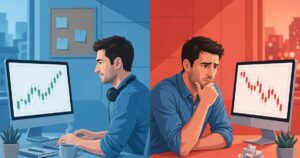
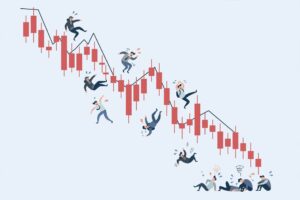
- Intelligence and education do not protect you in trading — they often make the first blow-up bigger because confidence builds faster than discipline.
- The market does not care about your credentials. It only responds to risk management and emotional control, neither of which a degree teaches.
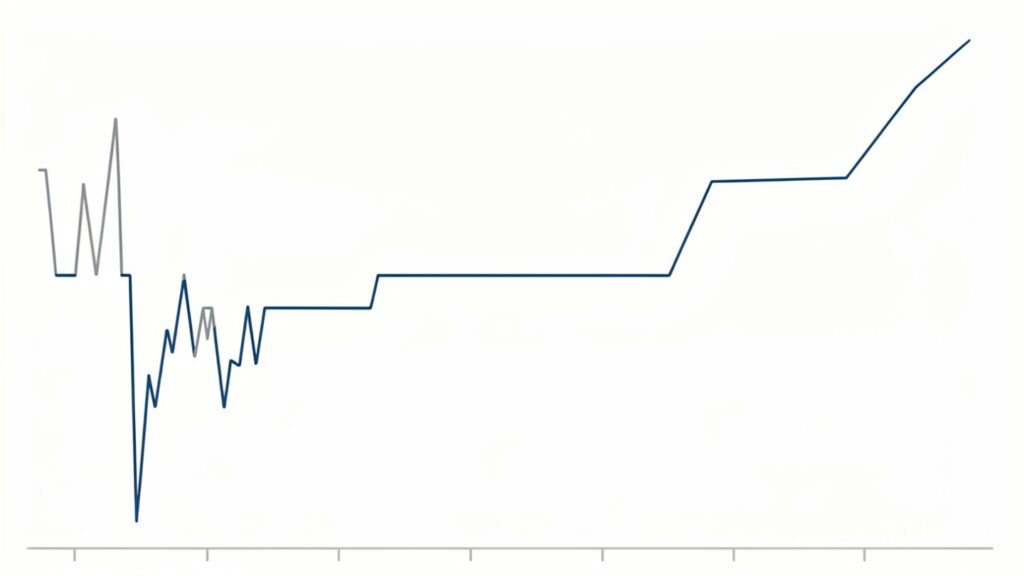
- Most traders who eventually succeed are not first-time winners — they are second-time survivors who rebuilt after a real loss.
- A financial backup plan is not a sign of weak conviction. It is what allows a trader to make calm decisions instead of desperate ones.
Understanding why traders fail first time around starts with one uncomfortable truth: the smartest, most educated people in the room are often the first ones to blow up their trading account. Not because they lack intelligence. Because intelligence creates a specific kind of overconfidence that the market is designed to punish, quickly and without mercy.
This pattern repeats constantly. Engineers, top university graduates, people who have succeeded at every structured, rules-based system life has thrown at them walk into trading assuming the same formula applies — study hard, apply logic, win. The market does not work like a classroom. It does not reward the smartest analysis. It rewards the most disciplined behavior, and those are very different skills.
This article is a direct, no-fluff breakdown from the Data Pips Team on exactly why traders fail the first time, why educated traders often fail faster and harder than anyone else, and why a real reset — not talent, not a better strategy — is usually what separates traders who eventually win from those who quit trading altogether.

Why Traders Fail First Time — The Real Pattern Behind It
The pattern is consistent across markets, account sizes, and backgrounds: traders with the most academic confidence often take the biggest risks early, because their entire life experience has trained them to trust their own intelligence as the deciding factor in any challenge.
Trading does not reward that instinct. According to Investopedia’s research on trading psychology, a trader’s beliefs and emotional discipline play a far larger role in long-term outcomes than technical analysis skill alone — meaning the mental game, not the IQ, is what actually decides survival.
The first rush into the market usually comes with significant capital, genuine excitement, and an unspoken assumption: “this should be easy for someone like me.” That assumption is exactly what the market exploits. Skilled, credentialed traders enter with larger position sizes, faster confidence, and far less respect for risk than the market requires — and the result is almost always the same painful lesson, just delivered faster and at greater cost.
Why Education and Intelligence Do Not Protect You in Trading
This is the part most people refuse to accept until it has already cost them money: being highly educated does not transfer into trading skill. It can actually work against you.
People who have spent years succeeding in structured academic or technical environments are used to a direct relationship between effort and outcome — study more, perform better, get rewarded. Trading does not follow that logic. A trader can do everything “correctly” by conventional analysis and still lose, because markets are driven by probability, psychology, and timing, not certainty.
This mismatch creates a dangerous blind spot. Highly analytical traders often deny early losses longer than less confident traders, because admitting the loss means admitting the model in their head — the one that has worked everywhere else in life — does not fully apply here. That denial extends the losing streak and deepens the damage before any correction happens.
“The market does not check your degree before it takes your money. It only checks your discipline.”
— Data Pips Team
The Market’s Humility Lesson — and Why It Takes 1-2 Years
Almost every trader who survives long-term goes through the same uncomfortable phase: a period, typically lasting one to two years, where expectations collide with reality and the illusion of “this is easy” gets completely dismantled.
This period is not optional and it is not avoidable through better preparation alone. Our broader breakdown of why traders fail their first time covers the technical and psychological gaps that show up during this exact window — the gap between knowing trading concepts and actually executing them under real financial pressure.
The traders who survive this phase share one trait: they stop denying the losses and start studying them. The traders who do not survive it usually keep increasing risk to “win back” what was lost, accelerating the damage instead of slowing down to understand it.
| First-Time Trader Mindset | Second-Time Trader Mindset |
|---|---|
| “My intelligence guarantees results” | “Discipline guarantees results, not intelligence” |
| Large position sizes from day one | Strict risk percentage on every trade |
| No financial backup plan | Cash buffer and stable income separate from trading |
| Denies losses, increases risk to recover | Accepts losses, reduces risk, studies the pattern |
When Trading Losses Spill Into Real Life
This is the part rarely discussed honestly in trading content. A serious losing stretch does not stay contained to a trading account. It spreads into relationships, physical health, sleep, and family stability. The financial stress bleeds into every other part of life, often before the trader is even willing to admit how serious the losses have become.
Research from the National Institute of Mental Health confirms that chronic financial stress directly impairs decision-making capacity, creating a feedback loop where stressed, exhausted traders make progressively worse trading decisions — which then creates more stress, more exhaustion, and more losses.
This is the exact point where most traders make the final, most expensive decision of their journey: do they quit entirely, or do they step back, rebuild, and return with a fundamentally different approach? The traders who go on to succeed long-term are almost always the ones who chose the second path, even though it required admitting the first attempt had genuinely failed.
The Founder’s Real Lesson: Rebuilding After Real Losses
The Data Pips Team has lived through this exact cycle directly in gold and forex markets. An early trading period ended in serious losses — the kind that does not just hurt a trading account but spills into relationships, health, and family stability in ways that are difficult to repair quickly.
The response was not to immediately re-enter the market trying to win back what was lost. It was to step back, build alternative income through freelancing and other work, create a genuine financial cushion, and only return to trading once the pressure to “make it back fast” had been removed entirely. Our guide on building multiple income streams covers exactly this kind of financial backup strategy in more depth.
The second period of trading looked nothing like the first. Smaller position sizes. Strict risk limits. A clear understanding that patience, not intelligence, was the actual skill being tested. That shift — not a better strategy, not new technical knowledge — was what changed the entire trajectory.
During the first serious attempt at trading gold and forex, large positions were taken with the confidence that careful analysis alone would be enough to win consistently. That confidence was misplaced, and the resulting losses forced a complete reset — including taking on freelance work to rebuild a financial cushion before trading again. On return, position sizes dropped significantly, a strict risk limit per trade became non-negotiable, and trading frequency was capped at two to three setups a day rather than chasing every opportunity. The strategy itself barely changed. The discipline behind it changed completely — and that single shift made the difference between repeated losses and consistent, compounding growth.
Why a Financial Backup Plan Changes Everything
One of the most underrated factors in trading psychology is not a chart pattern or an indicator — it is whether the trader has financial pressure pushing every decision, or genuine breathing room to make calm, calculated choices.
A trader with no backup income trades from fear. Every loss feels existential because it directly threatens basic financial survival. A trader with a stable income source or a meaningful cash buffer trades from a position of calm, because a losing trade is uncomfortable but not catastrophic.
This single difference — fear-based decision-making versus calm, calculated decision-making — explains a significant portion of the gap between traders who blow up repeatedly and traders who steadily compound their accounts over years. Our capital preservation guide expands on exactly how to structure trading capital and risk to protect against this fear-driven cycle.
Building a six-month cash buffer, maintaining a side income stream, and keeping trading capital strictly separate from essential living expenses are not signs of weak commitment to trading. They are the exact structure that allows a trader to survive long enough to develop real skill.
What Nobody Tells You About Why Traders Fail First Time
1. Your past success in other fields can actively work against you. The exact qualities that made someone successful in academics, engineering, or a structured career — confidence in analysis, trust in their own judgment, comfort with complexity — become liabilities in a probabilistic environment like trading, where humility and discipline matter more than intelligence.
2. Most traders who eventually succeed are not first-attempt winners. The dominant narrative around trading success focuses on early wins. In reality, a large share of consistently profitable traders went through at least one serious account blow-up before developing the discipline that eventually worked. The first failure is frequently a required part of the process, not an exception to it.
3. Reduced capital after a reset often produces better results than the original larger capital. This sounds counterintuitive, but smaller position sizes combined with hard-earned discipline consistently outperform large capital combined with overconfidence. The size of the account was never the limiting factor — the psychology behind how it was managed was.
4. Denial is the most expensive habit in trading, not the loss itself. A single loss is recoverable. A pattern of denying that a strategy or approach is not working, while continuing to apply it at increasing risk, is what actually destroys accounts. Our breakdown of why even profitable traders blow accounts covers this exact failure pattern in more detail.
5. Recovery is rarely about finding a better strategy. Traders who blow up an account often spend months afterward searching for a smarter system, a better indicator, or a more sophisticated approach. In most successful comebacks, the strategy stays largely the same — what changes is risk management, patience, and the emotional relationship to losing trades. Our guide on why traders exit winning trades too early shows the same principle in a different context — the fix is rarely the strategy itself.
Building Real Discipline Before You Return to the Market
If you have already gone through a significant loss, the question is not whether to return to trading. The question is whether you are returning with the same psychology that caused the loss, or a genuinely rebuilt approach.
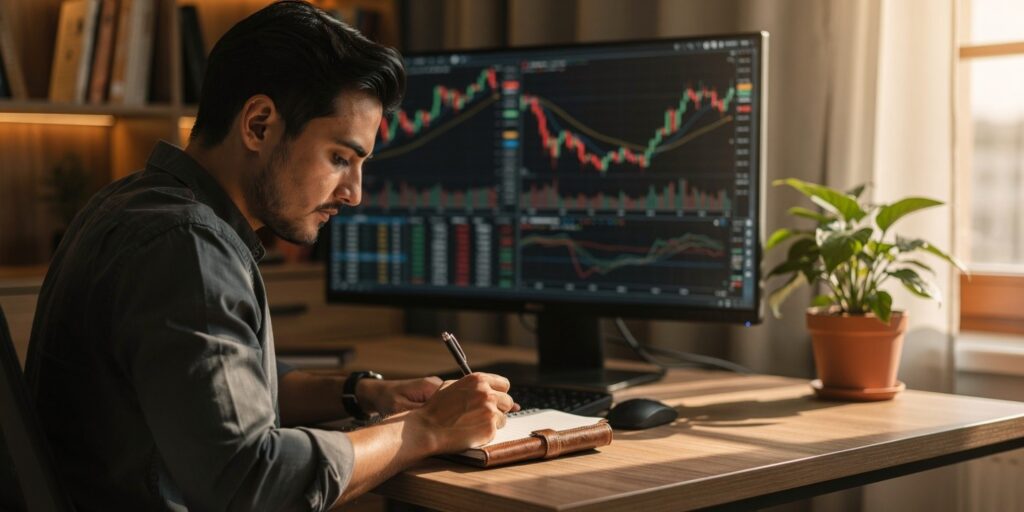
A few non-negotiable habits separate a real reset from a repeat of the same mistakes: journaling every trade, including the emotional state behind it. A strict, fixed risk percentage per trade that does not change based on recent wins or losses. A hard cap on daily trades to prevent overtrading during emotional periods. And critically, a financial structure outside of trading that removes the pressure to “make it back” quickly.
Our complete guide on trading patience and risk management walks through exactly how to build these habits into a sustainable daily practice, rather than a temporary fix that fades once confidence returns.
The resilience built through a real financial setback — and the discipline to rebuild from it — does not just apply to trading. Our business failure comeback story covers the same psychological rebuild process applied to business, because the underlying mechanism of recovery is consistent across both.
Quick Action Steps: Apply This If You Are Rebuilding After a Trading Loss
Step 1: Be honest about whether your last losing period was caused by a bad strategy, or by poor discipline applied to a reasonable strategy. Most of the time, it is the second one.
Step 2: Build a financial buffer outside of trading before re-entering the market — ideally enough to cover three to six months of essential expenses without touching trading capital.
Step 3: Set a strict, written risk percentage per trade and commit to it regardless of recent performance, good or bad.
Step 4: Cap your daily trade frequency to two or three setups maximum, and track every trade in a journal that includes your emotional state at the time.
Step 5: Review your journal weekly for the first 90 days after returning to trading, looking specifically for patterns of denial, overconfidence, or fear-driven decisions.
Frequently Asked Questions
Why do educated and intelligent traders fail first time more often?
Intelligence and education create overconfidence that the market does not reward. Highly educated traders often take larger early risks because they trust their own analysis, and they tend to deny early losses longer because admitting failure conflicts with their track record of success in other structured environments.
Is it normal to lose money during the first one to two years of trading?
Yes, a difficult, humbling period during the first one to two years of trading is extremely common, regardless of background or intelligence. This period is where the gap between trading theory and real execution under financial pressure becomes clear, and it typically cannot be fully avoided through preparation alone.
Do second-time traders really perform better than first-time traders?
Generally, yes. Traders returning after a real loss tend to bring stronger risk discipline, smaller position sizes, and a more realistic understanding of how losses feel under pressure — all factors that improve long-term consistency, even when the underlying trading strategy stays largely the same.
How important is a financial backup plan for trading psychology?
It is one of the most important and most overlooked factors. Traders with a financial cushion outside of trading make calmer, more calculated decisions because individual losses do not threaten basic survival. Traders without this cushion tend to make fear-driven decisions that compound losses rather than limiting them.
Should I change my trading strategy after a major loss?
Not necessarily. Many traders assume the strategy was the problem after a loss, when in reality poor risk management and emotional decision-making were the actual cause. Before changing strategies entirely, evaluate honestly whether discipline, not analysis, was the real point of failure.
How do I know if I am ready to return to trading after a blow-up?
You are likely ready when you have a financial buffer in place outside of trading capital, a written risk management plan you can follow regardless of emotion, and an honest understanding of what specifically went wrong the first time — without blaming the market alone for the loss.
Disclaimer: This article is for educational and informational purposes only and does not constitute financial or trading advice. Trading forex, gold, and other leveraged instruments carries substantial risk of loss and is not suitable for all investors. Past performance and behavioral patterns described in this article do not guarantee future results. The Data Pips Team makes no guarantees regarding trading outcomes from applying the strategies described in this article. Always trade with capital you can afford to lose and consult a licensed financial professional before making trading decisions.