The Difference Between Earning Well and Building Wealth
You can make a lot of money and still die broke. Read that again.
There are people pulling in six figures who can’t survive three months without a paycheck. And there are people earning half of that who own assets, sleep peacefully, and never check their bank balance with fear in their chest.
The difference between earning and building wealth is not about how much hits your account. It’s about what happens to that money after it arrives. Most people never learn this distinction, and that’s exactly why they grind for thirty years and end up with nothing but a tired body and a thin savings account.
Look — we’re not here to motivate you. We’re here to show you the gap. Because once you see it, you can’t unsee it. And that’s the first step to crossing it.

High Income Is a Trap Most People Walk Into Smiling
Here’s the thing nobody tells you when you finally land that big salary or your business starts printing money: a rising income feels like winning. It isn’t.
When money started flowing in for our founder during the Saudi Arabia years, the first instinct wasn’t wealth — it was relief. And relief makes you spend. New phone. Better clothes. Eating out. Sending money home to prove you “made it.”
That’s the trap. The more you earn, the more your lifestyle quietly expands to swallow it. Economists call it lifestyle inflation. We call it the silent killer of wealth.
You think you’re getting richer because the numbers on your payslip are bigger. But your net worth — the only number that actually matters — stays flat. We broke this down completely in why your income doubled but savings didn’t move, and it’s the most common disease in personal finance.
Earning well makes you feel rich. Building wealth makes you actually rich. They are not the same thing.
What Earning Actually Is — And Why It Has a Ceiling
Earning is trading time for money. That’s it. Whether you’re an employee, a freelancer, a doctor, or a business owner who can’t step away for a week without the whole thing collapsing — you’re earning, not building.
Income has a hard ceiling. There are only 24 hours in a day. You can raise your rate, work more hours, take on bigger clients — but eventually you hit a wall. Your body, your time, and your energy run out.
Our founder learned this the hard way fixing air conditioners in 45°C heat. You could work double shifts. You could take every job. But the moment you stopped moving, the money stopped too. That’s not wealth. That’s a faster hamster wheel.
The Three Types of Money Behavior
Over the years, watching people from electricians to international clients, one pattern repeats. There are only three ways people handle money:
| Type | Behavior | Result |
|---|---|---|
| The Poor Spender | Money arrives and vanishes on status items — phones, clothes, dinners to impress. | Always broke, no matter the income. |
| The Middle-Class Saver | Money is protected, locked in a savings account, never touched. | Safe but stagnant. Inflation eats it slowly. |
| The Wealthy Investor | Every dollar is interrogated: “How can you make more?” | Money multiplies. Wealth compounds. |
Most people think they need to graduate from spender to saver. Wrong. Saving alone won’t make you wealthy either. A savings account losing 6% to inflation while earning 2% is a slow leak, not a foundation.
You need to become the investor. The one who looks at every dollar like a worker and asks what job it’s going to do.
The Day a Small Reinvestment Changed Everything
Here’s a real moment. The first real profit our founder made in business was 2,000 SAR. A spender would’ve celebrated and blown it. A saver would’ve locked it in a drawer.
Instead, 1,800 of that 2,000 went straight back in — into more stock, more inventory, more of what was working. Kept only 200 for survival.
Next month? 6,200 SAR.
That’s the entire secret in one sentence. Wealthy people don’t spend their profit, they put it back to work until the work pays them more than their hands ever could.
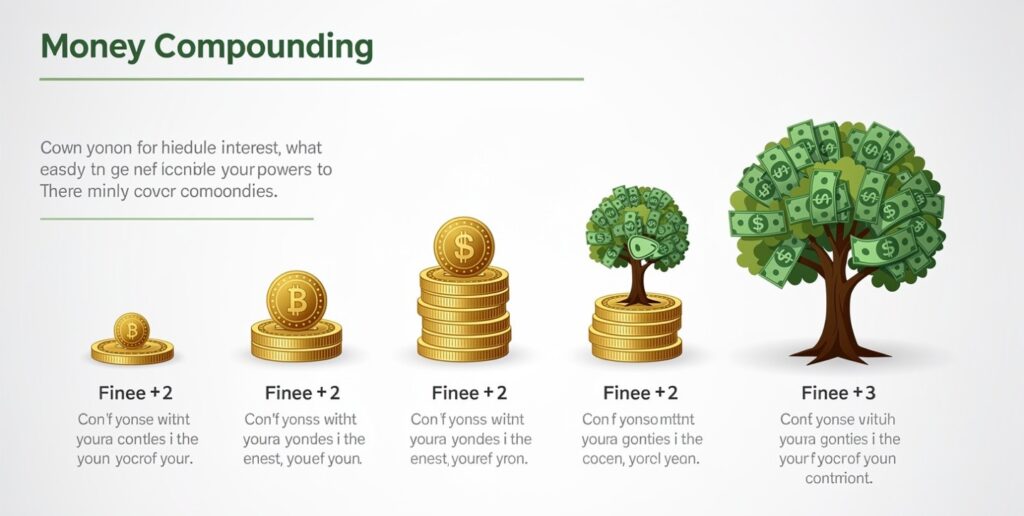
This is the same principle behind how compounding actually works. Small reinvestments stacked over time don’t add up — they multiply. The first one feels like nothing. The fiftieth one feels like a fortune.
What Actually Works: The Asset vs Liability Test
Forget complicated finance theory. There’s one test that separates wealth builders from earners, and you can apply it to every purchase you make.
Ask yourself: Does this put money in my pocket, or take it out?
An asset pays you. A liability bills you. The car you can’t afford, the phone on installments, the bigger house with the bigger mortgage — those are liabilities dressed up as success.
Real assets are the boring stuff: a business that runs without you, property that collects rent, stocks that pay dividends, skills that generate income on demand. These keep working while you sleep.
The Earner’s Balance Sheet vs The Builder’s Balance Sheet
| High Earner | Wealth Builder |
|---|---|
| Buys liabilities that look like assets | Buys assets that look boring |
| Income stops when they stop working | Income continues without them |
| Measures success by salary | Measures success by net worth |
| Spends first, saves what’s left | Invests first, spends what’s left |
| One income source | Multiple income streams |
Your net worth — assets minus liabilities — is the real scoreboard. Not your salary. Not your job title. Not the car parked outside.
Where Most People Go Wrong
Let’s be brutal about the mistakes, because this is where the gap gets created.
1. They Confuse Looking Rich With Being Rich
The luxury car, the watch, the lifestyle posts — most of it is financed debt designed to impress people who don’t care about you. Real wealth is quiet. It doesn’t need an audience.
2. They Wait to Earn “Enough” Before Investing
There’s no magic number. The person who invests $50 a month at 25 beats the person who invests $500 a month at 40. Time is the ingredient, not the amount. Start ugly, start small, but start.
3. They Treat Saving As the Final Goal
Saving is just step one. Money sitting still is money dying. We covered this trap in detail in our breakdown of six-figure earners going broke — it’s not how much you make, it’s how the money flows.
4. They Have Only One Income Source
One income is one heartbeat. If it stops, everything stops. Wealth builders engineer multiple streams so no single failure can take them down.
5. They Believe in the “Self-Made” Fairy Tale
Here’s a hard one. Most “self-made” billionaire stories are missing chapters. Gates had a mother with IBM connections. Musk’s family had resources. Trump inherited millions. The myth makes you feel like wealth is luck or genius. It isn’t. It’s systems, leverage, and patient decisions repeated over decades. You can run those same systems — you just have to actually run them.
The 72-Year-Old Who Taught Us the Real Game
During the Saudi Arabia years, our founder met an American real estate investor — 72 years old, calm, wealthy in a way that didn’t show off.
He said something that never left us: “You’re playing the other guy’s game.”
What did he mean? Most people play the earning game — the game built by employers and systems where you trade your hours and they keep the upside. He played a different game entirely.
His philosophy was three words: “I buy, and then I wait.”
For the first decade of his investing, he never touched a single dollar of his rental income for personal spending. Not once. It all went back into more property. He let time do the heavy lifting while everyone around him chased the next paycheck.
That patience — the willingness to delay gratification for ten years — is the muscle most people never build. And it’s the exact muscle that separates earning from wealth. If your psychology around money isn’t right, no income will save you.
Case Study: Two People, Same Income, Different Endings
Let’s make this concrete. Two people. Both earn $4,000 a month. Both work hard. Watch what time does to them.
| Person A (Earner) | Person B (Builder) | |
|---|---|---|
| Monthly Income | $4,000 | $4,000 |
| Lifestyle Spending | $4,000 (grows with income) | $2,800 (controlled) |
| Invested Monthly | $0 | $1,200 |
| After 10 Years | ~$0 net worth, more debt | ~$200,000+ in invested assets |
| If Income Stops | Survives 1 month | Assets keep paying |
Same salary. Completely different lives. The difference wasn’t talent or luck. It was the decision to convert income into assets month after month after month.
Person A worked just as hard. Maybe harder. But hard work without a system to capture it is just exhaustion with extra steps.
How to Start Building Wealth — Even From Zero
If you’re sitting there thinking “I don’t earn enough to invest,” good. That excuse is exactly what keeps people poor. Our founder started with nothing — fixing pipes and wiring — and built up through reinvestment. You can read the full breakdown of how to build wealth from nothing, but here’s the core.
Step 1: Know Your Real Number
Calculate your net worth today. Assets minus liabilities. It might be negative. That’s fine. You can’t fix a number you refuse to look at.
Step 2: Pay Yourself First
The moment income arrives, a fixed percentage goes to investment before anything else. Treat it like a non-negotiable bill. Start with 10% if you must, but make it automatic.
Step 3: Interrogate Every Dollar
Become the wealthy investor type. Before spending, ask: “Is this an asset or a liability?” That one question rewires your entire relationship with money.
Step 4: Reinvest Profits Relentlessly
Like the 1,800 SAR going back into the business. Don’t celebrate early wins by spending them. Feed them back until the snowball builds its own momentum.
Step 5: Build a Second Income Stream
Freelancing, a side business, dividends, rental — anything that doesn’t depend on your main job. One stream is fragile. Three is a foundation. Study the real rules of money and apply them, don’t just read them.
The Inflation Reality Nobody Wants to Hear
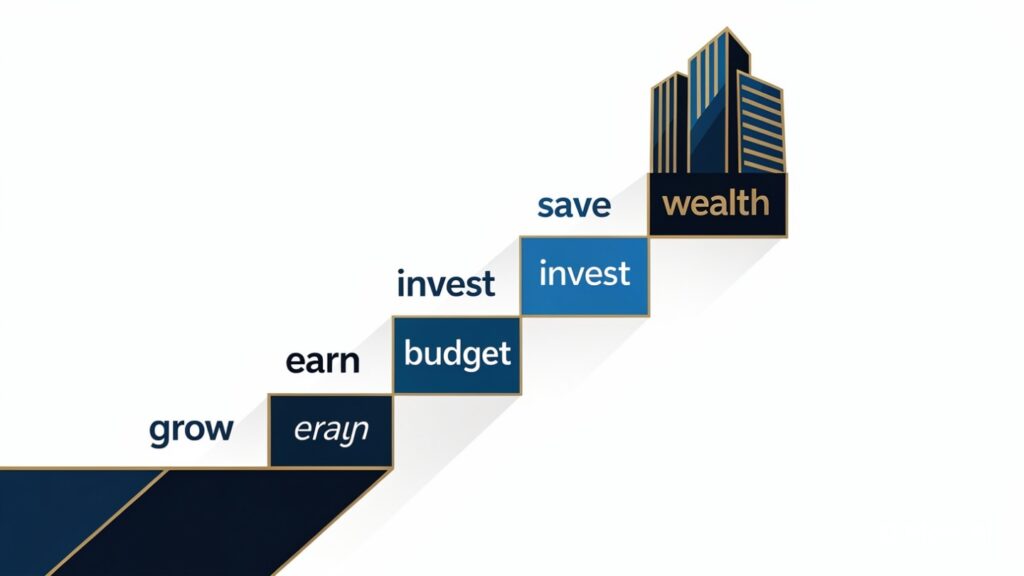
Here’s a truth that should make you uncomfortable. If your money is just sitting in a savings account, you’re losing money every single year.
Inflation quietly eats purchasing power. According to data tracked by the Federal Reserve’s Survey of Consumer Finances, the gap between high earners and actual wealth holders comes down to one thing — asset ownership, not income level.
The middle-class saver feels responsible. They’re not spending recklessly. But they’re standing still while the ground moves under them. Saving without investing is treading water in a rising tide.
Money that doesn’t grow doesn’t just stay the same — it shrinks. Standing still in finance is the same as moving backward.
Wealth Is Built in Decisions, Not Dollars
Let’s bring it home. The richest people you’ll ever meet aren’t rich because they earned the most. They’re rich because they made better decisions with whatever they earned.
The electrician who invests beats the executive who spends. The freelancer who builds assets beats the manager who finances liabilities. Income is the fuel — but the engine is your decisions.
You don’t need a higher salary to start. You need a different relationship with the money you already have. That shift is free. It just requires you to stop lying to yourself about what “doing well” actually means.
Quick Action Steps
- Calculate your net worth today — assets minus liabilities. Face the real number.
- Automate 10–20% of income into investments before you spend a single dollar.
- Run the asset test on every major purchase: does it pay me or bill me?
- Reinvest your next profit instead of celebrating it. Feed the snowball.
- Start building one extra income stream in the next 90 days.
- Track net worth monthly, not salary. Change the scoreboard you watch.
Frequently Asked Questions
What is the main difference between earning and building wealth?
Earning is trading time for money — it stops when you stop working. Building wealth means converting that income into assets that generate money on their own. Earning has a ceiling; wealth compounds without limit.
Can you build wealth on a low income?
Yes. Wealth is about behavior, not income size. Someone earning modestly who invests consistently and reinvests profits will out-build a high earner who spends everything. Time and discipline matter more than the starting amount.
Why do high earners often stay broke?
Lifestyle inflation. As income rises, spending rises to match it, so net worth stays flat. They also buy liabilities disguised as assets and rely on a single income source. High income without conversion into assets is just a faster treadmill.
Is saving money enough to become wealthy?
No. Saving protects money but doesn’t grow it. With inflation eating purchasing power, money sitting in a savings account slowly loses value. You need to invest savings into appreciating or income-producing assets to actually build wealth.
What counts as a real asset?
A real asset puts money in your pocket — a business that runs without you, rental property, dividend stocks, or in-demand skills. A liability takes money out, like financed cars, gadgets on installments, or a mortgage bigger than you can handle.
How much of my income should I invest?
Start with at least 10% and aim for 20% or more as income grows. The key is automating it so it happens before you spend. Consistency over time matters far more than the exact percentage.
How long does it take to build real wealth?
Real wealth is built in decades, not months. The 72-year-old investor model — “buy and wait” — works because compounding rewards patience. The first years feel slow; the later years feel exponential. Most people quit before the curve takes off.
Stop Earning Like a Worker. Start Building Like an Owner.
You’ve now seen the gap. The difference between earning and building wealth isn’t a mystery anymore. It’s the choice you make every time money touches your hands.
You can keep playing the other guy’s game — trading hours, financing liabilities, feeling rich while staying broke. Or you can switch games entirely and start stacking assets that work harder than you ever could.
Nobody is coming to make this decision for you. The salary won’t save you. The savings account won’t either. Only the system you build will.
So go calculate your net worth right now. Today. Not Monday. Then automate your first investment before you spend another dollar. The gap between earning and wealth closes one decision at a time — and your first decision starts the moment you close this tab.
Disclaimer: This article is for educational and informational purposes only and does not constitute financial, investment, or legal advice. All examples are illustrative. Always consult a qualified financial professional before making investment decisions. Any disputes arising from this content shall be governed by the Courts of Singapore.