Key Takeaways
- These three terms are not interchangeable — they are nested inside each other like Russian dolls: AI contains machine learning, which contains deep learning.
- AI is the broadest term: any technique that makes computers behave intelligently.
- Machine learning is a subset of AI: the approach where computers learn from data instead of following hand-written rules.
- Deep learning is a subset of machine learning: a powerful technique using neural networks with many layers, behind most of today’s cutting-edge AI.
- Understanding how these relate clears up one of the most common sources of confusion in all of technology — and makes every AI conversation clearer.
You have heard all three terms thrown around as if they mean the same thing — artificial intelligence, machine learning, deep learning — often in the same sentence, often interchangeably. And it leaves almost everyone quietly confused. Are they synonyms? Different things? Does it matter which one you use? This confusion is one of the most common in all of technology, and clearing it up is surprisingly simple.
Here is the good news: once you understand how these three terms relate to each other, the confusion vanishes permanently. They are not random synonyms, and they are not completely separate concepts. They have a precise, clean relationship — one that, once you see it, makes every AI conversation clearer and lets you understand articles, news, and discussions that previously seemed like a jumble of jargon.
This guide explains the difference between AI, machine learning, and deep learning in plain language, for a complete beginner. The Data Pips Team will show you exactly how the three relate, what each one means, and how to keep them straight forever. No technical background needed. By the end, you will never be confused by these three terms again. Let us get into it.
The One Picture That Explains Everything
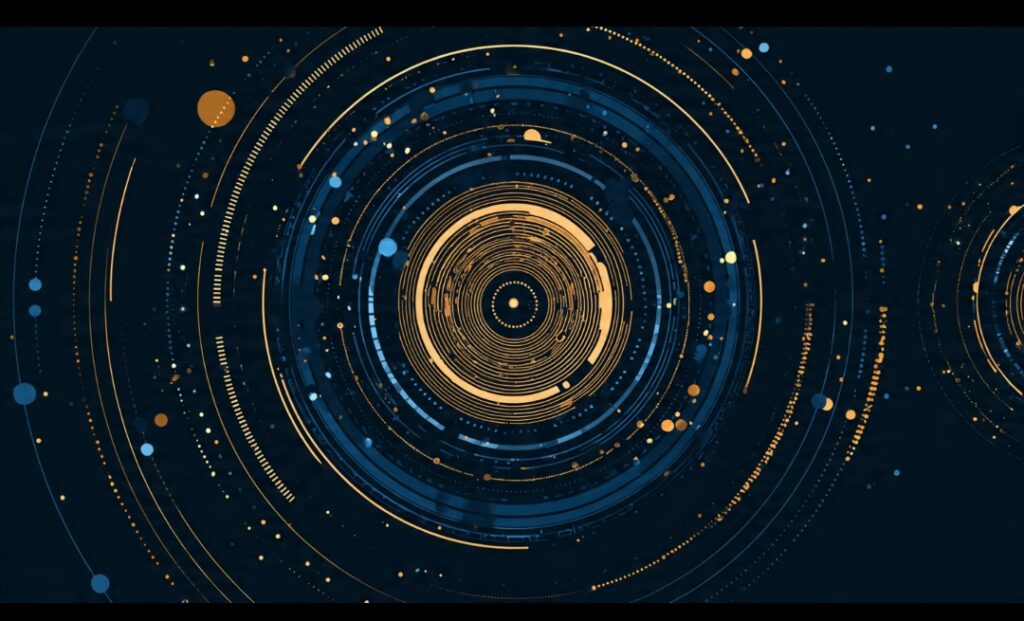
Before we define each term, let us start with the single image that makes the whole relationship instantly clear. Picture three circles, one inside another, like a target or a set of Russian nesting dolls.
- The biggest, outer circle is Artificial Intelligence (AI). It contains everything else.
- Inside it is a smaller circle: Machine Learning. All machine learning is AI, but not all AI is machine learning.
- Inside that is the smallest circle: Deep Learning. All deep learning is machine learning, but not all machine learning is deep learning.
That is the entire relationship, captured in one picture. They are nested. AI is the broadest category. Machine learning is a specific type of AI. Deep learning is a specific type of machine learning. Each one sits inside the larger one.
This is why the terms are related but not interchangeable. Calling deep learning “AI” is correct (it is inside the AI circle), but calling all AI “deep learning” is wrong (most of the AI circle is outside the deep learning circle). Understanding this nesting is the key that unlocks everything. Now let us look at each circle in turn, from the outside in.
— Data Pips Team
The Outer Circle: Artificial Intelligence (AI)
Artificial Intelligence is the broadest term — it refers to any technique that makes computers behave in ways we would call intelligent.
This is a big, umbrella concept. Artificial intelligence covers any approach that allows machines to perform tasks that normally require human intelligence — things like reasoning, problem-solving, understanding language, recognizing images, or making decisions. If a computer is doing something that seems “smart,” it falls under the AI umbrella, regardless of how it achieves that smartness.
Crucially, AI includes more than just systems that learn from data. The field of AI is decades old, and for much of its history, AI did not involve learning at all. Early AI often used hand-written rules and logic — for example, a chess program where experts programmed in explicit strategies, or an “expert system” with thousands of human-coded rules. These rule-based systems were genuinely AI (they made computers behave intelligently), but they did not learn from data — humans coded their intelligence directly.
So AI is the giant container that holds every approach to making machines intelligent — both the older rule-based methods and the newer learning-based methods. When someone says “AI,” they could mean anything inside this enormous circle. This breadth is exactly why “AI” alone is sometimes vague: it covers a huge range of very different techniques. To be more specific about HOW the intelligence is achieved, we move to the inner circles.
The Middle Circle: Machine Learning
Machine Learning is a subset of AI — specifically, the approach where computers learn from data and examples instead of following hand-written rules.
This is where modern AI really took off. Instead of humans programming in explicit rules, machine learning lets the computer figure out the patterns itself by studying large amounts of data. Show it thousands of examples, and it learns the rules on its own. Our complete guide on what machine learning is covers this in full detail.
Here is the key distinction that places machine learning inside the AI circle but separate from older AI: machine learning is AI that learns from data, whereas older rule-based AI had its intelligence hand-coded by humans. Both are AI (both make computers intelligent), but they achieve it differently. Machine learning’s “learn from examples” approach turned out to be vastly more powerful for complex problems like recognizing images or understanding speech — tasks where writing explicit rules is impossible.
As IBM describes it, machine learning enables systems to learn and improve from experience without being explicitly programmed for every task. This is why, when people talk about the recent AI revolution, they are almost always talking about machine learning rather than the older rule-based AI. Machine learning is the engine behind nearly all of today’s practical AI — recommendations, spam filters, fraud detection, voice assistants, and much more.
So machine learning sits inside the AI circle (it is a type of AI) but does not fill the whole circle (because rule-based AI also exists outside of machine learning). Now to the innermost circle.
The Inner Circle: Deep Learning
Deep Learning is a subset of machine learning — a powerful technique that uses neural networks with many layers.
This is the smallest, most specific circle, and it is behind most of the AI breakthroughs you have heard about recently. Deep learning is a particular method within machine learning that uses something called a neural network — a structure loosely inspired by the brain, made of interconnected units organized in layers.
The word “deep” specifically refers to having many layers stacked up. A simple neural network might have just a few layers; a deep one has many layers (sometimes hundreds), which lets it learn extremely complex patterns. This depth is what gives deep learning its remarkable power — each layer can learn to recognize increasingly sophisticated features, building from simple patterns in early layers to complex understanding in later ones.
Deep learning is the technique behind the most impressive modern AI: the large language models powering chatbots, the systems that generate stunning images, advanced speech recognition, and generative AI of all kinds. When you hear about AI doing something genuinely jaw-dropping in recent years, it is almost always deep learning at work.
So deep learning sits inside the machine learning circle (it is a type of machine learning) but does not fill it (because machine learning also includes simpler techniques that do not use deep neural networks). It is the innermost, most specialized, and currently most powerful of the three. To complete the picture: deep learning is a type of machine learning, which is a type of AI. The nesting is complete.
Example: Three Ways to Recognize Spam
Let us make the three levels concrete with a single task: detecting spam email. The same problem can be approached at each level, which beautifully illustrates the differences.
Rule-based AI (AI, but not machine learning): A human programmer writes explicit rules — “if the email contains the words ‘free money’ and has many exclamation marks, mark it as spam.” This is AI (the computer behaves intelligently), but it is not machine learning, because a human hand-coded the rules. It sits in the outer AI circle, outside the machine learning circle.
Machine learning approach: Instead of writing rules, you show the computer thousands of emails labeled “spam” or “not spam,” and it learns the patterns itself. It might discover subtle spam signals no human would think to write as rules. This is machine learning — it learned from data. It sits inside the machine learning circle.
Deep learning approach: For an even more sophisticated spam filter, you use a deep neural network with many layers that can understand the nuanced language and context of emails at a deep level, catching cleverly disguised spam. This is deep learning — machine learning using deep neural networks. It sits in the innermost circle.
Lesson: All three approaches are “AI.” Two of them are “machine learning.” One of them is “deep learning.” The same task, approached at three different levels of the nested hierarchy — which is exactly why understanding the nesting makes everything clear.
A Side-by-Side Comparison
Here is a clean comparison to lock in the distinctions:
| Aspect | Artificial Intelligence | Machine Learning | Deep Learning |
|---|---|---|---|
| What it is | Any technique making computers intelligent | AI that learns from data | ML using deep neural networks |
| Scope | Broadest (the whole field) | A subset of AI | A subset of ML |
| Includes rules? | Yes (also hand-coded rules) | No — learns from data | No — learns from data |
| Key tool | Many approaches | Pattern learning from examples | Multi-layer neural networks |
| Example | Rule-based chess program | Spam filter, recommendations | Chatbots, image generators |
The relationship is always the same: each is a more specific version of the one before it. AI is the field, machine learning is the dominant modern approach within it, and deep learning is the most powerful technique within machine learning.
— Data Pips Team
Why People Get These Confused
Understanding why the confusion exists helps cement the clarity. There are a few reasons these terms get tangled.
The Media Uses Them Loosely
News articles and marketing often use “AI,” “machine learning,” and “deep learning” interchangeably, even when they technically mean something more specific. A headline might say “AI” when the actual technology is deep learning, or “machine learning” when it means AI broadly. This loose usage trains people to treat them as synonyms, even though they have precise distinct meanings.
Deep Learning Drove the Recent Boom
Because deep learning is behind most recent AI breakthroughs, and those breakthroughs are what everyone talks about, the terms got blended in public conversation. When people say “AI is amazing now,” they usually mean deep learning specifically — but they say “AI,” reinforcing the blur between the broad term and the specific technique.
The Nesting Itself Is the Source of Confusion
Because the three are nested, statements can be true at multiple levels, which feels contradictory if you do not understand the hierarchy. “ChatGPT is AI” is true. “ChatGPT is machine learning” is true. “ChatGPT is deep learning” is true. All three are correct because of the nesting — but if you do not understand the nesting, hearing the same thing called three different names seems confusing. Once you grasp the circles-within-circles relationship, these overlapping-but-true statements make perfect sense.
The cure for all this confusion is simply the nested-circles picture. Hold that image in your mind, and you can correctly interpret any use of these terms, no matter how loosely someone throws them around.
What Nobody Tells Beginners About These Terms
1. “AI” Has Become a Marketing Word
Because “AI” sounds impressive, many products are labeled “AI-powered” even when the technology is simple or barely qualifies. The term has become a marketing buzzword, applied generously to attract attention. Understanding the real hierarchy helps you see past the hype — when something claims to be “AI,” it is worth asking what is actually under the hood, because the label alone tells you very little about the sophistication involved.
2. Most Modern AI You Hear About Is Specifically Deep Learning
When people marvel at recent AI — chatbots, image generators, voice cloning — they are almost always talking about deep learning, the innermost circle, even though they say “AI.” Knowing this helps you understand that the recent explosion of capability came specifically from advances in deep learning and neural networks, not from the broader field of AI as a whole. The breakthroughs are concentrated in that smallest circle.
3. Older AI Still Matters and Is Still Used
The outer parts of the AI circle — rule-based systems and other non-learning approaches — are not obsolete. They are still widely used where they work well, often combined with machine learning. Not every intelligent system needs deep learning; sometimes simple rules or basic machine learning is the better, cheaper, more reliable choice. The newest technique is not always the right one for a given problem.
4. Deep Learning Needs Much More Data and Computing Power
Deep learning’s power comes at a cost: it typically requires far more data and far more computing power than simpler machine learning. This is why deep learning became practical only relatively recently, when enough data and powerful enough computers became available. For smaller problems with limited data, simpler machine learning often works better than deep learning — bigger and more complex is not always better.
5. Understanding the Hierarchy Is Genuinely Useful
Knowing how these terms relate is not just trivia — it makes you a more informed reader of technology news, a clearer thinker about AI, and a more discerning evaluator of AI claims. As AI becomes central to more industries, this foundational clarity helps you navigate conversations, make better decisions, and spot both real capability and empty hype. This kind of clear understanding is exactly the sort of foundational literacy that compounds into real opportunity as the technology spreads through every field.
Quick Action Steps
Now It’s Your Move
- Memorize the nested circles. AI (biggest) contains Machine Learning, which contains Deep Learning (smallest). This single image explains the entire relationship.
- Know each definition. AI: any technique making computers intelligent. ML: AI that learns from data. Deep Learning: ML using neural networks with many layers.
- Remember the one-way rule. All deep learning is ML; all ML is AI. But not all AI is ML, and not all ML is deep learning. The nesting only works in one direction.
- Recognize that most recent AI is deep learning. When people marvel at chatbots and image generators saying “AI,” they usually mean deep learning specifically.
- See past the hype. “AI” has become a marketing buzzword. Knowing the real hierarchy helps you ask what is actually under the hood.
- Appreciate that simpler is sometimes better. Older AI and simpler machine learning still matter. The newest, most complex technique is not always the right choice.
- Use your clarity. You can now correctly interpret any loose use of these terms. Apply that clarity to read AI news and discussions with real understanding.
Frequently Asked Questions
The three are nested inside each other like Russian dolls. Artificial Intelligence (AI) is the broadest term — any technique that makes computers behave intelligently, including older hand-coded rule-based systems. Machine Learning is a subset of AI — specifically the approach where computers learn from data instead of following hand-written rules. Deep Learning is a subset of machine learning — a powerful technique using neural networks with many layers. So AI contains machine learning, which contains deep learning. All deep learning is machine learning, and all machine learning is AI, but not all AI is machine learning, and not all machine learning is deep learning. They are related but not interchangeable.
No — machine learning is a subset of AI, not the same thing. Artificial intelligence is the broadest term, covering any technique that makes computers behave intelligently, including older approaches where humans hand-coded explicit rules. Machine learning is specifically the approach where computers learn patterns from data rather than following hand-written rules. So all machine learning is AI, but not all AI is machine learning, because rule-based AI systems exist that do not learn from data. Think of it as nested circles: AI is the big outer circle, and machine learning is a smaller circle inside it. When people discuss the recent AI revolution, they are usually talking about machine learning specifically.
No — deep learning is a subset of machine learning, a specific technique within the broader machine learning field. Deep learning uses neural networks with many layers (the word “deep” refers to the many layers), which makes it especially good at learning extremely complex patterns in images, speech, and language. All deep learning is machine learning, but machine learning also includes simpler techniques that do not use deep neural networks. Deep learning is the most powerful and currently most prominent form of machine learning, behind most of today’s cutting-edge AI like chatbots and image generators, but it is just one method within the larger machine learning category.
They get used interchangeably for a few reasons. First, the media and marketing often use them loosely, saying “AI” when they mean deep learning specifically, or “machine learning” when they mean AI broadly. Second, deep learning drove most recent AI breakthroughs, so the terms got blended in public conversation — when people say “AI is amazing now,” they usually mean deep learning. Third, because the terms are nested, statements can be true at multiple levels, which feels contradictory without understanding the hierarchy. “ChatGPT is AI,” “ChatGPT is machine learning,” and “ChatGPT is deep learning” are all true because of the nesting. Understanding the nested-circles relationship resolves all this confusion.
Deep learning is generally more powerful for very complex problems like understanding language, recognizing images, and generating content, because its multi-layer neural networks can learn extremely sophisticated patterns. This is why deep learning is behind most of today’s most impressive AI. However, “more powerful” does not mean “always better.” Deep learning typically requires much more data and computing power than simpler machine learning, making it expensive and overkill for many problems. For smaller tasks with limited data, simpler machine learning often works better, faster, and cheaper. So the best choice depends on the problem — deep learning excels at complex tasks, while simpler machine learning is frequently the smarter choice for straightforward ones.
It is all three at once, because of the nested relationship. ChatGPT is AI (it makes a computer behave intelligently), it is machine learning (it learned from data rather than following hand-coded rules), and it is deep learning (it uses neural networks with many layers — specifically, it is built on a large language model, which is a deep learning system). All three labels are correct simultaneously because deep learning is inside machine learning, which is inside AI. So calling ChatGPT “AI,” “machine learning,” or “deep learning” are all accurate; deep learning is just the most specific and precise description, while AI is the broadest.
For everyday conversation, using “AI” as a general term is perfectly fine and widely understood. But understanding the distinctions helps you in several ways: you can read technology news and discussions with real comprehension, you can see past marketing hype (since “AI” is often used as a buzzword for simple products), and you can think more clearly and precisely about the technology. When you want to be specific, use the most precise term that applies — “deep learning” for neural-network-based systems like chatbots, “machine learning” for systems that learn from data, and “AI” as the broad umbrella. The understanding matters more than always picking the perfect word.
Now It’s Your Move
Three terms that confused you at the start now have a crystal-clear relationship. Artificial intelligence, machine learning, and deep learning are not random synonyms, and they are not completely separate ideas. They are nested — three circles, one inside another, like Russian dolls. AI is the biggest, containing everything. Machine learning sits inside it. Deep learning sits inside that. Once you see this single picture, the confusion that troubles almost everyone simply disappears.
Remember each one: AI is any technique that makes computers behave intelligently, the broad umbrella covering even older rule-based systems. Machine learning is the subset of AI where computers learn from data instead of following hand-written rules. Deep learning is the subset of machine learning that uses neural networks with many layers, powering most of today’s cutting-edge AI. And the relationship only runs one way: all deep learning is machine learning, all machine learning is AI, but not the reverse.
This clarity is genuinely useful. It lets you read technology news with real understanding, see past the marketing hype that slaps “AI” on everything, and think precisely about a technology that is reshaping the world. When someone uses these terms loosely — and they will, constantly — you can correctly interpret what they actually mean, because you hold the nested-circles picture in your mind.
Memorize the circles. Know each definition. Remember the one-way nesting rule. Recognize that most recent breakthroughs are specifically deep learning. See past the hype. And appreciate that simpler approaches still have their place. With this foundation, you understand the structure of the entire AI field.
You now have clarity on one of the most commonly confused topics in all of technology. While most people use these three terms interchangeably and vaguely, you understand exactly how they relate — a small piece of knowledge that makes every AI conversation, article, and decision clearer.
For your next steps, go deeper into each circle with our guides on what machine learning is, what generative AI is, and what an LLM is — the deep learning system behind the chatbots everyone uses. And understand the learning process they all share in how AI learns through training.