- A major financial milestone is never the product of one lucky trade or decision — it is engineered through a repeatable system over years.
- The market does not reward effort directly. It rewards genuine expertise applied consistently within a disciplined structure.
- A trader without a system is gambling. A trader with a system is operating a business, even if the “business” is a single trading account.
- Lifestyle creep quietly erodes more wealth-building potential than almost any single bad financial decision.
Many people enter trading and investing with a single goal: building serious wealth as fast as possible. After enough time spent analyzing charts, tracking results, and living through real losses, the people who actually reach a major financial milestone arrive at the same realization — it was never built on a single lucky trade. It was built on a foundation of psychology, discipline, and a system engineered to compound small, consistent gains over an extended period.
This guide from the Data Pips Team breaks down the core principles that separate consistent, system-driven wealth building from the chase for a single dramatic win — and why compounding, not luck, is the actual mechanism behind every durable financial outcome worth having.
Building an Automated Wealth System, Not Just a Bigger Effort
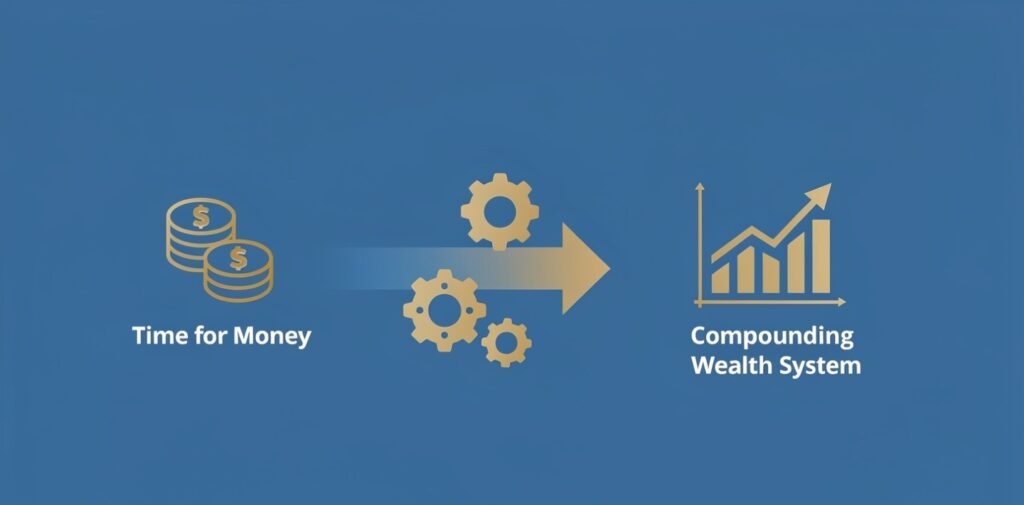
The ultimate goal of any serious trader or investor is moving from constant active involvement to systematic, structural freedom. Reaching a significant financial milestone is never simply about working harder — it is about engineering a system where capital, strategy, and risk management operate together as a coherent whole, rather than relying on individual heroic effort applied inconsistently.
Transitioning from a hands-on approach — where every market tick demands attention and reaction — toward a structured, rules-based model secures long-term financial stability in a way that constant manual intervention never can. Genuine success in financial markets comes from managing a process deliberately, not from chasing the market reactively.
Whether the underlying approach involves automated systems or a strictly disciplined manual strategy, the core shift required is the same: building toward consistent, compounding returns rather than chasing isolated wins. A trader without a system is functionally gambling. A trader with a genuine system is operating a business, even when that business consists of a single disciplined trading account.
Stop Trading Time, Start Providing Genuine Value
The most common trap in modern financial life is the direct exchange of time for money. A standard job, or even basic, undisciplined trading, can cover expenses, but genuine wealth is generated by solving real problems or extracting genuine value from inefficiency — not simply by showing up and putting in hours.
In trading specifically, this means developing a genuinely specialized skill — technical analysis applied with real precision, or a structured understanding of institutional order flow concepts like order blocks. Our complete guide on order blocks and fair value gaps covers exactly this kind of specialized skill that allows a trader to extract genuine value from market inefficiencies rather than guessing alongside the broader crowd.
“A trader without a system is just a gambler. A trader with a system is a business owner.”
— Data Pips Team
Master a High-Income Skill Before Chasing High Income
Particularly earlier in a career, the most valuable asset available is not an account balance — it is the capacity to learn and genuinely master a specialized, high-income skill. Whether that means developing real proficiency in structured trading methodologies, understanding institutional concepts deeply, or becoming a genuine expert in a specific market like forex or gold, a high-income skill is what makes someone difficult to replace.
The market does not reward effort in isolation. It rewards genuine expertise, applied consistently and combined with disciplined execution. This is precisely why two people can spend an identical number of hours analyzing the same charts and produce dramatically different long-term outcomes — the gap is rarely effort, it is the depth of genuine skill development underneath that effort.
The Magic of Compounding: Small, Consistent Gains Over Time
Reaching a genuinely significant financial milestone is never the result of a single massive win. It is the accumulated result of small, consistent gains compounding steadily over an extended period. Investopedia’s explanation of compounding confirms this mechanism — returns generating their own additional returns over time — as the primary engine behind almost all meaningful long-term wealth accumulation.
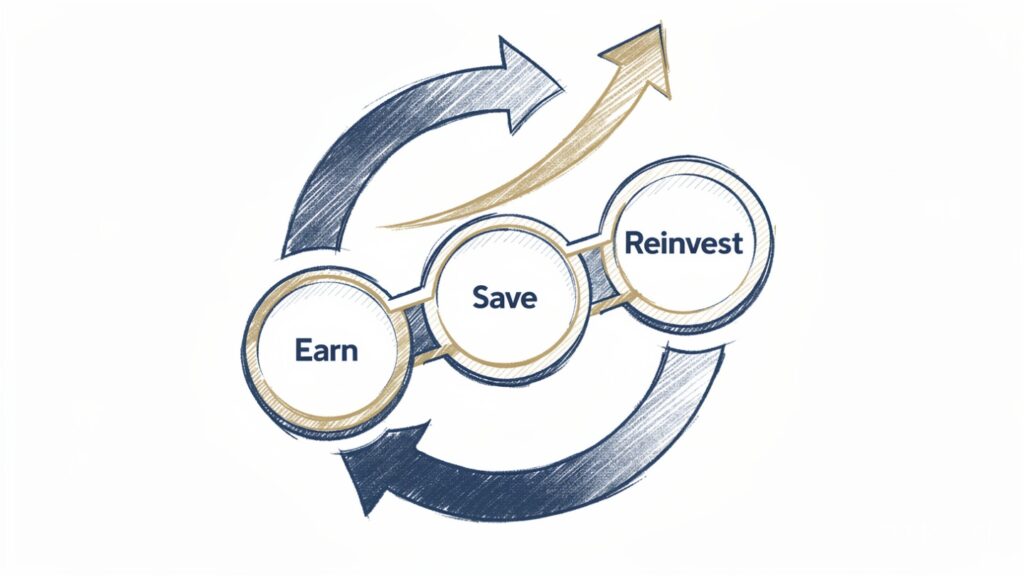
This process follows three connected steps. Earn by focusing relentlessly on a genuine, tested edge rather than chasing every available opportunity. Save by resisting lifestyle creep — the gradual, almost invisible tendency for spending to rise in step with income, quietly consuming the very profits meant to compound. Reinvest by deliberately putting earned capital back to work rather than treating it as immediately spendable income.
Investopedia’s explanation of lifestyle creep confirms this pattern as one of the most common, quietly destructive forces working against long-term wealth building — often more damaging over time than any single poor financial decision, precisely because it operates gradually and rarely feels like a mistake in the moment.
| Step | What It Requires | Common Failure Point |
|---|---|---|
| Earn | A genuine, tested edge or skill | Chasing too many opportunities at once |
| Save | Resisting lifestyle creep | Spending rising quietly with income |
| Reinvest | Putting capital back to work deliberately | Treating profit as immediately spendable |
When money genuinely starts making money on its own, the underlying identity shifts from worker to owner — a transition that happens gradually through this exact three-step cycle, not through a single dramatic event.
The Founder’s Real Lesson: Systems Survive, Hype Does Not
Financial markets are specifically structured to transfer money from the impatient to the patient. Most people who fail are not lacking intelligence or even technical skill — they are seeking a shortcut, hoping for a dramatic account transformation overnight rather than committing to the slower, less exciting path of consistent system execution.
Years of trading gold and forex reinforced this directly: the periods of strongest, most reliable growth never coincided with chasing exciting new strategies or reacting to market hype. They coincided with stretches of boring, repetitive adherence to a tested process, even when that process felt unglamorous compared to whatever new approach was generating excitement elsewhere. Our complete guide on building mechanical discipline covers exactly this transition from reactive, hype-driven trading to genuinely systematic execution.
During a period when a specific trading approach gained significant popularity within trading communities, abandoning a tested, working process to chase that newer, more exciting strategy produced a measurable setback in consistency. Returning to the original, less exciting but genuinely tested system after that detour restored consistent results within a few months. The lesson reinforced something already suspected but not yet fully internalized: hype-driven decisions, even when they come from genuine excitement rather than fear, interrupt compounding just as effectively as panic-driven ones do. The system itself was never the problem — the willingness to abandon it temporarily was.
Emotional Discipline and Patience Within the System
Real, durable success requires the emotional stability to handle inevitable losses without abandoning a proven process, combined with the discipline to stick with that process even when louder, more exciting alternatives suggest a faster path exists. According to Investopedia’s research on trading psychology, a trader’s underlying beliefs and emotional discipline consistently outweigh raw technical skill in determining long-term outcomes — confirming that the psychological component of this system matters as much as the technical and financial components combined.
This patience is not passive waiting. It is active adherence to a structure that has already been tested and proven to work, resisting the constant pull toward whatever feels most exciting in the current moment.

What Nobody Tells You About Building a Wealth Compounding System
1. The system itself eventually becomes more valuable than any single skill within it. A specific trading edge or income skill can become outdated or less effective over time. The discipline and structure built around earning, saving, and reinvesting consistently tends to remain valuable regardless of which specific skill or strategy is feeding into it at any given time.
2. Lifestyle creep is nearly invisible until it is reviewed in writing. Most people underestimate how much their spending has risen alongside their income until they actually track it directly. Reviewing spending data explicitly, rather than relying on a general sense of financial discipline, is often the only way this specific erosion becomes visible enough to address.
3. Boredom is a feature of a working system, not a warning sign. A genuinely sound, compounding wealth system often feels repetitive and unexciting during long stretches of steady execution. Mistaking that boredom for evidence that something needs to change is one of the most common ways a working system gets abandoned prematurely.
4. Passive income still requires active system-building first. The eventual goal of a hands-off, passive wealth structure does not eliminate the need for genuine upfront skill development and disciplined execution. Our complete guide on passive income assets covers specific vehicles for this transition, but the underlying system and discipline still need to exist first.
5. The milestone itself is less important than what building it required. Reaching a significant financial target functions less as a destination and more as evidence of a specific kind of personal development — the discipline to stay committed to a process when faster, more exciting alternatives constantly competed for attention. Our guide on transitioning from active income to passive wealth expands on this exact transformation in considerably more depth.
Beyond the Numbers: What the System Actually Builds
A significant financial milestone represents more than a number sitting in an account. It functions as evidence of mastered fear, disciplined habits, and sustained commitment to a vision over a period when many others would have abandoned it for something faster or more exciting. The compounding skill — the patience to stick with an unglamorous, working system — transfers directly into every other area of life that rewards consistency over intensity.
Success in financial markets leans heavily toward mindset over raw strategy. Focusing on consistent daily improvement — learning one new concept, maintaining physical discipline, refining a trading journal — allows the financial numbers to follow as a natural consequence of the underlying system, rather than as the direct target of daily effort. Our guide on the 1% rule and daily compounding habits covers exactly this principle of small, consistent daily improvement compounding into significant long-term results.
Quick Action Steps: Start Building Your Wealth System This Week
Step 1: Identify the single skill currently generating most of your income, and evaluate honestly whether it is genuinely specialized or easily replaceable.
Step 2: Track your spending for the next 30 days specifically looking for signs of lifestyle creep relative to your income from a year ago.
Step 3: Write down your current earn-save-reinvest cycle explicitly, including specific percentages or amounts for each step.
Step 4: Identify the last time you abandoned a working process to chase something more exciting, and write down what that decision actually cost you.
Step 5: Commit to one boring, unglamorous system this month, and track its consistency rather than its excitement level.
Frequently Asked Questions
What does it mean to build a “wealth machine” through compounding?
It refers to building a structured, repeatable system where earning, saving, and reinvesting work together consistently over time, allowing capital and skill to compound rather than relying on isolated wins. The goal is shifting from active, constant effort to a self-reinforcing system.
Is it possible to build significant wealth without a high-income skill?
It is considerably more difficult. A genuinely specialized, high-income skill provides the earning component that fuels the entire compounding cycle. Without it, the saving and reinvesting steps have less capital to work with, which significantly slows the overall compounding timeline.
What is lifestyle creep and why does it matter for wealth building?
Lifestyle creep refers to spending gradually rising in step with income, often without conscious awareness. It matters significantly because it quietly consumes the exact profits that would otherwise be reinvested and compounded, making it one of the most damaging long-term threats to wealth building precisely because it rarely feels like a mistake at the time.
Why do hype-driven strategies tend to underperform disciplined systems?
Hype-driven strategies often lack the testing and proven track record of an established system, and chasing them frequently interrupts the compounding process of a working approach. Switching strategies based on excitement rather than data tends to reset progress rather than accelerate it.
How important is emotional discipline compared to technical skill?
Emotional discipline and underlying beliefs consistently outweigh raw technical skill in determining long-term financial outcomes. A technically sound system still requires consistent, disciplined execution to be effective, which is why psychological factors deserve as much attention as strategy development.
How long does it typically take to see real results from a compounding wealth system?
There is no universal timeline, since results depend heavily on the underlying skill, consistency, and starting capital. Compounding is mathematically back-loaded, meaning the most significant, visible results tend to appear in the later years of consistent execution rather than evenly throughout the process.
Disclaimer: This article is for educational and informational purposes only and does not constitute financial, investment, or trading advice. Individual financial outcomes vary significantly based on skill, effort, market conditions, and personal circumstances. The Data Pips Team makes no guarantees regarding financial outcomes from applying the strategies described in this article. Consult a licensed financial advisor before making significant financial or investment decisions.